
Cobblestone Aprons and Edging in Littleton, MA
Littleton lots tend to run long. A drive that stretches a hundred feet or more from the road to the house is normal here, and a lot of that frontage is still gravel, or was until recently. When a property moves from gravel to asphalt, or simply gets a proper paved drive for the first time, the point where that drive meets the road is the detail that gets noticed first and fails first if it’s done wrong. That’s what an apron and edge restraint are for.
A cobblestone apron is the section of hard surface right at the street, built to take the daily entry and exit, plow blade contact, and the wear a car gets from turning in off the road. Edging is the border that runs along the sides of the drive, holding the asphalt or gravel where it belongs instead of letting it spread into the lawn over a few seasons. On a long rural drive, that edge line also does the job of marking where the drive actually is once snow covers everything else, which matters more than it sounds like at ten at night in a storm.
What’s underneath matters more than what’s on top
The stones themselves get the attention, but the work that decides whether they stay flat is below ground. That means excavating to a real depth, laying and compacting a base course, setting a bedding layer, and anchoring the restraint so it doesn’t walk sideways under frost or truck weight. Massachusetts winters move soil. Water gets into any gap, freezes, expands, and pushes. An apron built on a shallow base will heave unevenly within a few winters. One built on a compacted, properly drained base moves as a unit, if it moves at all.
Littleton’s sandy, well-draining soil is genuinely an advantage here. Sand doesn’t hold water against the base the way clay does, so there’s less of the saturation-and-freeze cycle that causes the worst heaving. That doesn’t remove the need for a real base, but it does mean the work holds up better over time than the same detail built on a wet, clay-heavy lot.
Plow contact is the other thing worth planning for before the stones go in, not after. An apron set flush with the road edge, with a restraint that sits slightly below the cobble face, takes a blade pass without catching or chipping. Set it proud of the asphalt and a plow will find it eventually, usually the first hard storm of the season. The same logic applies to the transition where the apron meets the existing drive surface: a clean, slightly feathered joint sheds water and plow pressure better than a hard lip.
Material choice matters for how the apron reads from the road, too. Granite cobbles hold their edge longer under repeated plow and vehicle contact than softer stone, and they weather to a look that suits the older farmhouses and stone-wall lines common around Littleton. A few options worth discussing before work starts:


What Our Clients Say
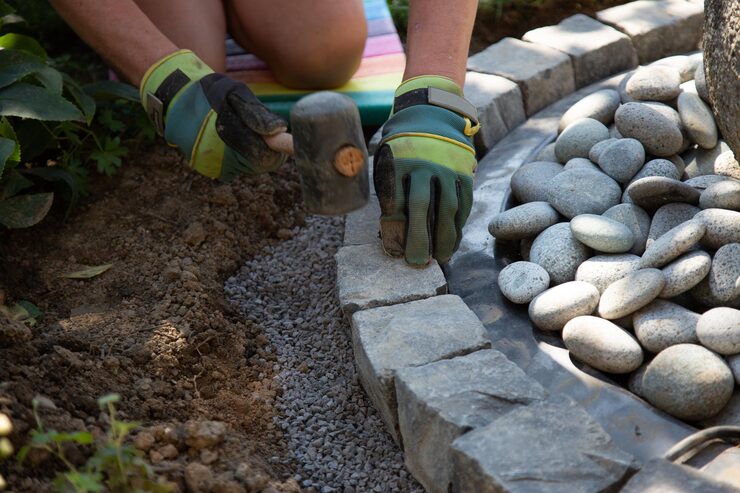
What the work involves below the surface
The stone is the last and smallest part of the job. A cobblestone apron stays flat or goes wavy depending on what is underneath it.
Granite cobblestone holds its edge and its look for decades, costs more up front, and is simple to lift and reset if a section shifts. It’s the material most homeowners end up choosing for a street-facing apron.
Concrete pavers cost less upfront and offer more color and pattern choices for Littleton driveway aprons and edging. They age less gracefully than granite cobblestone, and our harsh freeze-thaw cycling can eventually spall, chip, or crack individual units over time.
Belgian block is a middle option: smaller than true cobblestone, still stone, still repairable piece by piece, and a common choice for edging rather than a full apron surface.
Mixing materials rarely works well. In Littleton driveways, a granite apron with concrete edging, or the reverse, tends to look unresolved and wears at different rates under freeze-thaw cycles and road salt, which shows clearly within a few seasons.
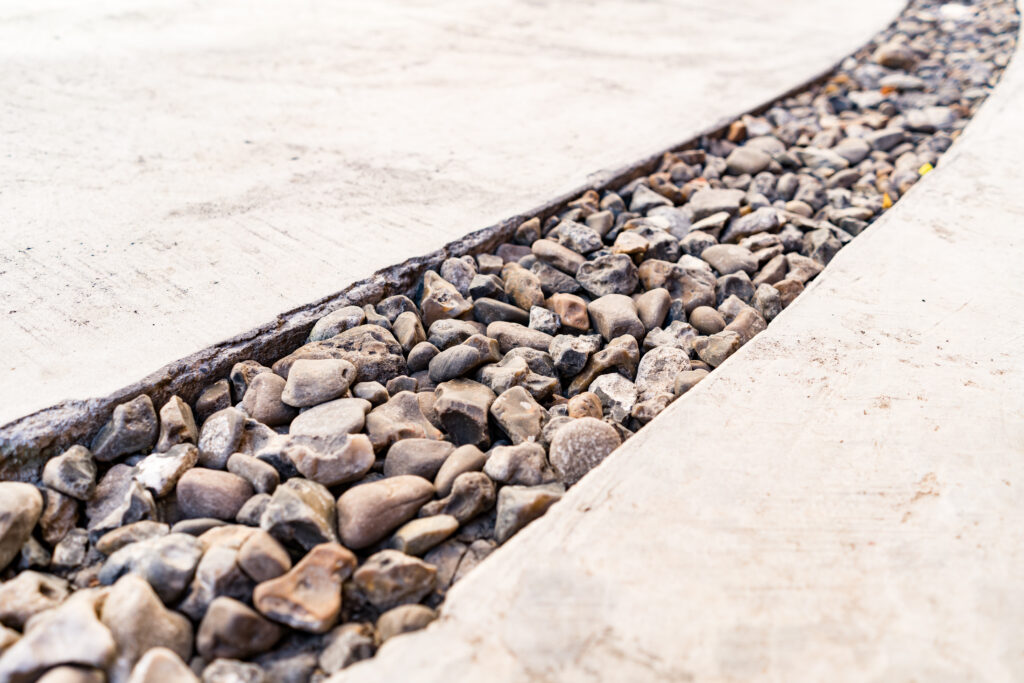
Grade dictates everything else. Water has to move off the apron and away from the house, garage, or any low point on the property, not pool at the street edge or run back up the drive.
Materials and the trade-offs
Cobblestone aprons and edging give a Littleton driveway a defined, finished look where it meets the street or garage, and they hold up to snowplow blades and studded tires far better than a painted or stamped line in the asphalt itself. The real work, though, happens below the stone. On a flat or gently sloped lot, that’s a matter of getting the pitch right during base work so water sheets off instead of pooling at the transition. On a lot with any real fall toward the house, the apron and edging need to work with a drainage plan, not just sit on top of one that isn’t there. That means proper base depth, compaction, and sometimes a hidden drain channel behind the stone before a single cobble goes down. We also account for Littleton’s freeze-thaw cycles, bedding each course so frost heave doesn’t pop stones loose over time. Done right, a cobblestone apron outlasts the driveway surface it borders and only gets better looking with a little weathering.

A transition that belongs with what's already there
An apron and edge detail sit right at the front of the property, which means they’re judged against whatever else is already visible from the road: stone walls, mature trees, an older farmhouse facade, existing plantings along the drive. Matching the stone color and laying pattern to that context matters more here than it would on a modern subdivision lot with little else to reference.
This is also where tying into existing hardscape comes up. If there’s already a stone wall along the frontage, or a walkway that uses a particular stone, the apron is a chance to carry that material forward rather than introducing something that reads as added on later. We work through those matching decisions with the homeowner before any excavation starts, because once the base is in, the stone choice is effectively locked in for the life of the installation.
Root systems from mature trees near the road are worth checking before excavation too. Littleton has no shortage of large oaks and maples close to driveways, and a root running under where the apron needs to go changes the excavation plan.
Where this fits Littleton properties specifically
This kind of work suits the town’s building stock and lot layout more than it would a tighter, in-town street grid. Long setbacks mean the apron and edging get seen and used daily, but they also mean there’s more frontage to build out, which is part of why Littleton sees a steady stream of gravel-to-asphalt conversions that include this detail rather than treating the drive and the street edge as separate projects.
Neighboring towns like Westford and Groton share a lot of this same rural, longer-lot character, and the same sandy soil conditions generally hold across that part of Middlesex County. The approach doesn’t change much from one town to the next here, because the ground doesn’t change much.
If you’re planning a new drive, converting from gravel, or just want the street-facing edge of the property to look and hold up better than what’s there now, call Driveway Specialists at (413) 337-3772 to talk through what the site needs before anything gets dug.

Where this suits Littleton properties
Long rural frontages
Littleton's larger lots often have fifty feet or more of frontage between the road and the drive. A cobblestone apron gives that stretch a defined edge instead of a ragged line of eroding gravel.
Gravel-to-asphalt conversions
Properties moving off gravel onto a paved drive need a clean transition at the street. Cobblestone edging marks that line permanently and keeps the new asphalt from creeping into the yard.
Older farmhouse and colonial lots
Many Littleton homes sit well back from the road with stone walls or mature plantings nearby. Cobblestone ties a new drive into that older material better than a poured concrete curb does.
So tar and chip suits a longer, gentler Littleton drive with some room around it. It is a poor match for a short, steep or shared one, or one that opens straight onto the walk.
Questions we hear
Does cobblestone edging stop asphalt from spreading at the edges?
Yes, that is its main structural job. Asphalt edges without restraint slowly splay outward under traffic and plow pressure. A properly bedded cobblestone border holds the line so the asphalt keeps its shape.
Will cobblestone heave in a Littleton winter?
Any unit set in soil will move somewhat with frost. The difference is how it fails. A well-compacted base and a bedding layer that drains let the stones settle evenly, so if anything shifts, you reset a few units rather than patching a crack.
Can this work be done alongside a gravel-to-asphalt conversion?
Yes, and it is one of the more common combinations on this page. The apron and edge restraint are usually built at the same time as the new asphalt surface, since both depend on the same excavation and base work.
Does the apron work need to match an existing stone wall or walkway?
It can, within reason. Matching the stone style, coursing, or color of existing walls or walkways is a design decision we work through with the homeowner before excavation starts.
Next step
Call us at (413) 337-3772. Tell us about the lot, the slope and what you want the frontage to look like. We have been working in this area since 1988, and we will tell you plainly what suits your property.