
Tar and Chip in Dover, MA
A tar and chip drive reads as a country road, not a parking lot: a dark, textured surface with visible stone rather than smooth black asphalt. In Dover, where drives run long through trees to a house set well back from the street, that look matches the property instead of fighting it. The surface sheds water well on sloped or wooded sites, resists hot-weather softening better than plain asphalt, and holds up on gravel-base driveways common to older rural lots. The trade-off is maintenance and surface feel, not just price, and it is worth understanding both before you choose it over a full-depth asphalt drive.
How It Goes Down
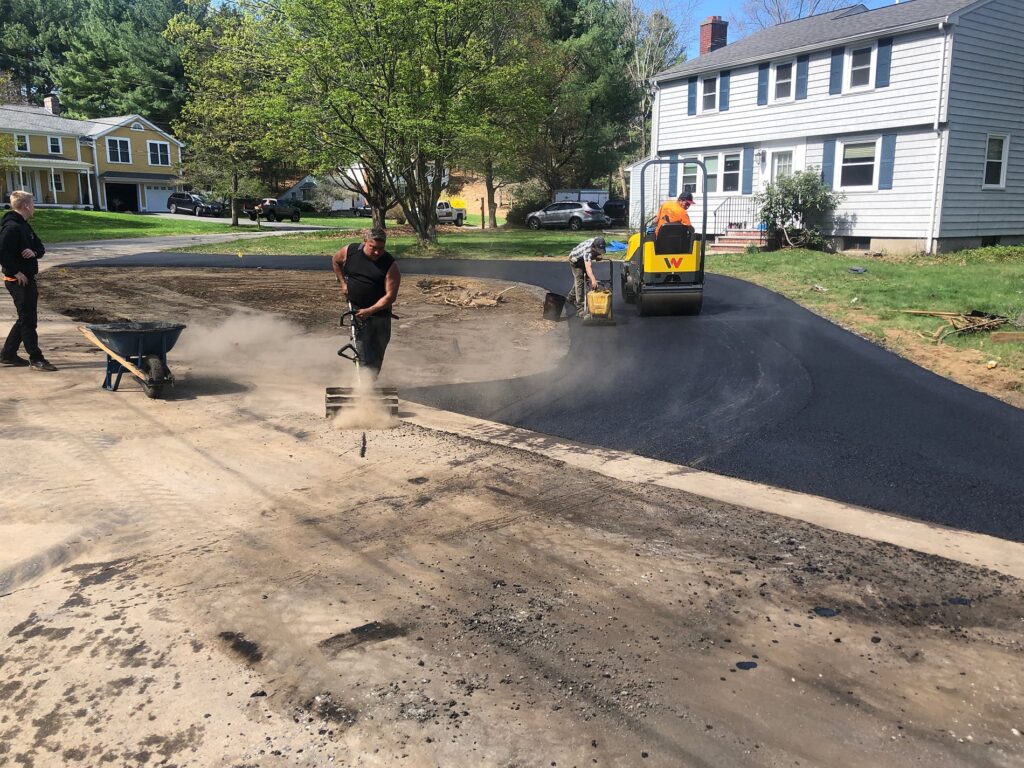
The process is straightforward: our crew preps and grades the base, then sprays a hot bituminous binder across it while it is fully workable. Clean, locally sourced stone is spread into that hot binder and a roller sets each piece firmly in place. A second layer often follows for Dover driveways, building a fuller, more durable finish that stands up to New England’s freeze-thaw cycles. Unlike asphalt, there is no troweled mat to lay down – the stone itself becomes the wearing surface, which is why tar and chip looks more textured, feels different underfoot, and handles tire traffic with a distinct, rugged character.
- The base is shaped and compacted. Everything above depends on it.
- The hot binder is sprayed across the surface.
- Stone is spread over the binder while it is still tacky.
- The stone is rolled in so it seats into the binder.
- Loose stone is swept or left to settle under traffic.
Where It Works, Where It Doesn't
Tar and chip suits a long, gently graded driveway where a rural look and decent traction matter more than a showroom finish, and it typically costs less than full-depth asphalt over the same length.


What Our Clients Say
What it does well
- The look: On a long approach, a rural-style lot or a house with some age to it, it fits in better than a flat black strip. It sits quietly beside lawns, stone walls and mature trees.
- Traction on a grade: The stone texture gives tires and boots something to grip. On a slope that matters, particularly where a smooth surface gets slick in wet leaves or a thin skim of ice.
- Cost: It is generally less expensive than full-depth asphalt because it needs less material and a lighter build. I won't put a figure on it. The saving depends on the base your drive already has and what it needs. We can give you a real number once we have seen the site.
- How it wears: It does not crack the way a rigid surface can. The binder stays flexible, so frost movement tends to show up as small surface changes rather than open cracks. Wear shows as stone loss in the wheel paths, and that can be patched.
Where it is the wrong choice
Be wary of tar and chip in these cases.
- You plow with a blade, or hire a plow: A plow blade catches loose stone and pulls it out. We cover snow in detail below, but if you want a clean, scraped surface all winter, asphalt is the better answer.
- You have a steep, short, heavily used drive: Tight turning on a slope scuffs stone loose, and tires at low speed wear the surface faster. A properly built asphalt drive will take that better.
- You want a smooth surface: Bare feet, bikes, scooters, skateboards, wheelchairs and strollers all prefer a smooth drive. Tar and chip is rough underfoot by design.
- You expect a clean, uniform finish: Tar and chip is textured and a little irregular. If you want the crisp, flat look of fresh asphalt, you will not get it.
If any of these describe your house, we will tell you so and recommend asphalt instead. A drive you regret in the first winter is not a good sale.
Loose stone and the first weeks
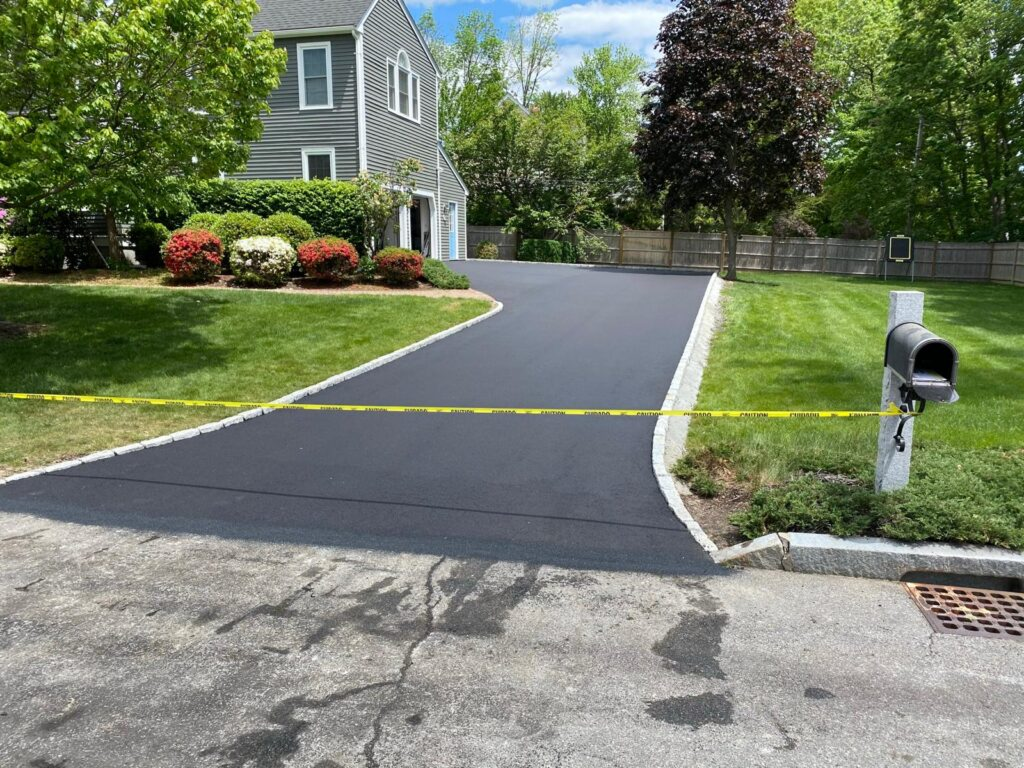
Some stone will come loose. That is normal in the first weeks, while the surface settles under traffic. You will see it in the garage, on the walkway and along the edges. Sweep it back onto the drive or off the paths and it settles out.
Drive slowly at first and avoid sharp turns, particularly with the wheels turned while stationary. That is the movement that scuffs a fresh surface most.
Over the longer term, the upkeep differs from asphalt. Asphalt is usually sealed to protect the surface. Tar and chip is maintained by re-treating worn areas: a new pass of binder and stone over the wheel paths and any thin patches. Done on time, that keeps the drive looking even. Left alone, it gets patchy.
Snow
This is the question most people ask, and the honest answer is that tar and chip and plows do not mix well.
A plow blade rides on the surface. On a smooth asphalt drive, it scrapes clean. On a stone surface, it can catch stone and drag it into the lawn or the snowbank. Every winter you will find some of it at the edge of the drive in spring.
You can reduce the damage:
- Raise the blade with shoes so it rides above the stone.
- Leave a thin layer of snow rather than scraping to bare surface.
- Use a snowblower with the skid shoes set high.
- Keep plows off the edges, where the binder is thinnest.
Even with care, you will lose some stone each winter. If you want a bare, scraped drive every time it snows, choose asphalt.
Does it suit Dover?
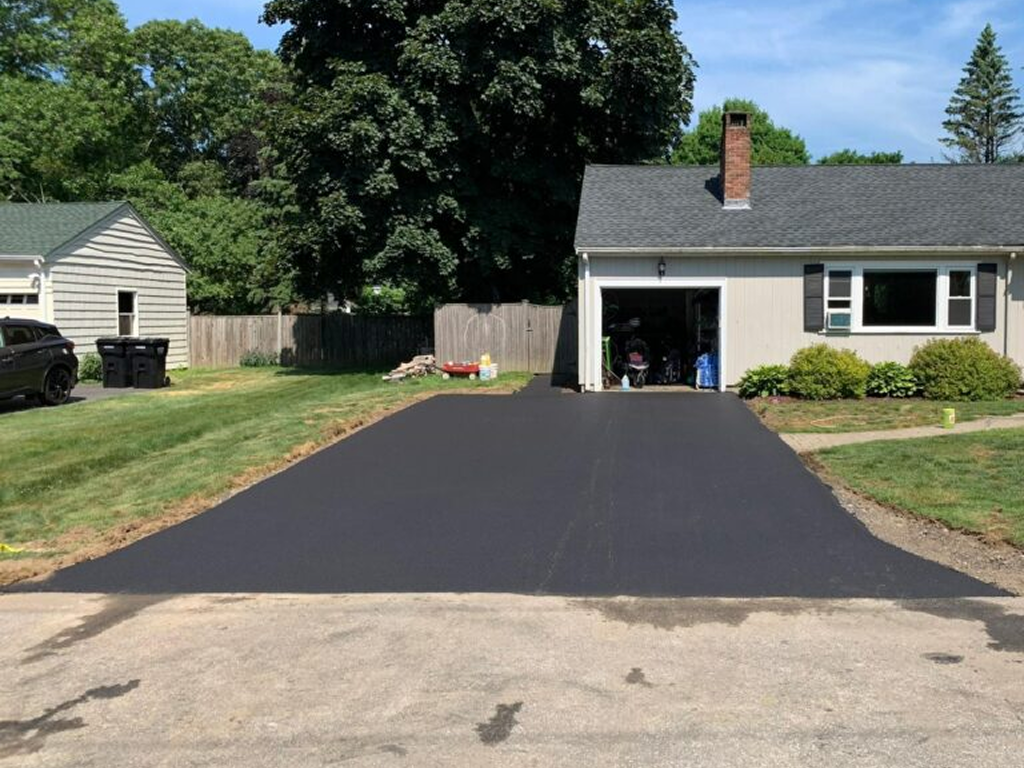
It depends on the lot. Dover has steep hillside lots, two-families with shared drives and tight frontages where the apron meets the sidewalk directly. Each one changes the answer.
The Look on an Estate Approach
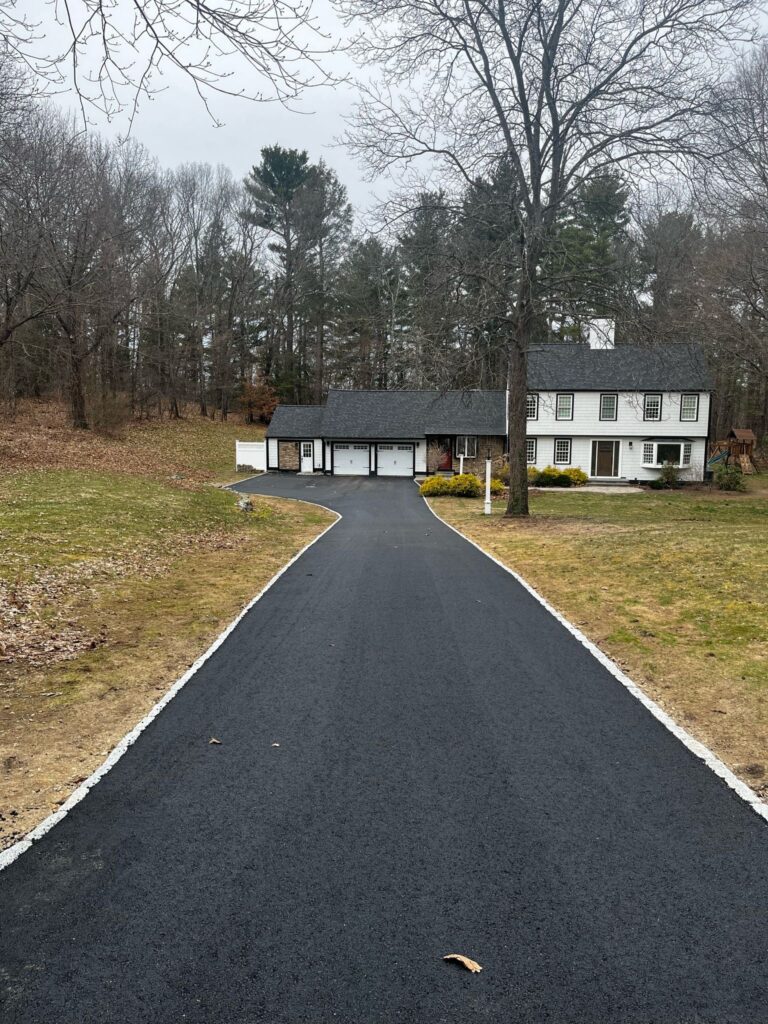
Long, wooded Dover drives suit a surface that reads as rural rather than paved. Stone texture breaks up a straight run through trees and sits comfortably against conservation land and stone walls.
Traction on Grade
The embedded stone gives tires more bite than smooth asphalt on a damp, shaded grade. On a drive that climbs through tree cover and stays wet longer than open ground, that texture matters.
Maintenance and Loose Stone
Expect loose stone in the first weeks as traffic works the surface in, and periodic top-ups over time as stone migrates to edges. It is a different upkeep rhythm than asphalt, not a lower one.
So tar and chip suits a longer, gentler Dover drive with some room around it. It is a poor match for a short, steep or shared one, or one that opens straight onto the walk.
Tar and chip questions
Can a tar and chip drive handle plowing in a Dover winter?
A rubber-edged plow blade set slightly high works better than a steel edge set tight to the surface, which can scrape stone loose. We talk through blade height and edge detail with anyone plowing the drive themselves before the first storm.
How does tar and chip handle Dover's ledge and root-filled lots?
Where ledge sits close to the surface or roots run under the route, base depth and drainage matter more than the surface material. We assess the subgrade first and route the drive to work with what is there rather than against it.
Does tar and chip work with conservation setbacks on a wooded lot?
Setback lines and the route around them are a site-planning question that comes before surface choice. Once the route is set within those limits, tar and chip is one of the surfaces that fits a long wooded approach well.
Is tar and chip cheaper than asphalt for a long Dover drive?
It generally costs less per foot than full-depth asphalt for a drive of the same length, though the gap narrows on a short run where mobilization is a bigger share of the job. We give a straight number once we've seen the site.
Next step
If you are weighing tar and chip against asphalt, we will look at your drive, the grade, the base and how you handle snow, then tell you which we would choose and why. If it is asphalt, we will say so.