
Cobblestone Aprons and Edging in Foxborough, MA
Foxborough lots run bigger than most of MetroWest, and that changes what a street-to-drive transition is for. On a subdivision lot with a long asphalt run, a cobblestone apron is the detail that keeps the whole driveway from looking like a flat black rectangle dropped on the grass. On the rural roads and steeper grades toward the south end of town, edging has a harder job: it has to hold gravel or asphalt in place on a slope, not just look good at the curb. Both are hardscape decisions, not paving repairs, and both are usually about improving a driveway that already works rather than fixing one that has failed.
The visible stone is the easy part to picture. What decides whether it still looks right in fifteen years is what goes in before a single cobble is set.
What’s underneath
An apron or edge course only works if it is built as its own structure, tied into the driveway but not dependent on it. That means excavating below the frost-affected zone, laying a compacted base that can shed water instead of holding it, and setting a bedding layer that lets each stone sit tight against its neighbors without rocking. The edge restraint, whether it is a concrete haunch, a steel or aluminum edge, or just the geometry of the cobbles themselves, is what stops the whole course creeping outward over a few winters.
Frost is the reason this matters more here than in milder climates. Water gets under a stone course, freezes, expands, and pushes the stone up or out. One freeze-thaw cycle does nothing. Twenty winters of it, on a base that was never built to shed water, is why an apron laid without proper drainage goes wavy and gap-toothed while a well-built one stays flat.
Foxborough’s larger lots usually mean more linear footage of edging to work with, and more room to get a paver, plate compactor and small excavator positioned without squeezing through a tight gap between house and property line. That is an advantage on cost and timeline, but it does not change the base requirements. A long apron on a sloped driveway still needs drainage planned along its length, not just at the street end, with outlets or daylighting points worked in where the grade naturally wants to shed water anyway.
Stone choice matters as much as the base it sits on. Granite cobbles hold up to snowplow blades and road salt better than softer stone, which matters on any Foxborough driveway that gets plowed rather than shoveled. Reclaimed granite setts, true antique cobblestone, and manufactured concrete pavers shaped to look like cobble all read differently at the street, and they also differ in cost, lead time, and how forgiving they are if a section ever needs to be lifted and reset. A contractor who has priced all three for this area should be able to walk through the tradeoffs without steering straight to whichever is easiest to install.


What Our Clients Say
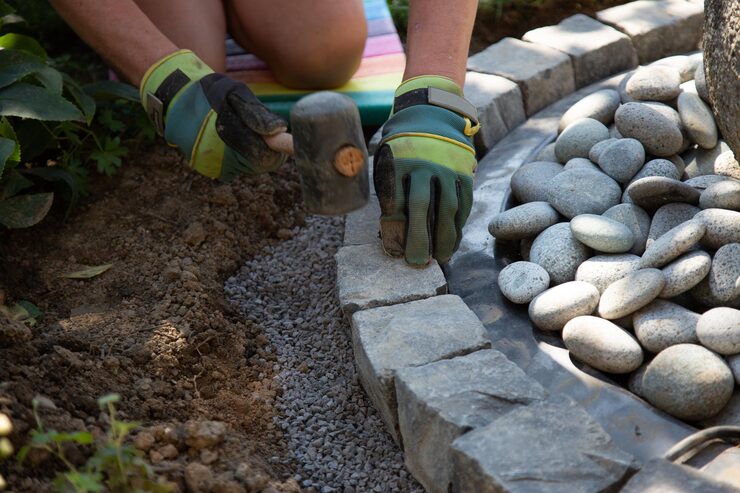
What the work involves below the surface
The stone is the last and smallest part of the job. A cobblestone apron stays flat or goes wavy depending on what is underneath it.
Granite cobbles hold their edge and color for decades but cost more up front. Concrete pavers run cheaper and come in more finishes, but wear and fade faster under Foxborough's road salt and plows.
Reclaimed granite setts look settled immediately and never really age further, a good match for Foxborough’s older homes. New-cut granite starts crisp and softens slightly over the years as edges wear round, suiting driveway aprons, borders, and walkway edging alike.
Concrete cobble pavers are the easiest to repair: lift a damaged unit, reset it, done. Natural granite repairs are possible but less forgiving of mismatched wear.
Every hard surface sheds water somewhere. An apron or border that traps runoff against a Foxborough foundation, garage slab, or walkway causes damage no amount of good stone can hide.
On Foxborough's steeper southern grades, edging has to resist lateral creep from water and weight, not just mark a line.
Materials and the trade-offs
Matching what's already there
Most cobblestone apron and edging work happens around a driveway, entry walk, or bed that already exists, often beside an older Foxborough farmhouse or a colonial-style subdivision build. The goal isn’t a brand-new look, but a transition from street to drive, or drive to front walk, that feels planned as one piece rather than added on later.
That means reading what’s already on the property: the color of existing stone walls, the age and style of the house, the width and curve of the driveway. A granite cobble apron against a 1980s colonial reads differently than the same stone against a converted farmhouse on a larger lot, so coursing pattern, border width and stone size should shift accordingly rather than follow one default layout everywhere.
- Existing stone walls or granite steps: match that material, or at least its tone
- Nothing obvious to match: let the roofline and siding color guide the choice

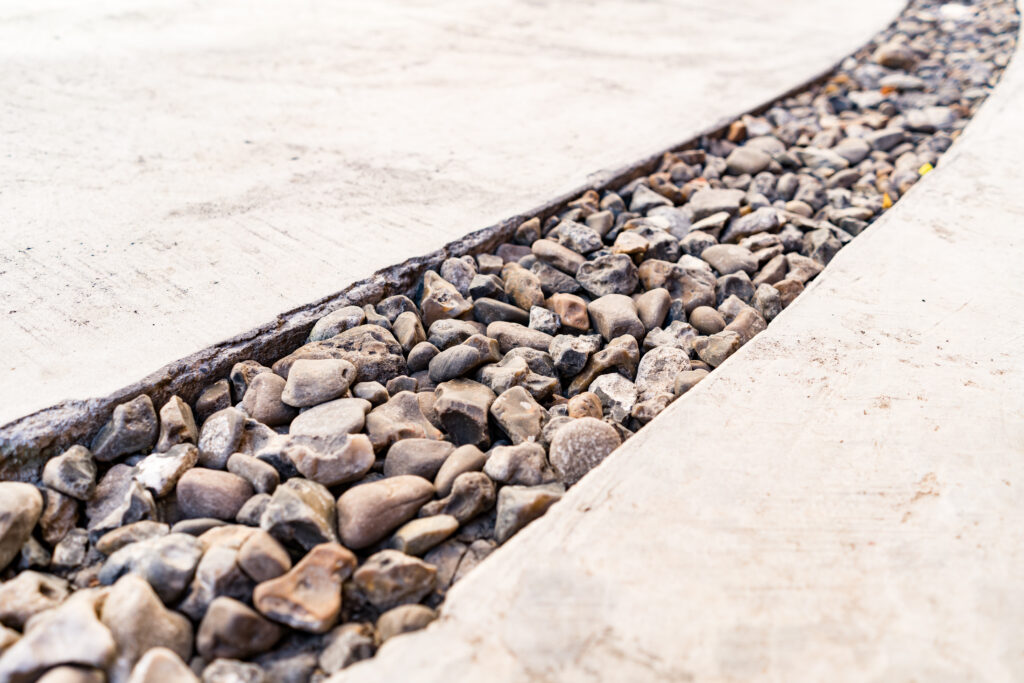
Drainage and grade decide more than the layout does
Before any pattern or stone choice, water has to have somewhere to go. A cobblestone apron or border sits at the lowest, most exposed point of a property’s hardscape, right where driveway meets street or lawn meets walk, which makes it the first place to show a drainage mistake. Pitching the apron so water runs toward the street, not back toward a garage or foundation, is not a style choice. It is the difference between a border that lasts and one that heaves and settles within a few seasons.
Where this fits a Foxborough property
This kind of work suits Foxborough particularly well because the lot sizes support it. A long driveway with room for a proper apron, a front walk bordered in matching stone, a stone edge along a gravel drive on a sloped rural parcel: all of these need the square footage Foxborough properties tend to have, and all of them read as considered rather than tacked-on when the base and drainage are handled correctly underneath.
If you are planning an apron, a border, or edging along an existing driveway or walkway in Foxborough, the next step is a site visit to look at the grade, the existing materials, and what the base actually needs before any stone gets ordered. Call Driveway Specialists at (413) 337-3772 to set one up.
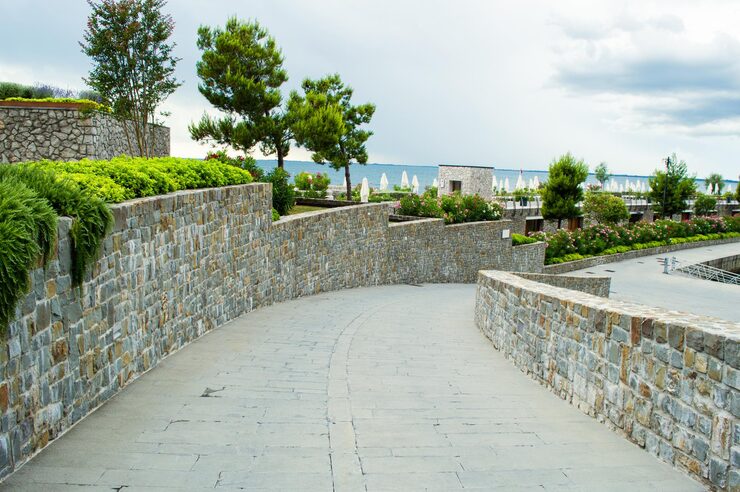
Where this suits Foxborough properties
Long subdivision driveways
Larger Foxborough lots give an apron room to read as a deliberate transition rather than a narrow strip at the street, with enough length to pitch drainage properly along the way.
Sloped rural frontages
On the steeper grades south of center, stone edging holds gravel or asphalt in place against runoff, doing structural work that a flat urban border never has to do.
Older house, new entry walk
Farmhouse and converted-colonial properties benefit from cobble borders that pick up the tone of existing stone walls or steps instead of introducing a mismatched new material.
So tar and chip suits a longer, gentler Foxborough drive with some room around it. It is a poor match for a short, steep or shared one, or one that opens straight onto the walk.
Questions we hear
Is a cobblestone apron the same as fixing a cracked driveway?
No. An apron or edging project is about the transition and the border, not the driveway surface itself. If the asphalt or concrete behind it is failing, that is a separate repair, though it is worth addressing before new stonework goes in next to it.
Can edging be added to an existing driveway without redoing the whole surface?
Yes, in most cases. The edge course is excavated and built as its own structure along the existing driveway edge. The driveway surface itself does not need to be touched unless it is already failing at that edge.
Do cobblestone aprons need much upkeep in Foxborough winters?
Plowed edges take the brunt of winter wear, so a well-restrained apron holds up better than loose or poorly bedded stone. Occasional resetting of an individual stone is normal maintenance, not a sign of failure.
How does Foxborough's terrain affect the design?
Larger subdivision lots allow for longer, more gradual aprons, while the steeper grades on rural roads to the south require edging that manages water and material movement, not just marks a boundary line.
Next step
Call us at (413) 337-3772. Tell us about the lot, the slope and what you want the frontage to look like. We have been working in this area since 1988, and we will tell you plainly what suits your property.