
Driveway Paving in Dover, MA
A driveway in Dover has usually been asked to do more than a standard suburban apron ever was. These are long runs cut through wooded, large-acreage lots, often with real elevation change between the road and the house, and a surface that has been breaking down quietly under tree cover for years before it shows on top. If you are looking at alligator cracking across a long run, standing water where the grade flattens, or a new build with no driveway at all, the decision in front of you is who puts it in and what goes underneath it.
When we come out to look at a Dover property, the site visit is longer than it would be for a flat quarter-acre lot near the road. We walk the full length of the drive, not just the end closest to the house. We measure square footage, but we also note where the route climbs or drops, where ledge sits close to the surface, where tree roots have already started to lift sections, and where the drive passes near a wetland buffer or conservation setback that limits how much we can regrade or widen. On a lot like this, the route itself is often part of the scope, not just the surface we lay over it.
Why the base decides everything
What fails in Dover almost always fails from below. Long drives through wooded, uneven ground see water moving across and under them in ways a short flat driveway never does. If the base under the existing asphalt was never built to carry that water away, or was compacted over roots and loam instead of structural gravel, the surface cracks and heaves no matter how new it looks. This is the difference between a paving contractor and a resurfacing outfit: a resurfacing crew puts hot asphalt over whatever is already there. We look at what’s under it first, because that’s where the money either gets spent well or gets wasted.
Overlay versus full replacement comes down to that base. If the gravel underneath is still intact, drains correctly, and the cracking is surface-level, an overlay can add real life to the drive. If the base has shifted, washed out, or was never adequate for the length and grade of a Dover drive, overlaying it just buries the problem under new material that will crack again, usually within a season or two. We’ll tell you plainly which one your drive needs, and we won’t sell an overlay on a base that can’t hold it.


What Our Clients Say
What Drives the Price
Square footage is only part of the estimate for a Dover driveway. Depth of excavation, how much material has to come out and be hauled away, access for our equipment along a long or narrow wooded route, grade, drainage work, and the apron where the drive meets the road all factor in. Dover's mix of clay-heavy soil and rocky subgrade means two drives of the same length can price very differently depending on what the ground is doing beneath them. Existing culverts, tree roots, and slope toward the house also change the scope once we start digging. Anyone willing to quote a firm number over the phone, without walking the site, is guessing.
Scheduling Around the Season
Paving in Massachusetts runs on the season, not the calendar date, and a long wooded drive in Dover often needs the ground to thaw and dry out before heavy equipment can get down it without rutting the shoulders. We typically plan asphalt work for the stretch between late spring and mid-fall, when base material compacts properly and the mix sets up the way it should, and we book around that reality rather than a fixed window. We'll be straightforward with you about where your project sits in the queue and how weather might shift it. Once the work starts, you'll need to keep vehicles off the new surface for a couple of days while it cures, and plan around a short stretch of disruption on a drive that's often your only way in or out.

Living With It the First Season
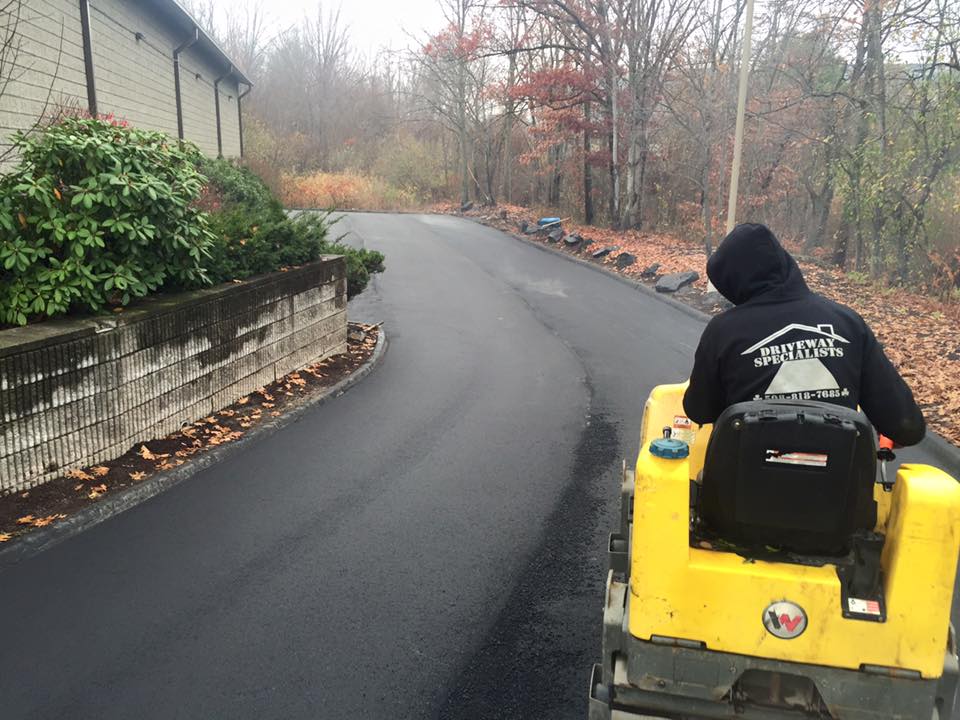
A new driveway settles in over its first season, especially one running through shaded, uneven ground typical of Dover plots backing onto trees or sloped gardens. Keep heavy vehicles, skips, and sharp turns off the edges while everything firms up, and expect the surface to look slightly different once it’s been through a full range of weather, from winter frost to a damp, leaf-strewn autumn. That’s normal for a drive of this length and exposure, and it’s part of why the base work underneath matters more than the finish coat on top.
- Expect minor colour variation as fresh tarmac or block paving weathers and cures
- Avoid parking in exactly the same spot every day while the surface beds in
- Check edges and joints after the first heavy rain for any settling
- Clear leaves and standing water promptly if your drive sits under trees
What drives the price
Several things set the cost of a driveway, and each one is visible only on site.
- Square footage : The area to be paved, plus any widening, turnaround or parking pad you want added.
- Depth of excavation : How far down the old material has to come out, and how much of the base has to be rebuilt.
- Material removed : The old asphalt has to be hauled away, and the amount depends on what is there.
- Access: A paver, a roller and delivery trucks all need to get in and turn around. Tight Dover frontages can limit what equipment fits, which changes how the work is staged.
- Grade: A steep drive is harder to prepare, harder to compact and harder to drain correctly.
- Drainage: If water needs to be moved off the drive and away from the house, that work is part of the job.
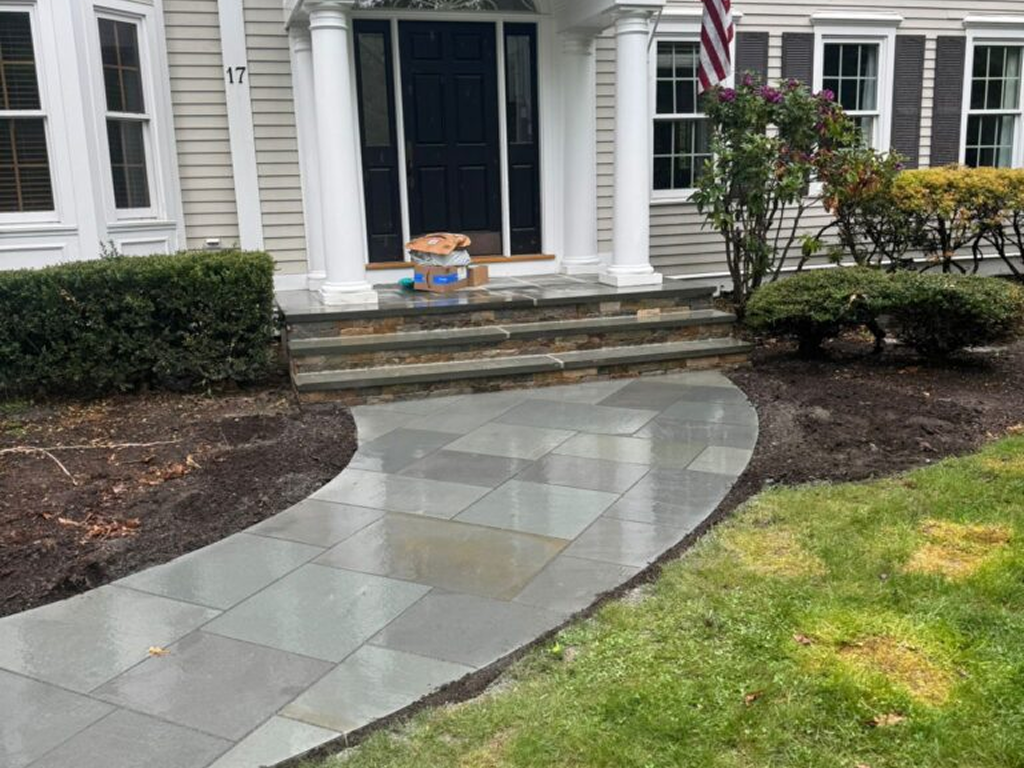
- The apron: On many Dover lots the apron meets the sidewalk with very little room between the street and the house. How that transition is built affects both the drive and the walk, and we look at it closely.
Anyone who gives you a firm figure without having stood on your driveway is guessing. When the guess is wrong, the extra cost shows up later as shortcuts in the base.
Built for the Ground It Sits On
A flat, paved apron near the street isn’t the same project as four hundred feet of drive winding past ledge outcrops and under a tree canopy. We treat them differently because the ground asks for it. On Dover lots, that often means more excavation, more attention to where water wants to go, and a route that respects setbacks rather than fighting them. Getting that part right the first time is what keeps you from redoing it in five years.
Edges, Frost, and What Happens Every Winter
New England freeze-thaw cycles are the quiet reason driveway edges crumble and cracks widen year after year, and a long Dover drive with more exposed edge than a short urban apron feels this more, not less. Water gets into small cracks, freezes, expands, and widens them, then does it again the next cold snap. Unsupported edges, especially where there’s no curbing or hard shoulder, are the first place this shows. We build and finish edges with that cycle in mind rather than treating it as a surprise every spring.
FAQs
Do you need to see the property before giving a price?
Yes. On a Dover lot especially, grade, ledge, tree roots, and setback lines all affect cost, and none of that shows up in a phone call. We walk the full length of the drive before quoting anything.
Can an overlay fix a long driveway that's cracking everywhere?
Only if the base underneath is still sound. If the cracking is coming from a failed or inadequate base, an overlay will crack again within a season or two. We'll tell you which one your drive actually needs.
How does a conservation setback affect the driveway work?
It can limit how much we're able to regrade, widen, or reroute the drive near a wetland buffer. We identify this during the site visit so the design works within those lines rather than against them.
When can work actually start?
Paving is seasonal in Massachusetts, and a long wooded drive needs workable ground before equipment can get down it safely. We'll give you a realistic timeframe once we've seen the site rather than a fixed date up front.
Call us
If your Dover driveway has reached the end of its life, or you are putting one in for the first time, call (413) 337-3772. We will arrange a time to see the site, measure it, and tell you what it needs.