
Driveway Paving in Millis, MA
A lot of driveways in Millis sit well off the road, running past tree lines and mature yards to a house that’s been there for decades. When that surface starts to crack, heave, or pool water after rain, the fix isn’t always obvious from the driver’s seat. Some of these drives were built thin to begin with, laid over whatever base was handy at the time. Others had a sound base once but it’s been pushed around by root growth and years of freeze-thaw. Either way, you’re looking at a decision: patch it, overlay it, or take it out and start over. That decision depends on what’s underneath, not what you can see on top.
When we come out to a Millis property, the first thing we’re doing is walking the length of the drive, not just looking at the worst section. On a long rural lot that might be two hundred feet or more, and the condition at the top of the drive near the road can be completely different from the condition near the garage. We’re checking for low spots where water sits, checking how close tree roots are running to the edges, and checking whether the existing surface is cracked all over or just failing in one or two places. We measure width, length, and grade, and we note where the drive crosses any wet or shaded ground, since wooded frontage keeps a surface damp longer after rain or snowmelt than an open lot would.
The asphalt or finish surface is the part everyone notices, but it’s the base underneath that decides whether a driveway lasts or falls apart in a few seasons. On the sandier, well-drained soil you find in parts of Millis, a properly built gravel base sheds water and stays stable through winter. On lots with heavier clay pockets or a high water table, that same base can hold water and heave when it freezes, which is exactly what cracks a driveway from below instead of from traffic on top. This is also where root systems from large oaks and maples come into play. Roots that run under a driveway will lift it unevenly over time no matter how good the surface material is. A contractor who only talks about asphalt thickness or finish color isn’t addressing the part of the job that actually matters most for a rural, tree-lined lot like the ones common in Millis.
Drainage deserves its own look, separate from the base question. A driveway that’s pitched wrong, or one that was never pitched at all, will funnel water toward a garage slab or a foundation instead of away from it. On sloped Millis lots this can mean real damage over time, not just a puddle that’s annoying to walk through. We look at where the water goes once it leaves the paved surface, whether that’s a swale along the edge, a drain tied into town infrastructure, or just low ground that was never graded to carry runoff anywhere useful. Fixing the pitch during a repave often costs little extra over matching the old grade, but it has to be planned before paving starts, not patched in afterward.


What Our Clients Say
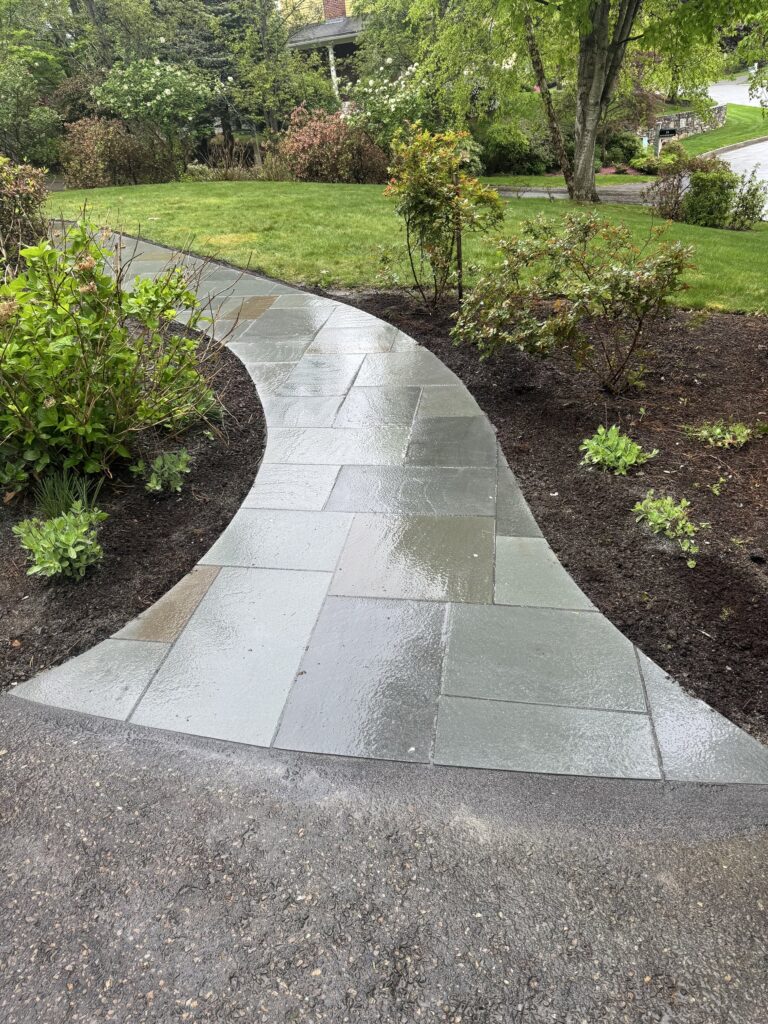
Full Replacement or Overlay
An overlay works when the base below is still sound and the problems are limited to surface wear – fading, minor cracking, or a worn top layer. Laying new asphalt over a broken or heaving base just buries the problem, and it comes back faster the second time, often within a season or two. If a Millis driveway has alligator cracking across most of its length, visible sinking in low spots, standing water after rain, or edges that have crumbled away from years of snowplow contact, that’s a base failure, and it calls for full replacement rather than a surface fix.
- Overlay: fast, lower cost, best for sound bases with cosmetic wear
- Full replacement: addresses drainage, grading, and base issues for a lasting fix
What Drives the Price
Square footage is only one part of the cost. Depth of excavation, how much old material has to come out and be hauled away, and how easily a paver and roller can access the site all factor in. A long Millis driveway with a narrow tree-lined approach takes more care and more time to get equipment in than a short, open apron near the street. Grade and drainage matter too. A drive that slopes toward a garage or basement entrance needs grading work to carry water away, and that adds to the scope. The apron where the drive meets the road is its own consideration, since work there depends on whether the road is town-accepted or a private way. Any contractor willing to quote a firm price without walking the site first is pricing blind.

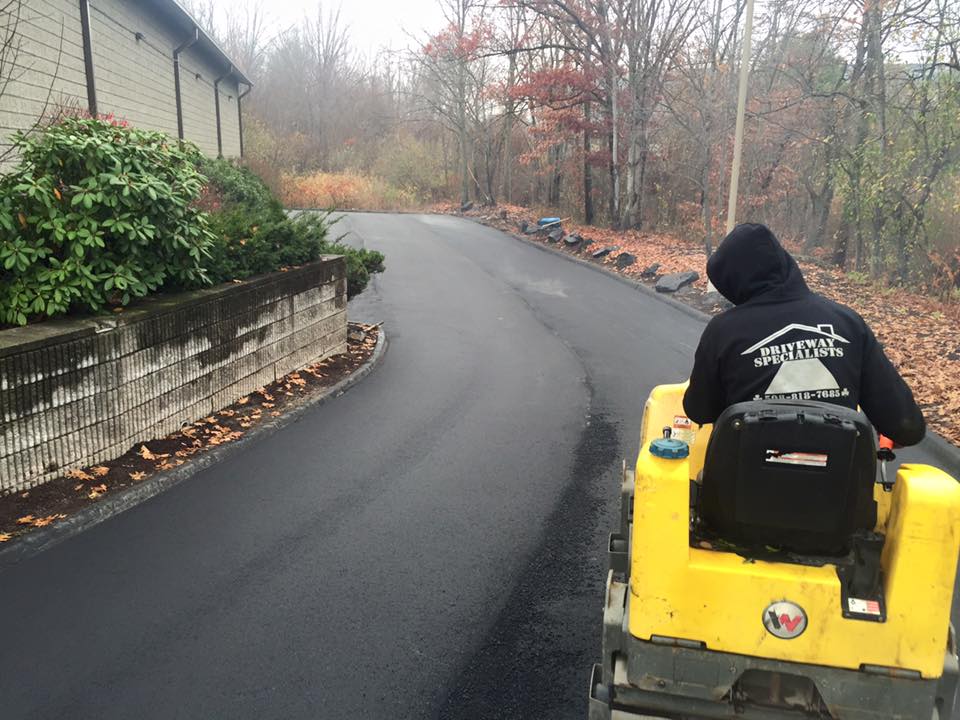
Scheduling Around New England Weather
Paving in Massachusetts runs on a seasonal window, generally from late spring through early fall once temperatures hold steady enough for asphalt to compact and cure properly. Demand in that window is heavy across Norfolk County, and Millis homeowners competing for the same crews and good weather days means booking early gives you real say over timing instead of taking whatever slot is left once fall rolls around.
Once your project is scheduled, plan for the logistics: keeping vehicles off the new surface for the stretch of time the crew specifies, since cure time shifts with humidity, temperature, and direct sun exposure that day. It also helps to think ahead about driveway access, trash pickup, and deliveries during that window.
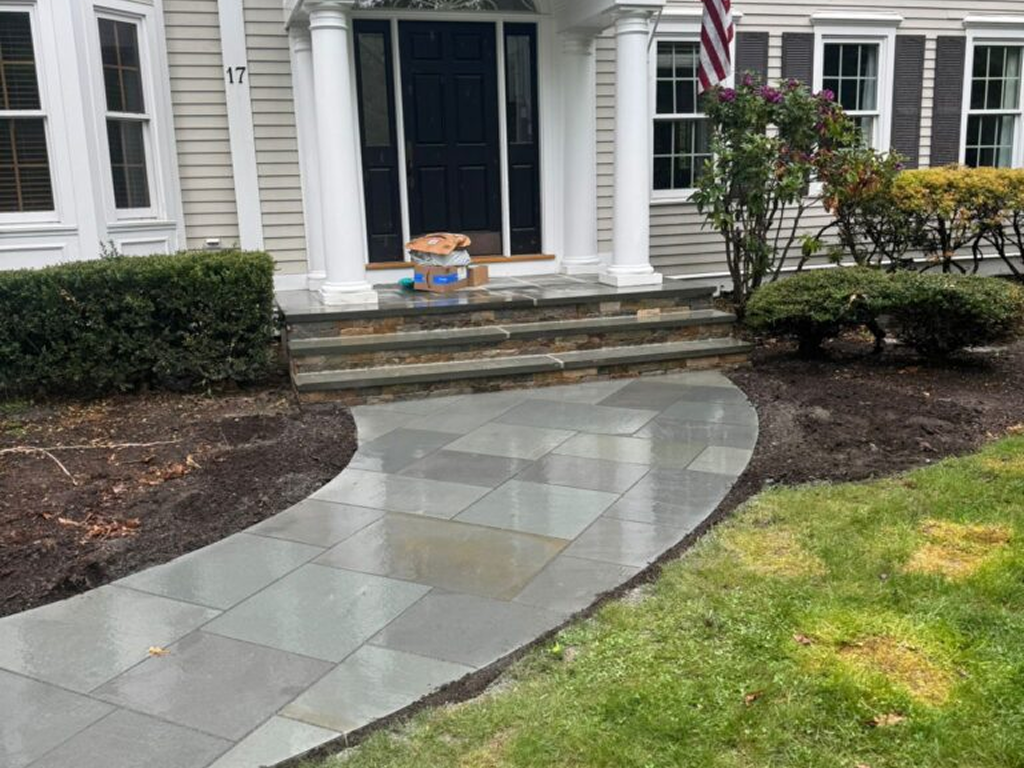
What drives the price
Several things set the cost of a driveway, and each one is visible only on site.
- Square footage : The area to be paved, plus any widening, turnaround or parking pad you want added.
- Depth of excavation : How far down the old material has to come out, and how much of the base has to be rebuilt.
- Material removed : The old asphalt has to be hauled away, and the amount depends on what is there.
- Access: A paver, a roller and delivery trucks all need to get in and turn around. Tight Millis frontages can limit what equipment fits, which changes how the work is staged.
- Grade: A steep drive is harder to prepare, harder to compact and harder to drain correctly.
- Drainage: If water needs to be moved off the drive and away from the house, that work is part of the job.
- The apron: On many Millis lots the apron meets the sidewalk with very little room between the street and the house. How that transition is built affects both the drive and the walk, and we look at it closely.
Anyone who gives you a firm figure without having stood on your driveway is guessing. When the guess is wrong, the extra cost shows up later as shortcuts in the base.
What to Expect During the Work
Old material gets excavated and hauled off, the base gets rebuilt or repaired depending on what the site visit found, and grading is set to move water away from the house and any low spots along the drive. On wooded lots, we also pay attention to root lines near the edges so the new base isn’t sitting on something that will shift it again in a few years. Access for equipment is planned before the crew arrives, which matters most on narrower country-road frontages.
Getting Your Drive Ready
Before the crew arrives, clear vehicles from the drive and any items stored along its edges. Let us know about sprinkler lines, buried wiring, or anything else below grade that isn’t obvious from a walk-through. If your drive runs through low, shaded ground, mention it when you call, since that affects both the base work and the schedule.
Call for a Site Visit
A Millis driveway that’s failed won’t get better on its own, and guessing at the cause from the driveway’s surface alone rarely gets it right. We’ve been building and replacing driveways across Norfolk, Middlesex, and eastern Worcester counties since 1988, and a site visit is the only honest way to know whether your drive needs an overlay or a full rebuild. Call Driveway Specialists at (413) 337-3772 to set up a time to walk your property.
FAQs
How do I know if my Millis driveway needs full replacement instead of an overlay?
If the problems are limited to surface wear and the base underneath is intact, an overlay can work. Widespread cracking, visible sinking, or crumbling edges usually point to a failed base, which an overlay won't fix and will just cover up temporarily.
Do tree roots really affect a driveway that much?
Yes. Mature oaks and maples common on Millis lots send roots under driveways, and as those roots grow they lift the surface unevenly. This is a common cause of heaving on wooded, rural properties, separate from ordinary wear or frost damage.
Can you give a price over the phone?
Not a firm one. Price depends on excavation depth, how much old material has to be removed, site access, grading needs, and drainage, all of which require a site visit to assess accurately.
When is the best time to book paving work in Millis?
Paving is seasonal in Massachusetts, and the window fills up with demand across the area. Booking early gives you more flexibility on scheduling rather than being limited to whatever dates remain later in the season.
What should I do to prepare for the crew's arrival?
Move vehicles off the driveway, clear items from along its edges, and tell us about anything below grade like sprinkler lines or buried wiring. If part of the drive runs through shaded or low ground, mention that when you call.
Call us
If your Millis driveway has reached the end of its life, or you are putting one in for the first time, call (413) 337-3772. We will arrange a time to see the site, measure it, and tell you what it needs.