
Parking Lot Paving in Lexington, MA
A parking lot in poor condition is not a cosmetic problem. It is a trip hazard waiting on an incident report, a complaint from a tenant or customer, a question your insurer will eventually ask, and the first thing anyone visiting the property sees before they reach the door. For a property manager, business owner, or HOA trustee in Lexington, that ordering matters more than how the asphalt looks.
Most lots we quote in Lexington can’t simply close for a week. A medical office on a side street off the center, a condo association lot serving residents who need to park every night, a retail plaza with deliveries on a schedule – none of these can go dark. Work gets phased: half the lot repaved while the other half stays open, overnight paving where traffic allows it, or weekend scheduling timed around the property’s actual use. Deliveries and tenant access get mapped before the first saw cut, not worked out on the day.
What a commercial scope covers
A residential driveway is one surface with one slope. A commercial lot is a system. Traffic flow and circulation decide where cars enter, queue, and exit without conflict. Accessible spaces and access aisles have to be placed and sized correctly, not just repainted where they used to be. Striping and signage need to be legible and consistent, not an afterthought once the asphalt is down. Catch basins and drainage structures have to be protected and reset to grade, not paved over and forgotten. Curbing, islands, and the loading area – which takes more wheel load and more turning stress than any other part of the lot – all get assessed separately, because they fail differently and on different timelines.
Before any quote, we map the lot by condition, not by guesswork. Alligatored sections, birdbath areas holding water, edges breaking up near catch basins, and the loading zone showing rutting all get flagged separately, because they usually need different treatment. An overlay across a lot with mixed failure is a short-term patch dressed up as a repave – it looks even for a season and then the untreated base failures come straight back through the new surface. We’ll tell you where that’s the case rather than sell you the easy version.
Base condition drives almost everything about cost and longevity here. A lot that was built on thin or poorly compacted stone will keep reflecting cracks no matter how many times it gets a new surface laid over it. In some sections, full-depth reclamation or a base rebuild in the worst areas costs less over ten years than repeated overlays that keep failing in the same spots. We’ll show you where a mill-and-overlay is genuinely sufficient and where it isn’t, with the reasoning laid out rather than assumed.


What Our Clients Say

Keeping the lot open while we work
A commercial lot cannot simply close. Tenants need to get home, staff need to get in, and deliveries arrive whether or not you are paving. The job is planned around that.
Half-and-half
We work the lot in sections, so one part is always usable while the other is down. Sections are cut off with clear barriers and signage, and we move the work across once the first section is ready for traffic. It takes more planning than closing everything, but it is usually the only workable approach for an occupied property.
Overnight and weekend work
Some lots have a busy period that cannot be disturbed, such as a retail or office frontage or a multi-unit building at the morning rush. We can schedule work outside those hours. We agree the sequence with you in advance so nobody finds a closed lot without warning.
Access and deliveries
Before work starts, we ask what has to keep moving:
- Which entrance and which bays do delivery vehicles use?
- Where do waste and recycling trucks stop, and when?
- Do any tenants or residents need guaranteed access for mobility reasons?
- Where can staff and visitors park while a section is closed?
The answers set the order of the work. A loading area that is busy at a known hour gets worked when it is quiet.
What a commercial scope includes
A commercial lot is not a large driveway. It carries different traffic and has different obligations, and the scope reflects that.
- Traffic flow and circulation: How vehicles enter, turn and leave decides where the surface wears out. We look at the lot as a circulation pattern, and we raise it if the layout is causing the damage.
- Accessible spaces and access aisles: These are part of the scope, not an afterthought, and they are laid out and marked as part of the work.
- Striping and signage: Fresh surface needs fresh markings, and the markings are what tell drivers where to go.
- Catch basins and drainage structures: A basin that is silted up or sitting at the wrong height will undo new paving. We check them and repair them as part of the job.
- Curbing and islands: Broken or displaced curbing channels water the wrong way and gives plows something to catch. It is dealt with before the surface goes down.
- The loading area: This is where the heaviest vehicles turn, stop and sit, and it takes the most punishment on any lot. It often needs different treatment from the rest.
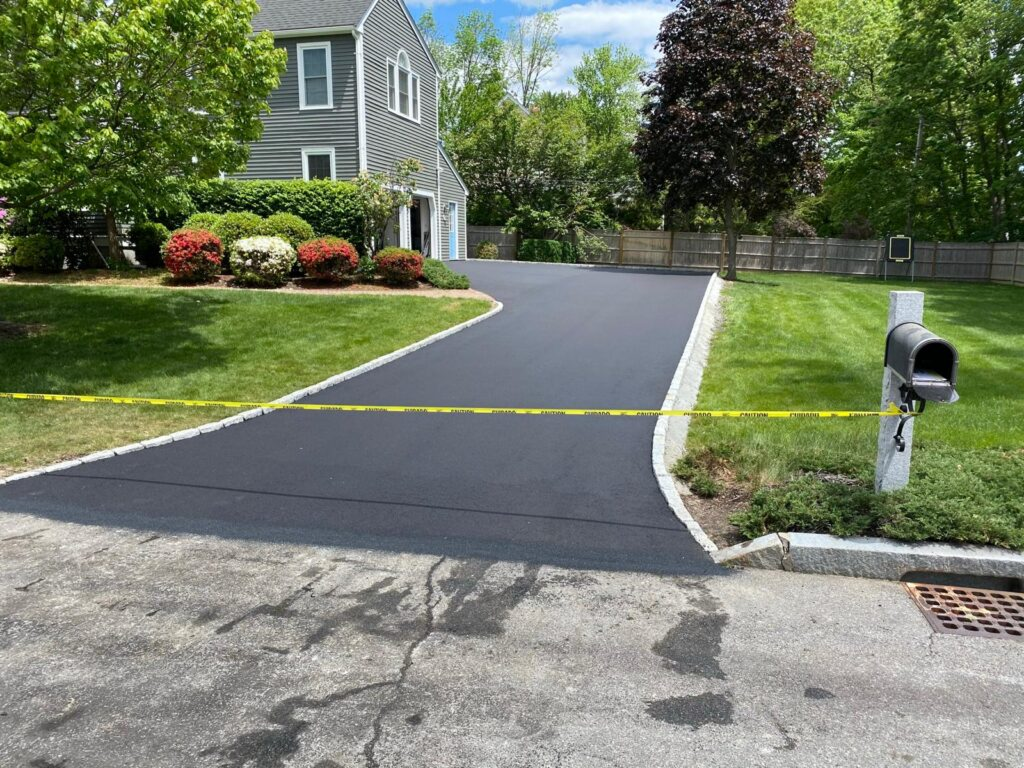

Assessment before we quote
We do not price a lot from the road. We walk it, because the quote depends on what is actually wrong and where.
How failure is mapped
We mark the lot area by area: where the surface is cracked but sound, where it has been undermined from below, where water stands, and where edges have broken away. Each of those has a different cause and a different fix.
Why a lot is zoned
A lot is almost never one problem, so one price for the whole thing is usually wrong. Areas in good shape may only need repairs and a new coat. Areas that have failed underneath need to be taken out and rebuilt. Drainage trouble spots need to be fixed at the source. Most lots need a mix of these. We would rather tell you that plainly than quote a single figure that hides it.
One honest warning: a single overlay across sections that have failed underneath is a short-term decision. The overlay follows the surface below it, so the cracks and low spots come back through. It can be the right call when money is tight and the property will change hands or be redeveloped. It should be a choice you make knowingly, not one made for you by a flat quote.Most lots need a mix of these. We would rather tell you that plainly than quote a single figure that hides it.
Documentation you can put in front of others
A manager or trustee usually has to justify the spend to someone else. We give you something to show them:
- A written scope that lists each zone and what will be done to it
- A marked-up plan of the lot showing the zones, sections and phasing
- A clear sequence of work, so the board or owner can see how the lot stays in use
- Photographs of existing conditions before work starts, which are useful if a question comes up later
You can pass these to an owner, a board or an insurer without having to translate them.
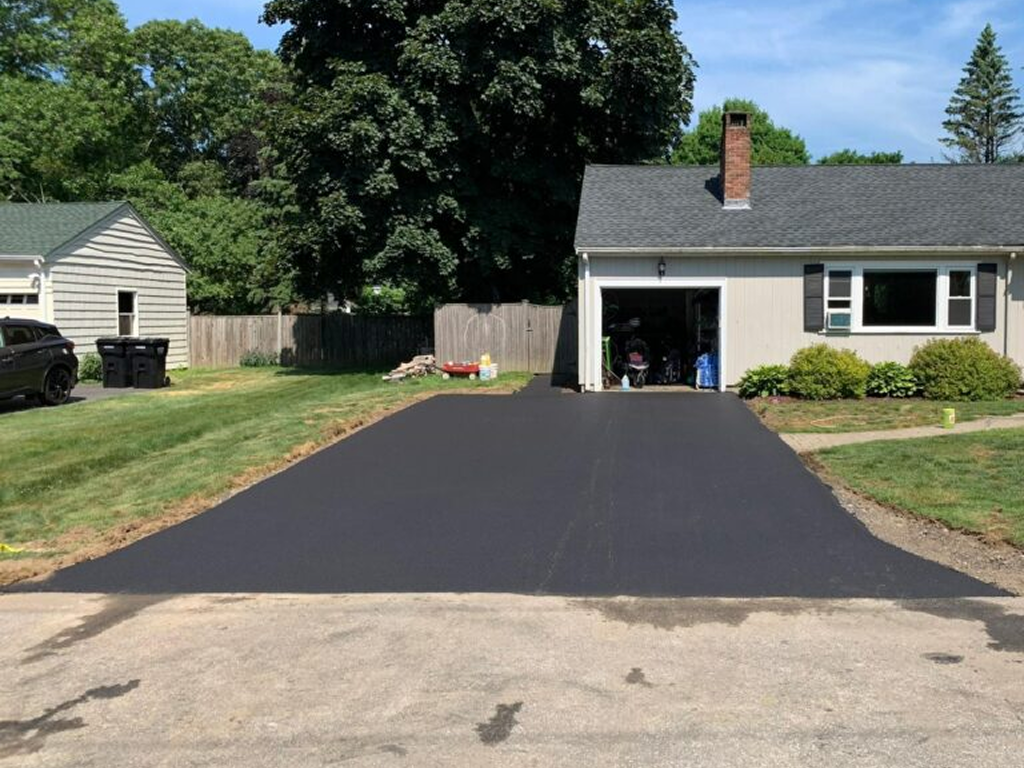
Lexington properties this applies to
Lexington is not a place of large, flat parking fields. The properties here have particular problems, and the work follows from them.
Established commercial lots
Plazas and professional buildings near the center sit on lots built decades ago, often with drainage and base work never upgraded since. Phased repaving lets tenants keep operating through the work.
Condo and HOA lots
Shared parking fields serving multi-unit buildings carry year-round resident traffic with no slow season. Scheduling has to work around actual occupancy, not an assumed quiet period.
Office and medical lots near historic areas
Lots close to Lexington center often sit on tighter frontages with mature trees overhead, so root heave and shaded, damp surfaces are common alongside the usual wear from daily visitor traffic.
Frequently Asked Questions
Can our parking lot stay open during repaving?
In most cases, yes. We phase the work in sections, often overnight or over a weekend, so tenants, residents, or customers still have access while the rest of the lot is being repaired.
Does the whole lot need the same treatment?
Usually not. We map the lot by failure type first – alligatoring, birdbaths, edge breakup, loading zone rutting – and most lots need a mix of repair, overlay, and full-depth reconstruction rather than one blanket fix.
What documentation do you provide for a board or owner approval?
A written condition assessment broken down by area, a phased scope of work with options, and pricing structured so it can support a capital request, a board line item, or an insurance conversation.
Do you handle striping, signage, and accessible spaces?
Yes. Commercial scopes include traffic flow layout, accessible spaces and access aisles, striping, and signage, not just the asphalt surface itself.
How do catch basins and drainage structures get handled?
They're identified before paving starts and protected or reset to grade as part of the work, rather than paved over and left to cause ponding or structural damage later.
We treat it as one lot with two users. The written scope states what is done and where, and phasing keeps both sides able to get in and out. That gives you something concrete to agree on before anyone commits to the cost.
Next step
Call us on (413) 337-3772. Tell us about the lot, who uses it and what has to keep running. We will arrange a walk of the property and give you a zoned scope and quote you can take to your owner, board or insurer.