
Parking Lot Paving in Littleton, MA
A deteriorating lot is a trip hazard before it is anything else. Then it is a complaint from a tenant or a customer, a question your insurer asks after someone goes down near a pothole, and the first thing a visitor sees before they reach your door. For a property manager, business owner, or HOA trustee in Littleton, a parking lot is a liability line and an impression line at the same time, and both keep running whether or not the pavement gets fixed.
Most lots here don’t close for repair in one shot, and they shouldn’t have to. We work lots in sections: half the spaces down while the other half stays open, overnight passes on a loading area, or a weekend push on a lot that’s quiet Saturday and Sunday. Deliveries, trash pickup, and tenant access get mapped before milling starts, not worked around afterward. Tenants and customers get notice ahead of time, with signage directing them to open spaces, so a phased job doesn’t turn into a parade of confused drivers circling the building.
A residential driveway is one surface. A commercial lot is a system: traffic flow in and out, circulation around the building, accessible spaces and the access aisles next to them, striping and signage that has to meet layout requirements, catch basins and the drainage structures tied into them, curbing, islands, and the loading or dumpster area that takes more weight and more turning stress than anywhere else on the property. Each of those pieces fails on its own schedule, which is why a lot can look fine from the street and still have a drainage structure backing up underneath a low corner.
We don’t price a lot off one look. Failure gets mapped section by section – alligatored areas near heavy turning radii, standing water at low points, edges breaking up where plows have been catching a lip for years. Most lots in Littleton need a mix: mill-and-overlay in the worst zones, patching in others, and full reconstruction where the base itself has failed under long-term water. A single overlay across all of it covers the cracking for a season and nothing more; we’ll say so when that’s what’s being asked for.
Littleton’s freeze-thaw cycles are hard on asphalt that’s already carrying standing water, and lots with marginal drainage tend to show it first at the low corners and along curb lines where meltwater has nowhere to go. We check grade and outlets as part of the walk, not as an afterthought, because a resurfaced lot sitting on the same bad drainage will crack again in the same spots within a couple of winters. Base failure and surface failure look similar from a windshield but need different fixes, and mixing them up is the most common way a lot gets re-paved twice in five years instead of once in fifteen.
A typical commercial scope includes:
- Section-by-section condition mapping before any pricing is set
- Mill-and-overlay, patching, or reconstruction, applied where each is actually warranted
- Drainage and catch basin review tied to grading, not just surface patching
- Striping, accessible space layout, and signage brought back to current requirements
- Phased scheduling built around deliveries, trash pickup, and tenant or customer access


What Our Clients Say
Keeping the lot open while we work
A commercial lot cannot simply close. Tenants need to get home, staff need to get in, and deliveries arrive whether or not you are paving. The job is planned around that.
Half-and-half
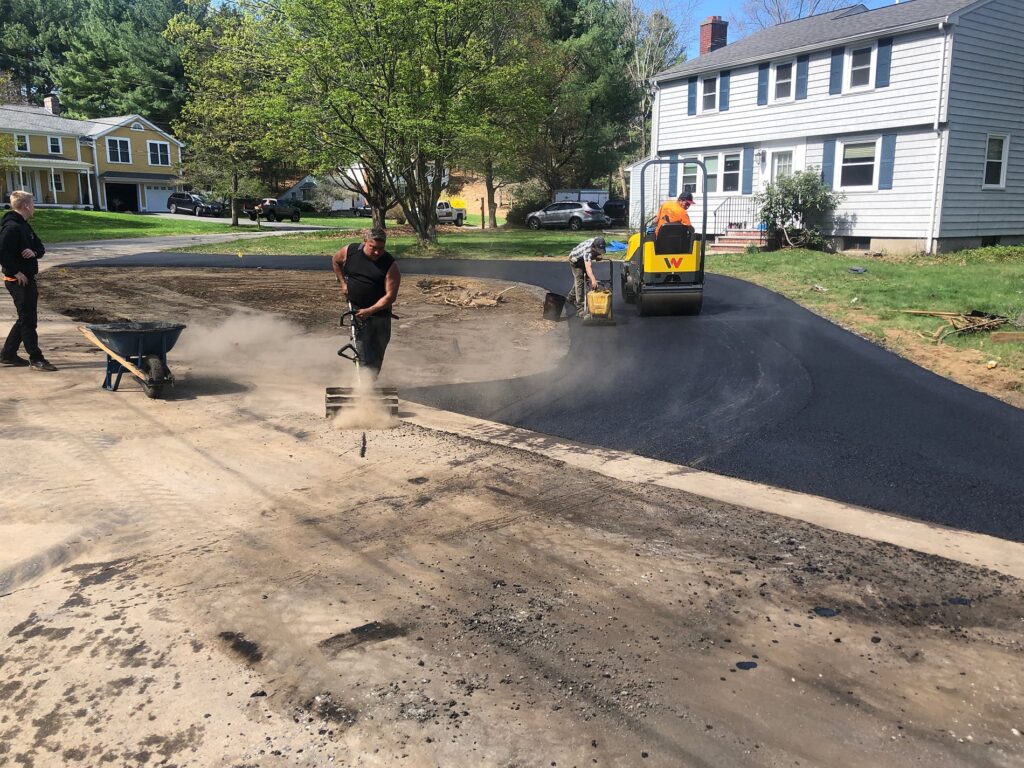
We work the lot in sections, so one part is always usable while the other is down. Sections are cut off with clear barriers and signage, and we move the work across once the first section is ready for traffic. It takes more planning than closing everything, but it is usually the only workable approach for an occupied property.
Overnight and weekend work
Some lots have a busy period that cannot be disturbed, such as a retail or office frontage or a multi-unit building at the morning rush. We can schedule work outside those hours. We agree the sequence with you in advance so nobody finds a closed lot without warning.
Access and deliveries
Before work starts, we ask what has to keep moving:
- Which entrance and which bays do delivery vehicles use?
- Where do waste and recycling trucks stop, and when?
- Do any tenants or residents need guaranteed access for mobility reasons?
- Where can staff and visitors park while a section is closed?
The answers set the order of the work. A loading area that is busy at a known hour gets worked when it is quiet.
What a commercial scope includes
A commercial lot is not a large driveway. It carries different traffic and has different obligations, and the scope reflects that.
- Traffic flow and circulation: How vehicles enter, turn and leave decides where the surface wears out. We look at the lot as a circulation pattern, and we raise it if the layout is causing the damage.
- Accessible spaces and access aisles: These are part of the scope, not an afterthought, and they are laid out and marked as part of the work.
- Striping and signage: Fresh surface needs fresh markings, and the markings are what tell drivers where to go.
- Catch basins and drainage structures: A basin that is silted up or sitting at the wrong height will undo new paving. We check them and repair them as part of the job.
- Curbing and islands: Broken or displaced curbing channels water the wrong way and gives plows something to catch. It is dealt with before the surface goes down.
- The loading area: This is where the heaviest vehicles turn, stop and sit, and it takes the most punishment on any lot. It often needs different treatment from the rest.
Assessment before we quote
We do not price a lot from the road. We walk it, because the quote depends on what is actually wrong and where.
How failure is mapped
We mark the lot area by area: where the surface is cracked but sound, where it has been undermined from below, where water stands, and where edges have broken away. Each of those has a different cause and a different fix.
Why a lot is zoned
A lot is almost never one problem, so one price for the whole thing is usually wrong. Areas in good shape may only need repairs and a new coat. Areas that have failed underneath need to be taken out and rebuilt. Drainage trouble spots need to be fixed at the source. Most lots need a mix of these. We would rather tell you that plainly than quote a single figure that hides it.
One honest warning: a single overlay across sections that have failed underneath is a short-term decision. The overlay follows the surface below it, so the cracks and low spots come back through. It can be the right call when money is tight and the property will change hands or be redeveloped. It should be a choice you make knowingly, not one made for you by a flat quote.Most lots need a mix of these. We would rather tell you that plainly than quote a single figure that hides it.
Documentation you can put in front of others
A manager or trustee usually has to justify the spend to someone else. We give you something to show them:
- A written scope that lists each zone and what will be done to it
- A marked-up plan of the lot showing the zones, sections and phasing
- A clear sequence of work, so the board or owner can see how the lot stays in use
- Photographs of existing conditions before work starts, which are useful if a question comes up later
You can pass these to an owner, a board or an insurer without having to translate them.
Littleton properties this applies to
Littleton is not a place of large, flat parking fields. The properties here have particular problems, and the work follows from them.
Rural and semi-rural lots
Many Littleton properties sit on former farmland or wooded parcels, with lots built in stages as the business grew. Phasing a repair around an active site is easier when the layout already has room to work section by section.
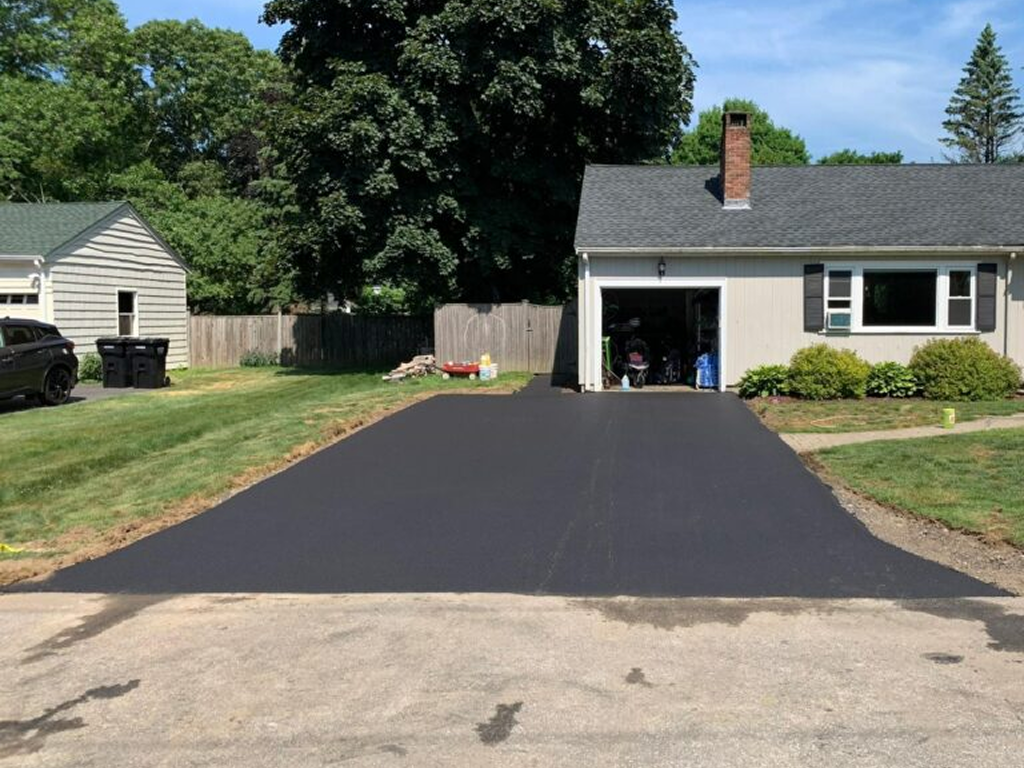
Long access drives
Sites set back from the road on a long private drive need the entrance and the lot treated as one project, since grade and drainage along the drive affect how water reaches the parking area itself.
Gravel-to-asphalt conversions
A lot of commercial and institutional lots here started as gravel. Converting to asphalt means building a real base first; sandy native soil underneath makes that base more stable than clay-heavy ground would allow.
Frequently Asked Questions
Can our lot stay open during paving?
In most cases, yes. We split the work into sections so half the lot stays usable while the other half is milled, repaired, or overlaid. Loading areas and main entrances are scheduled around your delivery and business hours wherever possible.
How do you decide what each section of the lot needs?
We walk and map the lot before quoting – noting where the base has failed, where water sits, and where traffic load has done the most damage. Sections get grouped by what they actually need: patch, overlay, or full reconstruction, rather than one price for the whole surface.
Can you provide documentation for our board or insurer?
Yes. We can put together a written condition assessment and scope breakdown that a trustee, property manager, or owner can present to a board or insurer as part of a capital planning or claims discussion.
Do you handle striping and ADA-compliant layout?
Yes. Striping, signage, accessible space counts, and access aisle placement are part of the scope on any commercial lot we repave, not an add-on billed separately after the fact.
What kinds of properties in Littleton do you work on?
Office and light-industrial sites, churches and schools, HOA and condo association lots, and rural or semi-rural properties converting from gravel to asphalt. The approach depends on the site's grade, soil, and how the lot is actually used day to day.
We treat it as one lot with two users. The written scope states what is done and where, and phasing keeps both sides able to get in and out. That gives you something concrete to agree on before anyone commits to the cost.
Next step
Call us on (413) 337-3772. Tell us about the lot, who uses it and what has to keep running. We will arrange a walk of the property and give you a zoned scope and quote you can take to your owner, board or insurer.