
Parking Lot Paving in Sherborn, MA
A deteriorating lot is a liability before it’s an eyesore. Potholes and heaved pavement are a trip hazard for visitors and staff, a complaint that lands on a property manager’s desk, a line item an insurer will eventually ask about, and the first thing a customer or family sees when they arrive. In Sherborn, that lot is rarely a simple flat field. It’s an estate forecourt reached by a long private way through woods, an institutional lot that fills twice a day and sits empty the rest, or a working farm or equestrian property where trailers and delivery trucks do more damage than cars ever would.
None of those are driveway jobs scaled up. They need a commercial scope, commercial-grade materials, and a crew that’s done this before on properties with the same constraints — long frontages, well-heeled neighbors, conservation land nearby, and roads that were never built to handle heavy equipment traffic without some planning.
What’s in scope, and what isn’t
A residential drive needs a sound base and a clean surface. A commercial lot needs that plus traffic flow and circulation that actually works for the vehicles using it, accessible spaces and access aisles placed correctly, striping and signage that holds up through a New England winter, catch basins and drainage structures sized for the lot’s runoff, curbing and islands where they’re needed, and a loading or drop-off area built to take the heaviest, most repetitive punishment on the property. We don’t re-explain base preparation here; it’s covered in detail on our driveway paving page, and the principles carry over. What changes at commercial scale is everything built on top of that base: compaction specs, drainage capacity, and the depth of asphalt needed under repeated heavy loads rather than occasional passenger cars.
Before we quote anything, we assess. That means walking the lot, mapping where the pavement has actually failed and why, and being honest that most lots need a mix of treatments rather than one price for one fix. An overlay across sections that failed for different reasons is a short-term decision dressed up as a long-term one. Some zones need full reconstruction down to subgrade. Others just need resurfacing or targeted repair, covered on our asphalt repair page. The assessment tells you which is which before money moves, and it typically looks at:
- Drainage patterns and whether existing catch basins are adequate or undersized
- Base failure versus surface-only cracking and alligatoring
- Striping, ADA compliance, and signage that may no longer meet current code
- High-wear zones — entrances, loading areas, turning radii — that fail faster than the rest of the lot


What Our Clients Say
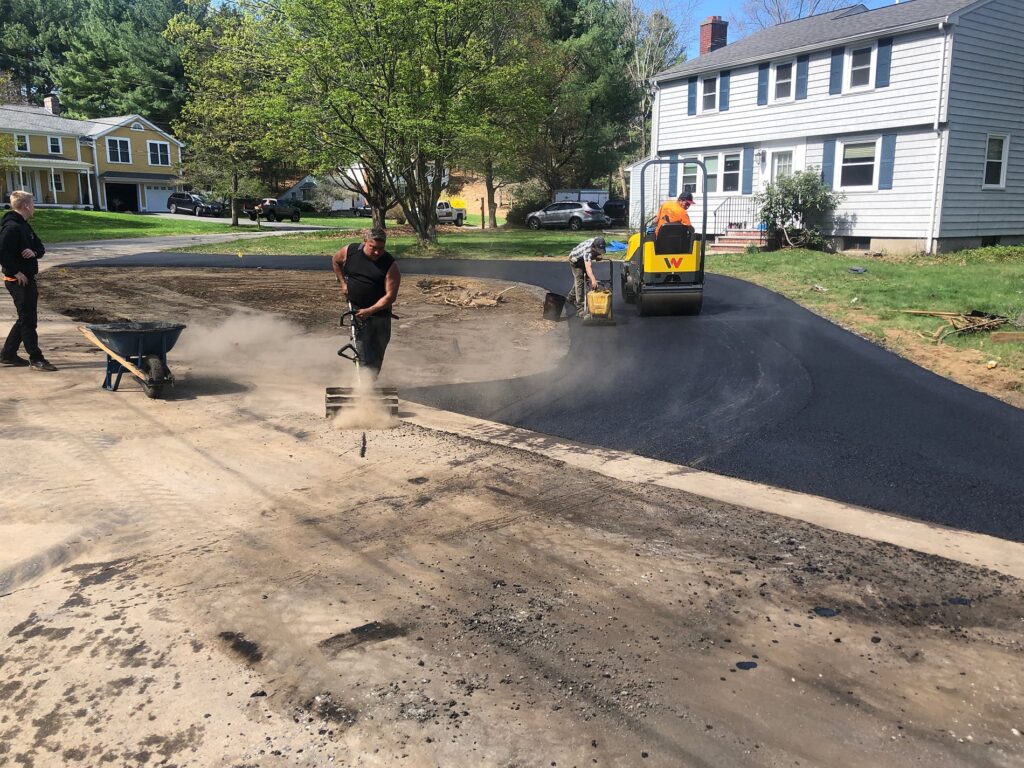
Keeping the lot open while we work
A commercial lot cannot simply close. Tenants need to get home, staff need to get in, and deliveries arrive whether or not you are paving. The job is planned around that.
Half-and-half
We work the lot in sections, so one part is always usable while the other is down. Sections are cut off with clear barriers and signage, and we move the work across once the first section is ready for traffic. It takes more planning than closing everything, but it is usually the only workable approach for an occupied property.
Overnight and weekend work
Some lots have a busy period that cannot be disturbed, such as a retail or office frontage or a multi-unit building at the morning rush. We can schedule work outside those hours. We agree the sequence with you in advance so nobody finds a closed lot without warning.
Access and deliveries
Before work starts, we ask what has to keep moving:
- Which entrance and which bays do delivery vehicles use?
- Where do waste and recycling trucks stop, and when?
- Do any tenants or residents need guaranteed access for mobility reasons?
- Where can staff and visitors park while a section is closed?
The answers set the order of the work. A loading area that is busy at a known hour gets worked when it is quiet.
What a commercial scope includes
A commercial lot is not a large driveway. It carries different traffic and has different obligations, and the scope reflects that.
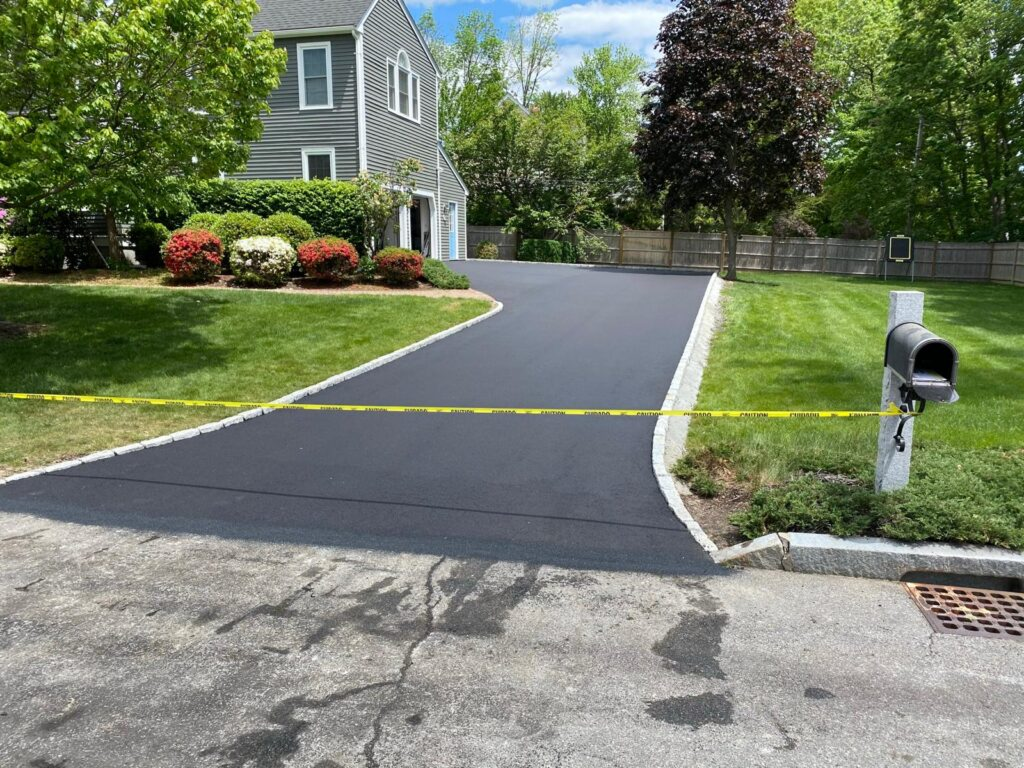
- Traffic flow and circulation: How vehicles enter, turn and leave decides where the surface wears out. We look at the lot as a circulation pattern, and we raise it if the layout is causing the damage.
- Accessible spaces and access aisles: These are part of the scope, not an afterthought, and they are laid out and marked as part of the work.
- Striping and signage: Fresh surface needs fresh markings, and the markings are what tell drivers where to go.
- Catch basins and drainage structures: A basin that is silted up or sitting at the wrong height will undo new paving. We check them and repair them as part of the job.
- Curbing and islands: Broken or displaced curbing channels water the wrong way and gives plows something to catch. It is dealt with before the surface goes down.
- The loading area: This is where the heaviest vehicles turn, stop and sit, and it takes the most punishment on any lot. It often needs different treatment from the rest.
Assessment before we quote
We do not price a lot from the road. We walk it, because the quote depends on what is actually wrong and where.
How failure is mapped
We mark the lot area by area: where the surface is cracked but sound, where it has been undermined from below, where water stands, and where edges have broken away. Each of those has a different cause and a different fix.
Why a lot is zoned
A lot is almost never one problem, so one price for the whole thing is usually wrong. Areas in good shape may only need repairs and a new coat. Areas that have failed underneath need to be taken out and rebuilt. Drainage trouble spots need to be fixed at the source. Most lots need a mix of these. We would rather tell you that plainly than quote a single figure that hides it.
One honest warning: a single overlay across sections that have failed underneath is a short-term decision. The overlay follows the surface below it, so the cracks and low spots come back through. It can be the right call when money is tight and the property will change hands or be redeveloped. It should be a choice you make knowingly, not one made for you by a flat quote.Most lots need a mix of these. We would rather tell you that plainly than quote a single figure that hides it.
Documentation you can put in front of others
A manager or trustee usually has to justify the spend to someone else. We give you something to show them:
- A written scope that lists each zone and what will be done to it
- A marked-up plan of the lot showing the zones, sections and phasing
- A clear sequence of work, so the board or owner can see how the lot stays in use
- Photographs of existing conditions before work starts, which are useful if a question comes up later
You can pass these to an owner, a board or an insurer without having to translate them.
Sherborn properties this applies to
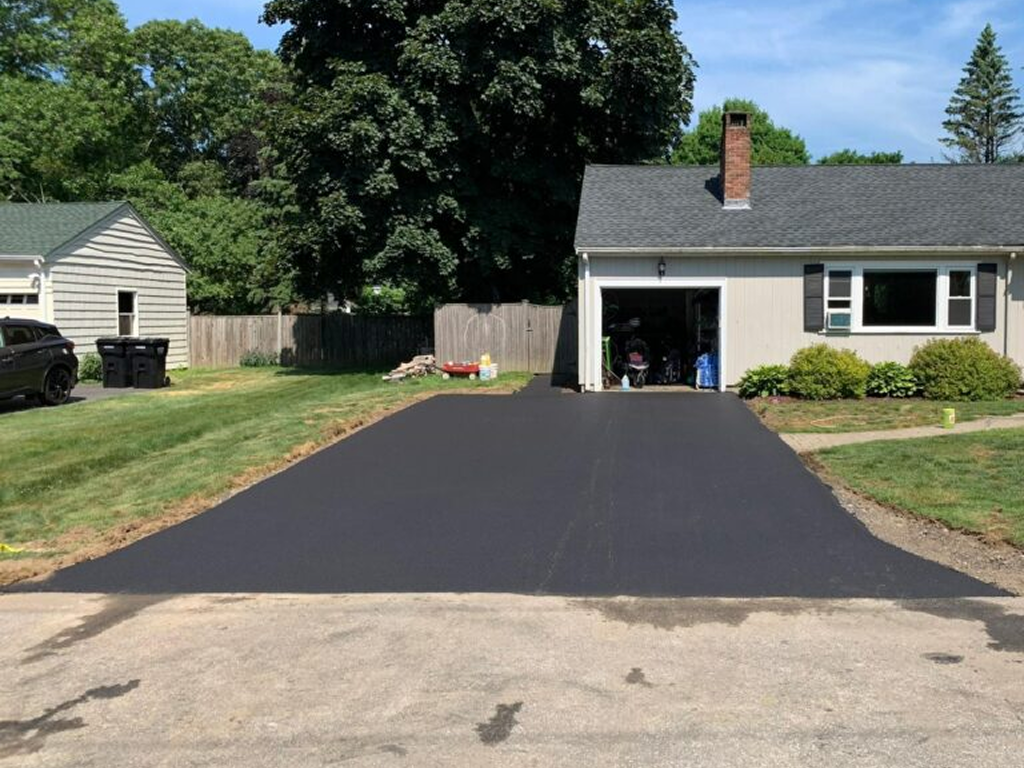
Sherborn is not a place of large, flat parking fields. The properties here have particular problems, and the work follows from them.
Estate and conservation properties
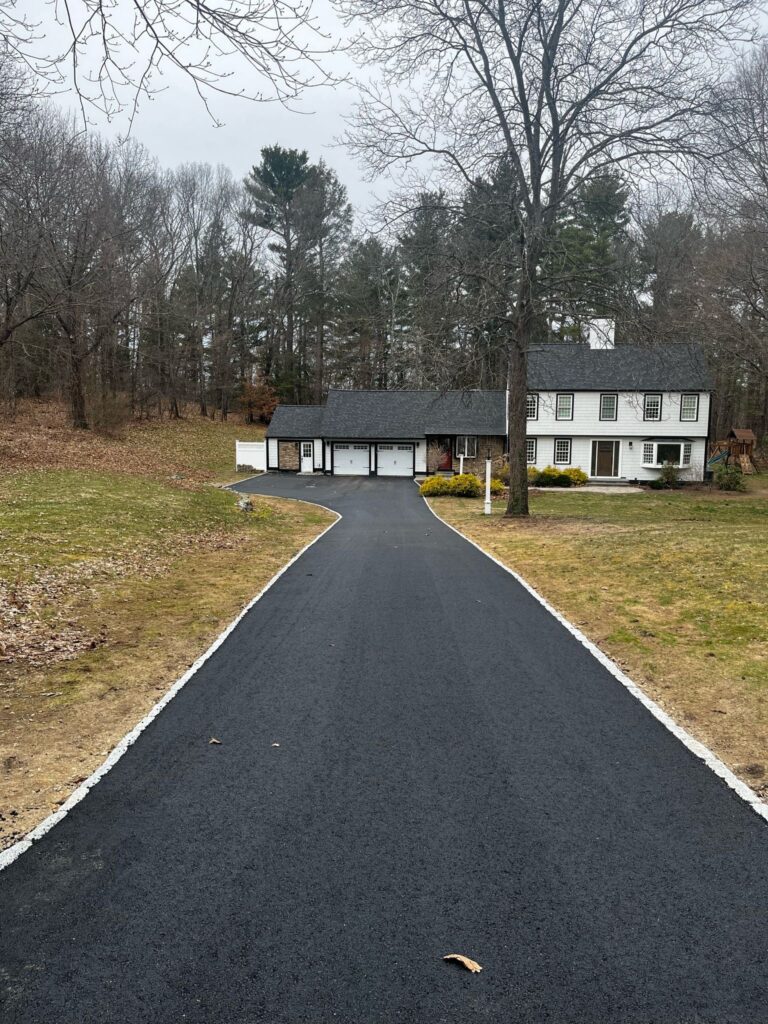
Large residential and institutional parcels bordering conservation land often have gravel or asphalt parking areas serving a main house, barn, or guest building, reached by a long private way through woods.
Schools, churches, and town-adjacent institutions
Sherborn's institutional lots carry heavy seasonal swings, from a quiet summer to a full lot at drop-off or service times, and they need clear circulation and accessible spaces that hold up under that swing.
Farms, equestrian facilities, and small commercial parcels
Working properties with mixed vehicle types, trailers, and delivery trucks need pavement structured for point loads and turning radii, not just a flat surface laid over the existing grade.
Frequently Asked Questions
Can the lot stay open while the work is done?
In most cases, yes. We phase the work in sections so part of the lot is always usable, schedule the heaviest work overnight or over a weekend, and coordinate with whoever manages deliveries or access so traffic keeps moving.
Does a gravel access drive need to be paved before the lot itself?
Not always, but it depends on condition. If the drive is rutted, washing out, or can't support the equipment and delivery trucks that will use the finished lot, it gets addressed as part of the same project rather than left to fail separately.
How do you handle ledge if it's close to the surface?
We find out during the assessment, before quoting, not during excavation. Shallow ledge changes drainage design and sometimes grading, and it's priced and planned for rather than treated as a surprise change order.
Who is responsible for the curb cut onto the public road?
If the lot connects to a town-accepted road, the curb cut and apron fall under the town's authority. If it's served by a private way, that's the owner's responsibility. We'll tell you which applies once we've seen the access.
What documentation do you provide for a board or insurer?
A written assessment that maps where the pavement has failed, why, and what each zone needs, plus a scope and phasing plan. That's the document a trustee or facilities manager can bring to a board meeting or an insurance conversation.
We treat it as one lot with two users. The written scope states what is done and where, and phasing keeps both sides able to get in and out. That gives you something concrete to agree on before anyone commits to the cost.
Next step
Call us on (413) 337-3772. Tell us about the lot, who uses it and what has to keep running. We will arrange a walk of the property and give you a zoned scope and quote you can take to your owner, board or insurer.