
Tar and Chip in Chestnut Hill, MA
Tar and chip gives you a textured, stone-finished surface rather than the smooth black of asphalt — closer to a country lane than a parking lot. It costs less than full-depth asphalt but wears differently and asks more of you in maintenance. For an older Chestnut Hill property with a short, ornamental approach, that trade can work well or poorly depending on the drive.
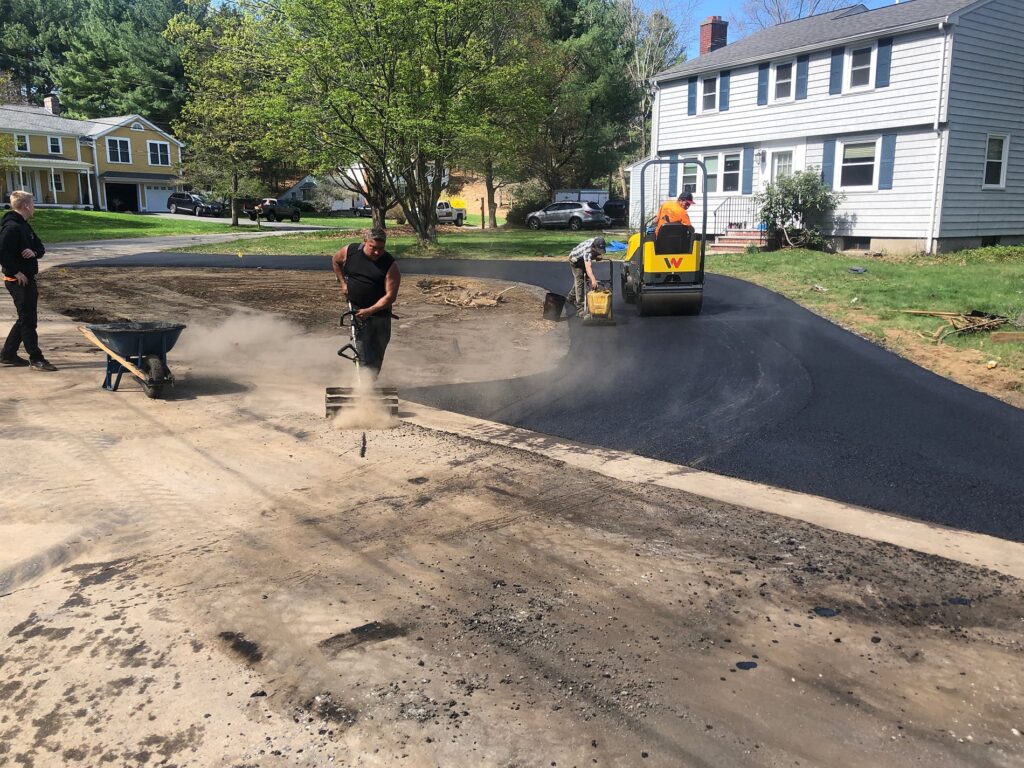
The build: a hot liquid binder goes down on the prepared base, then crushed stone is spread over it and rolled in immediately, bonding the stone before it cools into a textured aggregate surface rather than a flat, poured mat.
Where it earns its keep, and where it doesn't
Tar and chip suits a rural or estate-style approach, gives good traction on a sloped grade, and costs less than a comparable asphalt installation. It also ages differently — it doesn’t develop the long sheet cracks asphalt does, though the surface itself needs periodic topping as stone wears loose.
It’s the wrong call where you want crisp, straight edges against a formal entry, where the drive sees heavy daily traffic, or where a smooth surface matters for strollers, wheelchairs, or low-clearance cars. On those drives, asphalt or a bound paving surface is the better recommendation, and we’ll say so plainly before any work starts.
- The base is shaped and compacted. Everything above depends on it.
- The hot binder is sprayed across the surface.
- Stone is spread over the binder while it is still tacky.
- The stone is rolled in so it seats into the binder.
- Loose stone is swept or left to settle under traffic.
Maintenance, snow, and Chestnut Hill properties
Expect loose stone in the first few weeks as the surface beds in — sweeping it back into worn patches is normal upkeep, not a defect. Over time, tar and chip needs a fresh chip seal to stay tight, on a different schedule than asphalt sealcoating.


What Our Clients Say
What it does well
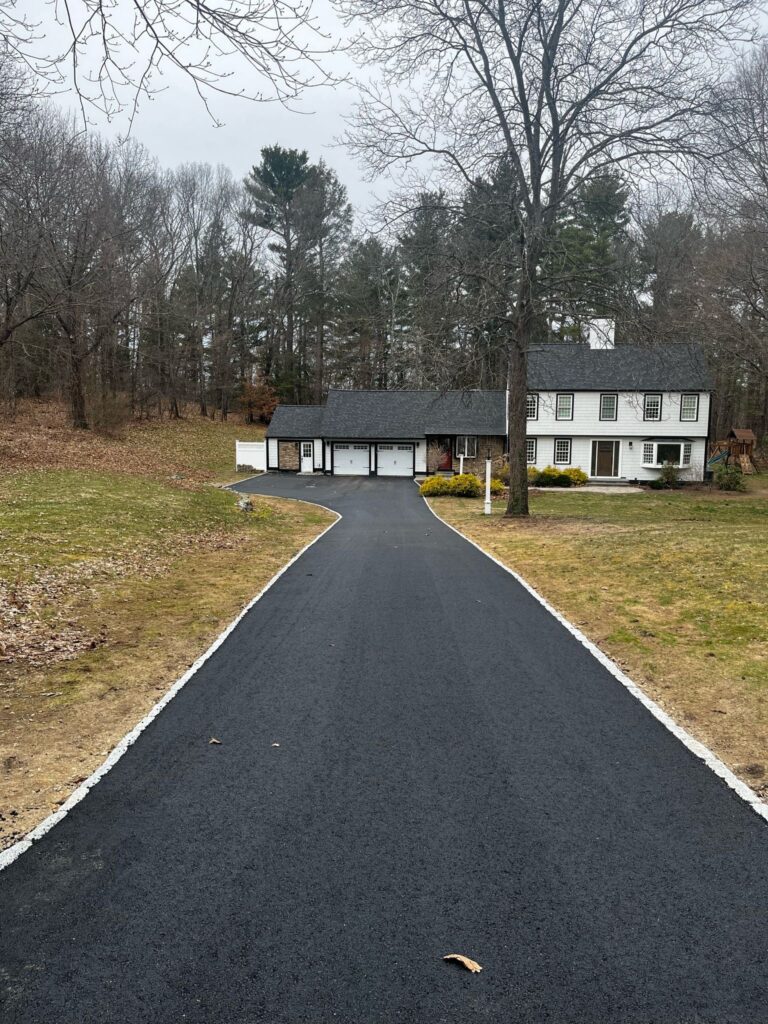
- The look: On a long approach, a rural-style lot or a house with some age to it, it fits in better than a flat black strip. It sits quietly beside lawns, stone walls and mature trees.
- Traction on a grade: The stone texture gives tires and boots something to grip. On a slope that matters, particularly where a smooth surface gets slick in wet leaves or a thin skim of ice.
- Cost: It is generally less expensive than full-depth asphalt because it needs less material and a lighter build. I won't put a figure on it. The saving depends on the base your drive already has and what it needs. We can give you a real number once we have seen the site.
- How it wears: It does not crack the way a rigid surface can. The binder stays flexible, so frost movement tends to show up as small surface changes rather than open cracks. Wear shows as stone loss in the wheel paths, and that can be patched.
Where it is the wrong choice
Be wary of tar and chip in these cases.
- You plow with a blade, or hire a plow: A plow blade catches loose stone and pulls it out. We cover snow in detail below, but if you want a clean, scraped surface all winter, asphalt is the better answer.
- You have a steep, short, heavily used drive: Tight turning on a slope scuffs stone loose, and tires at low speed wear the surface faster. A properly built asphalt drive will take that better.
- You want a smooth surface: Bare feet, bikes, scooters, skateboards, wheelchairs and strollers all prefer a smooth drive. Tar and chip is rough underfoot by design.
- You expect a clean, uniform finish: Tar and chip is textured and a little irregular. If you want the crisp, flat look of fresh asphalt, you will not get it.
If any of these describe your house, we will tell you so and recommend asphalt instead. A drive you regret in the first winter is not a good sale.
Loose stone and the first weeks
Some stone will come loose. That is normal in the first weeks, while the surface settles under traffic. You will see it in the garage, on the walkway and along the edges. Sweep it back onto the drive or off the paths and it settles out.
Drive slowly at first and avoid sharp turns, particularly with the wheels turned while stationary. That is the movement that scuffs a fresh surface most.
Over the longer term, the upkeep differs from asphalt. Asphalt is usually sealed to protect the surface. Tar and chip is maintained by re-treating worn areas: a new pass of binder and stone over the wheel paths and any thin patches. Done on time, that keeps the drive looking even. Left alone, it gets patchy.
Snow
This is the question most people ask, and the honest answer is that tar and chip and plows do not mix well.
A plow blade rides on the surface. On a smooth asphalt drive, it scrapes clean. On a stone surface, it can catch stone and drag it into the lawn or the snowbank. Every winter you will find some of it at the edge of the drive in spring.
You can reduce the damage:
- Raise the blade with shoes so it rides above the stone.
- Leave a thin layer of snow rather than scraping to bare surface.
- Use a snowblower with the skid shoes set high.
- Keep plows off the edges, where the binder is thinnest.
Even with care, you will lose some stone each winter. If you want a bare, scraped drive every time it snows, choose asphalt.
Does it suit Chestnut Hill?
It depends on the lot. Chestnut Hill has steep hillside lots, two-families with shared drives and tight frontages where the apron meets the sidewalk directly. Each one changes the answer.
Steep hillside lots
A grade that pitches sharply toward the street needs the stone rolled in tight and drainage considered first, since loose chip migrates downhill under its own weight and traffic.
Two-families with shared drives
A shared approach sees more daily traffic than a single-family drive, which wears tar and chip faster and makes the maintenance schedule a shared decision, not just a shared cost.
Tight frontages
Where the apron meets the sidewalk with little room to spare, a clean, defined edge matters more than it does on a long private drive, and that favors a tighter stone and binder finish.
So tar and chip suits a longer, gentler Chestnut Hill drive with some room around it. It is a poor match for a short, steep or shared one, or one that opens straight onto the walk.
Tar and chip questions
Is tar and chip cheaper than asphalt?
It generally costs less to install than a full-depth asphalt driveway, though the long-term maintenance pattern is different rather than simply cheaper or more expensive overall.
Will the stone come loose on my car or the street?
Some loose stone in the first weeks after installation is normal while the surface beds in. After that period, a properly rolled surface sheds far less, though some loose aggregate at the edges is part of how this surface behaves long-term.
Can tar and chip be plowed like asphalt?
Not the same way. A plow blade needs to be set to ride above the stone rather than scrape it, and shoveling or a snowblower are gentler options where the drive allows it.
Does tar and chip suit a short, formal driveway like those in Chestnut Hill?
Often yes, for an estate or period-home approach where a textured, rural look fits the property. It's less suited to drives where a sharp, formal, smooth-edged finish is the goal.
Next step
If you are weighing tar and chip against asphalt, we will look at your drive, the grade, the base and how you handle snow, then tell you which we would choose and why. If it is asphalt, we will say so.