
Tar and Chip in Medway, MA
Tar and chip gives a surface that reads like a country lane rather than a paved lot, with different costs and upkeep than asphalt. For many Medway properties, that look is exactly the point.
Tar and chip is built in layers: hot asphalt binder goes down over a prepared base, crushed stone is spread while the binder is still workable, and a roller sets the stone in place. The binder provides structure; the stone delivers the textured, stone-faced finish and traction on top.
Where It Works, and Where It Doesn't
Tar and chip suits long rural or estate-style approaches around Medway where looks matter as much as function, usually costing less than full-depth asphalt. The stone surface also grips well on graded drives, which counts for more once a slope turns wet or frosty.
It’s the wrong fit for driveways with heavy daily turning, tight repeated traffic, or where you want a smooth surface for basketball hoops, strollers, or wheelchairs — asphalt serves those better. Over time, tar and chip wears by shedding stone gradually rather than cracking like asphalt, so upkeep looks different, not necessarily harder.
- The base is shaped and compacted. Everything above depends on it.
- The hot binder is sprayed across the surface.
- Stone is spread over the binder while it is still tacky.
- The stone is rolled in so it seats into the binder.
- Loose stone is swept or left to settle under traffic.
Maintenance, Snow, and Fit for Medway
Expect some loose stone in the first weeks as traffic works it in; sweeping or re-rolling a high-traffic spot is normal, not a defect. Over time, a fresh chip application refreshes the surface rather than a full repave.


What Our Clients Say

What it does well
- The look: On a long approach, a rural-style lot or a house with some age to it, it fits in better than a flat black strip. It sits quietly beside lawns, stone walls and mature trees.
- Traction on a grade: The stone texture gives tires and boots something to grip. On a slope that matters, particularly where a smooth surface gets slick in wet leaves or a thin skim of ice.
- Cost: It is generally less expensive than full-depth asphalt because it needs less material and a lighter build. I won't put a figure on it. The saving depends on the base your drive already has and what it needs. We can give you a real number once we have seen the site.
- How it wears: It does not crack the way a rigid surface can. The binder stays flexible, so frost movement tends to show up as small surface changes rather than open cracks. Wear shows as stone loss in the wheel paths, and that can be patched.
Where it is the wrong choice
Be wary of tar and chip in these cases.
- You plow with a blade, or hire a plow: A plow blade catches loose stone and pulls it out. We cover snow in detail below, but if you want a clean, scraped surface all winter, asphalt is the better answer.
- You have a steep, short, heavily used drive: Tight turning on a slope scuffs stone loose, and tires at low speed wear the surface faster. A properly built asphalt drive will take that better.
- You want a smooth surface: Bare feet, bikes, scooters, skateboards, wheelchairs and strollers all prefer a smooth drive. Tar and chip is rough underfoot by design.
- You expect a clean, uniform finish: Tar and chip is textured and a little irregular. If you want the crisp, flat look of fresh asphalt, you will not get it.
If any of these describe your house, we will tell you so and recommend asphalt instead. A drive you regret in the first winter is not a good sale.
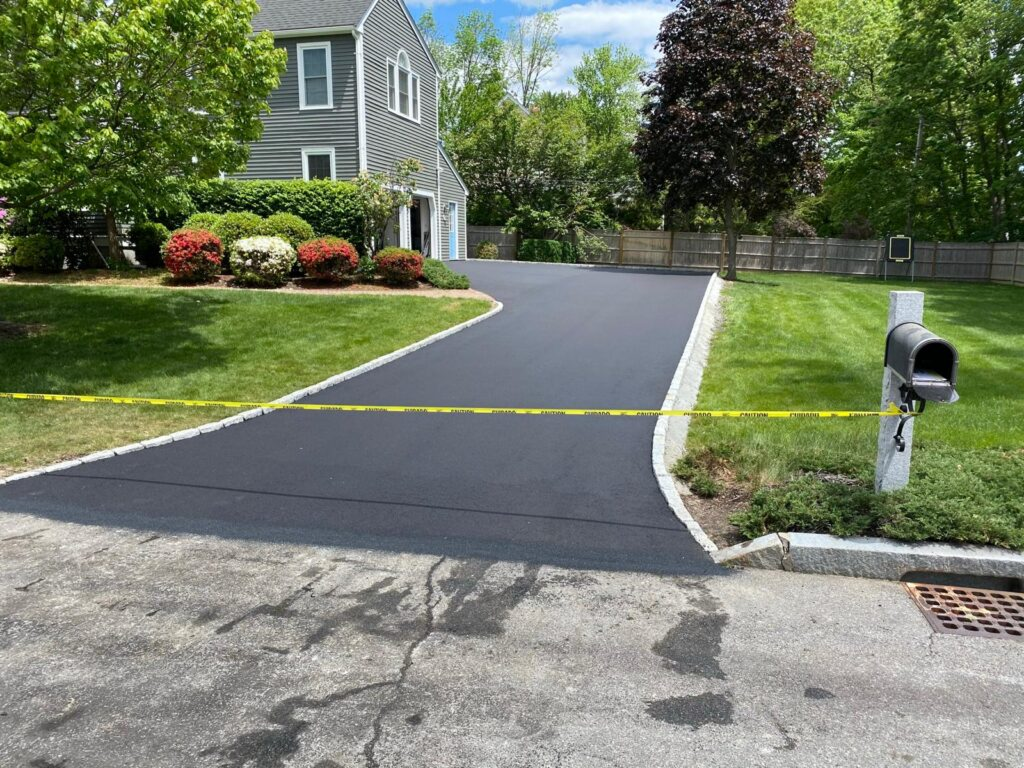

Loose stone and the first weeks
Some stone will come loose. That is normal in the first weeks, while the surface settles under traffic. You will see it in the garage, on the walkway and along the edges. Sweep it back onto the drive or off the paths and it settles out.
Drive slowly at first and avoid sharp turns, particularly with the wheels turned while stationary. That is the movement that scuffs a fresh surface most.
Over the longer term, the upkeep differs from asphalt. Asphalt is usually sealed to protect the surface. Tar and chip is maintained by re-treating worn areas: a new pass of binder and stone over the wheel paths and any thin patches. Done on time, that keeps the drive looking even. Left alone, it gets patchy.
Snow
This is the question most people ask, and the honest answer is that tar and chip and plows do not mix well.
A plow blade rides on the surface. On a smooth asphalt drive, it scrapes clean. On a stone surface, it can catch stone and drag it into the lawn or the snowbank. Every winter you will find some of it at the edge of the drive in spring.
You can reduce the damage:
- Raise the blade with shoes so it rides above the stone.
- Leave a thin layer of snow rather than scraping to bare surface.
- Use a snowblower with the skid shoes set high.
- Keep plows off the edges, where the binder is thinnest.
Even with care, you will lose some stone each winter. If you want a bare, scraped drive every time it snows, choose asphalt.
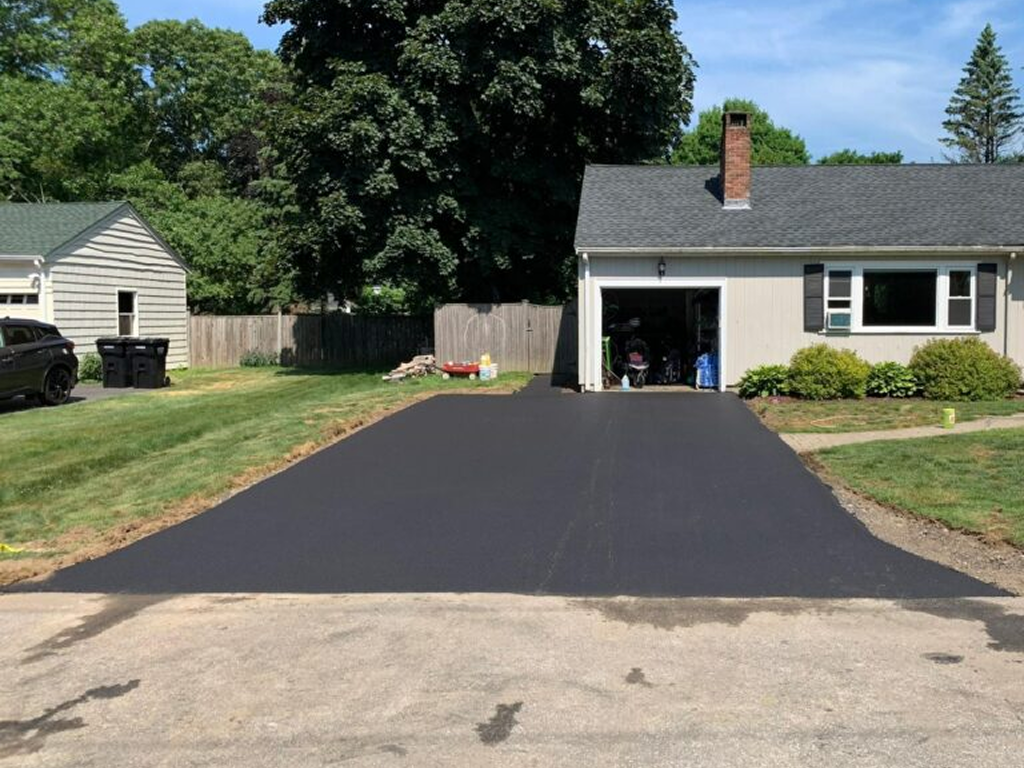
Does it suit Medway?
It depends on the lot. Medway has steep hillside lots, two-families with shared drives and tight frontages where the apron meets the sidewalk directly. Each one changes the answer.
Newer subdivision lots
Larger lots with wide, straight drives give room to stage the binder truck, stone, and roller without disrupting the rest of the property during installation.
Older homes on rural roads
Established properties on country roads often already suit the look of tar and chip, matching the setting better than a sharp-edged asphalt surface would.
Wide drives with room to stage
Enough width to park equipment clear of the work area makes the layered installation process faster and reduces the chance of tracking material onto lawns or gardens.
So tar and chip suits a longer, gentler Medway drive with some room around it. It is a poor match for a short, steep or shared one, or one that opens straight onto the walk.
Tar and chip questions
Does tar and chip cost less than asphalt in Medway?
It generally costs less than a full-depth asphalt install, though the right number depends on the length and condition of your specific drive. We can give you a straight comparison once we've seen the site.
Will loose stone be a problem on my car or in the yard?
Some loose stone is normal in the first few weeks while the surface settles in under traffic. After that it largely stops, and occasional sweeping handles the rest.
Can tar and chip handle a long, sloped driveway?
Yes, and it's one of the places it performs well. The textured stone surface grips better than smooth asphalt on a wet or frosted grade.
What happens to tar and chip during a New England winter?
Freeze-thaw affects any driveway surface, but tar and chip tends to show it differently than asphalt, with gradual stone loss rather than cracking. A rubber-edged plow blade helps protect the surface through the winter.
Is tar and chip a good fit for a shorter, flat driveway?
It can be, but for a short flat apron with heavy daily use, asphalt is often the more practical choice. We'll tell you plainly if that's the better fit for your property.
Next step
If you are weighing tar and chip against asphalt, we will look at your drive, the grade, the base and how you handle snow, then tell you which we would choose and why. If it is asphalt, we will say so.