
Asphalt Repair in Carlisle, MA
You’re standing over a pothole by the mailbox, or a patch of alligator cracking where the drive dips toward the garage, or an edge that’s crumbled away into the gravel shoulder. The question isn’t whether it looks bad. It’s whether it’s a problem you can fix now for a few hundred dollars or one that’s already decided to become a much bigger job.
On a two-acre lot in Carlisle, that question usually comes with a long driveway attached to it, often three hundred feet or more, cut through trees, with ledge sitting close to the surface in places and conservation land on one or both sides. That combination changes how asphalt fails here and what’s worth fixing. A drive that long has more joints, more low points, and more exposure to tree roots than a typical suburban driveway, so the damage tends to show up in more than one spot at once rather than as a single isolated patch.
Reading the damage
A single hairline crack running the width of the drive is usually just the asphalt shrinking in cold weather. It’s worth sealing before water gets into it, but it’s not structural. Alligator cracking, a web of interconnected cracks that looks like reptile skin, is different. That’s the base failing underneath, not the surface. The asphalt is just showing you what’s happening below, and no amount of sealcoat will fix a base that’s already given way.
Edge failure, where the pavement crumbles and breaks away along the sides, is common on long rural drives like the ones in Carlisle where there’s no curb and the shoulder is gravel or lawn. Without something holding the edge, it has nowhere to go but down and out, and every winter of plowing makes it a little worse. A sunken section, especially near a garage apron or at a low point in a sloped drive, usually means water has been sitting and softening the base for longer than anyone noticed. Heaving, where a section has pushed up rather than down, points to a root underneath or frost getting under a section that wasn’t draining.
Each of these tells you something different about what’s happening a foot below the surface, and that’s what decides the right fix:
- Surface cracks: clean and seal before the next freeze-thaw cycle widens them.
- Alligatored sections: cut out and rebuild the base, not just a skim coat on top.
- Crumbling edges: add proper edge support so the shoulder stops eating into the pavement.
- Sunken or heaved spots: find and fix the drainage or root issue first, or the patch fails again within a season.


What Our Clients Say
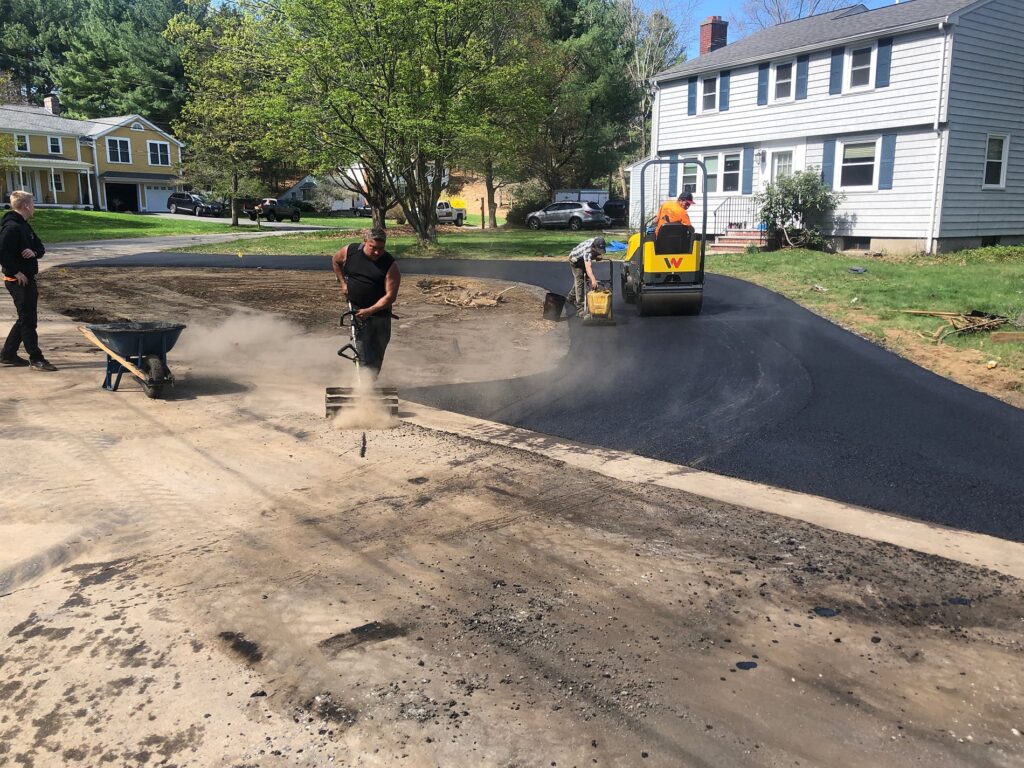
How to read the damage
Asphalt rarely fails for the reason it appears to. The surface shows a symptom, and the cause is usually underneath.
Repair or replace
On Carlisle's long private driveways, full repaving is costly, so repair-versus-replace matters. Isolated cracks, a pothole, or a soft shoulder are repairable.
Infrared patching
Heats the existing asphalt, blends it with new material, and bonds the patch seamlessly into the surrounding surface. Ideal for isolated Carlisle potholes, utility cuts, and shallow surface failures where the base below remains sound and stable.
Saw-cut and replace
We saw-cut neat edges around the damaged section and excavate it fully, replacing failed base material before compacting and laying fresh asphalt.
Crack filling
Seals hairline and linear cracks before water gets underneath, freezes, and forces the asphalt apart. It’s a cheap, fast fix, and far more effective tackled before a Carlisle winter sets in than patched up afterwards once damage has spread.
Edge rebuilding
Rebuilds crumbled shoulders common on long unguarded drives through Carlisle's wooded properties. Without a firm edge, plow blades catch loose asphalt and runoff washes out the base, eating the surface back season after season.
Why it failed here
Most repair calls in Carlisle trace back to one of three things: a long drive with a grade change somewhere along it, shallow ledge, or tree roots from the woods lining most lots this size. A drive running a few hundred feet through woods rarely sits level the whole way. Any low point becomes a place where water collects, softens the base, and eventually shows up as a sunken patch or alligator cracking.
Shallow ledge is a Carlisle-specific issue. Where bedrock sits close to the surface, there isn’t always room to build the full base depth a driveway needs, so the asphalt above that thin spot flexes more under weight than it should. That flexing opens cracks faster than you’d expect from a drive that otherwise looks fine.
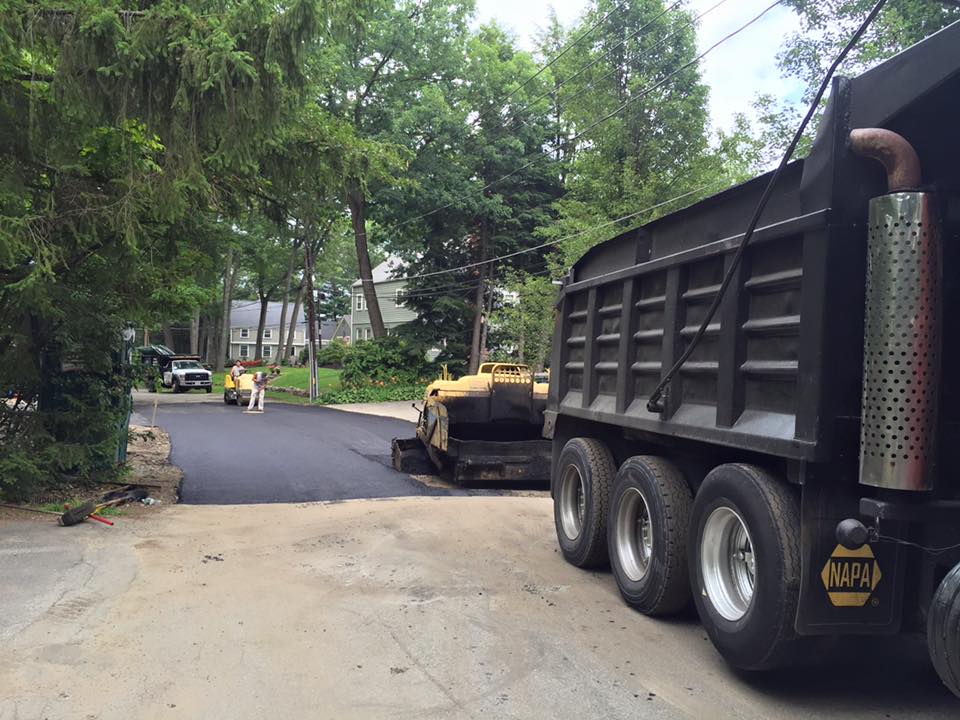
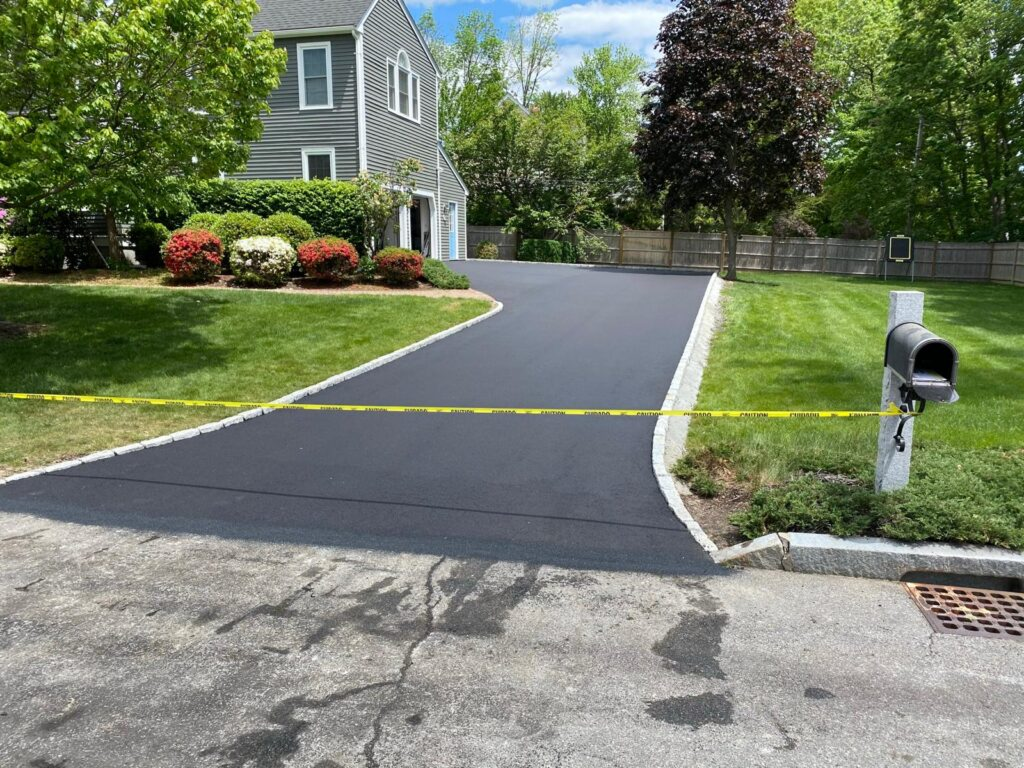
What the repairs are
Frost and timing
A small crack left alone lets water in, and Carlisle’s freeze-thaw cycles do the rest, widening it each winter. Addressing it in autumn is far simpler and cheaper than dealing with a full section failure once spring thaw arrives.
Culverts and drainage
Long Carlisle drives often cross a culvert or low swale on the way in from the road.
Access for repair work
A wooded, winding driveway still needs room for a truck and equipment to reach the damaged section.
Conservation land abutters
Carlisle lots backing onto conservation land don't change how asphalt repairs are performed, but they're reason enough to keep runoff, saw-cutting debris, and base material contained to the driveway itself rather than letting water or sediment migrate into adjacent protected areas.
What happens if you wait
A pothole left over a Carlisle winter typically triples in size by spring as freeze-thaw cycles pry it wider. What’s a quick patch in October can become a saw-cut repair by April, at several times the cost.
Why drives fail in Carlisle
Carlisle's ground is unforgiving in a few specific ways.
Steep hillside lots mean water arrives with speed. A sloped drive carries runoff downhill, and where that water meets a low corner, a garage door or the seam of an old patch, it goes down instead of away. Over years that washes out fine material from under the asphalt and leaves the hollows that later sink. On a hillside, drainage decides how long the work lasts.
Shared drives on two-family properties take more traffic than a single-family drive was built for. More vehicles, more turning, more weight on the same few feet. That is exactly where alligator cracking appears first, and where edges break down from vehicles clipping the sides.
Tight frontages put the apron directly against the sidewalk. Plows and shoveling push snow and meltwater straight onto that strip, and the edge there takes constant punishment. It is also the part of the drive most likely to involve the town, so if the damage reaches the apron or the sidewalk line, we will tell you before work begins what is yours to fix and what isn't.
And in every case, frost is the engine behind it. Water enters a small crack, freezes, expands and pries the crack wider. It thaws and drains into the opening, and the cycle repeats all winter. A hairline crack in October can be a pothole by March.
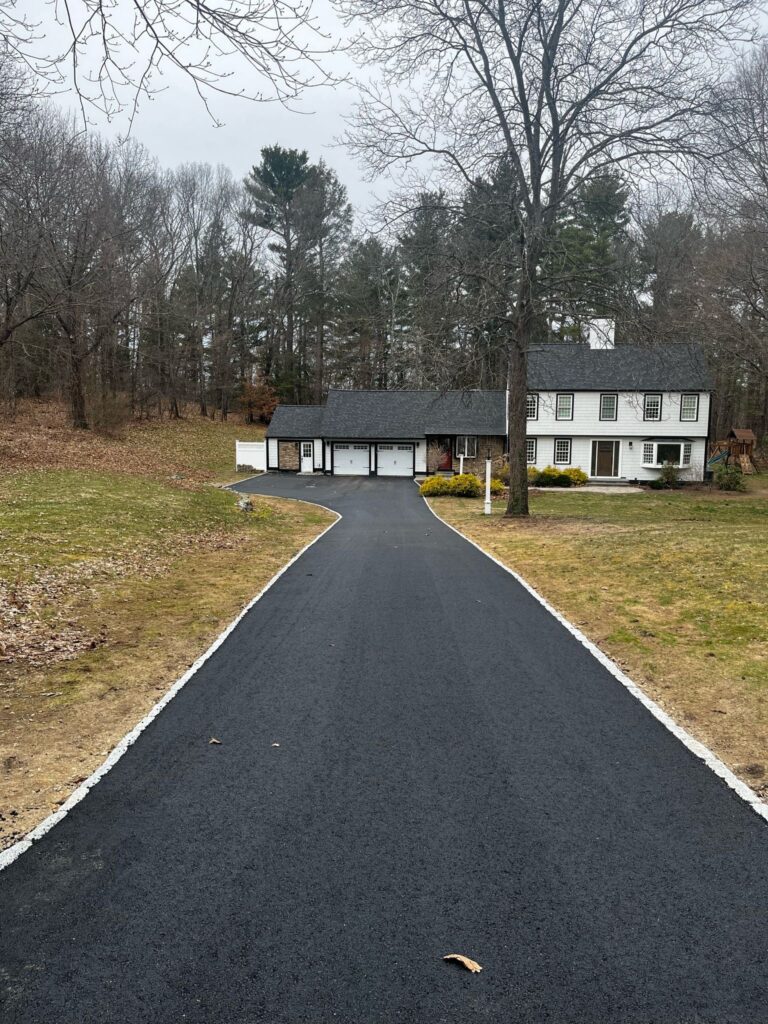
Why timing matters
A crack that is filled this fall is a small job. The same crack left through a winter lets water into the base, and the cost of the repair rises with every freeze. A pothole gets larger as vehicles break its edges away. An edge failure keeps retreating.
Spring is when the damage that has been hiding becomes obvious, and when everyone calls at once. The cheapest repairs happen before that, while the problem is still the size of a hand.
Asphalt repair questions in Carlisle
Can a driveway with ledge close to the surface be repaired the same way as any other?
Mostly, yes. The repair method depends on whether the failure is surface-level or base-level, not on what's beneath the base. Where ledge has left the base thinner than ideal, saw-cut repairs are sometimes built back with a bit more depth than the original section had.
Do tree roots need to be removed before a repair?
If a root is actively heaving a section, cutting or routing around it is usually part of the fix. Otherwise the same heave shows up again within a season or two.
How do I know if it's worth repairing versus planning for a full redo?
If the damage is contained to one or two sections and the rest of the drive looks sound, repair makes sense. If alligator cracking or sinking shows up in multiple unrelated spots along the length, that pattern usually points to a base problem that repairs won't keep up with.
Does crack filling actually matter on a long gravel-shoulder drive?
Yes, arguably more than on a curbed suburban drive. Without a curb to shed water away from the edge, cracks near the shoulder let water in faster, and that's exactly where edge failure starts.
Next step
Call us at (413) 337-3772. Tell us what you are looking at and where on the drive it is. We will come out, look at the damage and the ground around it, and tell you honestly whether it can be repaired and what that involves.