
Asphalt Repair in Chestnut Hill, MA
You’re standing at the top of the drive looking at it again. Maybe it’s a pothole that keeps coming back by the garage apron. Maybe it’s a web of cracks spreading out from one corner, or an edge that’s crumbled into the lawn after the last few winters. On the older, ornamental drives common around Chestnut Hill, that damage stands out against a high-finish property in a way it wouldn’t on a plain utility driveway, which is usually why people finally call.
The first question isn’t how much a new driveway costs. It’s whether this particular section needs one at all. Most of the time it doesn’t. Asphalt fails in patterns, and reading the pattern correctly is the difference between a contractor who patches the right spot and one who sells a full replacement to a driveway that had years left in it.
Hairline cracks running in a loose network, not yet connected, usually mean the surface is aging and losing flexibility but the base underneath is still doing its job. A seal and crack-fill job at this stage is cheap insurance – it keeps water out and buys the asphalt several more seasons before anything structural needs attention. Alligator cracking – tight, interlocking cracks that look like reptile skin – is different. That’s a base failure showing through the surface, and it means water has been getting underneath for a while, softening the gravel and soil that’s supposed to carry the load.
Edge failure, where the asphalt crumbles along the perimeter of the drive, is common on the shorter, curving drives typical of Chestnut Hill’s older lots, especially where there’s no curb or edge restraint to hold the mat in place. Once an edge starts going, it keeps going – every car that clips it or every snowplow that catches the lip widens the damage a little further. Sinking, usually in a localized dip, points to a soft spot in the base – often where a buried pipe, old root, or poor compaction sits underneath. Heaving, where the surface has pushed upward, is almost always frost or a root doing the pushing from below, and it tends to reappear each winter until whatever’s underneath is actually dealt with.
Each of these tells you something different about what’s happening under the surface, and that’s what decides the right fix – not how bad it looks from the street. A worthwhile assessment usually covers:
- Whether the damage is surface-level or base-level, and how far it’s spread
- Drainage around the area – standing water is often the real culprit, not age
- Whether a patch will hold for years or just months given the cause
- How the repair will match the existing surface and grade
On a property where the driveway is part of the first impression, a repair that’s done right – cut back to sound material, properly compacted, and tied in cleanly at the edges – shouldn’t be obvious once it’s finished. That’s really the standard worth asking for: not just a patch that stops the pothole, but one that disappears into the rest of the drive.


What Our Clients Say
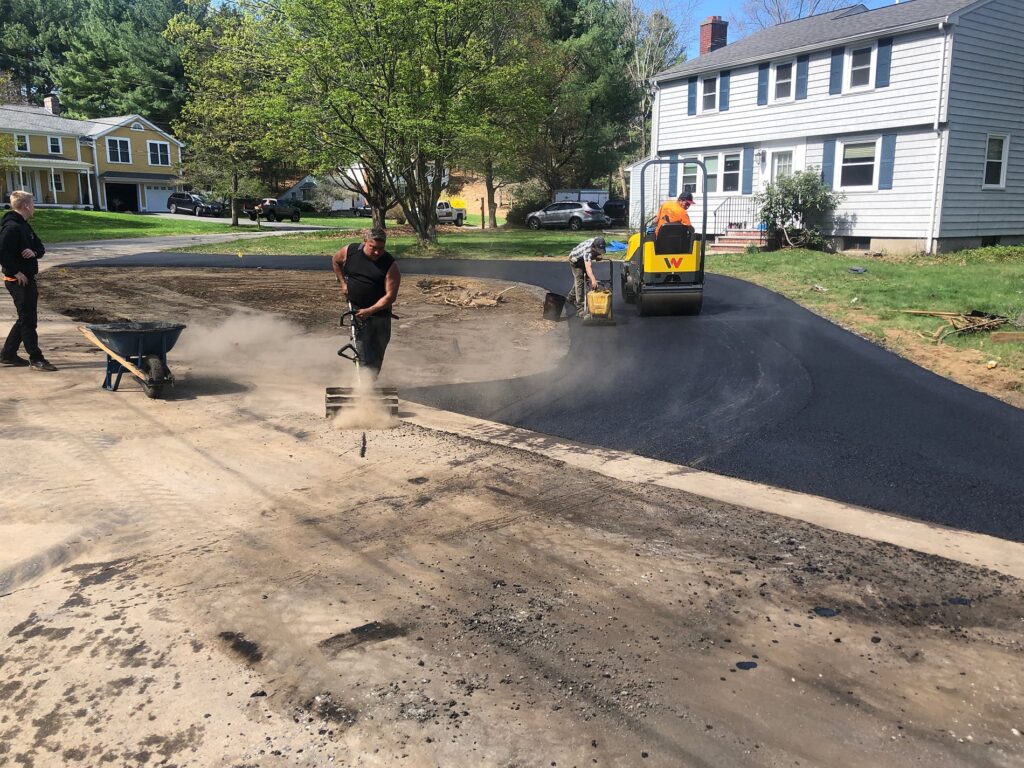
How to read the damage
Asphalt rarely fails for the reason it appears to. The surface shows a symptom, and the cause is usually underneath.
Large older homes and ornamental drives mean finish quality is scrutinized closely here. A patch that functions but looks rough stands out fast on a property where everything else has been kept to a high standard.
Short Chestnut Hill drives concentrate stress at the entrance apron and garage pad.
On the Newton-Brookline line, many Chestnut Hill lots carry mature trees close to the pavement.
Where repair makes sense in Chestnut Hill: isolated cracking, one sunken panel, a crumbled edge, or a pothole with sound asphalt around it.
Where replacement is the honest answer: alligator cracking across most of the surface, repeated failures in the same spot, or a base that’s clearly lost its shape over a wide area.
Repair vs. replacement, said plainly
A contractor who says your driveway has a few good years left is more useful than one leading with a replacement quote. Patching makes sense when the failure is contained – a crack here, a sunken panel there, one bad edge – and the surrounding asphalt and base are still sound enough to tie a repair into cleanly.
It stops making sense when damage is spread across most of the surface, or the same spot fails again after already being patched once. At that point you’re paying for the same square footage twice, and a full-depth rebuild of that section – or the whole drive – is the better use of the money. On a short ornamental drive like many in Chestnut Hill, that threshold tends to arrive sooner than on a long utility driveway, simply because there’s less total pavement to spread the cost of a mistake across.
The honest version of this conversation is specific to what’s actually there, not a general rule – which is why it’s worth having someone look at the actual cracks rather than guessing from a description.
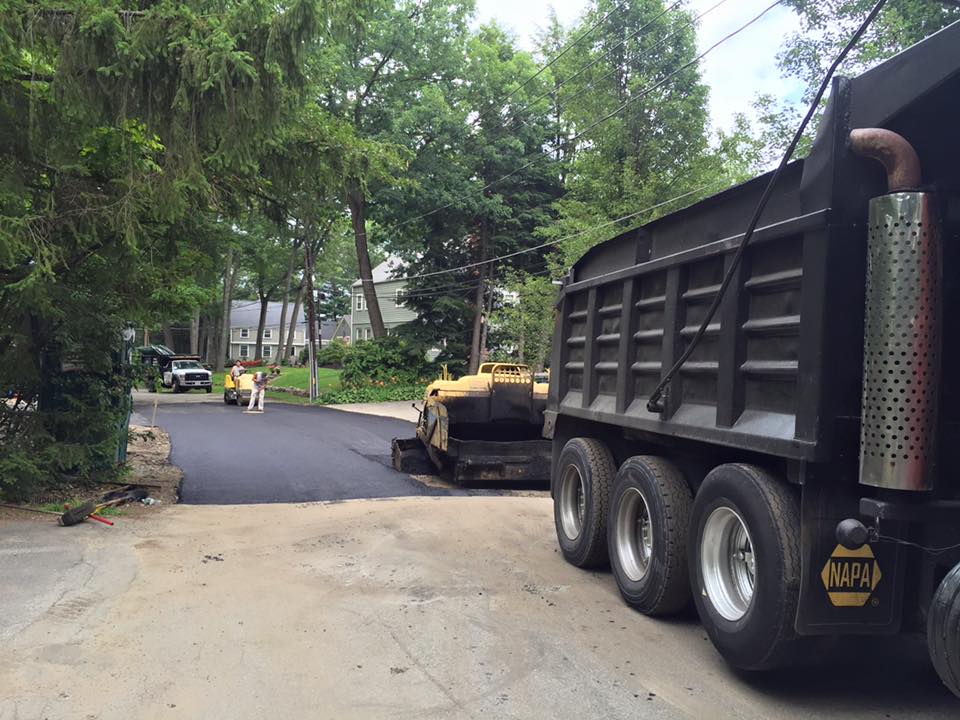
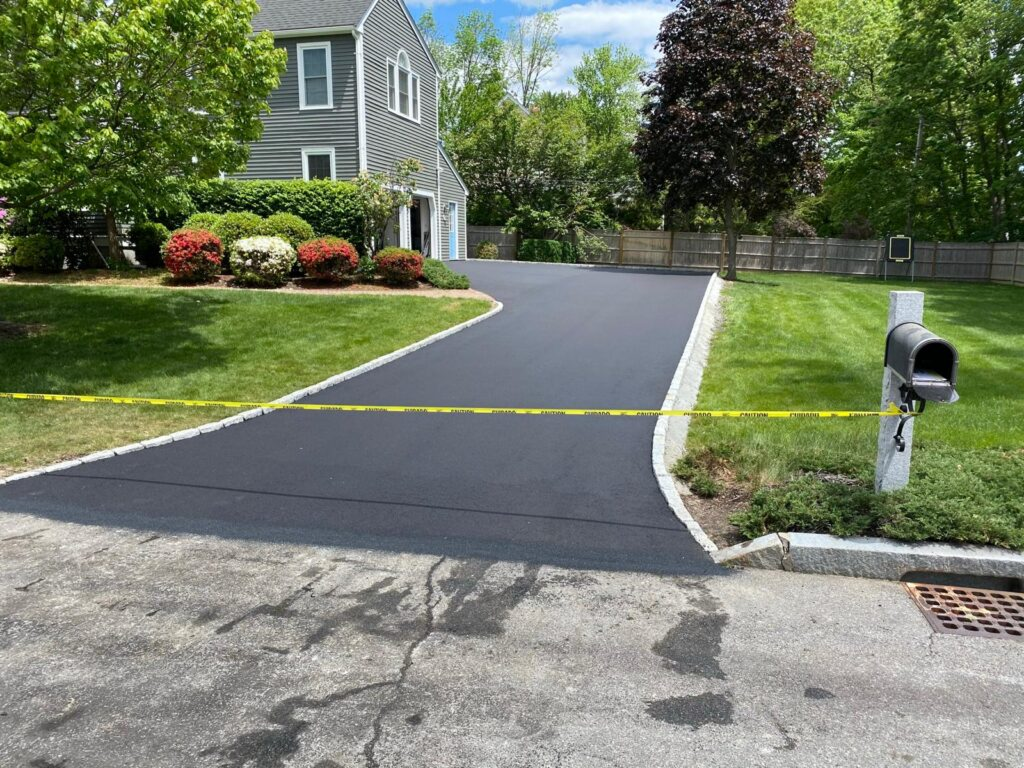
What the repairs are
Infrared patching heats the existing asphalt, blends in new material, and leaves a seamless repair without a cold joint – well suited to visible areas near an entrance or garage.
Saw-cut and replace removes a full section of damaged asphalt to sound, straight edges and rebuilds it from the base up.
Crack filling and sealing stops water from getting into hairline cracks before they widen into something structural. It's cheap, fast, and only works while cracks are still small.
Edge rebuilding re-establishes the perimeter where asphalt has crumbled away along Chestnut Hill driveways, often adding a firmer edge restraint so the same stretch doesn’t heave, crack, or fail again once freeze-thaw cycles return next winter.
Why it failed, and why waiting costs more
Chestnut Hill’s older drives fail from water and freeze-thaw: cracks let moisture into the base, which expands as it freezes. Shade and roots accelerate this. Left alone, small cracks become costly potholes. Catch it early – call (413) 337-3772.
Why drives fail in Chestnut Hill
Chestnut Hill's ground is unforgiving in a few specific ways.
Steep hillside lots mean water arrives with speed. A sloped drive carries runoff downhill, and where that water meets a low corner, a garage door or the seam of an old patch, it goes down instead of away. Over years that washes out fine material from under the asphalt and leaves the hollows that later sink. On a hillside, drainage decides how long the work lasts.
Shared drives on two-family properties take more traffic than a single-family drive was built for. More vehicles, more turning, more weight on the same few feet. That is exactly where alligator cracking appears first, and where edges break down from vehicles clipping the sides.
Tight frontages put the apron directly against the sidewalk. Plows and shoveling push snow and meltwater straight onto that strip, and the edge there takes constant punishment. It is also the part of the drive most likely to involve the town, so if the damage reaches the apron or the sidewalk line, we will tell you before work begins what is yours to fix and what isn't.
And in every case, frost is the engine behind it. Water enters a small crack, freezes, expands and pries the crack wider. It thaws and drains into the opening, and the cycle repeats all winter. A hairline crack in October can be a pothole by March.
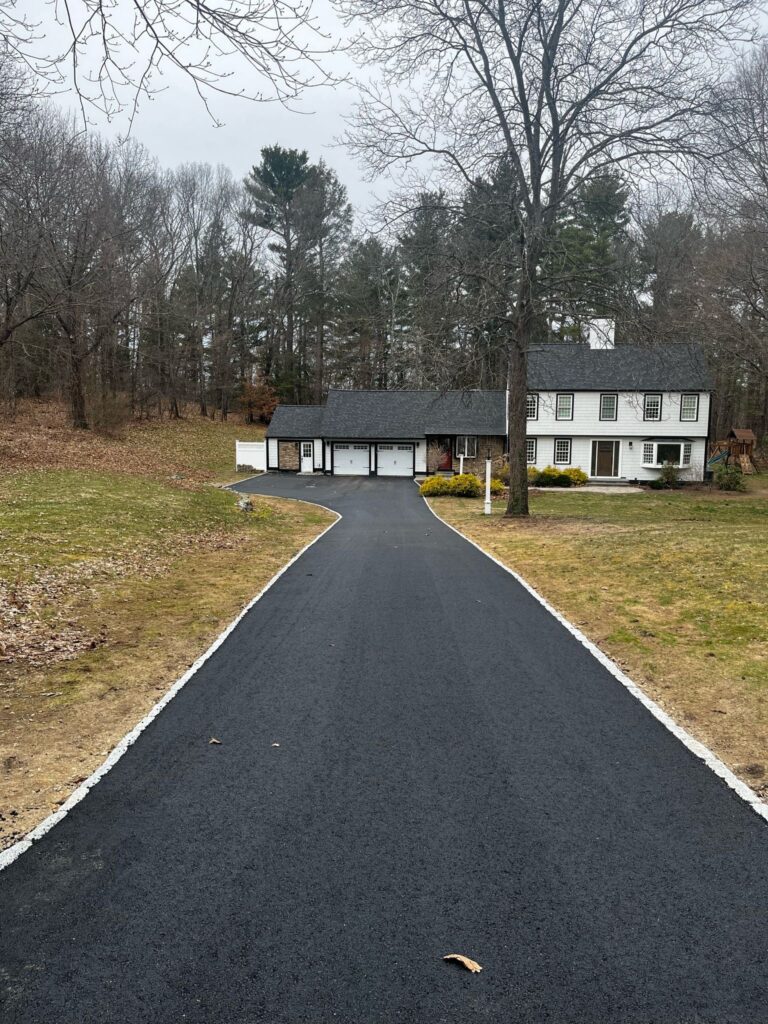
Why timing matters
A crack that is filled this fall is a small job. The same crack left through a winter lets water into the base, and the cost of the repair rises with every freeze. A pothole gets larger as vehicles break its edges away. An edge failure keeps retreating.
Spring is when the damage that has been hiding becomes obvious, and when everyone calls at once. The cheapest repairs happen before that, while the problem is still the size of a hand.
Asphalt repair questions in Chestnut Hill
Can a sunken section of my driveway be fixed without replacing the whole thing?
Often, yes. If the sinking is isolated to one area and the surrounding asphalt is sound, the affected section can be cut out, the base corrected, and that panel rebuilt without touching the rest of the driveway.
How do I know if it's a crack filling job or something bigger?
Hairline cracks that aren't connected and haven't widened are usually a crack-filling job. If you see alligator-pattern cracking, a soft or spongy spot underfoot, or the same crack keeps reopening after filling, it likely points to a base problem that needs a deeper repair.
Will a patch look obviously different from the rest of the driveway?
A basic patch can be visible, especially right after it's done, since new asphalt is darker than aged asphalt. Infrared patching blends more seamlessly because it reworks the existing surface material rather than dropping in a new, separate patch.
Is it worth repairing a driveway that's getting old anyway?
If the failures are contained and the base is still solid, yes – a repair can reasonably extend the usable life of the surface. If the whole drive is showing widespread alligator cracking or repeated failures, that's a sign the repairs would just be a stopgap, and it's worth saying so rather than charging for several rounds of patching.
Does repair work in winter?
Cold weather limits some repair methods, since asphalt needs to be workable to bond properly. Depending on the extent of the damage and the conditions, a temporary fix to stop water intrusion over winter followed by a proper repair later can be the more practical approach.
Next step
Call us at (413) 337-3772. Tell us what you are looking at and where on the drive it is. We will come out, look at the damage and the ground around it, and tell you honestly whether it can be repaired and what that involves.