
Asphalt Repair in Concord, MA
You’re standing over a pothole by the garage, or a patch of alligator cracking near the street, trying to work out if this is a weekend’s worth of worry or something worse. In Concord that question comes up in two very different settings. Out past the center, long rural drives run a hundred feet or more from the road to the house, often through stands of mature trees, and a failure halfway down can sit unnoticed for a season before anyone sees it, with roots and runoff doing quiet damage the whole time. Closer to the historic district, homeowners are often trying to keep a surface that reads as appropriate to the house and the street, not a fresh black rectangle that looks out of place against an old stone wall or a gravel apron next door. Either way, the instinct is the same: find out if this can be fixed before anyone talks about tearing it out.
It usually can. Most of what shows up on a driveway surface is a symptom of something happening underneath, and most of those problems have a repair that matches them. The job is reading the damage correctly first, then matching the fix to the cause rather than just the symptom on top.
Hairline cracking spread evenly across a section usually means the surface is aging and drying out, nothing structural yet, and it calls for sealing before water gets a foothold. Alligator cracking, a tight web of interconnected lines, means the base underneath is flexing under load and no longer supporting the asphalt the way it did, which usually means cutting out that section and rebuilding the base, not just resurfacing over it. Edge failure, crumbling along the sides of the drive, is almost always a frost and support issue rather than a load issue, common where plow trucks have been riding the shoulder all winter. Sinking says water has washed out material below, often around an old culvert or a tree root that has since rotted away. Heaving says water froze and pushed it up, a familiar story on the older rural lots where drainage was never built in properly to begin with. Each one points somewhere different, and the right repair follows from the diagnosis, not the other way around.
Before anyone cuts into the surface, a few questions are worth asking:
- Is the damage isolated to one section, or does it track the whole length of the drive in a pattern that suggests a base-wide drainage problem?
- Has it gotten worse over one winter, or has it been stable for years and only now become visible?
- Is there a tree, downspout, or slope nearby that’s feeding water into that exact spot?


What Our Clients Say
How to read the damage
Asphalt rarely fails for the reason it appears to. The surface shows a symptom, and the cause is usually underneath.
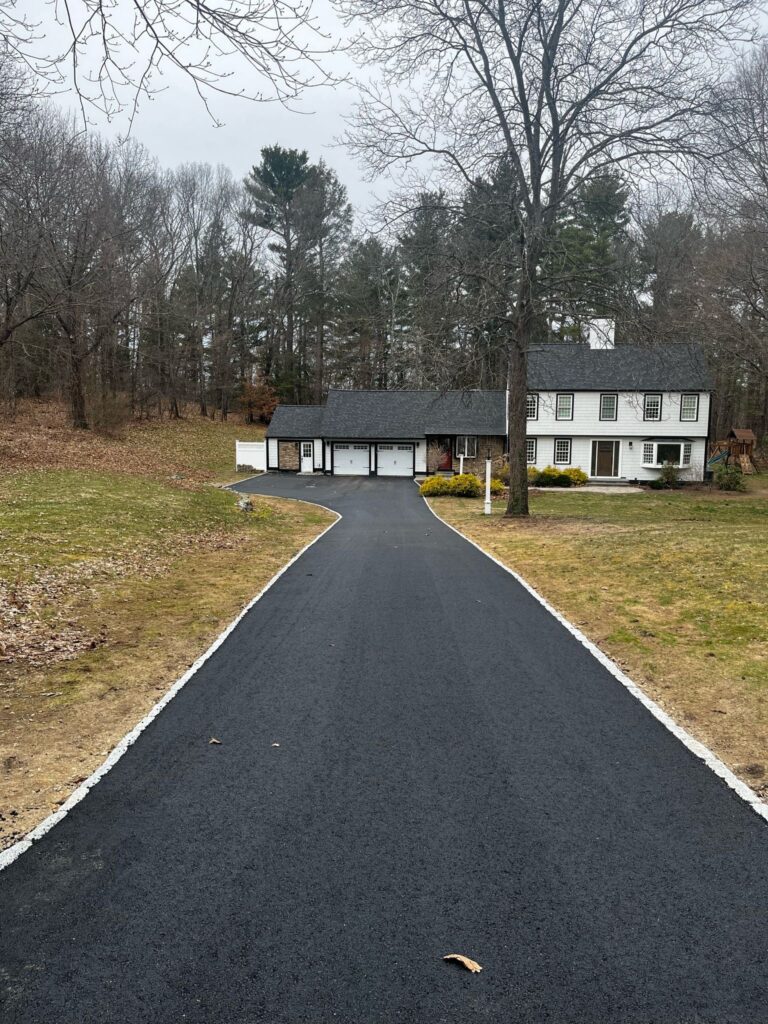
A long tree-lined drive in Concord hides small failures until they spread beneath the surface.
Repair or replacement
Patching makes sense when the base is still sound and the damage is contained. It stops making sense when failures keep returning in new spots, which usually means the base itself has given out.
Infrared patching
Reheats and reworks the existing asphalt in place, fusing the patch into the surrounding surface instead of leaving a visible seam or cold joint.
Saw-cut and replace
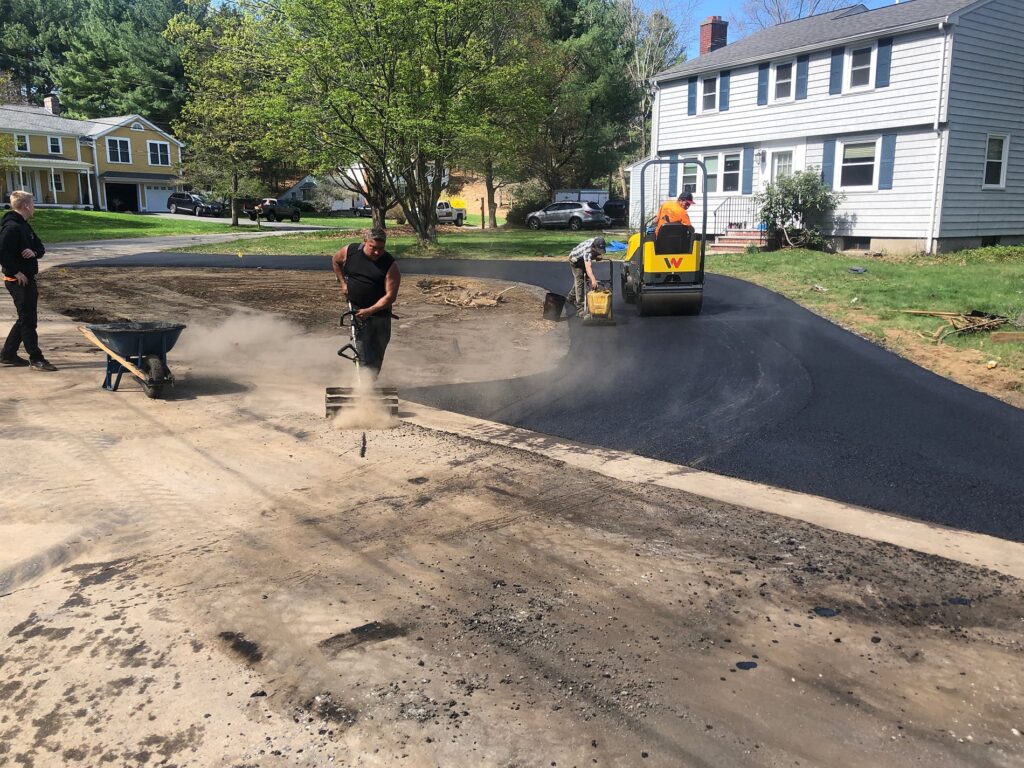
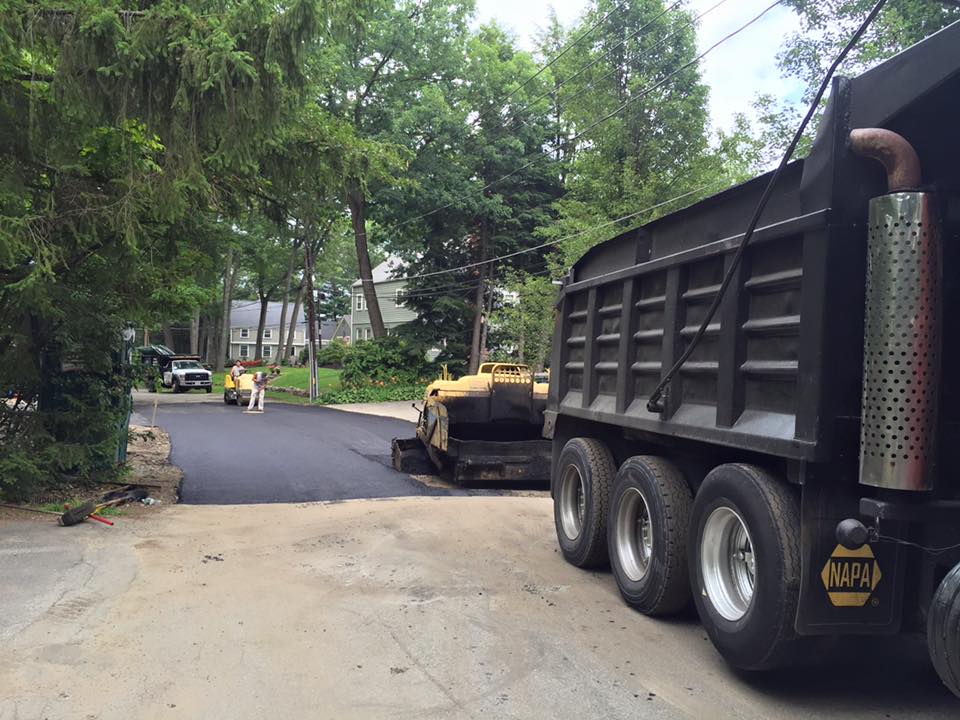
For damage that runs deeper than the surface layer, we saw-cut a clean, straight edge around the affected area, then excavate, rebuild the base, and repave the section properly, rather than patching over a weak spot that Concord's freeze-thaw cycles will reopen.
Crack filling
Seals hairline and moderate cracks before water gets underneath and reaches the base. It’s a cheap, fast fix, and most effective when applied before Concord’s freeze-thaw winters widen cracks into potholes needing full patching.
Edge rebuilding and regrading
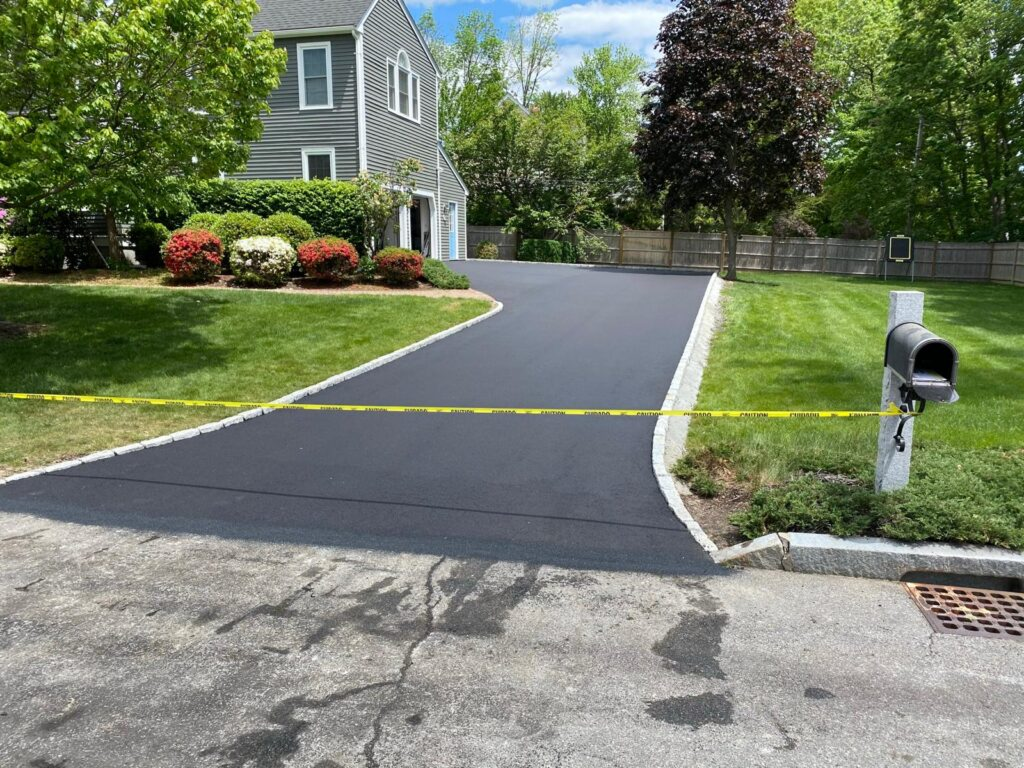
Crumbling edges and sunken sections near a garage apron both come from lost support underneath. Rebuilding the edge or regrading the dip restores what the base lost, rather than just patching the surface over it. On Concord's longer rural drives, we see sunken sections most often where a drive crosses a low point or runs under heavy tree cover, both places water sits longer than it should and works its way into the base course. Near the historic center, where drives tend to be shorter and closer to stone walls or mature plantings, edge failure is the more common complaint, usually from roots nearby competing for the same ground as the base material, or from decades of plow blades catching the same soft shoulder each winter. Knowing which pattern you're looking at before work starts means the repair addresses the actual cause instead of just resurfacing the symptom for a season.
What the repairs are
Why Concord drives fail
Mature oaks and maples along many Concord properties mean root intrusion under the base and shaded sections that stay damp long after the rest of the drive has dried, softening subgrade and encouraging cracks, heaving, and premature edge crumbling near older tree lines.
Frost and freeze-thaw
Water that seeps under the asphalt and into the base freezes, expands, and pushes the surface apart.
Water and grade
A drive that doesn't shed water toward a proper outlet will keep failing in the same spot no matter how many times it's patched.
Acting early
A crack filled this fall costs far less than the saw-cut repair it becomes after a Concord winter of water working into it and freezing repeatedly.
Get it looked at
Not sure if it’s a quick fix or something bigger? The fastest way to know is to have it looked at directly. Call Driveway Specialists in Concord at (413) 337-3772 and we’ll tell you honestly what we see.
Why drives fail in Concord
Concord's ground is unforgiving in a few specific ways.
Steep hillside lots mean water arrives with speed. A sloped drive carries runoff downhill, and where that water meets a low corner, a garage door or the seam of an old patch, it goes down instead of away. Over years that washes out fine material from under the asphalt and leaves the hollows that later sink. On a hillside, drainage decides how long the work lasts.
Shared drives on two-family properties take more traffic than a single-family drive was built for. More vehicles, more turning, more weight on the same few feet. That is exactly where alligator cracking appears first, and where edges break down from vehicles clipping the sides.
Tight frontages put the apron directly against the sidewalk. Plows and shoveling push snow and meltwater straight onto that strip, and the edge there takes constant punishment. It is also the part of the drive most likely to involve the town, so if the damage reaches the apron or the sidewalk line, we will tell you before work begins what is yours to fix and what isn't.
And in every case, frost is the engine behind it. Water enters a small crack, freezes, expands and pries the crack wider. It thaws and drains into the opening, and the cycle repeats all winter. A hairline crack in October can be a pothole by March.
Why timing matters
A crack that is filled this fall is a small job. The same crack left through a winter lets water into the base, and the cost of the repair rises with every freeze. A pothole gets larger as vehicles break its edges away. An edge failure keeps retreating.
Spring is when the damage that has been hiding becomes obvious, and when everyone calls at once. The cheapest repairs happen before that, while the problem is still the size of a hand.
Asphalt repair questions in Concord
Can a driveway with alligator cracking still be repaired?
Sometimes. If the cracking is contained to one section and the base around it is still sound, a saw-cut and replace repair can address it without touching the rest of the drive. If it's spreading across most of the surface, that usually points to a base problem too large for patching to solve.
How do I know if it's a repair or a full replacement?
Isolated damage with a stable base nearby is almost always a repair. Repeated failures in different spots, or damage that keeps reopening after patching, usually means the base itself has failed and patching is just delaying the inevitable.
Does crack filling actually make a difference?
Yes, if it's done before the crack widens. Sealing it out keeps water from reaching the base, which is what turns a small crack into a frost-heaved edge or a sunken section over a winter.
Will a patch look out of place on an older Concord property?
It depends on the repair method and the age of the surrounding asphalt. We talk through the options with each homeowner, since matching the look of an existing drive near the historic district matters as much as the fix itself.
What causes sunken spots near the garage?
Usually water that's worked its way under the surface and washed out material from the base, often where a drive dips slightly or sits under heavy tree cover. Regrading that section restores the support rather than just filling the dip.
Next step
Call us at (413) 337-3772. Tell us what you are looking at and where on the drive it is. We will come out, look at the damage and the ground around it, and tell you honestly whether it can be repaired and what that involves.