
Asphalt Repair in Hopkinton, MA
Maybe it’s a pothole that opened up by the mailbox after the frost let go this spring. Maybe it’s a web of cracks spreading across the middle of the drive, or an edge that’s started to crumble into the lawn where the plow caught it one too many times. Maybe there’s a dip near the garage door that fills with water every time it rains. Whatever brought you here, you don’t want a sales pitch for a brand-new driveway. You want to know if what you’re looking at can actually be fixed, and what that would involve.
That’s a fair question, and it has a real answer. Not every crack means the whole driveway is done. Not every soft spot needs a full tear-out. The way to tell the difference is to read the damage for what it’s actually telling you about the ground underneath, not just patch over the symptom and hope.
What the damage is telling you
Hairline cracking across an otherwise solid surface usually means the asphalt has aged and lost flexibility, with no major base problem underneath it yet. Alligator cracking, that tight pattern of interconnected lines that looks like reptile skin, means the base has already failed somewhere below and the surface is flexing under load with nothing solid to rest on. Those are two very different jobs, and treating one like the other either wastes money or leaves a repair that fails again within a season.
Edge failure, where the asphalt crumbles or breaks away along the sides, is common on drives without a hard border and gets worse every winter a plow blade catches it. Sinking, usually near a garage apron or a low point, points to a base that’s settled or washed out underneath. Heaving, where a section lifts rather than drops, usually means frost is working under a spot that holds water it shouldn’t. Each of these calls for a different fix, and a contractor who looks at a dip and says “regrade that one section” instead of quoting a full replacement is giving you useful information, not just a lower number.
Good repair work also depends on matching the patch to the surrounding surface. A cold-patch fix thrown into a pothole in October might hold through a mild winter, but it’s a stopgap, not a repair. A proper infrared patch or a cut-and-fill section tied into sound asphalt, with the edges sealed so water can’t work its way underneath, is what actually lasts. The difference shows up two winters later, when the cheap patch has already popped loose and the real one hasn’t moved.


What Our Clients Say
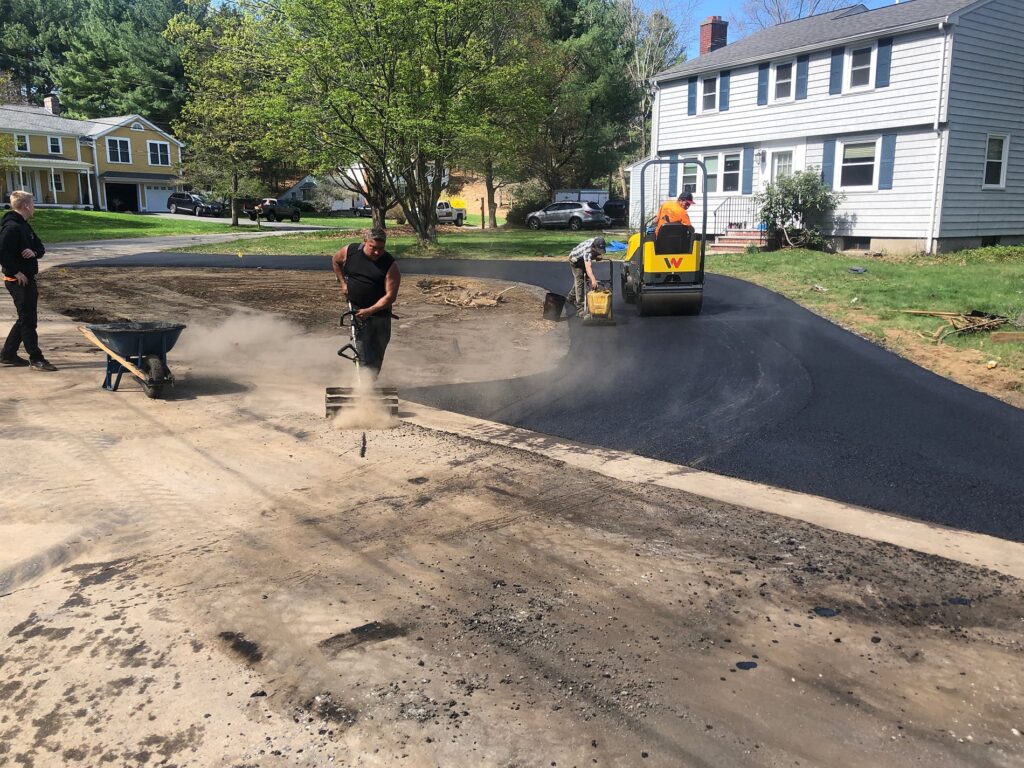
How to read the damage
Asphalt rarely fails for the reason it appears to. The surface shows a symptom, and the cause is usually underneath.
Reading Hairline Cracks
Fine surface cracks with no movement, sinking, or crumbling edges usually mean Hopkinton asphalt is simply drying out and oxidizing, not that the base has failed.
Alligator Cracking Means Base Failure
That tight, interconnected cracking pattern means the base beneath has already given way. Surface patching alone won’t hold up through another Hopkinton freeze-thaw cycle; the failed section needs to be cut out, excavated, and rebuilt properly from the base up.
Edge Crumbling From Plow Damage
Unsupported edges break down fastest in Hopkinton winters. Once the asphalt starts crumbling along the border, rebuilding that edge stops it from spreading further.
Sinking Near the Garage
A dip by the garage apron usually means the base underneath has settled or washed out, a common issue on Hopkinton properties with clay-heavy soil.
Heaving From Trapped Water
A section that lifts rather than sinks often has water trapped beneath it, freezing and pushing upward each Hopkinton winter.
Repair or Replace: Where the Line Actually Sits
This question deserves a straight answer, not a default toward the bigger job. A driveway with isolated problems, a sinking corner, a cracked section, on an otherwise sound surface is usually a good repair candidate. The base is doing its job everywhere except one or two spots, and fixing those spots buys real years.
Replacement makes more sense when damage is spread across most of the surface, when alligator cracking shows up in multiple areas rather than one, or when a drive has already been patched repeatedly in the same spots. At that point, repair becomes money spent twice: you pay for the patch now and the replacement later anyway, because the underlying base was never sound to begin with.
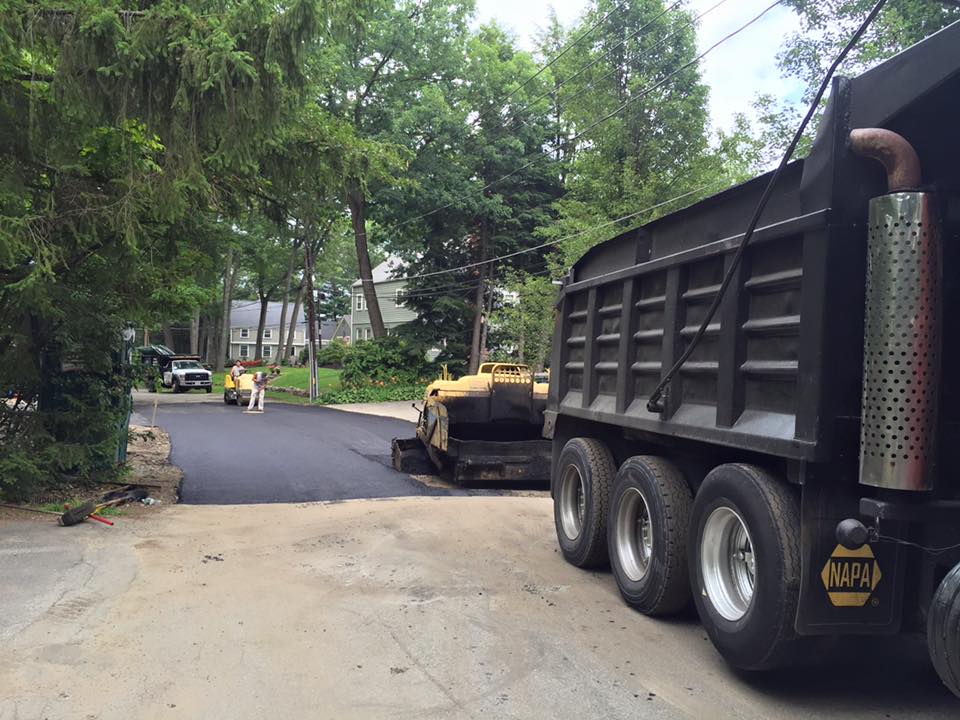
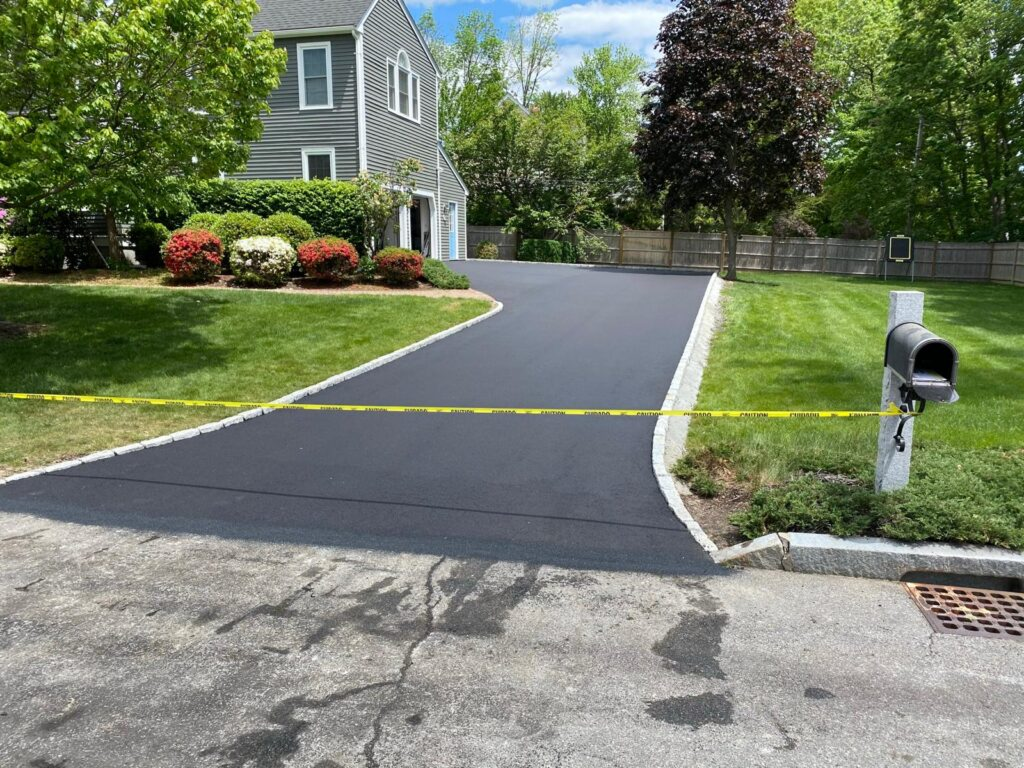
What the repairs are
Infrared Patching
Infrared patching heats the existing asphalt, blends in new material, and fuses the repair to the surrounding surface without a visible seam. It suits shallow, localized damage well.
Saw-Cut and Replace
For deeper damage, we saw-cut a clean section down to the base, rebuild the gravel underneath, and replace it with new asphalt. This is the right call for Hopkinton driveways once alligator cracking or base failure has set in.
Crack Filling
Crack filling seals hairline and moderate cracks before water seeps underneath and freezes, a common issue during Hopkinton winters.
Edge Rebuilding
Rebuilding a crumbled edge means re-establishing a solid border along your Hopkinton driveway, often with deeper base material and better compaction than the original installation.
Regrading a Sunken Section
Regrading addresses a settled or washed-out base directly: we excavate the sunken area, rebuild a properly compacted, well-drained base suited to Hopkinton’s clay-heavy soils, then repave. It fixes the underlying cause of sinking, not just the surface, preventing repeat failures.
Why drives fail in Hopkinton
Hopkinton's ground is unforgiving in a few specific ways.
Steep hillside lots mean water arrives with speed. A sloped drive carries runoff downhill, and where that water meets a low corner, a garage door or the seam of an old patch, it goes down instead of away. Over years that washes out fine material from under the asphalt and leaves the hollows that later sink. On a hillside, drainage decides how long the work lasts.
Shared drives on two-family properties take more traffic than a single-family drive was built for. More vehicles, more turning, more weight on the same few feet. That is exactly where alligator cracking appears first, and where edges break down from vehicles clipping the sides.
Tight frontages put the apron directly against the sidewalk. Plows and shoveling push snow and meltwater straight onto that strip, and the edge there takes constant punishment. It is also the part of the drive most likely to involve the town, so if the damage reaches the apron or the sidewalk line, we will tell you before work begins what is yours to fix and what isn't.
And in every case, frost is the engine behind it. Water enters a small crack, freezes, expands and pries the crack wider. It thaws and drains into the opening, and the cycle repeats all winter. A hairline crack in October can be a pothole by March.
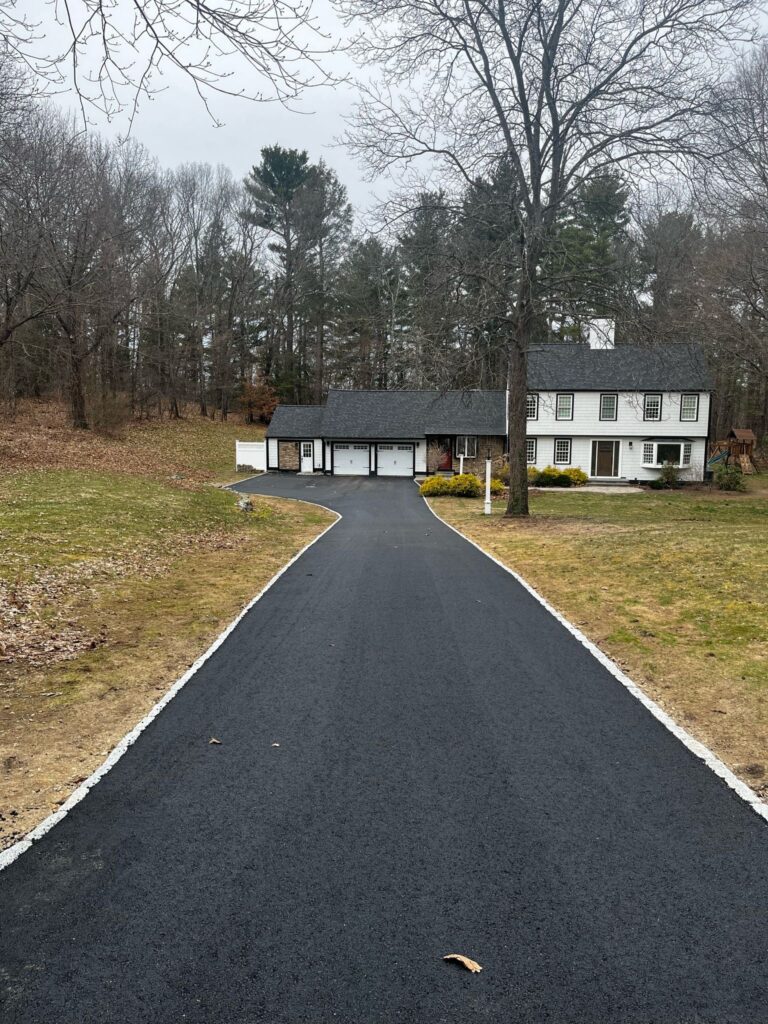
Why timing matters
A crack that is filled this fall is a small job. The same crack left through a winter lets water into the base, and the cost of the repair rises with every freeze. A pothole gets larger as vehicles break its edges away. An edge failure keeps retreating.
Spring is when the damage that has been hiding becomes obvious, and when everyone calls at once. The cheapest repairs happen before that, while the problem is still the size of a hand.
Asphalt repair questions in Hopkinton
Can a cracked asphalt driveway in Hopkinton be repaired instead of replaced?
Often, yes. If the cracking is limited to one or two sections and the rest of the base is sound, targeted repair is usually the right call. Widespread alligator cracking or repeated failures in the same spots point toward replacement instead.
Why do driveways on sloped Hopkinton lots fail at the bottom first?
Water runs downhill and concentrates stress at the low point of the drive, usually near the garage. That's where the base takes the most punishment and where sinking and cracking tend to show up first.
How long can a small crack or pothole wait before it needs attention?
The longer it sits, especially through a winter, the more water gets in, freezes, and widens the problem. A small, cheap repair now is almost always less than the same spot after a season of freeze-thaw.
Does crack filling stop a crack from coming back?
Crack filling seals the opening so water can't get underneath and freeze, which slows or stops the crack from spreading. It won't fix a crack caused by a failed base underneath, which needs a deeper repair.
What causes edge crumbling along the sides of a driveway?
Unsupported edges take the brunt of plow blades and lack the compacted base that the rest of the driveway has. Over successive winters they break down faster than the main surface, especially without a hard border.
Next step
Call us at (413) 337-3772. Tell us what you are looking at and where on the drive it is. We will come out, look at the damage and the ground around it, and tell you honestly whether it can be repaired and what that involves.