
Asphalt Repair in Lincoln, MA
You’re standing over a pothole that wasn’t there last spring, or a patch of pavement near the garage that’s gone soft and spidered under your feet. Maybe it’s the edge of a long wooded driveway, crumbling where a plow caught it last winter. Before anyone talks about tearing out a driveway, the real question is simpler: can this be fixed, and what does that actually involve?
In Lincoln, that question comes with its own set of conditions. Many of the driveways we look at here run several hundred feet back through conservation land and tree cover, out of sight of the road. Homeowners generally want repairs that hold up and stay quiet – no bright new patch that stands out against weathered asphalt, no disruption to the woods the drive runs through. That’s a reasonable thing to ask for, and it shapes how we approach a repair, from the mix we use down to how we feather the edges of a patch into existing pavement.
Reading the damage
Not all asphalt failure is the same problem wearing different clothes. Hairline cracks running in a loose web usually mean the surface is aging and losing flexibility – a maintenance issue, not a structural one. Alligator cracking, the tight, interlocking pattern that looks like reptile skin, means the base underneath has failed or is failing. That section is flexing under load because it no longer has solid support, and surface-level fixes won’t hold for long.
Edge failure – crumbling or breaking along the sides of the drive – usually points to a lack of lateral support, often made worse by snow plows catching an unprotected edge along a long, narrow lane. Sinking is different again: it tells you something underneath has settled or washed out, often where water has been getting under the pavement for a while, a common issue on drives that cross low, shaded, or poorly drained ground. Heaving, by contrast, points to frost or root pressure pushing a section up from below – unsurprising on a property with mature trees close to the pavement edge. Each of these says something different about what’s happening under the surface, and the right repair depends on getting that diagnosis right rather than guessing from the top.
On a long private drive through wooded, undeveloped land, that diagnosis matters more than it would on a short suburban apron. A single failing section on a quarter-mile drive is often isolated and fixable with a saw-cut patch tied properly into the surrounding base. The same symptom paired with multiple soft spots along the length suggests a base or drainage problem running further than the visible damage, and patching each spot individually without addressing what’s underneath usually just buys a season or two before the next one opens up.
A practical repair plan generally considers:


What Our Clients Say
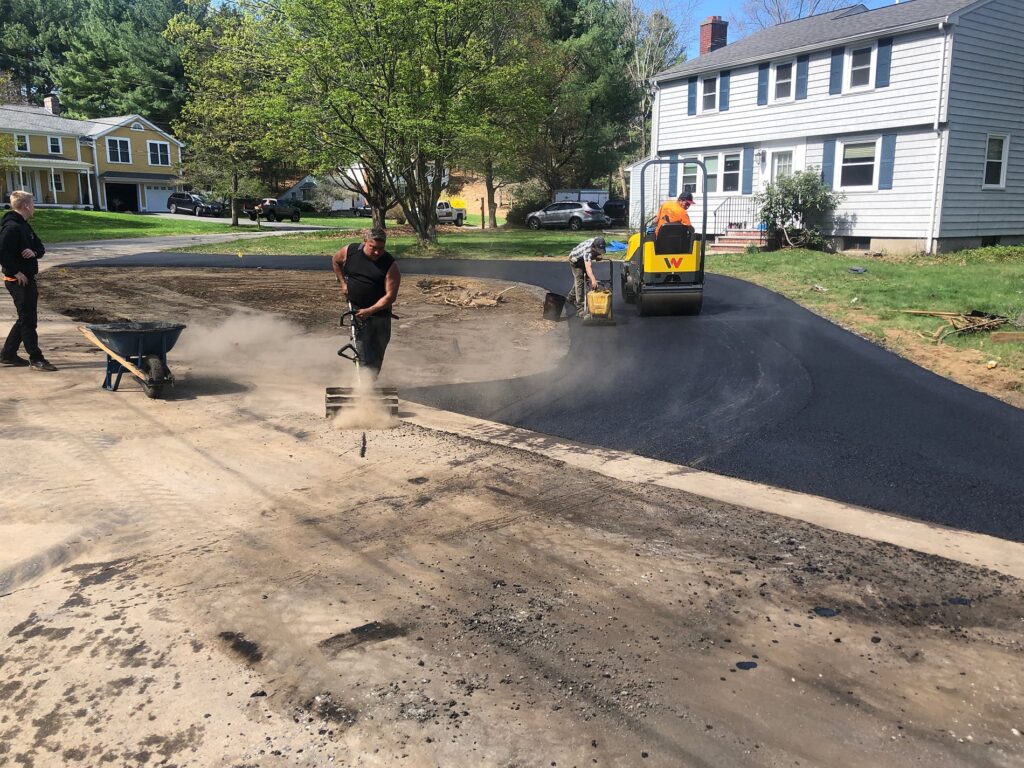
How to read the damage
Asphalt rarely fails for the reason it appears to. The surface shows a symptom, and the cause is usually underneath.
A hairline crack caught early is a small job. Left through a Lincoln winter, water gets in, freezes, and turns one crack into a section that needs rebuilding.
Repair or replace: the honest line
Sound base, isolated cracks or potholes? Patching holds up fine. Base failed over a wide area? Repeated patching just delays the inevitable replacement.
On a drive this long, the pavement doesn’t fail uniformly. One stretch can need real work while the rest still has years left in it.
What infrared patching does
Infrared patching reheats the existing asphalt in place, blends it with fresh material, and bonds it to the surrounding surface – no visible seam, no color mismatch. It suits isolated surface damage where the base below is still sound.
For a drive that’s meant to disappear into the landscape, a seamless infrared patch matters more than it would on a street-facing apron in town.
Saw-cut and replace
Lincoln’s freeze-thaw cycles are hard on asphalt that’s already struggling underneath. Surface patches can mask a problem for a season, but where the base itself has failed – not just the top layer – a patch will crack again within a year, often worse than before. Saw-cutting is how we deal with that properly.
We mark out the full extent of the damaged area, including a margin into sound asphalt, then saw a clean, straight edge around it rather than ripping out a ragged hole. The old asphalt and compromised base material come out together. We rebuild the base with properly compacted aggregate, checking grade and drainage as we go, since poor runoff is often what caused the failure in the first place. New asphalt is then placed and compacted to match the surrounding driveway, giving a tight seam rather than a visible scar.
- Clean saw-cut edges for a seamless repair
- Full base reconstruction, not just a surface layer
- Addresses drainage issues that cause repeat failures
It costs more than a simple patch, but it’s the only repair that actually lasts against Lincoln’s winters.
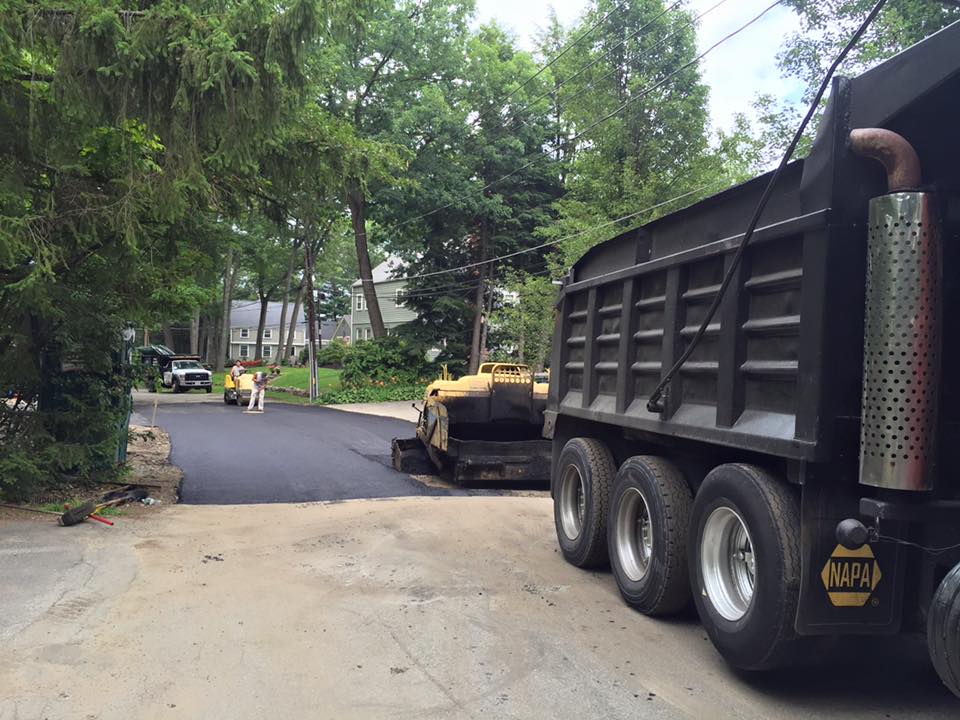
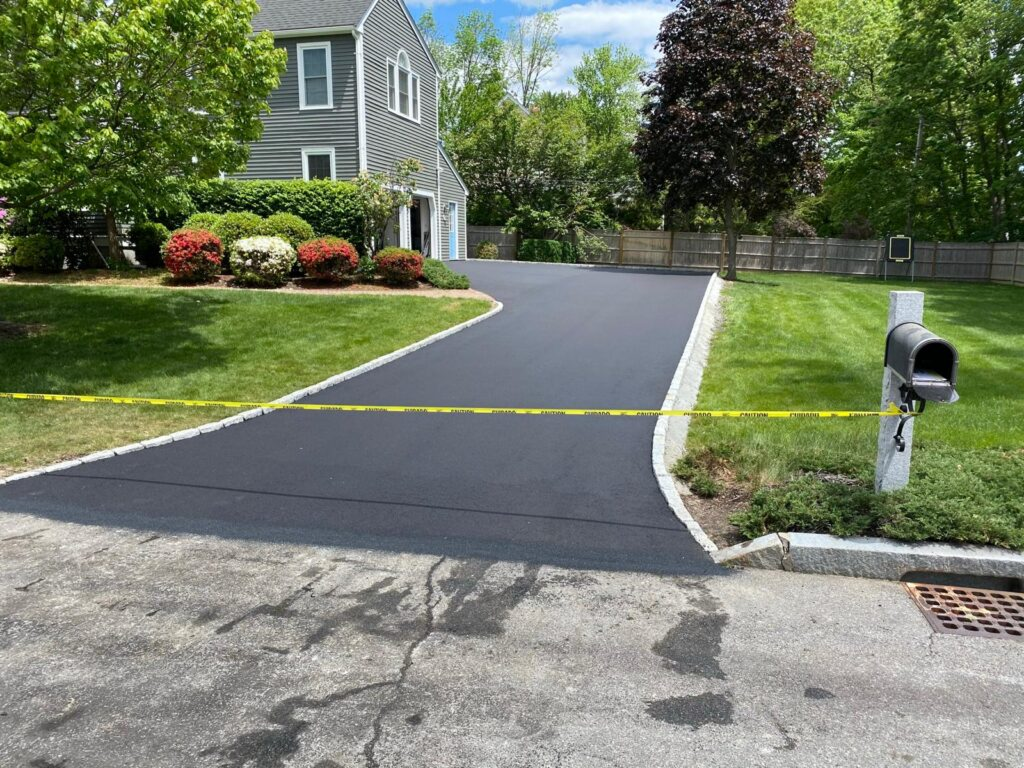
What the repairs are
A sunken section near a garage apron is a classic saw-cut candidate. Patching over settled ground just delays the same repair.
Crack filling and edge rebuilding
Crack filling keeps water out of hairline cracks before they widen. Edge rebuilding restores lateral support where plows or soft shoulders have broken down the side of the drive – common on tree-lined Lincoln drives with no curb.
Why it failed here
Lincoln’s wooded lots drive most failures: tree roots heave pavement from below, while shade keeps surfaces damp and weakens the base. Add long, sloped driveways shedding stormwater poorly, plus New England’s freeze-thaw cycles prying cracks wider each winter.
Timing matters more than it seems
A crack sealed before winter is a small job. Left through Lincoln's freeze-thaw cycles, water works in and widens it – by spring a quarter-inch crack can need saw-cutting, not filling.
Getting a straight answer on your driveway
Pothole, crack, or sunken spot on your Lincoln driveway? You deserve an honest look at what’s underneath, not a rushed replacement quote. Driveway Specialists has repaired driveways across Middlesex County, including wooded Lincoln lanes, since 1988. Call for a straight assessment.
Why drives fail in Lincoln
Lincoln's ground is unforgiving in a few specific ways.
Steep hillside lots mean water arrives with speed. A sloped drive carries runoff downhill, and where that water meets a low corner, a garage door or the seam of an old patch, it goes down instead of away. Over years that washes out fine material from under the asphalt and leaves the hollows that later sink. On a hillside, drainage decides how long the work lasts.
Shared drives on two-family properties take more traffic than a single-family drive was built for. More vehicles, more turning, more weight on the same few feet. That is exactly where alligator cracking appears first, and where edges break down from vehicles clipping the sides.
Tight frontages put the apron directly against the sidewalk. Plows and shoveling push snow and meltwater straight onto that strip, and the edge there takes constant punishment. It is also the part of the drive most likely to involve the town, so if the damage reaches the apron or the sidewalk line, we will tell you before work begins what is yours to fix and what isn't.
And in every case, frost is the engine behind it. Water enters a small crack, freezes, expands and pries the crack wider. It thaws and drains into the opening, and the cycle repeats all winter. A hairline crack in October can be a pothole by March.
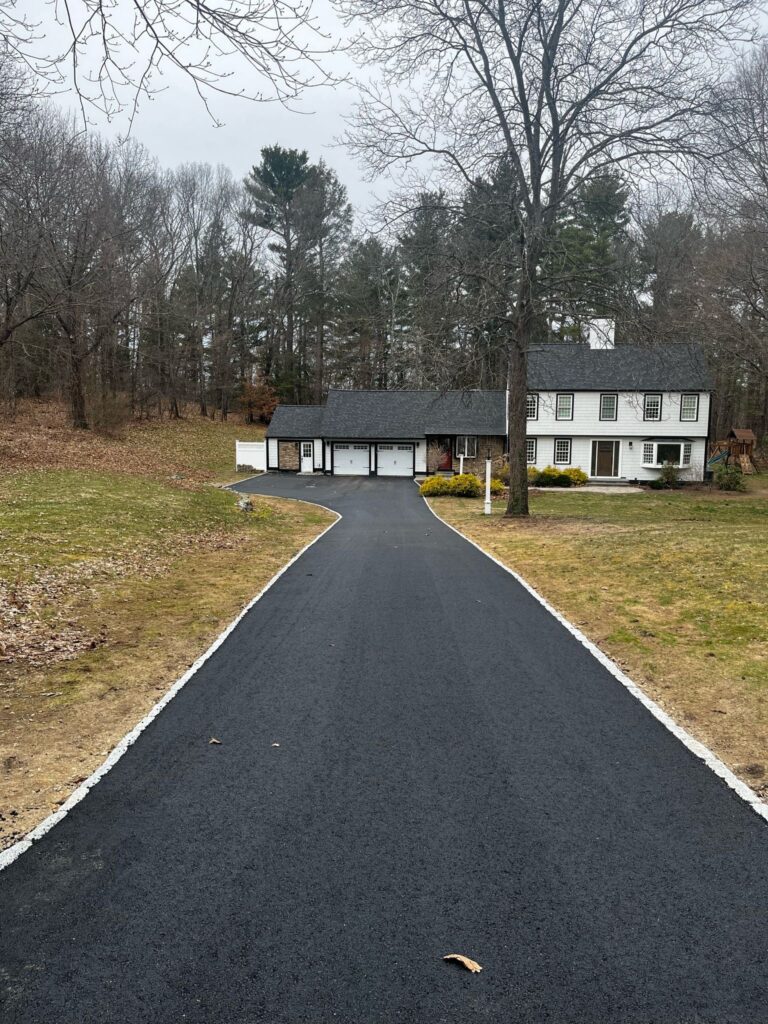
Why timing matters
A crack that is filled this fall is a small job. The same crack left through a winter lets water into the base, and the cost of the repair rises with every freeze. A pothole gets larger as vehicles break its edges away. An edge failure keeps retreating.
Spring is when the damage that has been hiding becomes obvious, and when everyone calls at once. The cheapest repairs happen before that, while the problem is still the size of a hand.
Asphalt repair questions in Lincoln
Can a sunken section of driveway be repaired without replacing the whole thing?
Usually yes, if the sinking is isolated. The affected area is saw-cut out, the base underneath is rebuilt and properly compacted, and new asphalt is placed in that section. It's only when sinking shows up in multiple spots along the drive that a wider rebuild starts to make more sense than repeated patching.
Why does my driveway crack more near the trees?
Roots from mature oaks and maples can push up under the pavement, and the shade those same trees cast keeps the asphalt damp for longer after rain. Both weaken the surface and base faster than they'd wear on an open, sun-exposed section.
Will a repair be visible against the rest of the driveway?
Infrared patching blends new material into the existing surface and bonds it seamlessly, which keeps repairs from standing out – something we pay particular attention to on long, visually quiet Lincoln drives. Saw-cut repairs can be more visible until the asphalt weathers, but they're the right call when the base has actually failed.
How urgent is a small crack really?
More urgent than it looks. A hairline crack left through a New England winter lets water in, which freezes and expands with each cold snap, turning a small crack into a section that needs cutting out and rebuilding. Sealing it early is a far smaller job.
Next step
Call us at (413) 337-3772. Tell us what you are looking at and where on the drive it is. We will come out, look at the damage and the ground around it, and tell you honestly whether it can be repaired and what that involves.