
Asphalt Repair in Medway, MA
You’re standing at the top of your driveway looking at a pothole that wasn’t there last spring, or a patch of cracks spreading out from the edge of the garage apron, or a spot by the mailbox that’s gone soft and started to sink. The question isn’t whether it looks bad. It’s whether it’s fixable, and what fixing it actually involves.
That’s what this page is for. Not a pitch for a new driveway – a straight answer on repair, for driveways in Medway specifically, where newer subdivision lots sit alongside older homes on rural roads, and where most drives are wide enough that we can get a truck and equipment in without much trouble. We also see a fair number of long rural driveways out here, which bring their own issues – more surface area exposed to runoff, more tree roots nearby, and more distance for water to travel before it finds a low spot to pool.
Reading the damage
Different types of cracking mean different things are happening under the surface, and knowing which one you’re looking at changes what the right fix is.
Hairline cracks running in a rough grid are usually just the asphalt aging and shrinking. They’re a maintenance item, not a structural one, as long as they stay fine and shallow. Left alone through a few Ontario winters, though, water gets into them, freezes, and turns a cosmetic issue into a structural one.
Alligator cracking – a tight web of interlocking cracks, named for the pattern – means the base underneath has already failed in that spot. The surface is flexing because nothing underneath is holding it rigid. That section needs to come out, not just get filled, or the same failure will reappear within a season or two.
Edge failure, where the asphalt crumbles or breaks away along the sides of the drive, usually comes down to lack of support on the unpaved side. It’s common on driveways cut into larger lots where the edge sits against loose soil rather than compacted ground – a pattern we see often on Medway’s newer builds, where the surrounding grading hasn’t fully settled yet.
Sinking points to a void or soft spot in the base – often water-related, sometimes traced back to a downspout or drainage path that empties right onto the driveway. Heaving, where a section has pushed up rather than down, usually means frost got underneath and lifted it, or a root is doing the pushing, which is worth checking for on older, tree-lined properties.
A few things we’ll generally want to know before we quote anything:
- How long the problem has been there and whether it’s spreading
- Whether water visibly pools nearby after rain
- Roughly how large the affected area is
Tell us which of these you’re seeing and we can usually tell you over the phone whether it’s a patch job or something bigger, before anyone comes out.


What Our Clients Say

How to read the damage
Asphalt rarely fails for the reason it appears to. The surface shows a symptom, and the cause is usually underneath.
A pothole doesn't start as a pothole. It starts as a crack that let water into the base, and a winter of freeze-thaw that did the rest.
Repair or replace
Most driveways we assess across Medway are patchable rather than beyond saving. We cut back damaged asphalt, address drainage or base issues, then reinstate properly.
A contractor who tells you a driveway has a few years left in it, and fixes the one bad section, is worth more than one who only quotes a full tear-out. We’d rather be right than busy.
Infrared patching
Infrared patching reheats the existing asphalt in place and blends it with new material, leaving a seamless repair.
Saw-cut and replace
Where alligator cracking signals a failed base, we saw-cut a clean rectangle, rebuild the base properly, and lay fresh asphalt. It costs more than a simple patch, but for Medway driveways with deep-rooted problems, it’s the durable fix.
Why it failed here
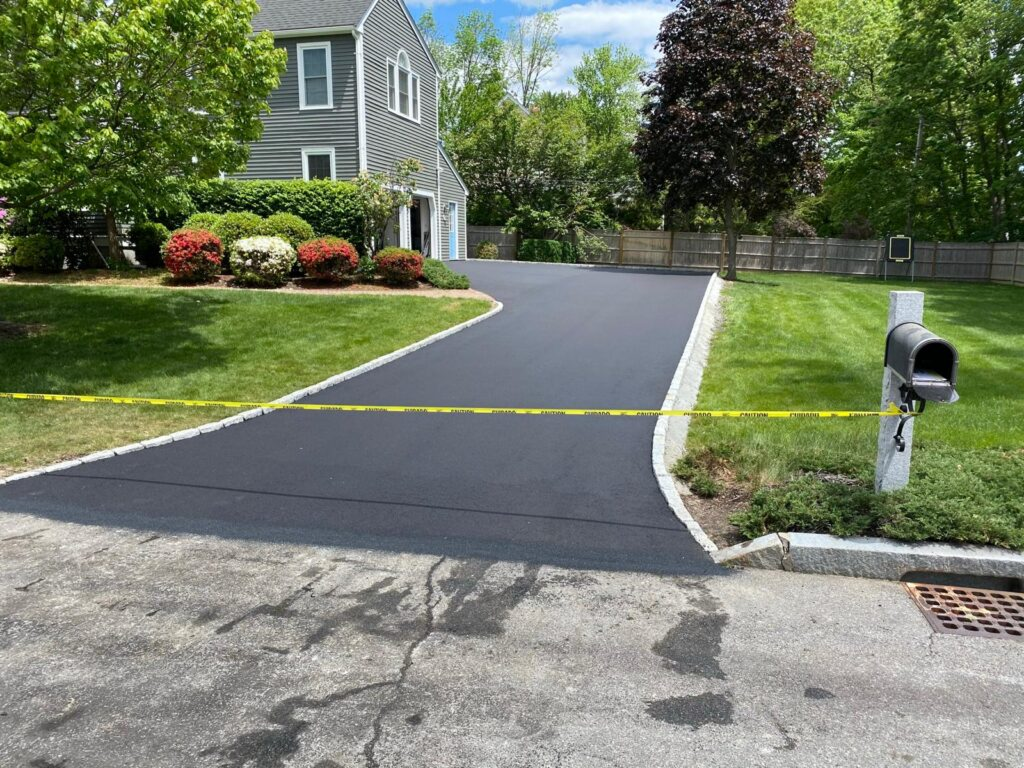
In Medway, failure usually traces back to one of a few recurring things, and the local mix of older rural lanes and newer subdivision driveways shapes which one you're likely dealing with. Water finding its way under the base is the most common culprit – poor grading or a clogged edge lets moisture sit and soften what should be a solid foundation. On newer lots, a base that was never compacted properly before paving shows up a few seasons in as rutting or alligator cracking. On older properties, frost working at an unsupported edge year after year gradually breaks the asphalt down from the perimeter inward, while a root from a mature tree can push up from below and crack the surface outright. Heavier vehicles play a role too – a plow truck clearing snow in a hard Medway winter, or a delivery or oil truck backing onto a long rural drive, can accelerate damage that was already starting beneath the surface, even if it wasn't visible yet.

What the repairs are
Crack filling
Routing and filling cracks before winter keeps water out of the base layer. In Medway’s freeze-thaw cycles, it’s cheap, fast, and the single most effective thing an owner can do between larger asphalt repairs, extending driveway life noticeably.
Edge rebuilding
Where the edge has crumbled, we cut back to sound asphalt, rebuild support on the unpaved side with compacted aggregate, and repave the edge cleanly.
Regrading a sunken area
A sunken section by a garage or at a low point usually means standing water underneath.
Why timing matters
A crack caught in fall costs a fraction of the pothole it becomes by spring. Water gets into the base over winter, freezes, expands, and turns a small problem into a structural one by the time the ground thaws.
Get it looked at before winter sets in
Seeing a crack, soft spot, or crumbling edge in your Medway driveway? The cheapest time to fix it is before the first hard freeze.
Why drives fail in Medway
Medway's ground is unforgiving in a few specific ways.
Steep hillside lots mean water arrives with speed. A sloped drive carries runoff downhill, and where that water meets a low corner, a garage door or the seam of an old patch, it goes down instead of away. Over years that washes out fine material from under the asphalt and leaves the hollows that later sink. On a hillside, drainage decides how long the work lasts.
Shared drives on two-family properties take more traffic than a single-family drive was built for. More vehicles, more turning, more weight on the same few feet. That is exactly where alligator cracking appears first, and where edges break down from vehicles clipping the sides.
Tight frontages put the apron directly against the sidewalk. Plows and shoveling push snow and meltwater straight onto that strip, and the edge there takes constant punishment. It is also the part of the drive most likely to involve the town, so if the damage reaches the apron or the sidewalk line, we will tell you before work begins what is yours to fix and what isn't.
And in every case, frost is the engine behind it. Water enters a small crack, freezes, expands and pries the crack wider. It thaws and drains into the opening, and the cycle repeats all winter. A hairline crack in October can be a pothole by March.

Why timing matters
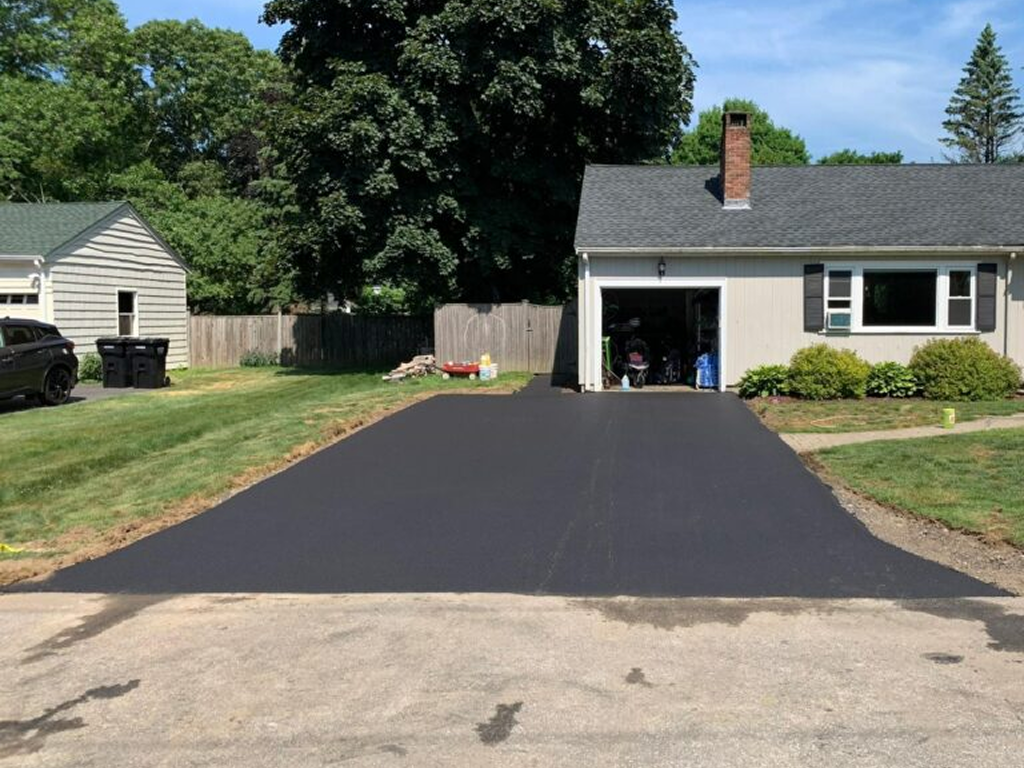
A crack that is filled this fall is a small job. The same crack left through a winter lets water into the base, and the cost of the repair rises with every freeze. A pothole gets larger as vehicles break its edges away. An edge failure keeps retreating.
Spring is when the damage that has been hiding becomes obvious, and when everyone calls at once. The cheapest repairs happen before that, while the problem is still the size of a hand.
Asphalt repair questions in Medway
Can a cracked driveway in Medway be repaired instead of replaced?
Often yes. If the base underneath is still sound and the damage is limited to a crack network, a patch, or one sunken corner, repair makes sense. The test is whether the problem is surface-deep or runs into the base. A contractor can tell the difference by probing the edges of the damage and checking how far it extends.
Why do so many driveways in Medway crack near the edges first?
Edges have less support on one side and take the brunt of frost heave each winter. On the newer subdivision lots around Medway, thinner edge sections next to unpacked topsoil are usually the first place a crack opens.
How fast does a small crack turn into a pothole?
It depends on water and traffic, but the pattern is consistent: a crack lets water into the base, freeze-thaw cycles widen it, and repeated wheel loads break the weakened surface into a pothole. One winter left unaddressed is usually enough to turn a hairline crack into something structural.
Does Driveway Specialists repair long rural driveways as well as subdivision drives?
Yes. Medway has both, and the wide aprons and larger lots common in town generally give us good room to stage equipment and move material in, whether the drive sits on a quarter-acre subdivision lot or a longer rural stretch.
Next step
Call us at (413) 337-3772. Tell us what you are looking at and where on the drive it is. We will come out, look at the damage and the ground around it, and tell you honestly whether it can be repaired and what that involves.