
Asphalt Repair in Northborough, MA
You’re standing over a pothole by the garage, or looking at a patch of pavement that’s gone spidery and loose underfoot, or watching water pool in a dip that wasn’t there two years ago. The question isn’t whether your driveway looks tired. It’s whether this particular failure is a patch job or the start of something bigger. That’s what this page is for.
Northborough has two very different driveway populations. On the older main road network, you’ve got asphalt laid decades ago, often patched more than once, sitting on a base nobody can fully account for anymore. In the newer subdivisions, you’ve got long straight drives on larger lots, laid more recently and more consistently, but long enough that water running the full length of the slab has real force behind it by the time it reaches the street or the garage apron. Both situations fail, but they fail differently, and the repair that makes sense depends on reading the damage correctly before anyone reaches for a shovel.
Reading the damage
Hairline cracks running in a rough grid, not yet connected, usually mean the surface is aging but the base underneath is still doing its job. That’s a crack-filling situation, not an emergency. Alligator cracking – tight, interlocking cracks that genuinely look like reptile skin – means the base has already failed under that section and the surface is just the last thing to show it. Edge failure, where the asphalt crumbles along the border of the drive, is often a drainage and support issue rather than a wear issue; edges have no neighboring pavement to lean on and take the brunt of plow blades every winter. Sinking is a base or sub-base problem, often linked to water finding its way underneath. Heaving, less common here but not unheard of under a long exposed run, points to frost and moisture working beneath the slab over winter.
None of these are cosmetic categories. Each one tells you something different about what’s happening below the surface, and that’s what decides whether a repair will actually hold.


What Our Clients Say
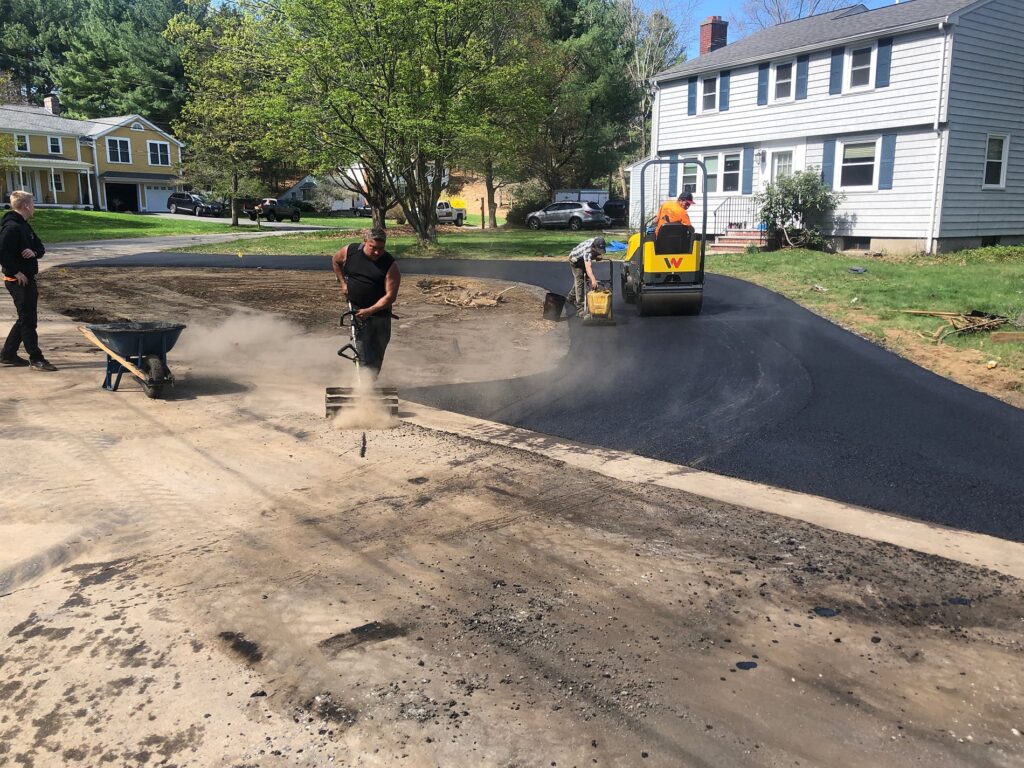
How to read the damage
Asphalt rarely fails for the reason it appears to. The surface shows a symptom, and the cause is usually underneath.
On older Northborough streets, decades of patch-on-patch asphalt often hide an inconsistent base. A crack that looks minor on top can sit over a section that’s already shifted below, so proper repair means addressing the base, not just the surface.
Repair or replacement, honestly
Localized damage with a sound base, like a sunken corner from a drainage issue, usually just needs patching plus a fix for the water problem. Replace only when failure is widespread.
Newer Northborough subdivision drives are long and straight, which concentrates water flow. A single weak point near the bottom of the run can take on a disproportionate amount of stress.
Infrared patching
Infrared patching heats existing asphalt and fuses it with new material, creating a seamless bond rather than a visible patch. It’s ideal for Northborough driveways with smaller problem areas where the base remains intact and only the surface has failed.
Saw-cut and replace
For damage deeper than the surface, we saw-cut a clean line around the affected area, remove it fully, and rebuild against solid base material. It’s the right fix for alligator cracking or a section that’s failed below the surface.
Crack filling and edge rebuilding
Northborough’s freeze-thaw cycles are tough on asphalt, and the first sign of trouble is almost always a hairline crack. Left alone, these small fissures let water seep beneath the surface, where repeated freezing and thawing through the winter months forces them wider and deeper until you’re left with potholes or sunken patches. Crack filling addresses this early, sealing out moisture before it can undermine the base layer and turn a simple fix into a costly repair.
Edge rebuilding tackles a related but distinct problem: the borders of a driveway that lack the support of surrounding soil or a solid foundation. These edges take a beating from snowplows, vehicle weight, and ordinary settling, often crumbling well before the rest of the surface shows wear. Rebuilding those sections restores structural integrity and gives the whole driveway a cleaner, more finished look.
- Seals hairline cracks before winter freeze-thaw cycles widen them
- Prevents water infiltration that weakens the base layer beneath the asphalt
- Restores crumbling edges worn down by plows and lack of soil support
- Extends the driveway’s overall lifespan and improves its appearance
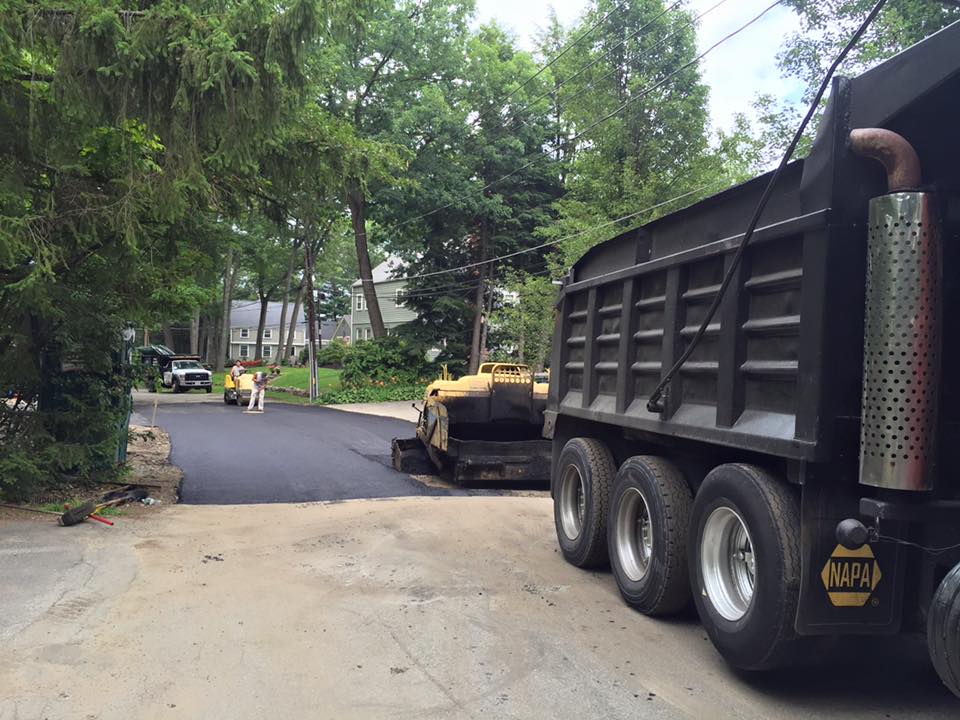
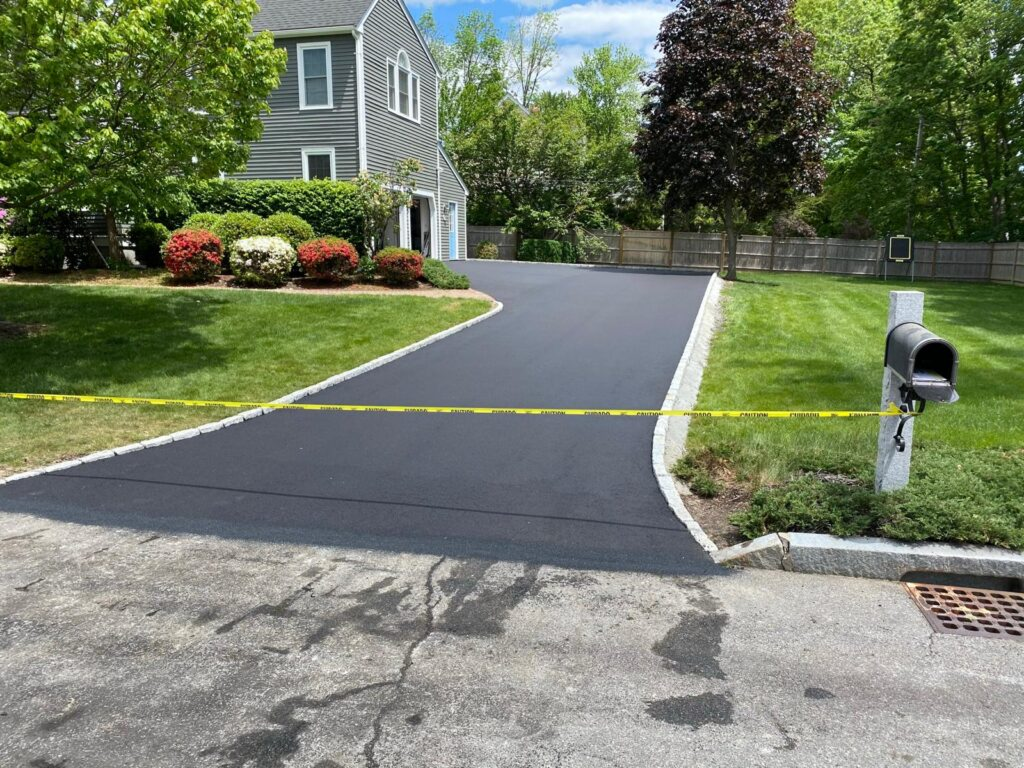
What the repairs are
Why it failed here
In older Northborough driveways, water seeps into unsealed cracks and freeze-thaw cycles widen them into potholes. Newer subdivision driveways often fail from poor grading or repeated heavy vehicle loads.
Shaded Northborough driveways under mature trees stay wet longer after rain, extending the freeze-thaw window each winter and accelerating the cracking and potholing a timely asphalt repair is meant to stop before costly resurfacing becomes unavoidable.
Why timing matters
A small crack filled in fall costs little and takes little time. Left through a Northborough winter, freeze-thaw cycles widen it with every storm.
Northborough winters bring repeated freeze-thaw cycles. A small crack ignored in October is rarely the same size by April – it's wider, deeper, and more expensive to fix properly.
What we need from you
A few clear photos of the damage and a sense of how long it’s been there help us figure out roughly what we’re dealing with before we even arrive, so the visit itself is about confirming and fixing, not guessing.
Why drives fail in Northborough
Northborough's ground is unforgiving in a few specific ways.
Steep hillside lots mean water arrives with speed. A sloped drive carries runoff downhill, and where that water meets a low corner, a garage door or the seam of an old patch, it goes down instead of away. Over years that washes out fine material from under the asphalt and leaves the hollows that later sink. On a hillside, drainage decides how long the work lasts.
Shared drives on two-family properties take more traffic than a single-family drive was built for. More vehicles, more turning, more weight on the same few feet. That is exactly where alligator cracking appears first, and where edges break down from vehicles clipping the sides.
Tight frontages put the apron directly against the sidewalk. Plows and shoveling push snow and meltwater straight onto that strip, and the edge there takes constant punishment. It is also the part of the drive most likely to involve the town, so if the damage reaches the apron or the sidewalk line, we will tell you before work begins what is yours to fix and what isn't.
And in every case, frost is the engine behind it. Water enters a small crack, freezes, expands and pries the crack wider. It thaws and drains into the opening, and the cycle repeats all winter. A hairline crack in October can be a pothole by March.
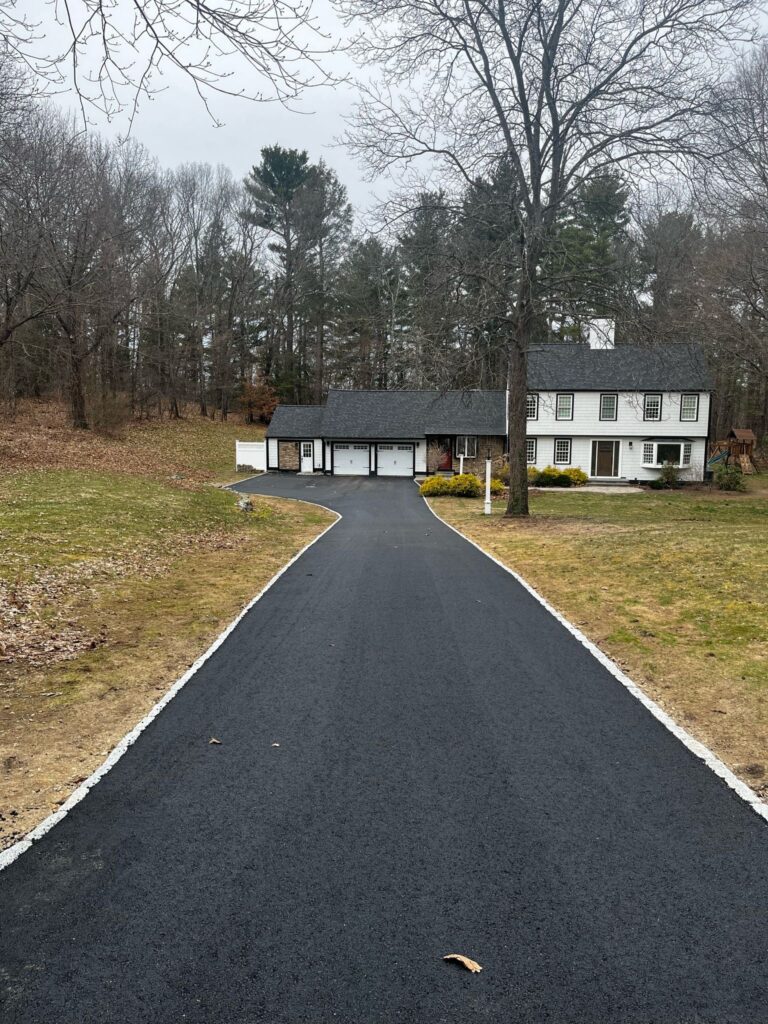
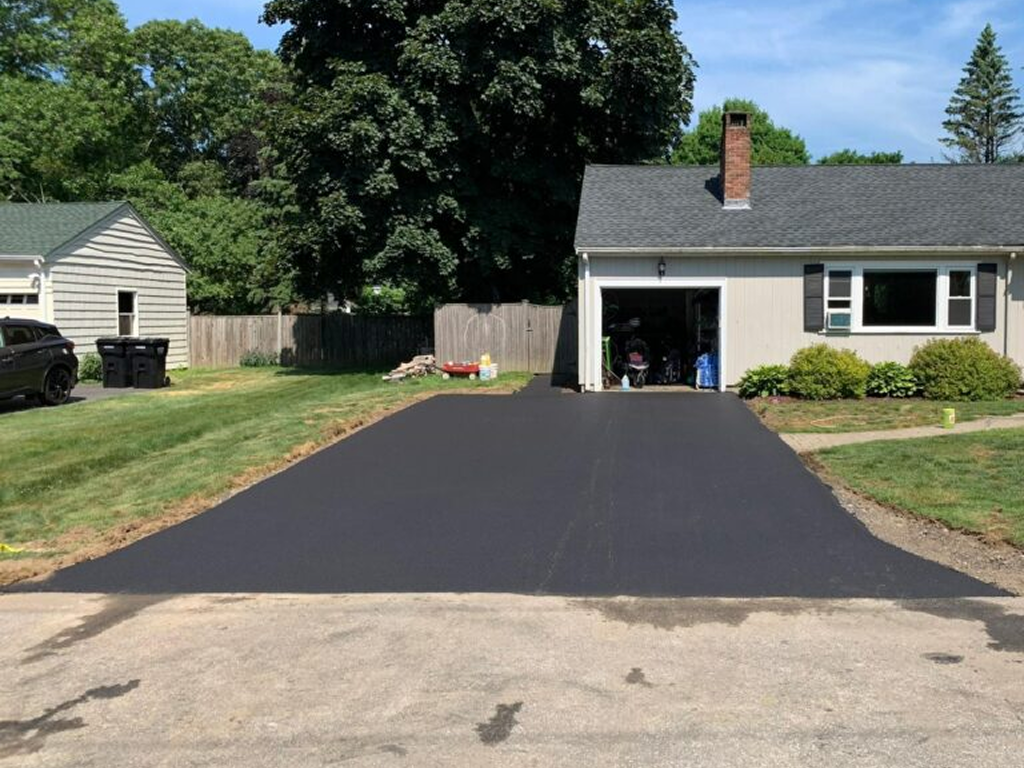
Why timing matters
A crack that is filled this fall is a small job. The same crack left through a winter lets water into the base, and the cost of the repair rises with every freeze. A pothole gets larger as vehicles break its edges away. An edge failure keeps retreating.
Spring is when the damage that has been hiding becomes obvious, and when everyone calls at once. The cheapest repairs happen before that, while the problem is still the size of a hand.
Asphalt repair questions in Northborough
Can a pothole in my Northborough driveway actually be repaired, or do I need a new driveway?
Most isolated potholes can be repaired if the surrounding base is still solid. We cut out the damaged section, rebuild the base where needed, and patch the area so it bonds properly. Replacement only makes sense when the damage has spread across most of the surface.
How do I know if a crack is serious or just cosmetic?
Hairline cracks in a loose grid pattern are usually surface aging and can be handled with crack filling. Tight, interlocking cracking that resembles reptile skin, known as alligator cracking, means the base underneath has already failed and needs a deeper repair.
Why does my driveway edge crumble faster than the middle?
Edges have no adjoining pavement to support them and take direct impact from snowplow blades each winter. Without that support, they wear and crack faster than the main surface, especially on longer driveways in Northborough's subdivisions.
Is it worth fixing a crack now if it's small?
Yes. A small crack sealed before winter costs far less than the same crack after a season of freeze-thaw cycles have widened it and let water damage the base underneath. Early repair is almost always the cheaper path.
Do you offer sealcoating as part of a repair visit?
Sealcoating is a separate, preventative service rather than a repair, so we handle it separately from patching or crack work. If you're interested in it alongside a repair, just ask when you call.
Next step
Call us at (413) 337-3772. Tell us what you are looking at and where on the drive it is. We will come out, look at the damage and the ground around it, and tell you honestly whether it can be repaired and what that involves.