
Asphalt Repair in Norwood, MA
You’re standing over it right now, maybe. A pothole that keeps growing past the edges you patched last spring. A dark, spidered patch near the end of the drive that flexes when you drive over it. A section by the garage that’s dipped low enough to pool water after every rain. The question isn’t whether something’s wrong. It’s whether this is a fifteen-minute fix or the start of something bigger.
Norwood’s post-war streets make this an easier call than it is in a lot of towns. The lots are compact, the drives are narrow and run flat between closely set houses, and there’s rarely a grade pushing water toward a low spot. That means most of the damage we see here comes from one of two things: age and frost working on an asphalt surface that’s simply had its time, or a weak spot in the base that was never going to hold up regardless of the slope.
What the damage is actually telling you
Hairline cracks running in roughly straight lines are usually just the surface drying out and contracting – cosmetic, and worth sealing before they let water in, but not a structural problem on their own. Alligator cracking – that tight, interlocking web of cracks that looks like reptile skin – is a different story. It means the base underneath has already failed and the surface is flexing under weight with nothing solid to rest on. Patching the top without fixing what’s underneath just buys a season.
Edge failure, where the asphalt crumbles along the sides of the drive, is common on narrow Norwood lots where there’s no shoulder or apron to spread the load – tires ride close to the edge on every pass, and plows catch it every winter. Sinking is a base or drainage issue, often where water has found its way under the pavement and softened what’s beneath it. Heaving, by contrast, points to frost or root pressure pushing up from below rather than water washing material out.
None of these are guesses once you know what to look for, and knowing which one you’re dealing with is what decides whether a patch is money well spent or money spent twice. A quick way to sort the serious from the cosmetic before anyone even shows up with equipment:
- Can you fit a coin edge-on into the crack? If so, water’s already getting below the surface.
- Does the spot flex or feel soft underfoot when it’s warm out? That’s a base problem, not a surface one.
- Is the damage spreading wider each season, or staying put? Spreading means it’s active and worth addressing now.
- Does water sit there for more than a few hours after rain? That’s a drainage or grading issue feeding the damage.


What Our Clients Say
How to read the damage
Asphalt rarely fails for the reason it appears to. The surface shows a symptom, and the cause is usually underneath.
A single hairline crack or a small alligatored patch near the apron is a repair. A drive that’s alligatored end to end, with the base failing in multiple spots, is usually past the point where patching makes sense.
We'd rather tell a Norwood homeowner their drive has a few good years left in it than talk them into replacement work it doesn't need yet.
Infrared patching
Heats the existing asphalt and fuses it with new material, leaving a seamless repair without a visible patch line – ideal for isolated potholes, utility cuts, and small alligatored sections common on Norwood driveways, without the cost of a full resurface.
Saw-cut and replace
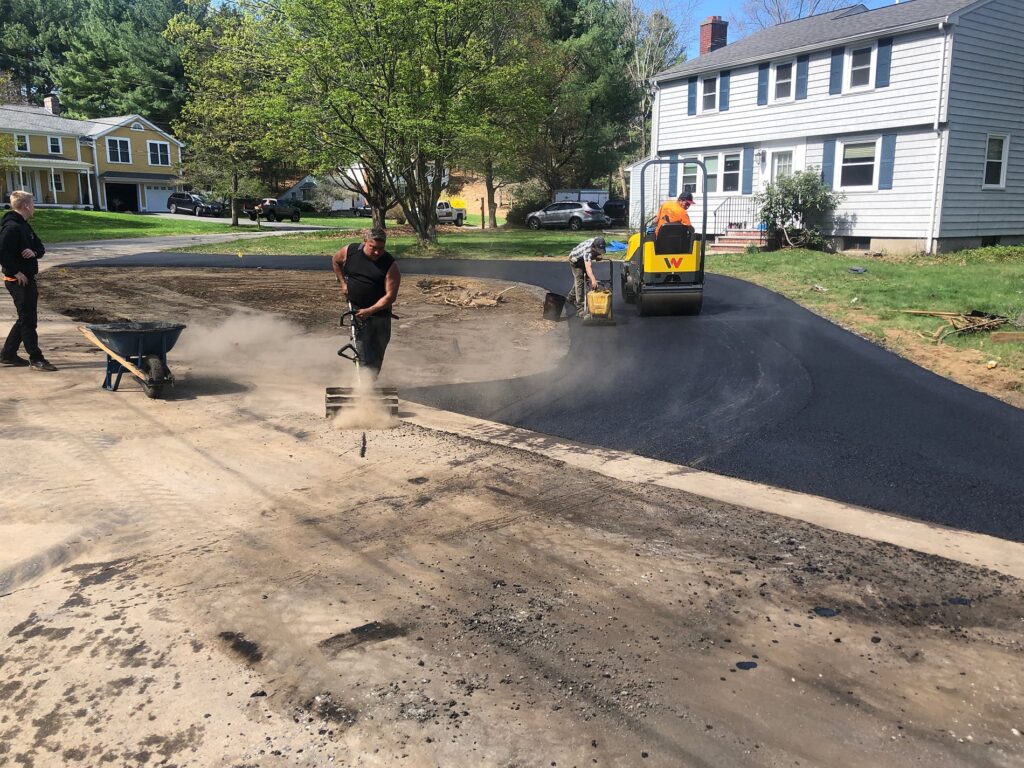
For Norwood driveways with potholes, cracking, or base failure, we saw-cut a clean, straight edge around the damaged section, excavate it fully, then rebuild the base and asphalt in compacted layers—delivering a durable, seamless repair where infrared patching simply won't reach deep enough.
Crack filling
Keeps water out of hairline and surface cracks before they widen, cheapest when done early rather than after a winter's freeze-thaw has pried them open.
Why repairs fail here in the first place
Norwood’s flat, narrow drives don’t fight drainage the way a sloped property does, but they’re not immune. Two things do most of the damage: age, and water finding its way under the base through an unsealed crack or a weak edge with no shoulder to protect it.
Once water sits under the pavement, New England’s freeze-thaw cycle takes over. It expands when it freezes, shoving the surrounding asphalt apart, then thaws and settles slightly lower than before — ready to refreeze the next cold snap. Each cycle through a Massachusetts winter widens the gap a little more. That’s why a crack that looked minor in November can be a pothole by March, and why edge failure is so common on narrow drives with no buffer between the asphalt and the plow blade.
Mature trees aren’t the main driver of damage on most Norwood lots the way they are in older, leafier neighborhoods, but where a drive runs near an established oak or maple, root pressure can still heave a section from below even on an otherwise flat, well-drained property.
What the repairs are
Regrading a sunken section
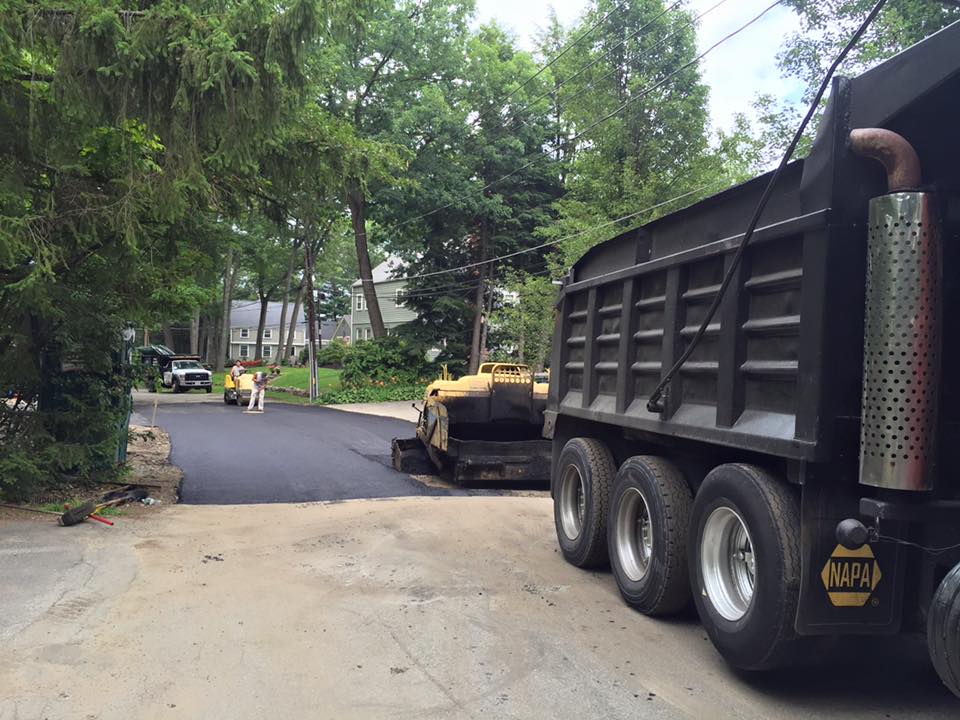
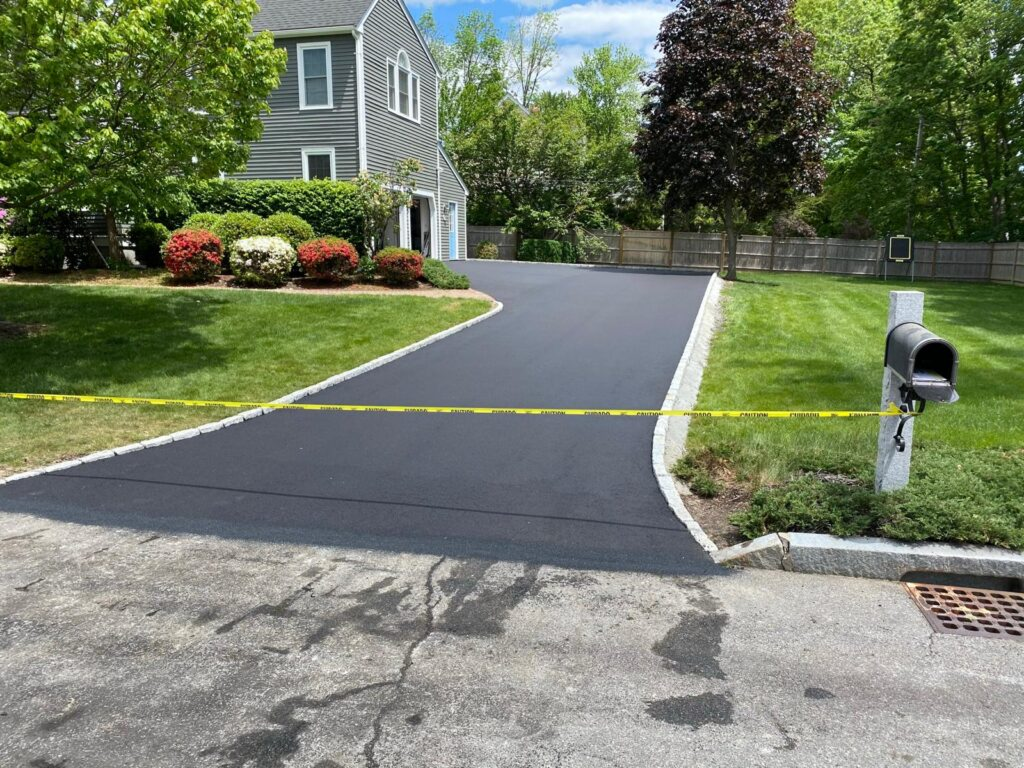
Where a low spot has formed near a garage apron, drain, or old utility cut, Norwood crews regrade the sunken section: excavating, rebuilding the base to proper height and compaction, then repaving so water sheds away instead of pooling and refreezing.
Why timing matters
A crack filled promptly in Norwood’s mild spells costs a fraction of what the same crack costs after winter freeze-thaw cycles turn it into a pothole with a failed base underneath, forcing a full patch instead of a simple seal.
What a narrow Norwood lot means for the work
Tight side yards and close-set houses in Norwood mean less room to stage equipment or stockpile asphalt. We plan smaller crews, compact gear, and careful sequencing so the repair moves efficiently without blocking shared driveways, sidewalks, or neighbors’ access.
Reading a repair that's already been done badly
Around Norwood, a patch that’s darker, higher, or already cracking along its own edges usually means it was poured over a crumbling base rather than rebuilt properly – that same failure will simply return, often within a season or two.
Get it looked at before the next freeze
Not sure how bad the damage is? Send Driveway Specialists a photo or have us take a look in person around Norwood. We’ll tell you straight whether it’s a simple patch job or something more serious, and why.
Why drives fail in Norwood
Norwood's ground is unforgiving in a few specific ways.
Steep hillside lots mean water arrives with speed. A sloped drive carries runoff downhill, and where that water meets a low corner, a garage door or the seam of an old patch, it goes down instead of away. Over years that washes out fine material from under the asphalt and leaves the hollows that later sink. On a hillside, drainage decides how long the work lasts.
Shared drives on two-family properties take more traffic than a single-family drive was built for. More vehicles, more turning, more weight on the same few feet. That is exactly where alligator cracking appears first, and where edges break down from vehicles clipping the sides.
Tight frontages put the apron directly against the sidewalk. Plows and shoveling push snow and meltwater straight onto that strip, and the edge there takes constant punishment. It is also the part of the drive most likely to involve the town, so if the damage reaches the apron or the sidewalk line, we will tell you before work begins what is yours to fix and what isn't.
And in every case, frost is the engine behind it. Water enters a small crack, freezes, expands and pries the crack wider. It thaws and drains into the opening, and the cycle repeats all winter. A hairline crack in October can be a pothole by March.
Why timing matters
A crack that is filled this fall is a small job. The same crack left through a winter lets water into the base, and the cost of the repair rises with every freeze. A pothole gets larger as vehicles break its edges away. An edge failure keeps retreating.
Spring is when the damage that has been hiding becomes obvious, and when everyone calls at once. The cheapest repairs happen before that, while the problem is still the size of a hand.
Asphalt repair questions in Norwood
Can a pothole be fixed without redoing the whole driveway?
In most cases, yes. An isolated pothole with sound asphalt around it is a straightforward infrared or saw-cut repair. Full replacement only makes sense when the failure has spread across most of the surface or the base has failed in several places.
How do I know if it's a crack or a sign the base has failed?
Straight hairline cracks are usually surface-level and worth sealing early. Alligator cracking – a tight web of interlocking cracks – means the base underneath is already compromised and needs more than a surface fill.
Why does my driveway edge keep crumbling?
Narrow drives without a shoulder take the full weight of tires and plow blades right at the edge, with nothing to spread the load. Once the edge starts to crumble, each winter's freeze-thaw cycle makes it worse until it's rebuilt properly.
Is it worth repairing an asphalt driveway in winter?
Some repairs, like infrared patching, can be done in colder weather with the right conditions, but many repairs hold better when done in warmer months. If damage shows up in winter, it's usually better to have it assessed and scheduled rather than left to worsen through repeated freeze-thaw cycles.
How long will a patch last before I need another one?
It depends entirely on whether the underlying cause was fixed. A patch over a failed base will crack again; a patch that addresses the actual problem – water, base, or edge support – can hold for years. That's a question worth asking before any repair is scheduled.
Next step
Call us at (413) 337-3772. Tell us what you are looking at and where on the drive it is. We will come out, look at the damage and the ground around it, and tell you honestly whether it can be repaired and what that involves.