
Asphalt Repair in Waltham, MA
You are standing over it right now. Maybe it is a pothole that showed up overnight after a hard freeze, a spidered patch of cracks near the bottom of the slope, a crumbling edge where the asphalt meets the grass, or a low spot by the garage that holds water every time it rains. You are not looking for a new driveway. You want to know if this one spot can be fixed, what that actually involves, and whether it is worth doing now or waiting.
On Waltham’s hillside streets, with two- and three-family houses sharing driveways that run steep and narrow between buildings, damage shows up in predictable places. The base of a slope, the edge where a shared drive narrows, the seam between two pours. Reading the damage correctly matters more here than almost anywhere, because a drive that serves two or three households does not get a convenient few weeks of closure to sort out a problem that got ignored too long.
Reading the damage
Different failures point to different causes underneath. Hairline cracks running in a loose pattern are usually just age and surface oxidation; they let water in but the base below is probably still sound. Alligator cracking, a tight web of interconnected cracks that looks like reptile skin, means the base has lost its ability to support the load above it. That section is flexing under weight instead of holding firm. Edge failure, where the asphalt crumbles and breaks away along the border, is almost always water and lack of confinement, worse on a shared drive where cars track close to the edge because there is no room to centre a vehicle. Sinking usually means the base has washed out or settled unevenly underneath. Heaving, where the surface has pushed up rather than down, points to frost or a root working beneath the surface.
Each of these tells you something different about what repair will or will not fix, and that is the real starting point before any decision gets made about what to do next.
Matching the fix to the damage
A patch is only as good as what it sits on. Cutting out a failed section, squaring the edges, and tying the new asphalt into a stable base is a different job from skimming a thin layer over a soft spot and hoping it holds through the next freeze-thaw cycle. On Waltham’s older drives, especially ones poured decades ago on a thin base by today’s standards, a proper patch often means digging down further than you would expect, past the asphalt and into the gravel underneath, to find material that will actually carry weight again.


What Our Clients Say

How to read the damage
Asphalt rarely fails for the reason it appears to. The surface shows a symptom, and the cause is usually underneath.
Repair or replace
A good Waltham contractor tells you how many years a drive has left, not just what tearing it out costs. Patching works for localized damage over a sound base.
On a shared Waltham driveway, a contained asphalt repair that patches potholes, cracks, and sunken edges while keeping both households' access open is often the practical choice over a full teardown that nobody wants to coordinate, schedule, or pay for together.
Infrared patching
Infrared patching reheats the existing asphalt in place and blends it with new material, leaving a seamless repair with no cold joints.
Saw-cut and replace
For deeper failures, we saw-cut a clean square around the damaged area, remove it fully, and replace it down to the base. This is the right call when alligator cracking shows the base itself has given way.
Crack filling
Crack filling seals hairline and moderate cracks before water gets underneath and starts the freeze-thaw cycle so common in Waltham winters. It is cheap, fast, and only effective while cracks stay surface-level, not structural, so timing matters.
Edge rebuilding
Driveway edges take a beating in Waltham, especially on the narrow shared drives common around the city’s older triple-deckers and tight lot lines. Once the border starts to crumble, it rarely stops on its own — tires clip the broken edge every time someone pulls in or out, snow plows chip away at it each winter, and the damage creeps further into the driveway with every freeze-thaw cycle. Edge rebuilding stops that spread before it reaches sound pavement.
We cut back to solid, well-bonded asphalt so the repair isn’t just patched over crumbling material, then rebuild the border with proper compaction and confinement so it can actually bear the weight of tires rolling along it day after day. This is especially important where a driveway sits close to a neighbor’s property, a retaining wall, or a planting bed, since a weak edge there tends to fail fastest.
- Removal of deteriorated or unsupported edge material
- Compacted base work for lasting confinement
- Clean, matched transition to the existing surface
Done right, it protects the rest of the driveway from further erosion.

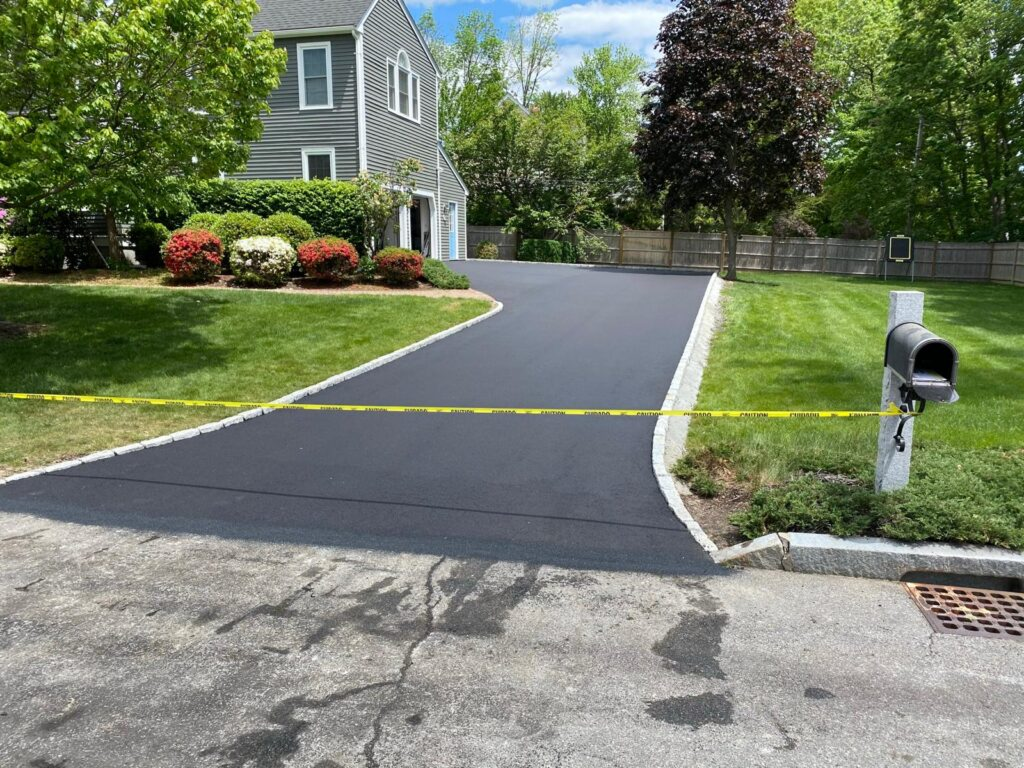
What the repairs are
Why it failed on this kind of site
Waltham’s hillside lots funnel water downhill into every weak seam, and shared narrow drives add constant turning stress from pivoting cars and trucks. Winter freeze-thaw cycles then pry open any crack, turning October hairlines into spring potholes.
Steep grade plus stacked housing means water and turning stress both concentrate in the same few feet of asphalt, which is exactly where failures tend to start.
Why timing matters
A crack filled this fall costs little and takes an hour. Left through a Waltham winter, water seeps in, freezes, and expands—returning by spring as a pothole or sunken section that costs far more to repair.
What a winter left undone looks like
Each freeze-thaw cycle widens an untreated crack a little more. By the time the ground thaws for good in spring, a small surface flaw has often become a structural one that needs cutting out rather than filling.
Shared drives need faster decisions
When a driveway serves more than one household, a failure near the shared boundary affects everyone’s access. Addressing it before it spreads keeps the repair simple and keeps both parties off a torn-up surface.
Why drives fail in Waltham
Waltham's ground is unforgiving in a few specific ways.
Steep hillside lots mean water arrives with speed. A sloped drive carries runoff downhill, and where that water meets a low corner, a garage door or the seam of an old patch, it goes down instead of away. Over years that washes out fine material from under the asphalt and leaves the hollows that later sink. On a hillside, drainage decides how long the work lasts.
Shared drives on two-family properties take more traffic than a single-family drive was built for. More vehicles, more turning, more weight on the same few feet. That is exactly where alligator cracking appears first, and where edges break down from vehicles clipping the sides.
Tight frontages put the apron directly against the sidewalk. Plows and shoveling push snow and meltwater straight onto that strip, and the edge there takes constant punishment. It is also the part of the drive most likely to involve the town, so if the damage reaches the apron or the sidewalk line, we will tell you before work begins what is yours to fix and what isn't.
And in every case, frost is the engine behind it. Water enters a small crack, freezes, expands and pries the crack wider. It thaws and drains into the opening, and the cycle repeats all winter. A hairline crack in October can be a pothole by March.

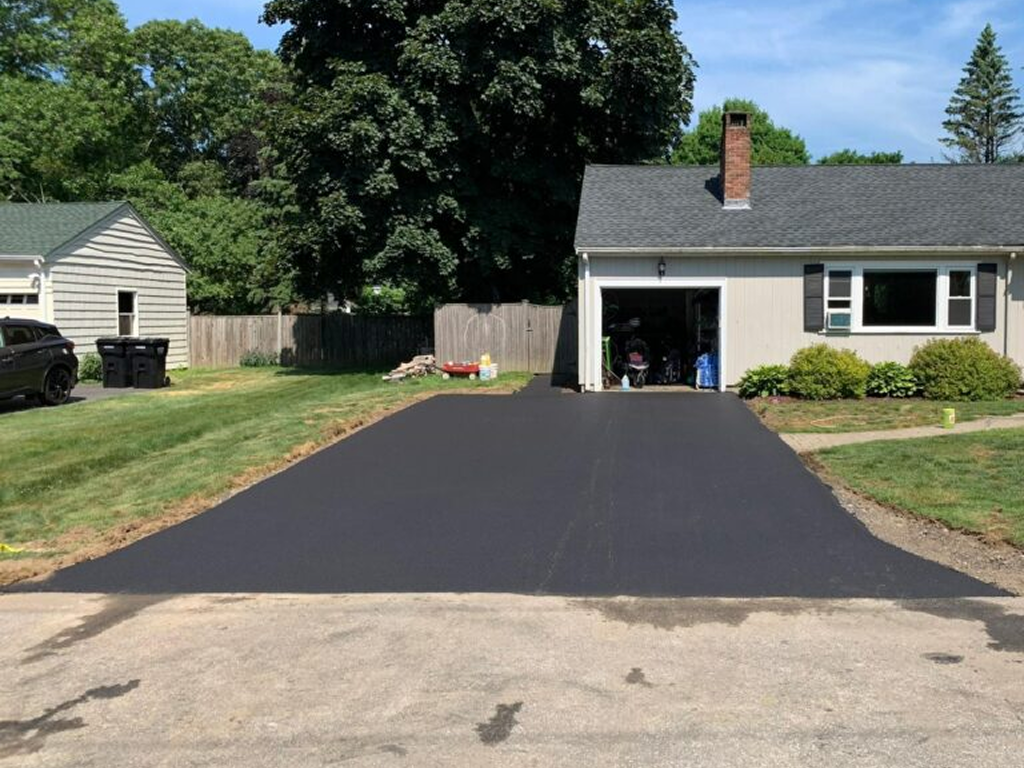
Why timing matters
A crack that is filled this fall is a small job. The same crack left through a winter lets water into the base, and the cost of the repair rises with every freeze. A pothole gets larger as vehicles break its edges away. An edge failure keeps retreating.
Spring is when the damage that has been hiding becomes obvious, and when everyone calls at once. The cheapest repairs happen before that, while the problem is still the size of a hand.
Asphalt repair questions in Waltham
Can a pothole in my Waltham driveway just be patched, or does it mean deeper damage?
It depends on what is under it. If the surrounding asphalt is solid and the pothole is an isolated spot, a saw-cut and replace or infrared patch usually holds well. If potholes keep appearing nearby, the base has likely failed more broadly and patching one spot will not stop the next one.
Why does my driveway crack more near the shared edge with my neighbor?
Shared and stacked drives in Waltham see more turning and pivoting than a single straight-in driveway, which stresses the edges where confinement is weakest. That stress combined with water runoff on a sloped site is a common reason edge failure shows up there first.
Is it worth fixing cracks now if I'm planning to replace the driveway eventually?
Yes, if replacement is more than a season away. Filling cracks now keeps water out and prevents a manageable surface problem from becoming a base problem, which keeps your options open and the eventual job more straightforward.
How do I know if it's a repair job or time to consider full replacement?
Widespread alligator cracking across most of the surface, repeated failures in different spots, or a base that has visibly washed out usually point to replacement. A localized crack, pothole, or edge crumble on an otherwise sound surface is typically a repair.
Next step
Call us at (413) 337-3772. Tell us what you are looking at and where on the drive it is. We will come out, look at the damage and the ground around it, and tell you honestly whether it can be repaired and what that involves.