
Asphalt Repair in Watertown, MA
You’re standing over a pothole by the garage, or a patch of pavement that’s gone soft and spidered underfoot, or an edge that’s crumbled into the grass. You don’t need a new driveway. You need to know if this spot can be fixed, and what that would actually take.
In Watertown, that question comes up a lot on the tight two-family lots along the city’s denser streets, where a shared drive carries two households’ worth of traffic down a strip barely wide enough for one car to pass another. The apron meets a busy street, the setback is short, and there’s rarely room to stage equipment off to the side. None of that changes how asphalt fails. It changes how the repair gets planned and executed, and it’s why a local crew that’s worked these lots before tends to move faster and cleaner than one guessing at it for the first time.
Reading the damage correctly is the difference between a repair that lasts and one that fails again by spring:
- Hairline cracks across the surface are usually just the asphalt aging and contracting – cosmetic, not urgent, but worth sealing before water finds a path down to the base.
- Alligator cracking, the web of interlocking lines that looks like reptile skin, means the base underneath has already failed and is flexing under load. That section won’t hold a patch for long; it needs to come out and be rebuilt properly.
- Edge failure – crumbling along the sides where there’s no curb or neighboring surface to brace it – is common on narrow Watertown drives where the asphalt edge sits exposed right at the property line, often with nothing but gravel or lawn next to it.
- Sinking means something settled or washed out below, often a sign of a drainage issue that’ll keep recurring until it’s addressed at the source.
- Heaving, especially near a foundation or a mature tree, usually means a root or frost is pushing up from underneath, and patching over it without dealing with the cause just wastes money.
Once the cause is clear, the fix has to match it. A small isolated pothole can often take a saw-cut patch: cut back to solid pavement, remove the failed material and base, compact new gravel, and tie in fresh asphalt so the seam doesn’t become the next crack line. Alligatored sections and anything with a washed-out base need full-depth removal, not a skim coat on top of a problem that’s still there. Edge repair on a narrow Watertown drive usually means rebuilding a proper compacted shoulder so the new edge has something to bear against, rather than just dumping asphalt against bare soil again.
Timing matters too. Cold-weather patches are a stopgap at best – asphalt doesn’t compact or bond the same way below a certain temperature, so a repair done in January is often meant to hold until a proper fix can go in once it warms up. If you’re not sure which category your damage falls into, or whether it’s worth patching versus waiting, that’s exactly what the form beside this is for.


What Our Clients Say

How to read the damage
Asphalt rarely fails for the reason it appears to. The surface shows a symptom, and the cause is usually underneath.
Repair or replace: the honest line
Sound base with isolated damage – a cracked corner, a sunken pocket – usually just needs repair, not replacement. But widespread alligator cracking, or a patch that's failed two winters running, means repair money's wasted.
Infrared patching
Infrared patching heats the existing asphalt, blends in new material, and leaves a seamless repair without a cold joint.
Saw-cut and replace
For alligator cracking or failed base, we saw a clean rectangle around the damage, remove it fully, and rebuild the base before repaving. It costs more than a patch but actually stops the problem.
Crack filling
Hairline and linear cracks get routed and filled before Watertown’s winter freeze-thaw cycles set in. It’s cheap, it’s fast, and it’s the single best way to keep water from seeping in and undermining a base that’s otherwise structurally fine.
Edge rebuilding
Narrow Watertown drives often lose asphalt at the edge first, since there's no curb bracing it.
Regrading sunken areas
A sunken section near a garage apron, utility trench, or old oil tank pit usually means the base beneath the asphalt has settled – the surface itself is often still sound. Watertown driveways built over disturbed soil, backfilled trenches, or older gravel bases are especially prone to this, particularly after a hard winter of freeze-thaw cycles and spring thaw. Simply dumping cold patch into the dip is a short-term fix at best; the low spot will reappear within a season or two because the real problem is underneath, not on the surface.
Fixing it properly means cutting out the sunken asphalt, excavating down to the base, and finding out why it settled – poor compaction, washed-out fines, or a collapsing trench backfill are common culprits locally. We re-establish proper grade with correctly compacted aggregate, address any drainage issue feeding water into the area, then repave the section level with the surrounding driveway. Done right, the repair ties in seamlessly and holds for years rather than becoming an annual patch job.

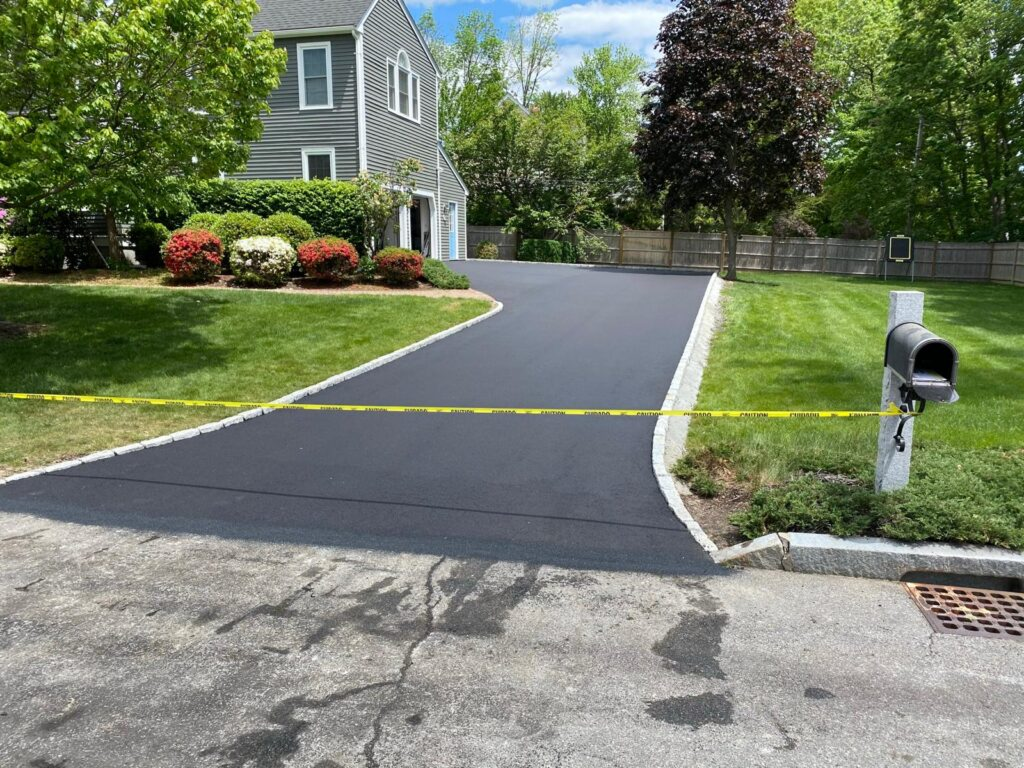
What the repairs are
Why driveways fail here
Most Watertown repair calls share the same causes: poor drainage lets water seep into cracks, then freeze-thaw cycles widen them. Shared two-family driveways see extra traffic stress, while tree roots on tight lots cause heaving near houses and property lines.
Timing matters
A crack filled this fall is a five-minute fix. The same crack left through a Massachusetts winter lets water in, freezes, and widens – turning into base failure by spring that costs far more to put right.
Shared drives, extra wear
Two-family drives carry double the traffic of a typical single-family apron. That extra load concentrates stress at joints and edges, which is usually where repair work starts on these lots.
Working on a tight lot
Minimal setbacks and busy aprons mean careful staging – equipment has to get in, work, and clear out without blocking the street.
Get it looked at
Not sure if that asphalt damage needs a quick patch or a bigger repair? The fastest way to know is to have it looked at. Call Driveway Specialists in Watertown and we’ll tell you straight what’s actually involved.
Why drives fail in Watertown
Watertown's ground is unforgiving in a few specific ways.
Steep hillside lots mean water arrives with speed. A sloped drive carries runoff downhill, and where that water meets a low corner, a garage door or the seam of an old patch, it goes down instead of away. Over years that washes out fine material from under the asphalt and leaves the hollows that later sink. On a hillside, drainage decides how long the work lasts.
Shared drives on two-family properties take more traffic than a single-family drive was built for. More vehicles, more turning, more weight on the same few feet. That is exactly where alligator cracking appears first, and where edges break down from vehicles clipping the sides.
Tight frontages put the apron directly against the sidewalk. Plows and shoveling push snow and meltwater straight onto that strip, and the edge there takes constant punishment. It is also the part of the drive most likely to involve the town, so if the damage reaches the apron or the sidewalk line, we will tell you before work begins what is yours to fix and what isn't.
And in every case, frost is the engine behind it. Water enters a small crack, freezes, expands and pries the crack wider. It thaws and drains into the opening, and the cycle repeats all winter. A hairline crack in October can be a pothole by March.

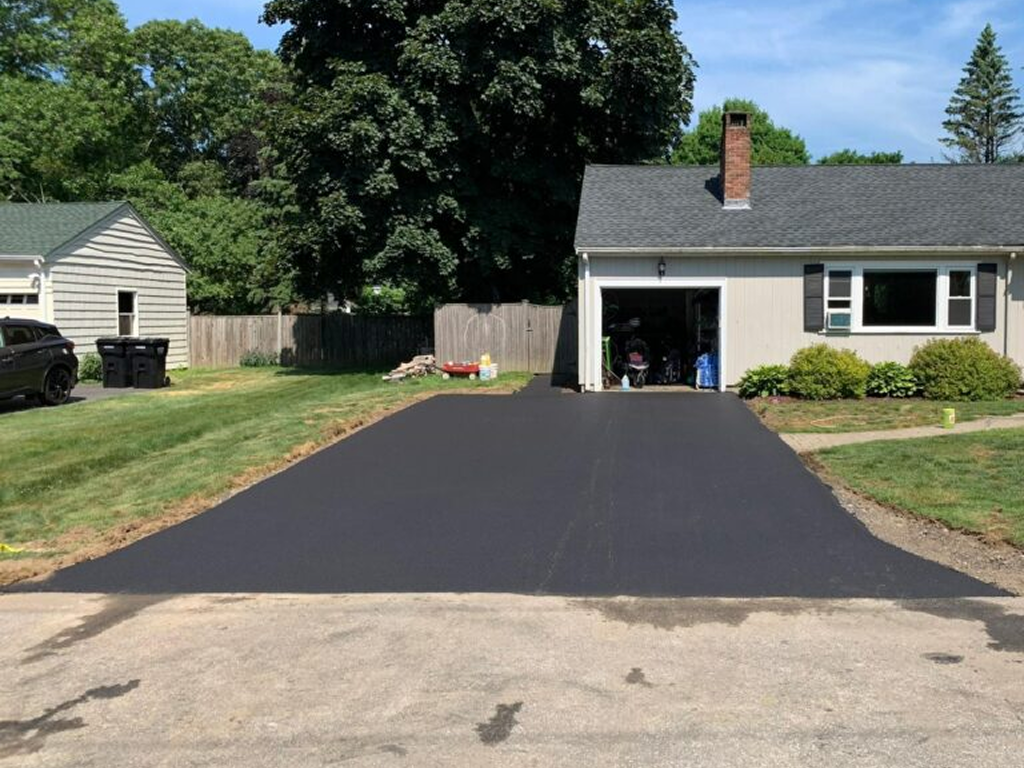
Why timing matters
A crack that is filled this fall is a small job. The same crack left through a winter lets water into the base, and the cost of the repair rises with every freeze. A pothole gets larger as vehicles break its edges away. An edge failure keeps retreating.
Spring is when the damage that has been hiding becomes obvious, and when everyone calls at once. The cheapest repairs happen before that, while the problem is still the size of a hand.
Asphalt repair questions in Watertown
Can a sunken spot near my garage be patched without redoing the whole driveway?
Usually, yes. If the sinking is isolated and the surrounding asphalt and base are sound, we excavate and regrade that one section rather than repaving the entire drive.
How do I know if it's alligator cracking or just surface cracking?
Surface cracking runs in separate lines, often parallel or random, and the pavement underneath still feels solid. Alligator cracking forms a connected web of small interlocking pieces, and the surface often flexes slightly when you walk on it – that's a sign the base has already failed.
Is it worth fixing the edge on a narrow driveway if the rest looks fine?
Yes. An unsupported edge that's starting to crumble will keep spreading inward, especially once plow blades or tire edges catch it through the winter. Rebuilding it early is far cheaper than dealing with a wider failure later.
We share our driveway with the other unit - does that affect the repair?
It affects planning more than the repair itself. Shared drives see more daily traffic, so edges and joints wear faster, and we have to schedule work so both households can still get a car in and out.
Do you fix the apron where it meets the street?
We can repair the private portion of the apron. Where it ties into the public street, that section falls under the city's jurisdiction, so we'll flag that boundary clearly before any work starts.
Next step
Call us at (413) 337-3772. Tell us what you are looking at and where on the drive it is. We will come out, look at the damage and the ground around it, and tell you honestly whether it can be repaired and what that involves.