
Asphalt Repair in Wrentham, MA
You’re standing at the end of a long drive looking at a pothole that wasn’t there last spring, or a patch of asphalt that’s gone soft and spidery near the garage. Maybe it’s an edge that’s crumbled away where the plow caught it in January. In Wrentham, where so many lots are rural or lakeside with drives running well back from the road through trees, that kind of damage usually has a specific cause, and a specific fix. It isn’t always a sign the whole driveway is done.
This page is about reading that damage correctly and knowing what repairing it actually involves, not about selling a full replacement you may not need.
Reading the damage
Different failures point to different problems underneath. Hairline cracks that run in a fairly straight line are usually just surface aging and temperature movement; they let water in but the base below is still sound. Alligator cracking, a web of interlocking cracks that looks like reptile skin, means the base has lost its ability to support the surface, usually from water sitting underneath. Edge failure, where the asphalt crumbles or breaks away along the sides of the drive, is common on long rural drives without curbing and often follows plow damage or a lack of shoulder support. Sinking is a base or drainage problem, often where water has washed out material under the surface. Heaving, especially near trees, points to roots pushing up from below rather than anything wrong with the asphalt itself.
Knowing which one you’re looking at tells you whether a patch will hold or whether you’re looking at a bigger job. It also tells you how urgently to act. A hairline crack left alone for another freeze-thaw cycle becomes a wider crack with chunks breaking loose at the edges. Water that’s finding its way into the base in October is doing more damage by February, when it expands as ice and pushes the surface apart from underneath. Catching a problem in the “just a crack” stage, rather than the “chunks coming loose” stage, is usually the difference between a modest repair bill and a section that needs full excavation.


What Our Clients Say
How to read the damage
Asphalt rarely fails for the reason it appears to. The surface shows a symptom, and the cause is usually underneath.
Mature oak and maple cover on many Wrentham lots keeps shaded stretches of driveway damp and slower to dry, which accelerates the freeze-thaw damage that starts most cracks, potholes, and crumbling edges we’re called out to repair each season.
Long drives through wooded or lakeside frontage put more surface area, and more edge, out of sight of the house.
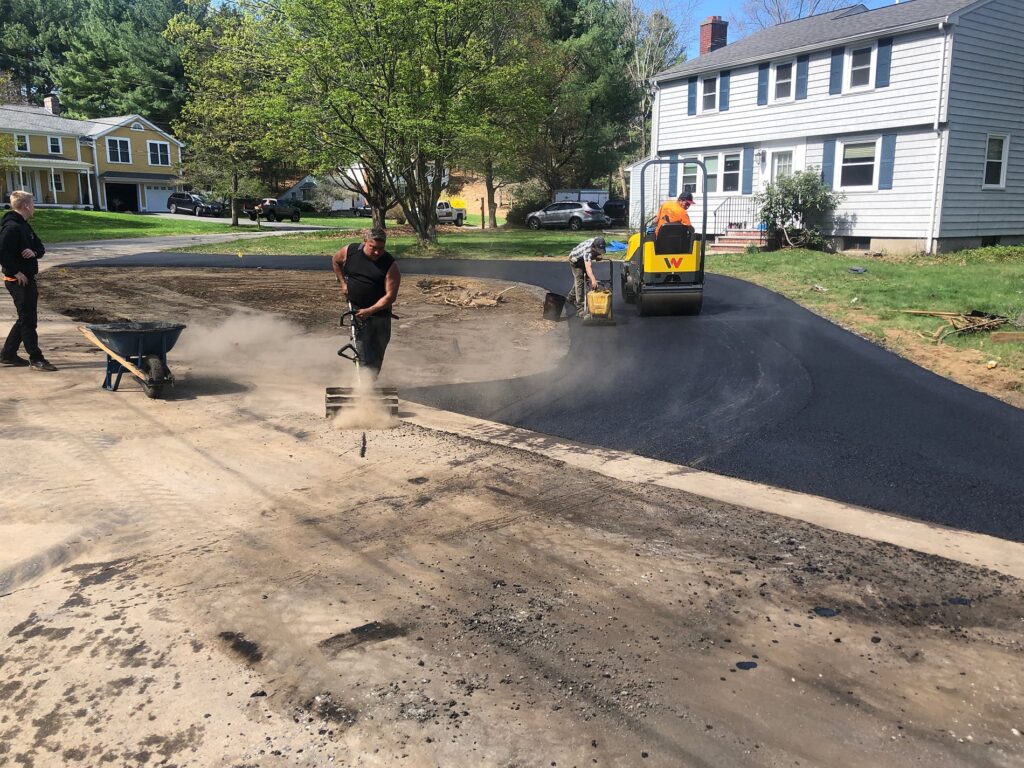
Infrared patching heats the existing asphalt, blends in new material, and bonds the repair to the old surface.
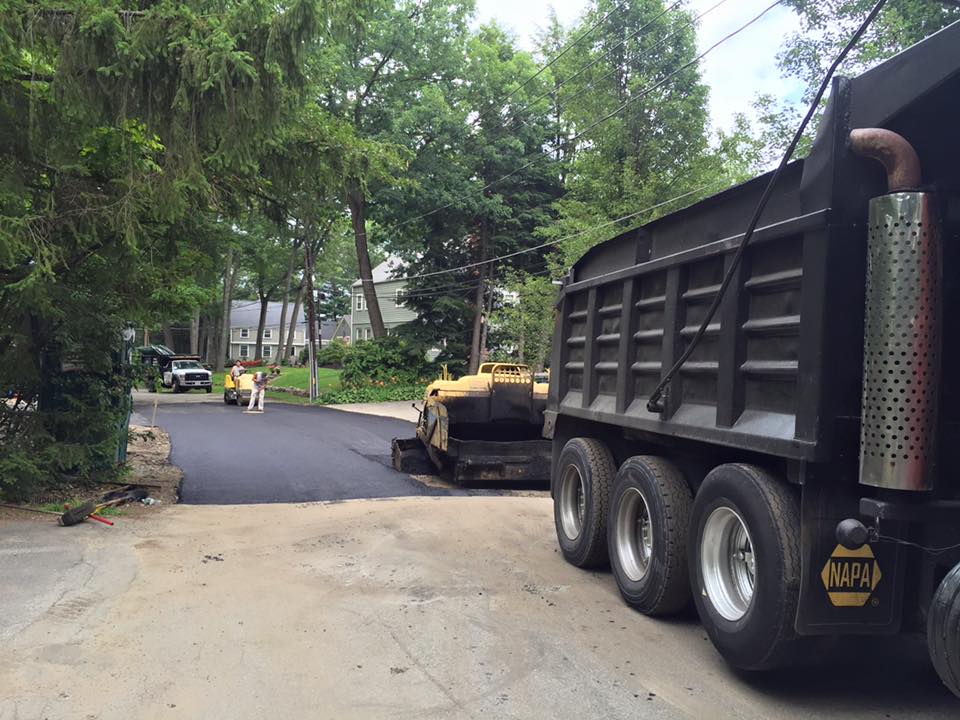
Saw-cut and replace removes the full depth of a damaged section along clean, straight edges and rebuilds the base and surface. It’s the right call for Wrentham driveways where alligator cracking, potholes, or sinking signal the base beneath has failed.
Crack filling seals hairline and moderate cracks before Wrentham's winter sets in, so water can't seep underneath and freeze.
Why driveways fail here
On older Wrentham properties, the drive was often built decades before today’s base standards and simply wasn’t built as deep or as well-drained as current work. Combine that with a long run where water has somewhere to go but not always a clear path to get there, and you get soft, saturated sections that break down under freeze-thaw cycling.
Root heave from mature trees close to the edge of the drive is another common cause, pushing sections up unevenly rather than cracking them from water. And on drives that see delivery trucks, oil trucks, or heavy equipment coming down a long rural approach, point loads on a base that was never designed for that weight will show up as localized cracking or sinking well before the rest of the surface shows wear.
Identifying which of these is actually happening under your driveway, rather than guessing from the surface, is most of what a proper repair assessment is for. The right fix depends entirely on the cause, not just the symptom.
What the repairs are
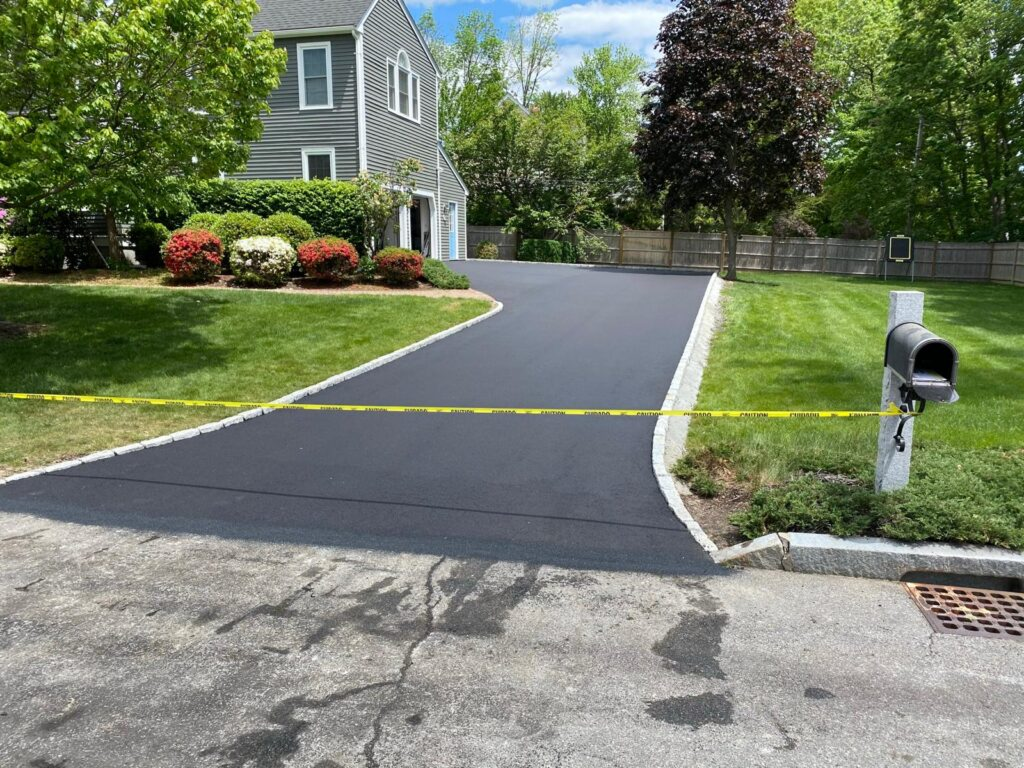
Edge rebuilding restores crumbled shoulders along drives without curbing, common where plows have no protected edge to work against over a Wrentham winter.
Regrading a sunken section corrects the slope so water sheds away from the garage or low point instead of pooling and re-softening the base underneath it.
A small crack addressed this fall costs far less than the same crack left to widen, fill with water, freeze, and fracture outward through another New England winter.
Leaving a soft spot through a Wrentham winter usually means it grows.
Next step
Spotted a pothole, crack, or sunken edge on your Wrentham driveway? Send a photo or let us take a look before it worsens. We’ll tell you plainly whether it needs patching, saw-cut repair, or more. Call Driveway Specialists at (413) 337-3772.
Why drives fail in Wrentham
Wrentham's ground is unforgiving in a few specific ways.
Steep hillside lots mean water arrives with speed. A sloped drive carries runoff downhill, and where that water meets a low corner, a garage door or the seam of an old patch, it goes down instead of away. Over years that washes out fine material from under the asphalt and leaves the hollows that later sink. On a hillside, drainage decides how long the work lasts.
Shared drives on two-family properties take more traffic than a single-family drive was built for. More vehicles, more turning, more weight on the same few feet. That is exactly where alligator cracking appears first, and where edges break down from vehicles clipping the sides.
Tight frontages put the apron directly against the sidewalk. Plows and shoveling push snow and meltwater straight onto that strip, and the edge there takes constant punishment. It is also the part of the drive most likely to involve the town, so if the damage reaches the apron or the sidewalk line, we will tell you before work begins what is yours to fix and what isn't.
And in every case, frost is the engine behind it. Water enters a small crack, freezes, expands and pries the crack wider. It thaws and drains into the opening, and the cycle repeats all winter. A hairline crack in October can be a pothole by March.
Why timing matters
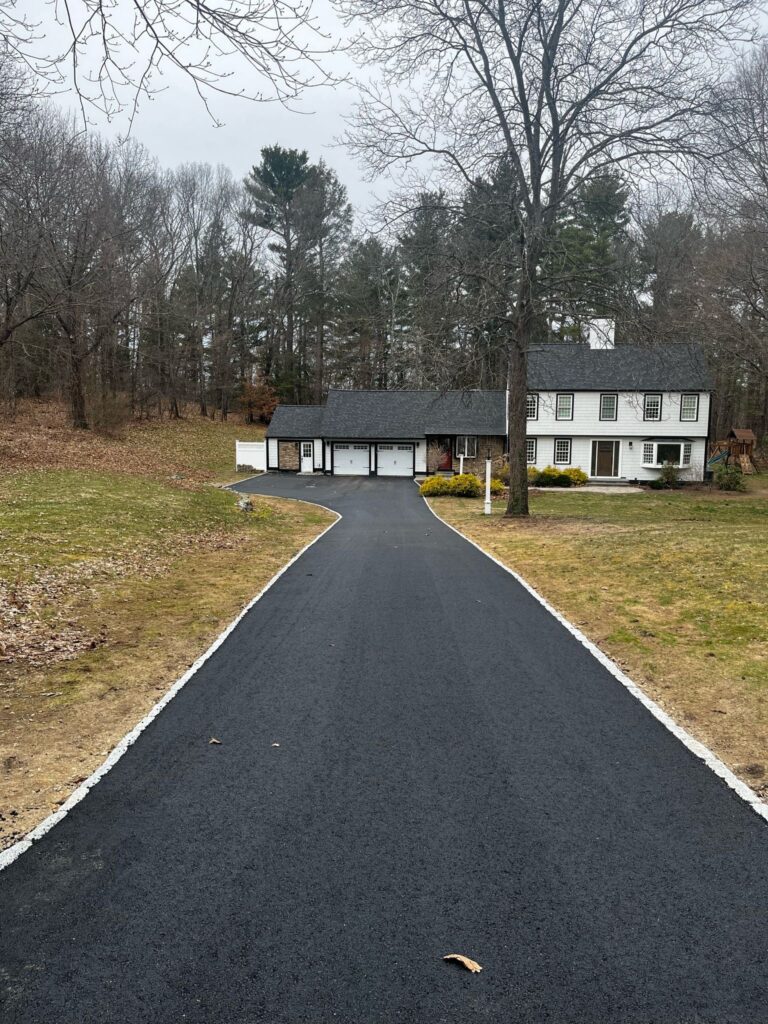
A crack that is filled this fall is a small job. The same crack left through a winter lets water into the base, and the cost of the repair rises with every freeze. A pothole gets larger as vehicles break its edges away. An edge failure keeps retreating.
Spring is when the damage that has been hiding becomes obvious, and when everyone calls at once. The cheapest repairs happen before that, while the problem is still the size of a hand.
Asphalt repair questions in Wrentham
Can a pothole be fixed without redoing the whole driveway?
In most cases, yes. An isolated pothole over a base that's otherwise sound is a straightforward patch, usually with infrared patching or a saw-cut repair, not a sign the whole surface needs to come out.
How do I know if it's alligator cracking or just surface cracks?
Surface cracks run in fairly straight lines and stay shallow. Alligator cracking forms a connected web of smaller cracks that looks like reptile skin and means the base underneath has started to fail.
Why does my driveway crumble at the edges every winter?
Edges without curbing or solid shoulder support take the brunt of plow contact and have less material around them to resist frost movement, so they break down faster than the main surface.
Is root damage from trees something that can be repaired?
The lifted section can be cut out and replaced, but if the root causing it is still growing nearby, the same heaving can return. We'll flag that tradeoff when we look at it.
How urgent is a small crack really?
More urgent than it looks. Water gets into a crack, freezes, and expands it through a single winter. A small repair now is cheaper than the same spot after a few freeze-thaw cycles.
Next step
Call us at (413) 337-3772. Tell us what you are looking at and where on the drive it is. We will come out, look at the damage and the ground around it, and tell you honestly whether it can be repaired and what that involves.