
Patios in Concord, MA
Concord properties tend to fall into one of two shapes. There is the historic district home, close to the center, where any new outdoor space has to sit comfortably next to an old house without looking like it was dropped in from a catalog. And there is the long rural drive out past the center, where the house sits well back from the road and there is room to actually build something – a patio off the back of the house, a sitting area near a converted barn, space that extends the house into the yard rather than just connecting it to a driveway.
Both situations are hardscape work, not paving work. The decision is not just whether the surface holds up. It is how it looks in five years, how it reads against a two-hundred-year-old facade or a stretch of stone wall, and whether it still feels like it belongs once the plantings around it have filled in. Material choice matters here more than on a typical suburban lot. A tumbled bluestone or a weathered-edge paver tends to sit better next to old clapboard and fieldstone than anything with a sharp, factory-cut edge. A clean modern paver can work too, but usually only on the newer end of town, away from the center, where the architecture already reads contemporary.
What holds it flat
None of that matters if the ground underneath moves. Massachusetts frost pushes and pulls everything below grade every winter, and a patio with a shallow or inconsistent base will heave unevenly – not all at once, but paver by paver, stone by stone, until the surface that looked perfect the first summer is rocking and gapping by the third. The work that actually determines whether a patio stays flat happens before a single paver goes down: excavation to a consistent depth, a compacted base that drains rather than holds water, a bedding layer that lets stone sit level, and edge restraint that keeps the whole field from creeping outward over time. None of that is visible once the job is finished. All of it is why one patio lasts and another doesn’t.
For a Concord property, that groundwork also has to account for what is already there – mature trees close to the house, older foundations without modern drainage, and in many cases soil that has never been disturbed by heavy equipment. Getting the base right on a lot like that takes more care than a new-construction yard with uniform fill, and it is worth doing properly rather than quickly.


What Our Clients Say
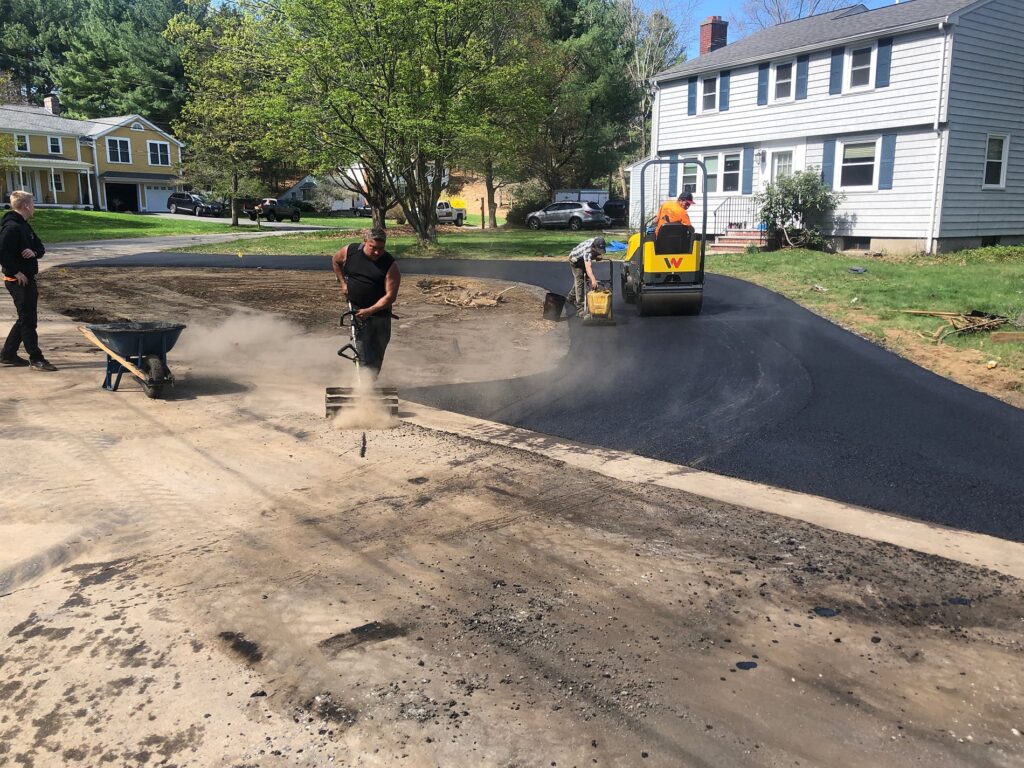
What happens below the surface
A patio is a thin finished layer sitting on a structure you never see. That structure decides whether the surface is flat in ten years or wavy in two.
Bluestone and granite read as period-appropriate against an older Concord house, echoing the stone walls and walkways common in these neighborhoods. Concrete pavers cost less and install faster but look more obviously manufactured next to original stonework and mature plantings.
Every Concord patio needs a direction for water to go. We pitch the surface away from the house and tie it into the existing yard grade, so runoff drains naturally and never pools against a foundation or basement wall.
Natural stone ages well and repairs piece by piece.
Poured concrete is the cheapest option up front for Concord patios, but it cracks with frost heave and tree root movement, and repairs rarely blend in invisibly.
On a long rural drive out of the center, a patio can sit well away from the house as a separate destination – a fire area, a dining spot, reached by a stone path.
Edge restraint matters more than most Concord homeowners assume. Without properly anchored restraint, paver patios spread slowly outward under frost pressure and seasonal freeze-thaw cycles until joints open, stone shifts, and the once-tight surface starts looking uneven and loose.
Materials and the trade-offs
Tying a new patio into an existing stone wall or set of granite steps takes matching, not just proximity. Color, texture and joint pattern all have to agree.
Shaded sites under Concord's mature oaks and maples stay damp longer after rain, inviting algae and moss.
In Concord, a patio connected to the driveway or front walk should share a material language, even if it is not the identical stone, so the property reads as one cohesive design rather than a collection of unrelated surfaces poured at different times.
Root systems from large trees can lift a patio from below years after installation.
Concord’s historic district sets a visual standard whether or not a given property sits inside its boundary. Neighboring towns like Lincoln and Carlisle share the same rural-lot character.
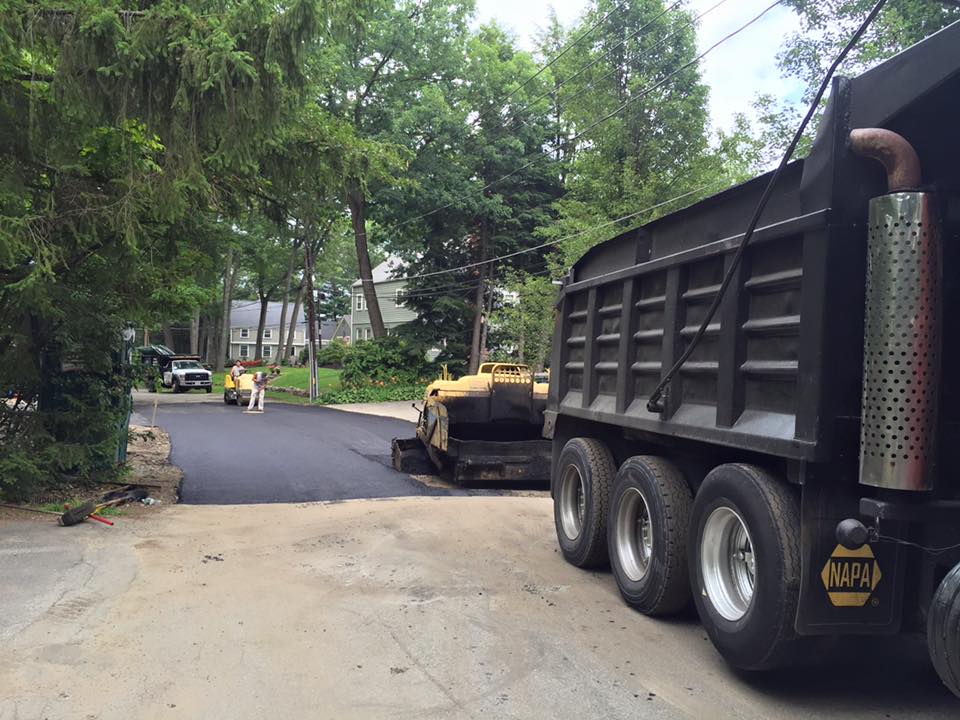
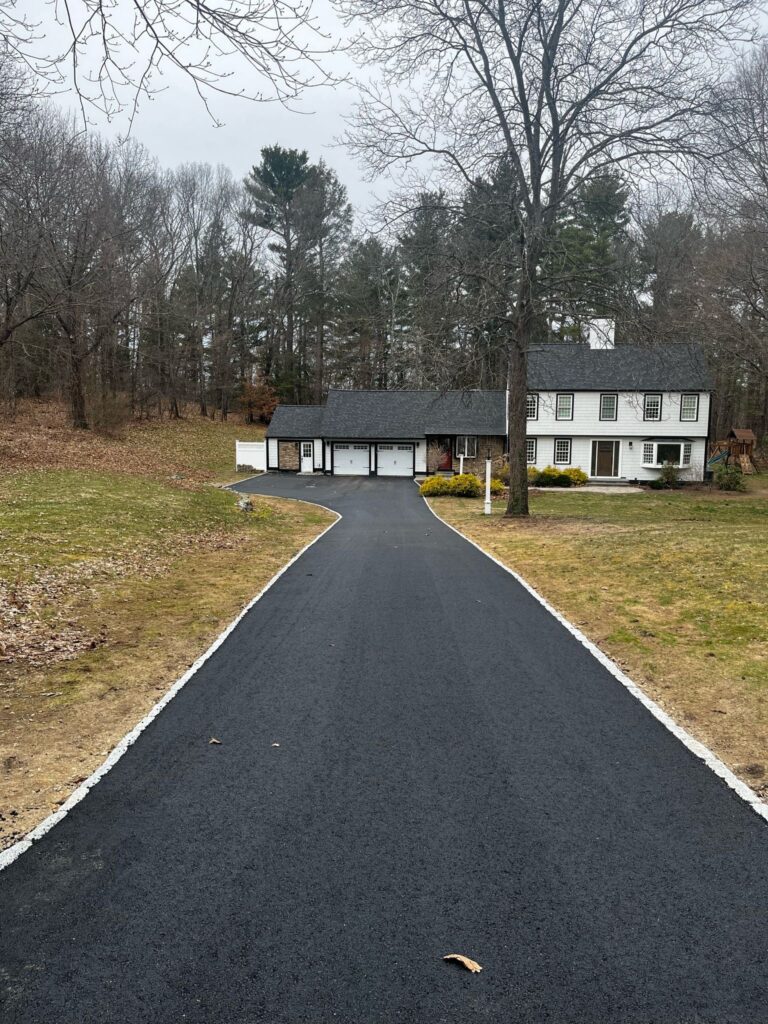
How the work ties into what is already there
A patio is rarely the first thing built on a property. There is usually a driveway, a front entry, maybe a stone wall along the property line or a bed of plantings that has been growing for decades. New hardscape has to sit next to all of it without looking like an addition that arrived later.
That means matching materials where it makes sense – a bluestone patio near a bluestone walk, granite edging near existing granite steps – and choosing a different material deliberately where blending would look forced. It also means thinking about how people actually move across the property: from the driveway to the front door, from the back door to the patio, from the patio to the yard beyond. A patio that ignores those paths ends up unused no matter how well it is built.
For an older Concord house, scale matters too. A patio sized for a modern suburban yard can overwhelm a colonial-era home’s proportions. Keeping the new work in scale with the house, rather than maximizing square footage, is usually the better long-term choice.
Where this kind of work fits a Concord property
The properties where this work makes the most sense in Concord share a few traits: an older house that benefits from stone rather than poured concrete, enough land around it to give a patio room to breathe, and existing hardscape – walls, walks, steps – that a new patio needs to respect rather than compete with. Long rural drives out of the center often have the opposite problem of a tight in-town lot: too much undefined space rather than too little, and a patio gives that space a purpose.
In-town, close to the historic district, lots are tighter and the patio often has to do more with less room – functioning as the main outdoor living space rather than one feature among several. Either way, the groundwork is the same: proper excavation, a base built for New England frost, and drainage that moves water away from the house instead of toward it.
If you’re planning a patio for a Concord property, call Driveway Specialists at (413) 337-3772 to talk through the site and what the ground under it will actually support.
Where this suits Concord properties
Historic district homes
Period-appropriate stone that sits comfortably next to an older facade, chosen to match the house's age and proportions rather than a generic patio layout.
Long rural drives out of center
Properties with room to spare suit a patio set apart from the house as its own destination, connected by a stone path rather than tucked against the back door.
Lots with existing stonework
Where a stone wall, granite steps or an older walk already exists, new hardscape works best matched to it in material and joint pattern, not built as an unrelated addition.
Questions about patios in Concord
Does a patio need the same base as a driveway?
The principle is the same – compacted base and drainage below frost movement – but a patio carries foot traffic, not vehicle weight, so the base depth and bedding layer are built differently than for a driveway.
Can a new patio match an older Concord house?
Yes, with the right material choice. Natural stone like bluestone or granite reads as period-appropriate; poured concrete and some paver styles look more obviously modern next to an older facade.
What happens if drainage isn't planned properly?
Water pools against the foundation or pitches toward the house instead of away from it, which creates problems well beyond the patio itself over time.
Do tree roots near the patio site cause problems later?
They can. Roots from mature trees close to the build area can lift sections of a patio years after installation if the excavation and base don't account for them up front.
Is natural stone worth the extra cost over concrete pavers?
It depends on the property. Natural stone costs more, ages better, and can be repaired piece by piece; concrete pavers cost less but read as more manufactured, especially next to an older house.
Next step
Tell us what you have: the slope, the house, how the space gets used. We will look at the lot and talk through what will work on it. Call Driveway Specialists at (413) 337-3772. We are family-run and have been working in Massachusetts since 1988.