
Patios in Harvard, MA
Most houses in Harvard sit well back from the road, down a long gravel or unpaved drive, with the kind of orchard-country grade that puts the house noticeably above or below the surrounding land. That setback is usually the whole point of living out there, and it is also exactly why so few of these properties have a finished outdoor space that works. The lawn runs right up to the back door, or there is a stretch of grade between the house and the view that nobody has done anything with. A patio is how you claim a piece of that ground without paving the property or fighting the grade.
This is not driveway work, and we don’t treat it like driveway work. A patio is judged on how it looks years from now and how well it holds its line through frost, not just whether it is functional. It also has to answer a question a driveway never has to: where do people actually want to sit, eat, and stand around a fire pit, relative to the house, the tree line, and whatever view the lot gives you. On a lot with real separation from the road, that question has more good answers than it would on a tight suburban parcel, but it still has to be answered before anyone breaks ground.
What happens under the surface
A patio that stays flat and one that goes wavy after a few winters are built the same way on top. The difference is underneath. Proper excavation removes topsoil and any soft or organic material down to a stable subgrade, because topsoil compresses unevenly and holds moisture against the base. A compacted gravel base goes in next, built up in layers rather than dumped and tamped once, because a base that looks solid on day one can still settle unevenly if it wasn’t compacted in lifts. On top of that comes a bedding layer, usually sand, that gives the stone or pavers a uniform setting surface.
Edge restraint is what holds that whole assembly together. Without it, the outer courses creep outward as the base shifts with frost, and a crisp edge becomes a ragged one within a few seasons. In New England, frost is the constant pressure testing all of this. Ground freezes, water in the soil expands, everything above it moves slightly, and then it thaws and settles back down, not always in the same spot. A base built correctly moves as one unit and the surface stays flat. A base that was shortchanged moves unevenly, and that shows up as lippage between stones, gaps at joints, or a patio that slopes toward the house instead of away from it.


What Our Clients Say
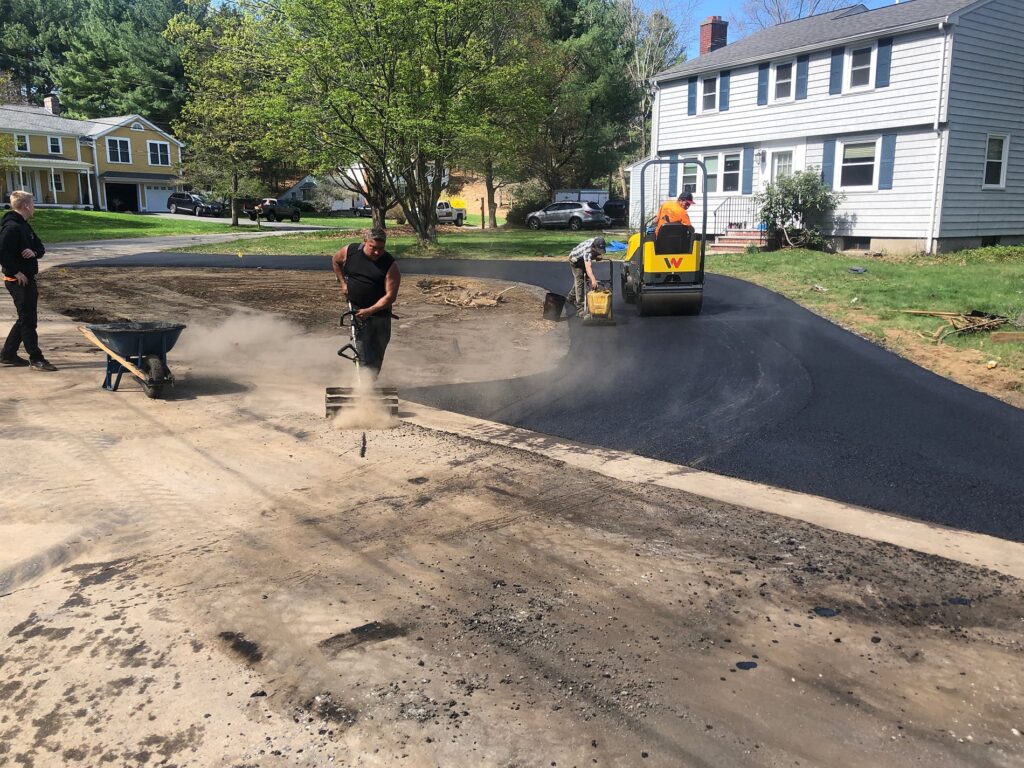
What happens below the surface
A patio is a thin finished layer sitting on a structure you never see. That structure decides whether the surface is flat in ten years or wavy in two.
Material choice changes how the patio ages. Fieldstone and irregular bluestone read as permanent and suit an older Harvard farmhouse, while cut pavers give a tighter, more uniform surface for newer builds, patterned layouts, and easier long-term repairs.
Concrete pavers cost less upfront and are the easiest to repair, since a single damaged unit lifts out and resets without disturbing the rest.
Natural stone, fieldstone or bluestone, costs more and repairs are harder to match invisibly, but it ages into a Harvard property instead of just sitting on top of it, weathering gracefully alongside stone walls and older New England homes common throughout town.
Every material handles freeze-thaw the same way structurally: it’s the base underneath that decides whether the surface cracks or heaves, not the stone or paver itself.
Jointing sand and polymeric sand both lock paver patios together, but polymeric resists weed growth, ant activity, and washout far better, which matters on exposed Harvard lots bordered by open fields, loose soil, and heavy spring runoff near the edges.
Once the base and material are settled, the remaining decisions, pattern, border, and how the edge meets the lawn, are mostly about how the finished patio will be used day to day, whether that's Harvard dinners outdoors, firepits, or simply extra garden space.
Materials and the trade-offs
Water has to go somewhere once a hard surface replaces absorbent ground.
Pitching the patio away from the house isn’t a design preference, it’s what keeps water out of a foundation that was likely never built with a modern drainage system behind it. In older Harvard homes, this detail matters even more.
On a lot with a meaningful grade change, drainage swales or a dry well may need to sit between the patio and the lower ground to carry water away cleanly, protecting foundations, lawns, and neighboring Harvard properties from runoff and erosion over time.
A Harvard patio that ties into an existing stone wall or old foundation needs the wall's drainage considered too, since water redirected by the new surface can end up pooling against aging mortar joints, slowly undermining both the wall and the patio base.
None of this is guesswork done from a desk. In Harvard, we walk the actual grade, watch where water already moves after rain across your yard, and build the patio’s drainage plan from what the land is doing right now.
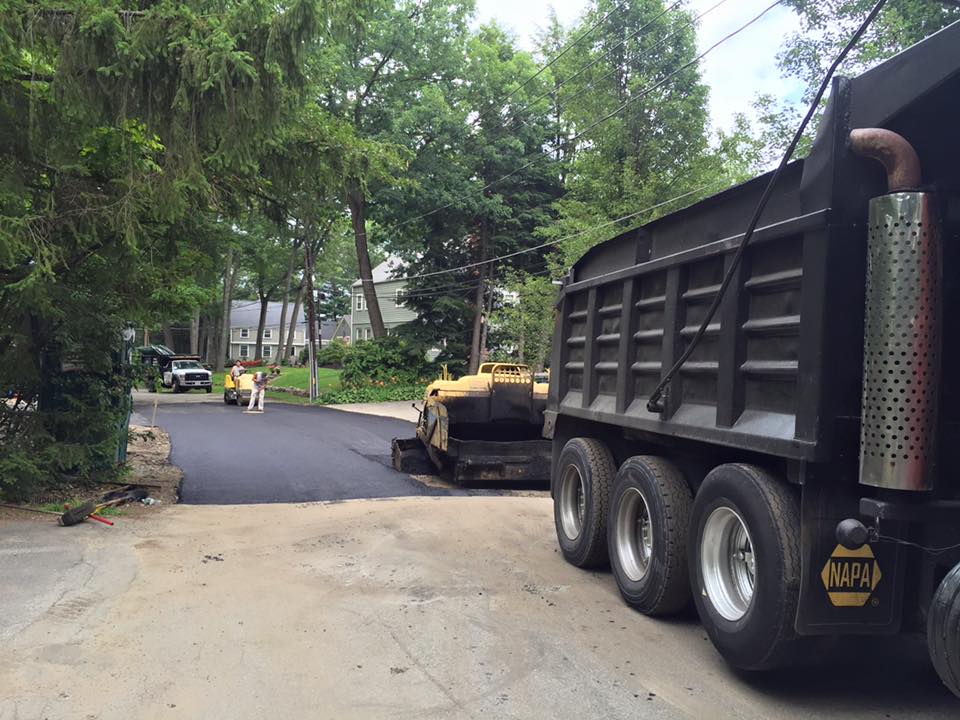
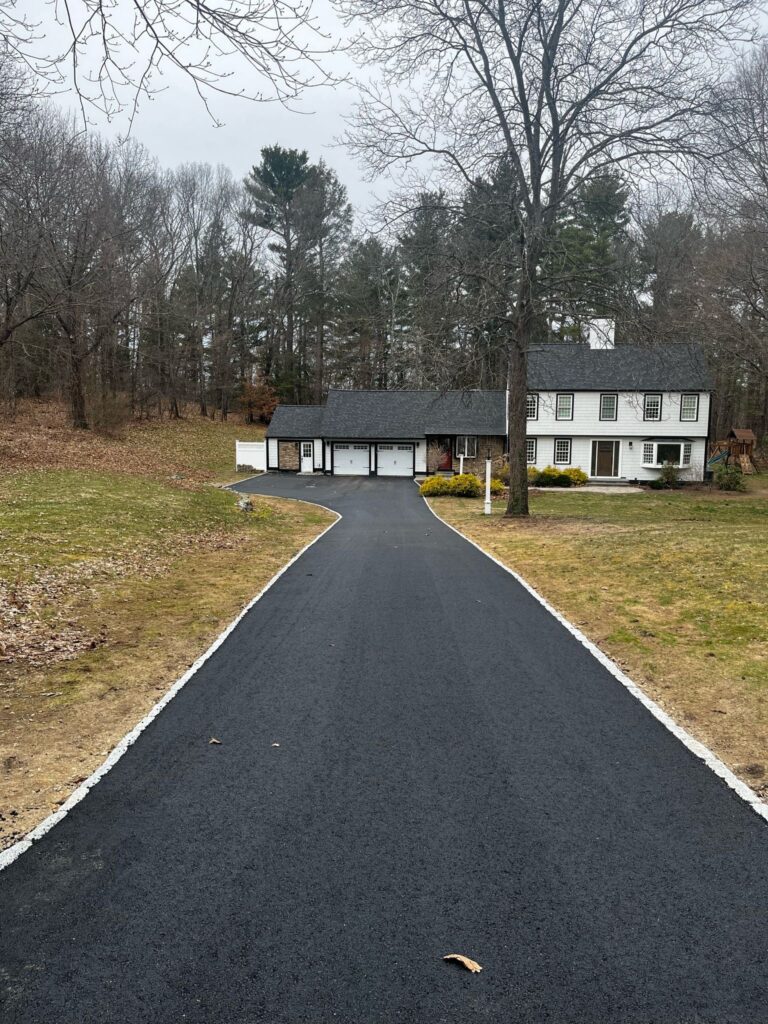
A patio built without reference to that existing drainage pattern can solve the standing-water problem on the patio itself while creating a new one for the lawn or the drive below it. We see this often around Harvard, where clay-heavy soil and older lot grading mean water already follows a specific route toward the street, a swale, or a neighboring yard. Adding a new paved surface across that path, without accounting for it, simply redirects the problem rather than resolving it.
Before any base material goes down, we study how the property sheds water through a full rain cycle: where it pools, where it moves fastest, and which low points on the house or drive are vulnerable. The patio is then pitched, jointed, and edged to work with that pattern rather than fight it, often tying into existing downspouts or drive drainage so the whole system functions as one.
- Grading assessed before design, not after installation
- Joint and base work suited to Harvard’s clay soil conditions
- Drainage tied into existing driveway and downspout routes
Tying it into what's already there
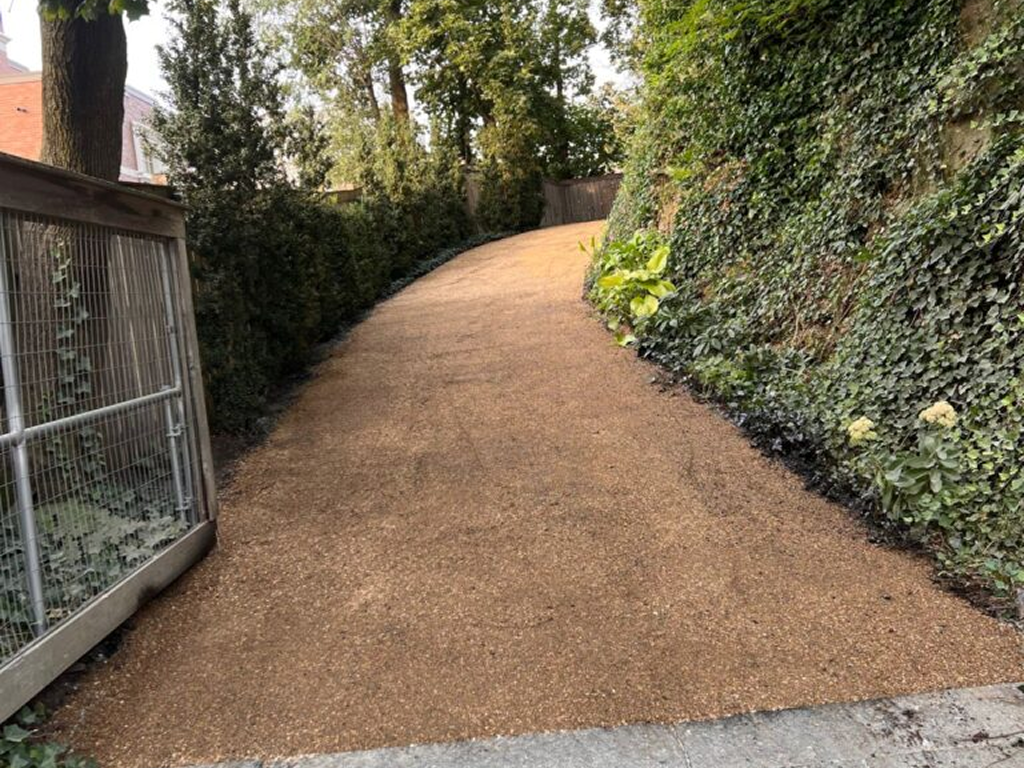
Very little hardscape work in Harvard happens on a blank lot. There is almost always a gravel drive, an entry walk, an old stone wall, or a planting bed the patio has to meet cleanly. The transition from gravel to patio surface, in particular, needs a defined edge, usually a border course or a change in material, so the gravel doesn’t migrate onto the finished surface and the patio edge doesn’t erode into the drive.
Where this suits Harvard properties
Orchard-adjacent lots
Houses set well back from the road with open southern exposure suit a patio that catches the view across the orchard rows without crowding the working land.
Long gravel drives
Where the drive itself stays unpaved, a stone or paver patio at the house gives you one finished surface to maintain instead of trying to harden the whole approach.
Older farmhouses
Fieldstone and irregular bluestone sit naturally against older foundations and stone walls already on the property, where a poured slab or new concrete would look out of place.
Questions about patios in Harvard
Can a patio tie into an unpaved drive without looking out of place?
Yes. A stone or paver patio doesn't need to match a gravel drive materially, only in tone. Fieldstone, irregular bluestone, and earth-toned concrete pavers all sit comfortably next to gravel and lawn in a way a bright, uniform paver pattern does not.
Do you need to re-grade around the house for a patio on a sloped lot?
Often, yes, at least locally. The patio itself has to pitch away from the foundation, and on orchard-country grades that usually means building up the low side or cutting into the high side so the finished surface reads level while still shedding water correctly.
How does frost affect a patio differently than it affects a driveway?
The mechanics are the same, heave under an unrestrained edge, but a patio has more edge relative to its area and more corners, so edge restraint and a properly compacted base matter even more than on a long drive.
Will tree roots from nearby orchard trees or old shade trees lift the patio?
Roots from mature trees can heave a patio base over time, which is one reason excavation depth and base material matter more near established trees. We look at root position during the site visit and adjust the excavation and sometimes the layout to keep roots clear of the base.
Can you match new stonework to an existing wall or old foundation on the property?
We can select stone and set a coursing pattern that reads consistently with existing walls or foundation stone, though exact quarry matches aren't always possible if the original material is no longer available.
Next step
Tell us what you have: the slope, the house, how the space gets used. We will look at the lot and talk through what will work on it. Call Driveway Specialists at (413) 337-3772. We are family-run and have been working in Massachusetts since 1988.