
Patios in Hudson, MA
A patio in Hudson has to work with the lot it sits on, and Hudson has two very different kinds. Close to the old mill streets, lots are narrow and the house sits near the front, which pushes any new outdoor space to a tight backyard with limited room to stage material or swing equipment. Out toward the newer subdivisions off Wedgewood Drive and Lakewood, frontage opens up, backyards are deeper, and the question becomes less about fitting the work in and more about how it connects to a larger, often sloped, piece of ground. Either way, the job is not a smaller version of a driveway. It is an outdoor room, and it has to read as one from the day it is finished and still ten years later.
The part nobody sees decides whether that happens. Excavation depth, what goes into the base, how it is compacted, and how the edges are restrained all happen before a single paver or stone is set. Massachusetts frost does not care how good the surface material looks. It moves whatever is underneath it every winter, and a base that was never properly compacted telegraphs that movement straight up through the surface as heaving, settling, and gaps that open along joints. A base built correctly absorbs that movement instead of transmitting it, which is the only reason a patio laid this year still sits flat five winters from now.
Materials are not interchangeable once you account for how they age:
- Concrete pavers hold a crisp edge and are simple to lift and reset if a section settles, which matters more in a yard with mature trees and shifting root systems.
- Natural stone, like fieldstone or bluestone, costs more and weathers into something that suits an older Hudson house with real character, but repair means matching stone, not ordering a replacement unit off a shelf.
- Poured concrete looks clean at first but cracks with frost movement and is difficult to repair invisibly once it does, which shows fastest on an exposed, unshaded patio.
Drainage is the other half of the job. Water has to move away from the house foundation and off the patio surface, not pool at a low corner or run back toward the basement. That means pitching the whole surface deliberately during the base and bedding stage, not hoping gravity sorts it out afterward. Done properly, it also keeps ice from forming across the main walking surface each winter, which matters on a shaded Hudson lot that holds frost longer than open ground.
Layout matters just as much as material on the sloped lots common in Hudson’s newer sections. A patio set without a retaining edge or a planned step down from the house will shed water across the lawn in sheets after a heavy rain, carrying mulch and soil with it. A patio that steps down in planned stages, tied into a low retaining wall where the grade demands it, handles that same storm without moving an inch of soil. That kind of planning has to happen before excavation starts, not after the first season reveals the problem.


What Our Clients Say
What happens below the surface
A patio is a thin finished layer sitting on a structure you never see. That structure decides whether the surface is flat in ten years or wavy in two.
Excavation and base work sit below everything else. Compaction depth and material choice here determine whether a Hudson patio stays flat through repeated freeze-thaw cycles or starts to heave, settle, and crack within its first few winters.
Edge restraint keeps pavers and stone locked in place. Without it, Hudson’s freeze-thaw cycling walks individual units outward year after year until joints open, edges wander, and your patio needs costly resetting far sooner than it should.
Concrete pavers are the most repairable choice for Hudson patios.
Natural stone ages differently than it starts. Bluestone and fieldstone pick up character over years that suits an older Hudson house, lichen and weathering adding charm, though matching a replacement piece later after fading takes more effort and patience.
Poured concrete reads as a single clean surface at install, but Hudson's frost cycles crack it the same way they crack any slab, and a repair patch rarely disappears.
Grade work happens before material choice matters.
Materials and the trade-offs
Mature oaks and maples are common across Hudson’s older lots. Root pressure under a patio needs a base built to tolerate some movement rather than a rigid pour that cracks when a root lifts it.
Tying a new patio into an existing entry or walkway means matching step heights and material lines so the transition looks planned, not added on afterward.
Older Hudson homes near the mill district often have stone retaining walls or foundations already in place.
Newer subdivision lots on Hudson’s outskirts tend to offer more usable square footage and gentler grade than tight older in-town parcels, opening up larger patio footprints, better placement options, and simpler drainage solutions without the compromises cramped lots often force.
Access still matters on a wider lot. Material has to be moved from a driveway or street to the build site, and a longer carry adds time even when the yard itself is generous.
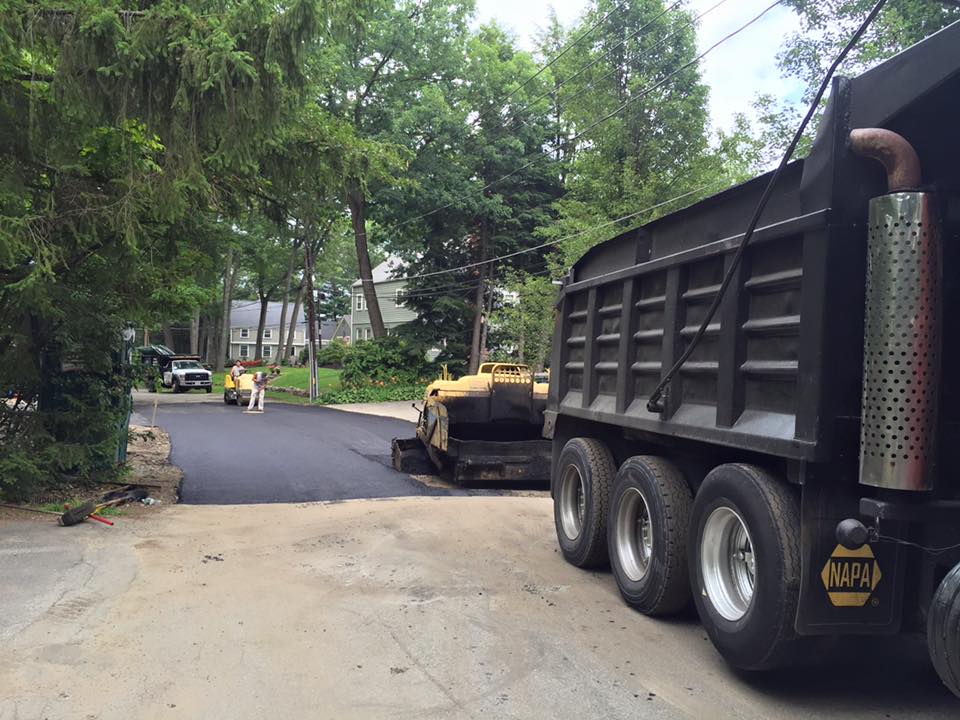
Near Hudson’s older neighborhoods, narrow side yards and shared driveways mean material staging has to be planned before work starts, not improvised once a delivery truck is already on site. A patio project here often means smaller equipment, hand-carrying base material further than on an open lot, and sequencing the excavation so nothing blocks the only access point for days at a time. It is slower work, and that is factored into how the job gets scheduled, not treated as an afterthought once crews arrive.
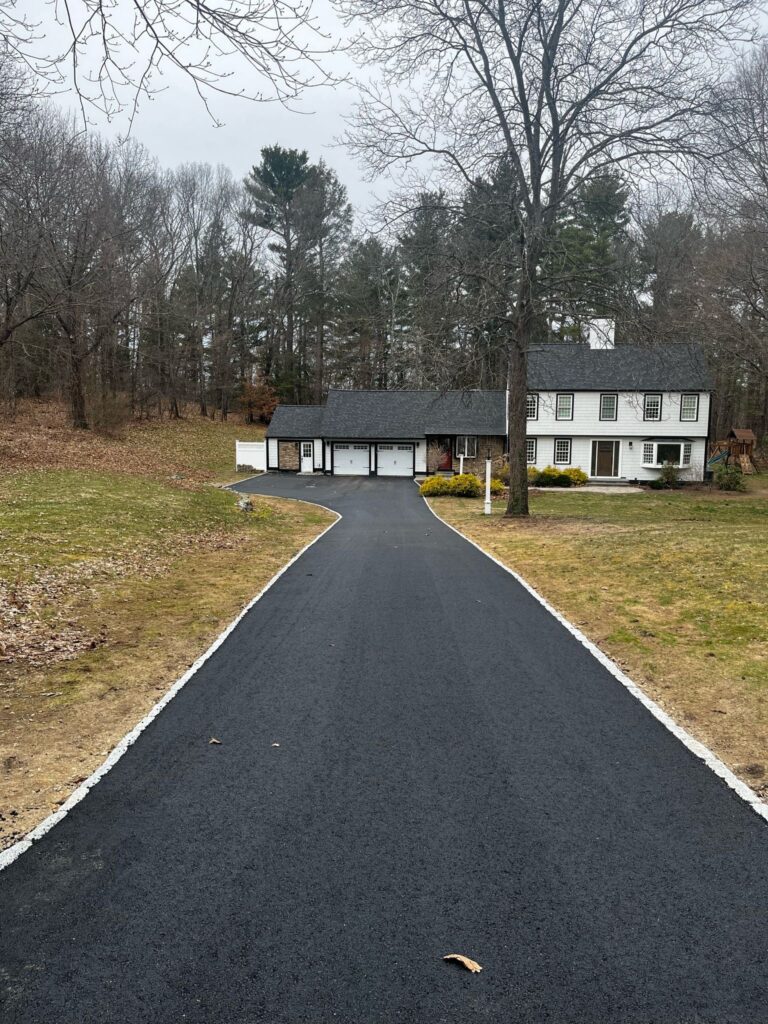
On the newer subdivision side of Hudson, deeper lots and more consistent grade mean a patio can be planned as part of a larger outdoor layout rather than squeezed into whatever flat ground exists. That gives more freedom to size the space, add a connected walkway, or step the patio down to meet a sloped backyard without fighting the lot the whole way. The tradeoff is that a bigger surface moves more water, so the drainage plan has to account for a larger footprint from the start rather than being added once the patio outline is already set.
These lots also tend to be newer construction, which means less mature root systems to work around but sometimes compacted fill soil left over from the original build that needs its own attention before a base goes down. Each lot type in Hudson comes with its own version of the same underlying question: what is actually under the ground, and what does the work need to account for because of it.

Where this suits Hudson properties
Compact mill-area lots
Narrow backyards near Hudson's older mill streets need smaller equipment, careful staging, and a build sequence planned around limited access rather than open-site convenience.
Shaded, tree-root yards
Mature oaks and maples common across older Hudson properties mean a base built to tolerate root movement, plus a surface that handles standing shade and moisture well.
Open subdivision frontage
Newer Hudson lots with deeper, flatter yards suit larger patio footprints and connected walkways, provided the drainage plan scales up with the bigger surface area.
Questions about patios in Hudson
How is a patio build different from driveway paving?
A patio is built for foot traffic and standing water management rather than vehicle loads, so the base depth, material choice and edge detail are all different from a driveway, even though both start with excavation and compaction.
Can a patio go in on a lot with mature trees?
Yes, but root pressure has to be planned for. A base and jointing method that tolerates some movement holds up better near established trees than a rigid, perfectly flat installation.
Do you match new hardscape to an older Hudson house?
Material choice is part of that. Natural stone tends to suit older homes with existing stone walls or foundations, while concrete pavers suit a cleaner, more uniform look on newer construction.
What happens to drainage once a patio goes in?
The ground that used to absorb rain now sheds it, so the patio has to be pitched during the base stage to carry water away from the house foundation rather than letting it pool or redirect toward the basement.
How long does a typical Hudson patio project take?
It depends on lot access, size, and material. Tighter older lots with limited equipment access generally take longer per square foot than open subdivision yards with easy staging room.
Next step
Tell us what you have: the slope, the house, how the space gets used. We will look at the lot and talk through what will work on it. Call Driveway Specialists at (413) 337-3772. We are family-run and have been working in Massachusetts since 1988.