
Patios in Shrewsbury, MA
Shrewsbury runs two very different kinds of lot. Around Lake Quinsigamond the properties are tight and older, with short drives and backyards that step down toward the water, where a patio has to earn its space without crowding the house or the slope. On the eastern side, in the newer subdivisions off the main corridors, lots are bigger and flatter, and the question is less about fitting a patio in and more about getting the grading and tie-ins right so it looks like it was built with the house rather than added after. Either way, a patio is an improvement project, not a repair. The decision is about how it will look in ten years and how water behaves once you have covered part of the yard with a hard surface, as much as it is about what it costs to put in.
A patio that looks right the first summer and goes wavy or sinks at the edges the second winter almost always failed below ground, not on the surface. Everything that matters structurally happens before a single paver goes down: how deep the base is excavated, what goes in to replace the soil, how well that base is compacted, how the bedding layer is screeded, and how the edges are restrained so the whole thing cannot creep outward. Massachusetts frost is the reason this matters more here than in milder climates. Water in the soil beneath a patio freezes and expands, then thaws and settles, and it does this every winter. A base built to shed water and resist that movement stays flat. A base that traps water heaves unevenly, and because a patio is made of individual units rather than one poured slab, uneven heave shows up fast as lippage and gaps between pieces that once sat flush.
The slope toward the lake adds a wrinkle most flat-lot jobs never deal with: a patio stepped into a grade needs retaining at the low edge and a drainage plan that carries water around the surface rather than letting it pool against the house foundation or sheet down toward a neighbor’s yard. On the newer eastern lots, the base course has to match the compaction of the surrounding fill so the patio doesn’t settle differently than the lawn around it, which is a common reason new-construction patios develop a visible lip along one edge within a year or two.
Material choice is a real trade-off. Concrete pavers, natural stone, and clay brick all handle freeze-thaw differently:
- Concrete pavers are the most forgiving and easiest to repair individually if one settles — lift it, fix the base beneath, reset it, and the rest of the patio is undisturbed.
- Natural stone, bluestone especially, has the look that holds up best next to an older Shrewsbury house, but irregular stone is harder to reset cleanly if a section moves, and it costs more up front.
- Clay brick ages well and suits a traditional property but tolerates the freeze-thaw cycle less well than concrete paver systems, and individual bricks can spall over time.


What Our Clients Say
What happens below the surface
A patio is a thin finished layer sitting on a structure you never see. That structure decides whether the surface is flat in ten years or wavy in two.
On lakeside Shrewsbury lots that slope toward the water, grading is the project. Patios must shed water away from the foundation and off to the side, never pooling against the house or sheeting straight down toward the lake.
On the flatter eastern subdivision lots around Shrewsbury, drainage is less dramatic but still matters.
Excavation depth and base material are decided by what sits under the topsoil, not by habit. Shrewsbury’s mixed glacial soils mean we check before assuming sand drains well everywhere on a given lot, adjusting sub-base thickness accordingly.
Compaction is done in layers, not all at once. A base that looks solid on top but was never compacted in lifts will settle unevenly within a season or two, usually right where it is walked on most.
Edge restraint keeps the whole field of patio pavers locked together. Without it, Shrewsbury’s freeze-thaw cycling works units loose at the perimeter first, and that loosening spreads inward over several winters, undermining joints and levelness across the patio.
Mature trees around many of Shrewsbury's older lake-area properties mean root systems that can lift a patio built without accounting for them.
Materials and the trade-offs
Tying a new patio into an existing stone wall or planting bed means matching joint lines and material tone, not just butting the new work up against the old and leaving a visible seam.
Matching an older Shrewsbury house usually means warmer, more irregular material rather than a sharp modern paver, especially near period stonework. A newer subdivision house can carry either look, depending on its own stone, render and trim details.
Where a Shrewsbury patio connects to the back door or a deck step, the transition height and the drainage at that single point get more attention than almost any other part of the layout, keeping thresholds dry and level through wet seasons.
A patio built right against a Shrewsbury foundation needs a slight pitch away from the house written into the compacted base, not corrected later by piling extra bedding sand under pavers near the wall, which only invites damp and movement.
Fire pits and seat walls built into a Shrewsbury patio need their own footing work, separate from the paved field, since they carry different loads and settle differently if treated as one surface rather than engineered individually.
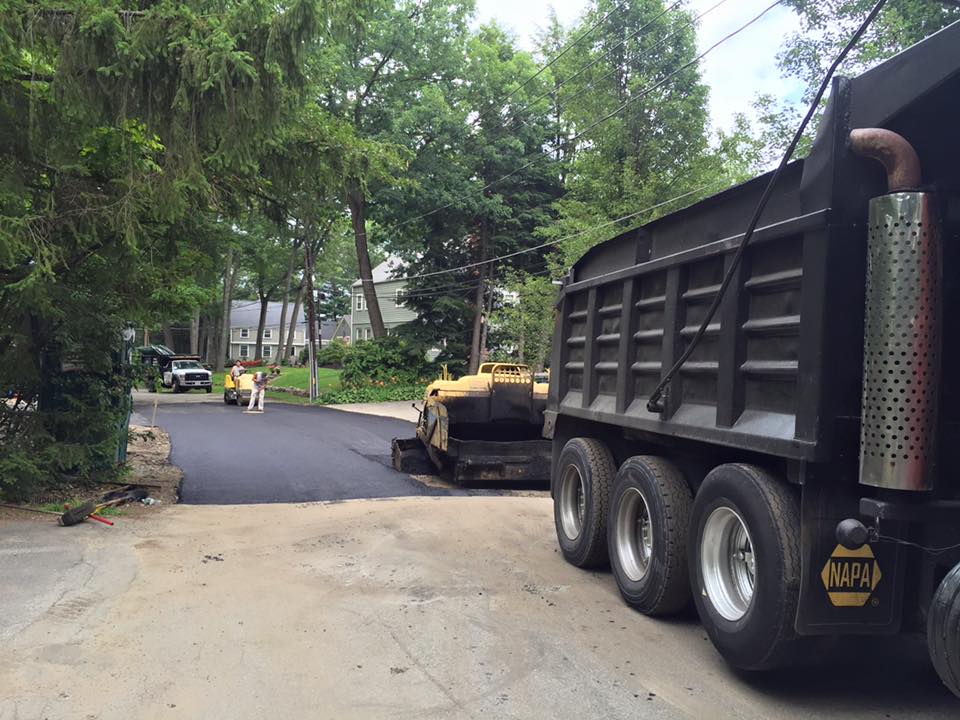
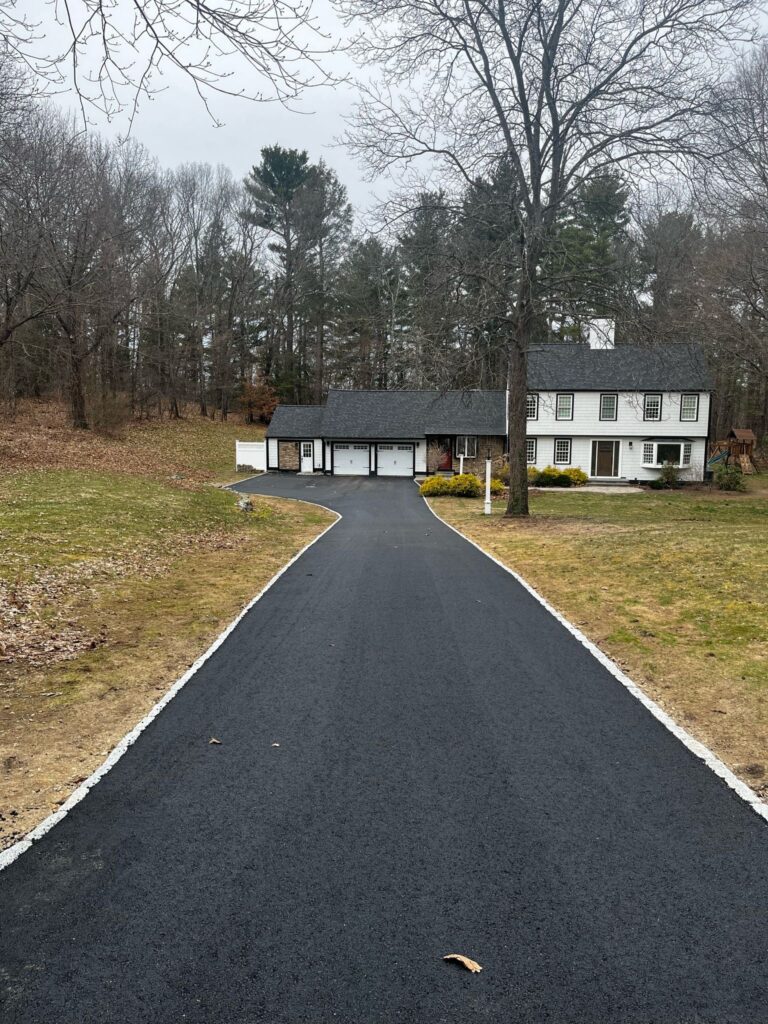
Lakeside Shrewsbury lots often have limited equipment access between the house and the water, which shapes how a patio gets built. Materials and small equipment have to be carried or wheeled through narrow side yards, so the sequence of work, where excavated soil goes, and how base material arrives on site all have to be planned before anyone breaks ground. On a tight lot this planning matters more than the design itself, because a crew that cannot move material efficiently ends up compacting the base unevenly or compressing it through repeated foot traffic in spots that were never meant to be a path. We walk the access before quoting a lakeside job for exactly this reason, and it is often the reason one patio shape costs noticeably less to build than another on the same lot.
On the newer eastern subdivision lots around Shrewsbury, access is rarely the constraint; grading and scale usually are instead. These properties tend to have wider side yards and sometimes direct equipment access from the street or driveway, which opens up larger patio footprints and more flexibility in shape than you’d get on an older, tighter lot. The work there shifts toward getting the grading right across a bigger area, making sure a large paved surface still drains predictably in every direction rather than pooling against a foundation or fence line, and tying the patio into a newer house’s existing hardscape, often a poured concrete walkway or a builder-grade stoop, without the finished result looking like two unrelated projects stitched together.
Matching paver color and joint pattern to what is already there takes more care on these lots than people expect, since builder-installed concrete and a custom paver patio rarely come from the same supplier. We also factor in:
- Subsoil compaction across the wider excavation footprint
- Consistent base depth so a larger slab doesn’t settle unevenly
- Transition detailing where new pavers meet existing concrete edges

Where this suits Shrewsbury properties
Lakeside lots with slope
Properties stepping down toward Lake Quinsigamond need a patio that manages grade and keeps water moving away from the house and off toward the yard edge, not into it.
Older homes needing a material match
Houses built before the newer subdivisions often suit stone or brick over a sharper modern paver, so the patio reads as part of the property rather than an addition.
Larger eastern subdivision yards
Flatter, wider lots on the eastern side give more room for a bigger patio footprint, where the main work is grading it correctly and tying it into existing concrete.
Questions about patios in Shrewsbury
Can a patio be built close to Lake Quinsigamond without causing drainage problems?
Yes, but the grading has to be planned so water sheds away from the house and is managed across the slope rather than directed straight down toward the water. This is usually the central design question on lakeside lots, not an afterthought.
What's the difference between a patio project and the driveway work you do elsewhere in Shrewsbury?
A driveway repair fixes something that has failed and has to carry vehicle weight. A patio is built from scratch for foot traffic and outdoor living, with different base depth, drainage needs, and material choices suited to that lighter, more flexible use.
Do you match new patio work to an existing walkway or wall?
We look at the existing stone, paver color, and joint pattern on the property and choose materials that sit naturally alongside them, rather than installing something that reads as a separate project bolted onto the house.
How does frost affect a paver patio differently than a poured concrete one?
A paver patio is made of individual units, so freeze-thaw movement shows up as small shifts or gaps rather than a single large crack. It also means individual pavers can be lifted and reset if the base beneath them settles, without redoing the whole surface.
Next step
Tell us what you have: the slope, the house, how the space gets used. We will look at the lot and talk through what will work on it. Call Driveway Specialists at (413) 337-3772. We are family-run and have been working in Massachusetts since 1988.