
Patios in Westborough, MA
Westborough is a mix: newer subdivision lots with generous level backyards, older homes closer to the center with smaller frontage, and a commercial corridor that has reshaped parts of town over the years. A patio project here usually starts the same way regardless of which of those you own – you want a usable outdoor space that actually holds up through a New England winter, and you want it to look like it belongs with the house, not bolted onto it.
A patio is not a driveway scaled down. Nobody is parking a car on it, but the ground underneath still moves every winter, and that movement is what separates a patio that stays flat for decades from one that heaves, settles unevenly, and starts trapping water against the house within a few seasons.
What happens below the surface
The visible stone or paver surface is the last four or five percent of the job. Before that comes excavation to remove topsoil and organic material that will compress and shift over time, a compacted base layer that gives the whole structure something stable to sit on, a bedding layer that lets the pavers or stone seat evenly, and edge restraint that keeps the whole field from spreading outward as frost pushes and settles it season after season.
Skip or shortcut any one of those steps and the symptoms show up the same way everywhere in Massachusetts: a corner that pools water, a paver that rocks underfoot, a line of stone that has drifted away from the edge restraint entirely. None of that is a material failure. It is a base failure wearing a material’s face.
Frost is the mechanism worth understanding, because it explains almost everything else on this page. Water in the soil beneath a patio freezes and expands, lifting whatever sits above it. On a well-built base, that movement is uniform and the surface rides it without damage. On a thin or poorly compacted base, the movement is uneven, and uneven movement is what cracks mortar joints, opens gaps between pavers, and turns a flat patio wavy within a few winters.


What Our Clients Say
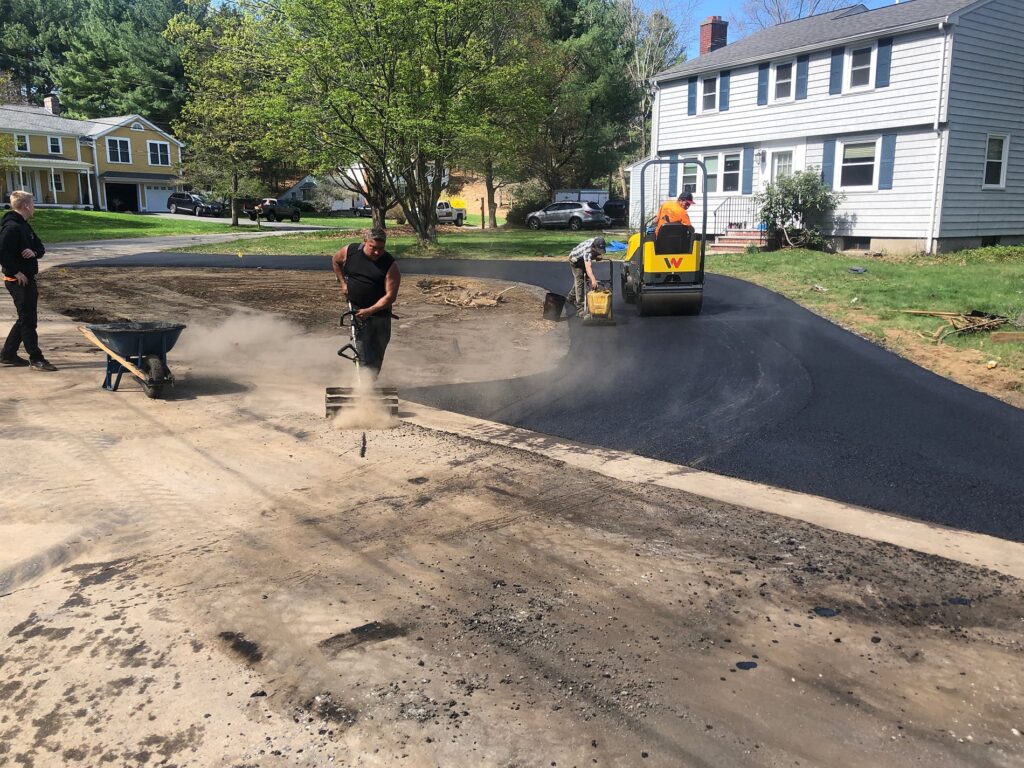
What happens below the surface
A patio is a thin finished layer sitting on a structure you never see. That structure decides whether the surface is flat in ten years or wavy in two.
Westborough’s mix of newer level lots and older in-town properties both support good hardscape, but each needs the base and drainage plan built around its own grade, soil, and tree roots, not a generic patio layout pulled from a catalog.
Pavers handle Westborough's freeze-thaw cycles well because the joints flex slightly with ground movement, resisting the cracking that plagues poured slabs.
Natural stone – bluestone or fieldstone – ages well and suits older Westborough homes, but it costs more and repairs are harder to blend invisibly.
Poured or stamped concrete is the lowest upfront cost of the three, but it cracks as a single sheet. Westborough’s freeze-thaw winters make this worse, and once a crack forms, patching always shows against the surrounding slab.
Every Westborough patio has to shed water away from the foundation. A surface pitched even slightly toward the house turns every rainstorm into a basement problem waiting to happen.
On larger Westborough subdivision lots, the grading plan usually routes water toward a side yard or existing swale, and that drainage path needs to be read correctly before any base, edging, or paver pattern goes in.
Materials and the trade-offs
On tighter in-town lots near Westborough center, drainage options are more limited, so the pitch, surface material, and any edge drainage must be planned precisely from the start, keeping water away from foundations, walkways, and shared property lines before the patio base ever goes down.
A patio should read as part of the property, not an addition. Matching the walkway material, stepping down from an existing deck, or aligning with the driveway edge all matter more than people expect.
Older Westborough homes often have mature plantings, fieldstone walls, and established grading.
Newer Westborough construction tends to have a blank slate out back, which is an opportunity but also means the patio has to set the tone for everything added later—plantings, seating walls, fire pits, even where the grill and shade structure eventually go.
Commercial frontage properties along the Westborough corridor sometimes want a smaller hardscape area for seating or entry presentation, which has its own scale, drainage, and foot-traffic considerations, plus material choices that hold up to regular commercial use while still looking inviting to passing customers.
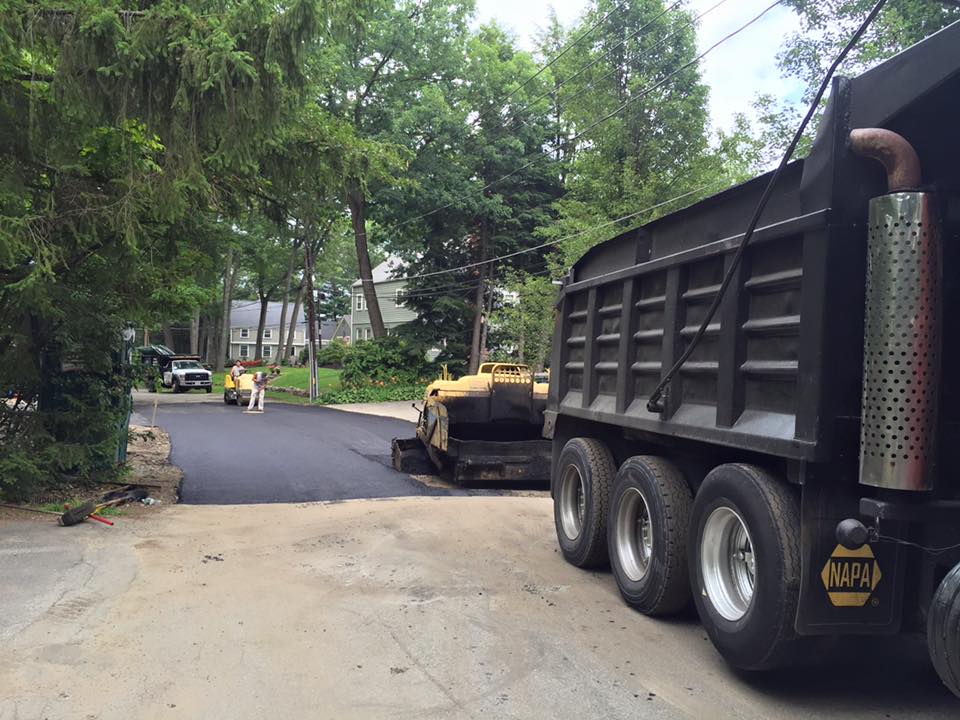
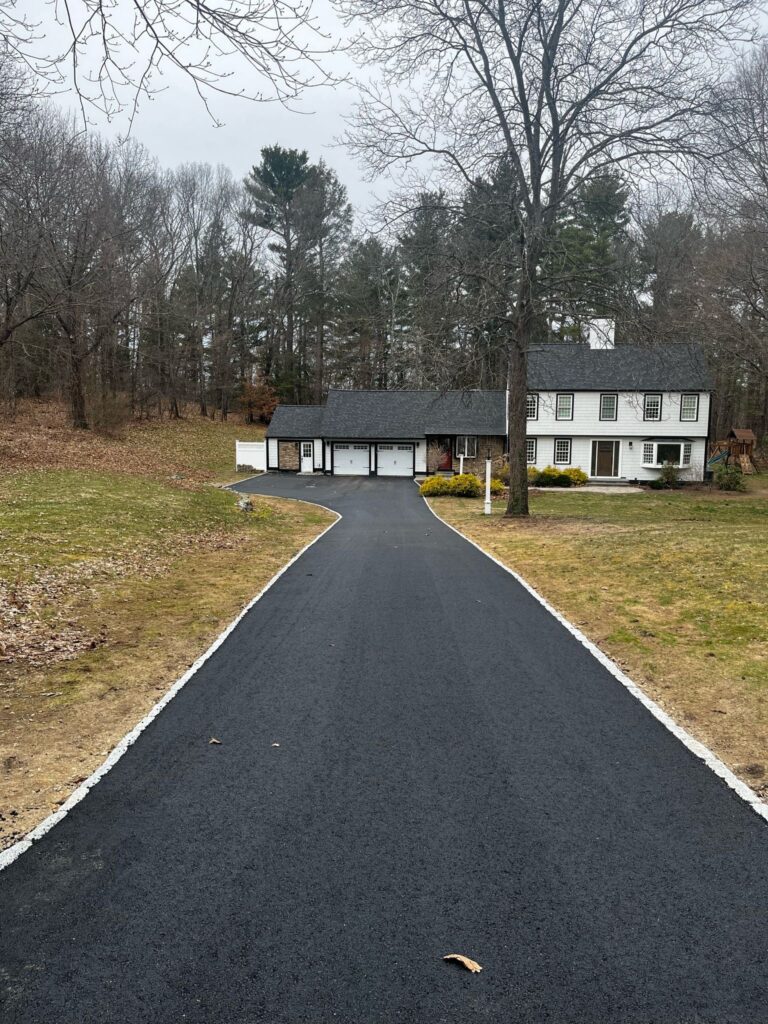
Westborough’s range of lot types means there is no single right patio size or layout. A good plan starts with how the grade behind the house actually falls, not with a catalog picture.
Wide, level backyards common in the newer subdivisions give the most flexibility – room for a full-size patio, a fire pit area, or a path connecting to a shed or pool, all without fighting the slope. The main job there is building a base that performs evenly across a larger footprint and planning drainage before the stone goes down, not after.
Older homes closer to the center often have smaller, more defined yards and established landscaping already in place. The patio has to work within that footprint, tying into existing stone, mature trees, and a house with its own period details. That usually means a tighter layout, careful attention to root zones near mature trees, and a material choice that reads as original to the property rather than added on.
Frost is the one constant across every lot type in Westborough, from flat subdivision yards to shaded in-town lots. The base has to move evenly with the ground, not fight it, no matter which paver or stone goes on top.
Trees are the other recurring factor. Mature oaks and maples on the older lots mean root systems that can lift a poorly based patio years after installation, plus shade that keeps a surface damp longer after rain or snowmelt. Both affect which parts of a yard actually make sense for a patio, regardless of how the layout looks on paper.
None of this is a reason to avoid a project – it’s the reason to get the base, grade, and material decisions right before anything visible goes in. A patio planned around the actual ground it sits on, rather than a generic layout, is the one that still looks right in ten years.
If you’re planning a patio in Westborough, call (413) 337-3772 to talk through the site and get a plan built around it.
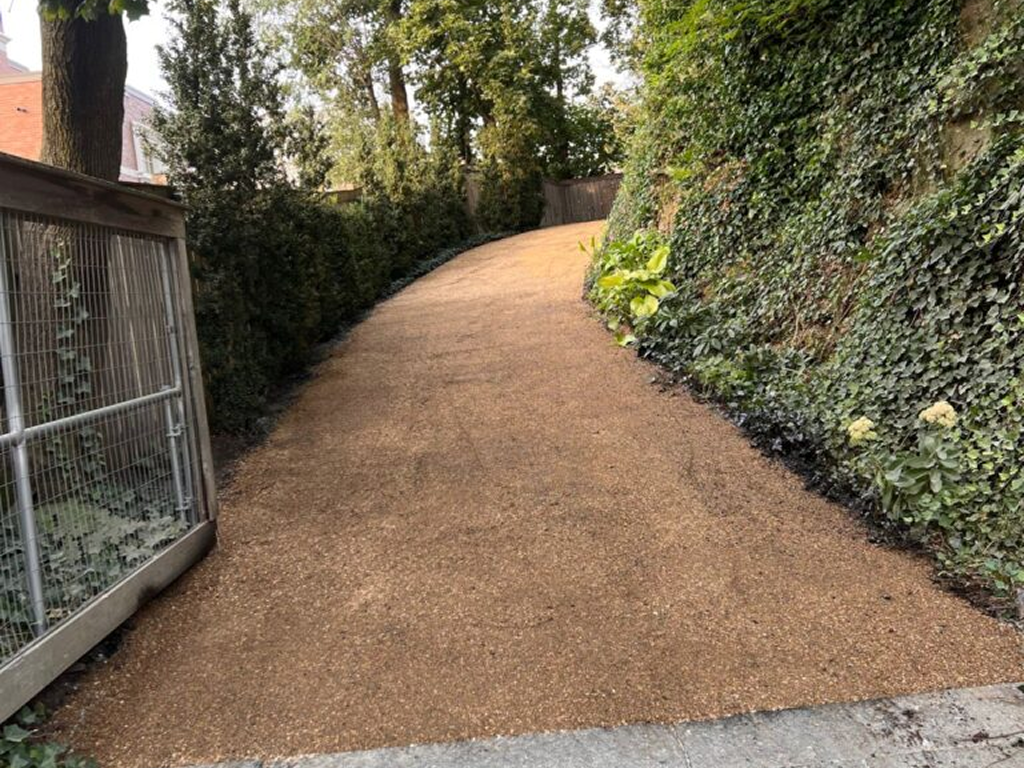
Where this suits Westborough properties
Wide subdivision backyards
Level, open lots common in Westborough's newer developments give room for full-size patios and connected features, with the base built to perform evenly across a larger footprint.
Older in-town lots
Smaller, established yards near Westborough center call for a patio that ties into existing stone walls, mature trees, and a house with period details already in place.
Corridor frontage properties
Commercial and mixed-use frontage along the Westborough corridor sometimes calls for a smaller hardscape area for entry presentation or seating, with its own scale and traffic needs.
Questions about patios in Westborough
Do you need to tie a new patio into existing drainage?
Yes. A patio has to shed water away from the house, and on most Westborough lots that means working with whatever grading or swale already handles runoff, not creating a separate drainage problem next to it.
Can a patio be built close to mature trees?
It can, but roots and shade both affect the base and how damp the surface stays. We assess root zones before placing the layout so the patio does not get lifted by root growth later.
How does frost affect a patio differently than a driveway?
The mechanism is the same – ground movement under freeze-thaw – but a patio has no vehicle load, so a properly built base moves evenly with the ground rather than being stressed by weight on top of movement.
What's the difference in long-term maintenance between pavers and poured concrete?
Pavers can be lifted and reset individually if a section settles. Poured concrete cracks as a single sheet, and a patch is visible rather than blending back in.
Next step
Tell us what you have: the slope, the house, how the space gets used. We will look at the lot and talk through what will work on it. Call Driveway Specialists at (413) 337-3772. We are family-run and have been working in Massachusetts since 1988.