
Retaining Walls in Littleton, MA
A lot of Littleton properties sit on rolling, semi-rural ground: a long gravel or asphalt drive cutting through a slope, a bank behind the house that sheds water toward the foundation, or a side yard that drops off faster than anyone would like. A retaining wall isn’t just a line of stone or block sitting on top of the ground. It’s a structure doing real work, holding back soil that wants to move, and it only does that job if what’s underneath it is built correctly.
Most of what decides whether a wall still looks straight in fifteen years happens before the first visible course goes in. That starts with excavation deep enough to get below the topsoil into stable ground, a compacted base of crushed stone that won’t settle unevenly, and gravel backfill behind the wall face that gives water somewhere to go other than pushing against the stone. Add a buried drain line at the base of that backfill, daylighted to a spot where water can actually leave the site, and the wall stops acting like a dam. Skip any one of these steps and the wall will eventually lean, bulge, or crack, usually within a few winters, because frost in the saturated soil behind it has nowhere to go but outward.
Why frost is the real test
Massachusetts freeze-thaw cycling is the single biggest reason retaining walls fail here. Water trapped behind a wall freezes, expands, and pushes. It thaws, the soil settles differently, and it pushes again, slightly differently, the following year. A wall with proper drainage sheds that water before it can freeze in place. A wall without it is fighting the ground every winter it stands, and the damage compounds: a half-inch of lean this year becomes a visible bulge in three or four.
Height and setback decide a lot of the engineering too. Anything pushing past roughly four feet typically needs engineered reinforcement, whether that’s geogrid tied back into the soil mass, a stepped-back batter on the wall face, or in some cases a permitted design reviewed by the town. Littleton’s conservation and building departments pay particular attention to walls near wetlands, drainage swales, or steep lots where runoff could affect a neighbor downhill, so it’s worth having that conversation before materials are ordered rather than after.
Materials matter too, but not equally:
- Segmental concrete block is consistent, relatively economical, and holds a crisp line, though it ages with a more manufactured look.
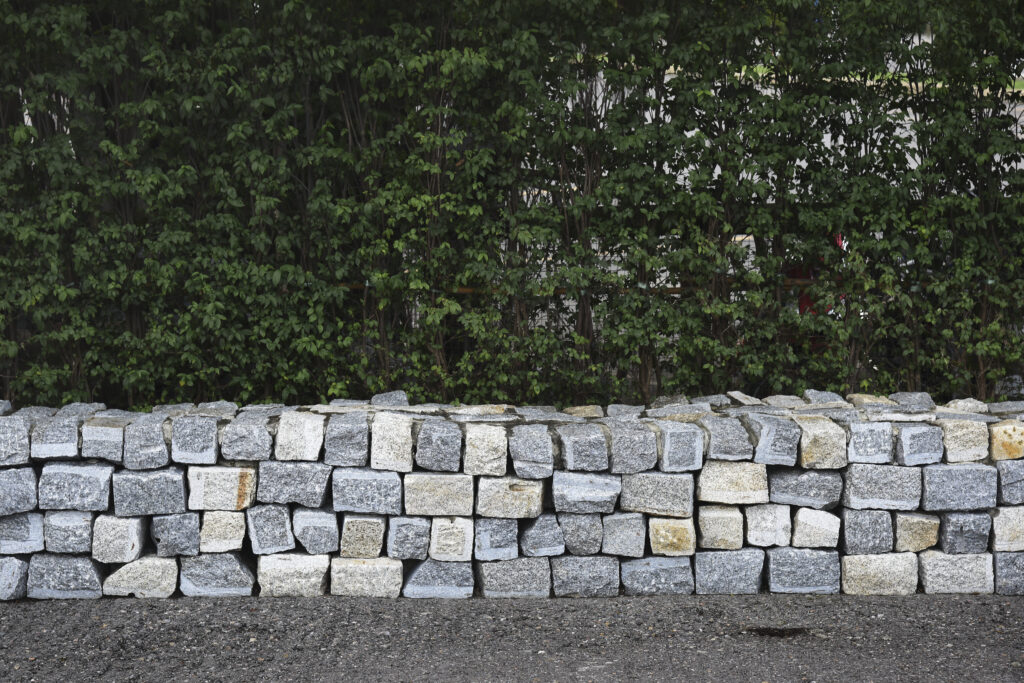
- Natural stone costs more and takes longer to lay well, but it ages the way stone does on an old New England property, which matters on a lot of Littleton’s older lots.
- Timber is the cheapest option up front and the one we’d steer most clients away from, since wood rots and compresses in contact with wet soil regardless of treatment, and repair means pulling the wall apart rather than resetting a few units.


What Our Clients Say
What holds a wall up is underground
The part you see is the smaller part of the job. Below it, the work runs in a fixed order.
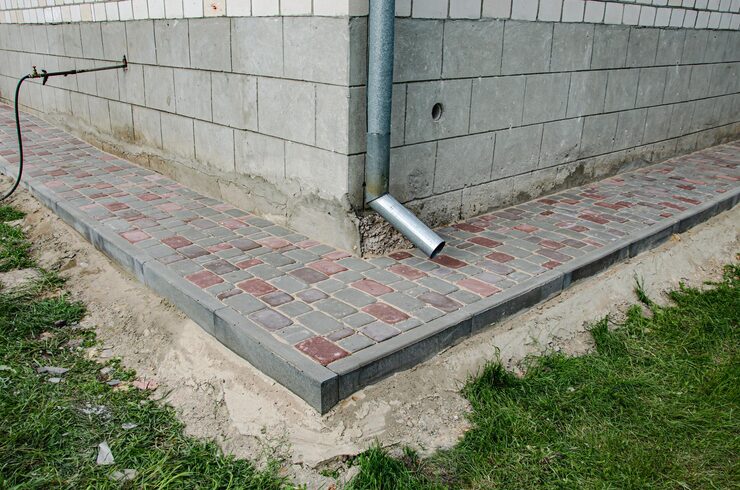
Grading around a new wall determines where water ends up. A wall built without regard to the slope above and below it just shifts a wet-yard problem elsewhere, often toward a Littleton foundation or driveway instead of away from it.
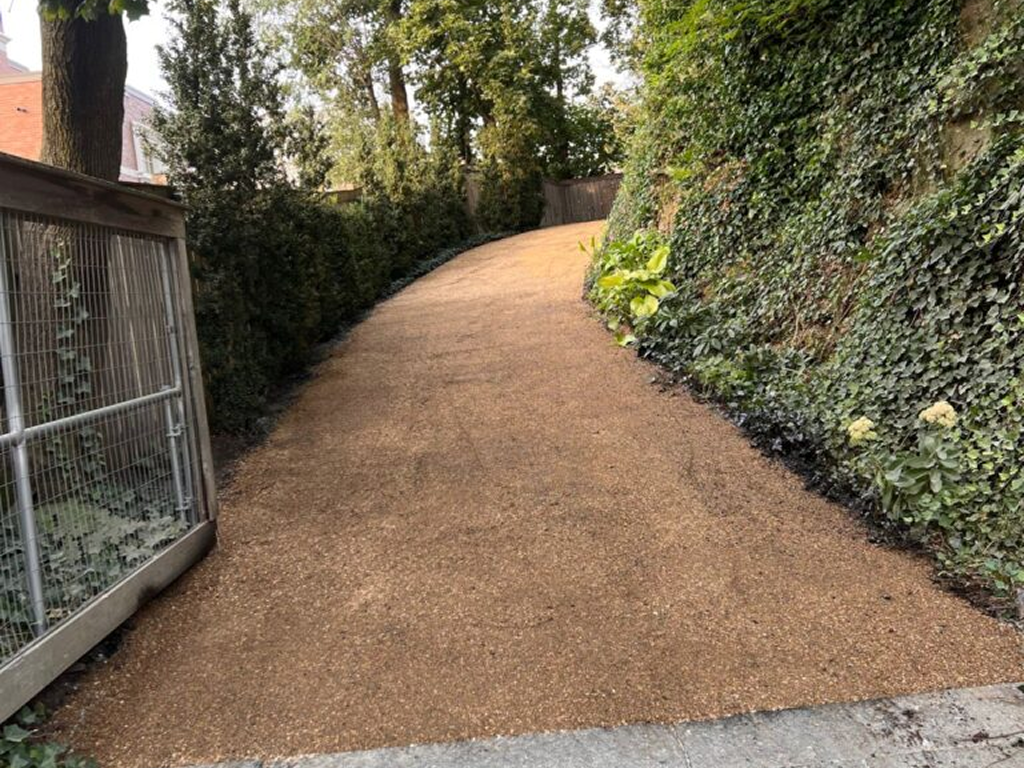
On Littleton's longer gravel-turned-asphalt drives, a retaining wall at the edge of a cut slope stabilizes the base course itself, protecting the new pavement from erosion underneath it.
Tree roots on wooded Littleton lots complicate excavation near mature oaks and pines.
A retaining wall should read as part of the property, not bolted on.
Curved or terraced walls handle a steep Littleton slope better than one tall vertical face. Breaking the grade into steps reduces the load on any single wall, improves drainage between tiers, and often looks more settled against the natural terrain.
Drainage behind the wall
Where retaining walls fit on a Littleton property
Littleton’s lots tend toward the rural and semi-rural: more acreage, longer frontages, and plenty of long gravel drives homeowners are converting to asphalt for the long haul. That mix creates specific grading problems. A drive cut into a hillside needs something holding the uphill side in place so base material doesn’t wash onto the new surface after a hard rain. A bank behind an older house, built before modern grading standards, often needs a wall just to stop the slow slide of soil and lawn toward the foundation.
Sandy soil, common across much of Littleton, is actually a good partner for this work. It drains well, easing pressure on backfill and drainage design compared to a clay-heavy lot where water sits and pushes. That doesn’t eliminate the need for proper drainage behind the wall, but it does mean the ground is cooperating rather than working against the build from day one.

Choosing the material
Tying the wall into what's already there
A retaining wall rarely stands alone. It usually sits near a driveway, a front walk, an existing dry-stack stone wall left over from the property’s farming history, or a house old enough that a modern concrete-block wall would look out of place next to it. Part of the design conversation is matching what’s already on the property: stone color and texture, cap width, wall height relative to existing grade, and how the top of the wall transitions into a planting bed or a mowed edge rather than stopping abruptly.
If the property also has a gravel drive being converted to asphalt, the retaining wall and the paving work often get planned together, since the wall frequently defines where the new drive edge sits and how water sheds off it. We handle both, but this page is about the wall itself: what holds, what drains, and what still looks right against an older New England house ten or twenty years on.
Scope, slope, and getting it right the first time
Every retaining wall conversation starts with the same questions: how tall does this need to be, what’s it holding back, and where does the water go once it’s built. On a Littleton property, that means walking the slope, checking how the lot drains in heavy rain, and figuring out whether the soil near the surface is sandy and well-draining or a heavier pocket that needs more careful backfill design. Height matters more than most homeowners expect. A wall under a certain height is a straightforward build. Get taller than that, especially with a driveway or structure above it, and the loads involved push the project into engineered territory, with reinforcement, geogrid, or a stepped design to spread the force properly.

Questions we get asked
Does a retaining wall in Littleton need an engineer?
Low walls holding back a gentle slope generally don't need engineered drawings. Once a wall climbs past a few feet, or it's holding back a cut slope near a structure or driveway, the load behind it grows fast and an engineered design with proper reinforcement becomes the sensible route, sometimes the required one depending on height and site conditions. We'll tell you honestly which category your project falls into before any work starts.
Will a retaining wall help with a wet or soft section of my yard?
It can, but only if drainage is built into the wall itself. A wall without gravel backfill and a drain line just becomes a dam. On Littleton's sandier lots this is usually straightforward; on the clay pockets it needs more attention to where the water actually goes once it hits the wall.
What's the most durable material for a freeze-thaw climate like Littleton's?
Properly built, both natural stone and segmental concrete block hold up well through Massachusetts winters. The failures we see aren't material failures – they're base and drainage failures. A timber wall is the one material that struggles regardless of how well it's built, simply because wood rots and compresses over time.
Can a retaining wall be built to match an existing stone wall or older house?
Yes, and on a lot of Littleton properties that's exactly the goal. Natural stone, especially fieldstone-style veneer, can be chosen to sit comfortably next to an old farmhouse foundation or an existing dry-stacked wall rather than looking like a new addition.
Next step
Call us and we will come look at the slope, the access and the water. We will tell you what the wall needs and what it will cost to do properly.