
Cobblestone Aprons and Edging in Acton; MA
A lot of Acton driveways do the job fine but look unfinished where they meet the road or the walkway. You’ve got a long approach through trees, a wide apron off a subdivision street, or an older asphalt edge that’s started to crumble and spread. The driveway itself might have years left in it. What’s missing is the detail at the edges – the part that actually shows.
Cobblestone aprons and edging address that directly. An apron is the section where the driveway meets the street or garage threshold, usually the hardest-worked and most visible few feet of the whole surface. Edging is the restraint that runs along the sides, holding whatever material fills the middle – asphalt, gravel, or pavers – in a straight, stable line instead of letting it creep into the lawn or the mulch bed every time it’s plowed or mowed too close.
What’s happening below grade
None of this holds up on good looks alone. Underneath, there’s excavation down past the topsoil, a compacted gravel base, a bedding layer of sand or stone dust, and then the cobblestone itself, set either in that bedding layer or mortared depending on the application. Frost is the reason this sequence matters in Massachusetts. Water in the ground freezes, expands, and pushes upward unevenly. A shallow, uncompacted base moves with it. A properly built base drains before the water has a chance to freeze in place, so the stones stay level instead of heaving individually out of line – which is exactly what you see on driveways where the edge was laid straight onto existing soil with no prep underneath.
Acton’s glacial sand is genuinely good ground for this. It drains fast and compacts into a stable base without the standing water and soft spots that make the same work harder in towns sitting on heavier clay. That doesn’t mean the base step can be skipped here – it means the material cooperates when the work is done properly, and it also means an apron tied into a sandy subgrade tends to settle evenly rather than dipping at one corner.
Material choice changes what you’re buying. Granite cobblestone, new or reclaimed, is the most durable option and ages well, picking up a weathered look rather than a damaged one, but it costs more up front. Concrete cobble pavers cost less and come in more consistent sizing, but they chip and fade over time in a way that’s harder to disguise. Belgian block or reclaimed granite curbing is a strong middle option for straight edging runs where you don’t need the full cobble field. Whatever you choose, a cobblestone or stone edge is more repairable than it looks – individual units can be pulled and reset if one shifts, which isn’t true of a poured concrete curb.
A few things worth sorting out before work starts:


What Our Clients Say

What the work involves below the surface
The stone is the last and smallest part of the job. A cobblestone apron stays flat or goes wavy depending on what is underneath it.
Grade matters as much as material. In Acton, water must flow away from the house and garage, not pool at the apron or seep under the edging — otherwise the base beneath saturates and fails, regardless of the cobblestone on top.
Good edging also ties into what’s already on the property – existing stone walls, a bluestone walkway, foundation plantings – so the new work reads as part of the house rather than an add-on.
On a long wooded Acton drive, the apron is often the only part of the job visible from the road.
Older Acton subdivisions built in the 1960s through 80s often have original asphalt aprons now cracking at the street edge.
Matching an older Acton home takes more than function—color and pattern matter. A cobblestone apron laid in herringbone or soldier-course reads differently than a plain running bond, so the right pattern depends on your house’s existing style.
Materials and the trade-offs
Matching the house, not just the driveway
A cobblestone apron or edge is a visible, permanent part of the property's front face, which means it has to sit comfortably next to whatever's already there. On a colonial or farmhouse-style Acton home, a traditional running bond in weathered granite tends to look original rather than added on. On a newer build, a tighter pattern in consistent concrete cobble can look more deliberate and less busy. The entry gate, mailbox post, stone wall, or front walk often give a cue worth matching – same stone family, same joint width, same general tone, even the same weathering if the existing stone has aged a bit. Transitions matter too: where the apron meets asphalt or the edge meets a lawn, a clean, consistent reveal height keeps mowers and plows from catching on it. None of this is decorative fuss.


Where long drives change the plan
A lot of Acton properties sit on acre-plus wooded lots with driveways running well back from the road, sometimes past mature oaks and stone walls that predate the house. On a drive like that, the apron at the street is often the only hardscape detail anyone actually sees day to day – everything past the first curve is screened by trees. That makes the apron worth getting right: wide enough for the turning angle off the road, pitched so runoff clears the pavement instead of sheeting across it, and set on a base deep enough that root growth from nearby trees doesn’t heave it unevenly within a few seasons. Root interference is a real consideration here, more than in open subdivision lots, and it affects where the edge line gets set relative to existing trunks.
Where subdivision asphalt is reaching the end
Acton has a good amount of subdivision-era asphalt now at or near the end of its working life, laid down through the 1960s to 80s on the streets built out during that era’s housing boom. On those properties, replacing the whole driveway isn’t always the right call if the surface itself is still sound in the middle – the failure is almost always concentrated at the edges and the apron where the driveway meets the street. Rebuilding the apron and adding restrained cobblestone edging along the worst-wearing sections – the street transition, any curve where asphalt has started to spread or crumble, and the strip along the garage – solves the visible problem without the cost of a full repave.
- Apron rebuilds handle the heaviest wear point: the transition where vehicles turn in off the street
- Cobblestone edging stops asphalt spread at curves and holds the shape of the drive
- A targeted fix upgrades curb appeal ahead of a sale without redoing square footage that’s still structurally fine
Call Driveway Specialists at (413) 337-3772 to go over what your apron and edges actually need.
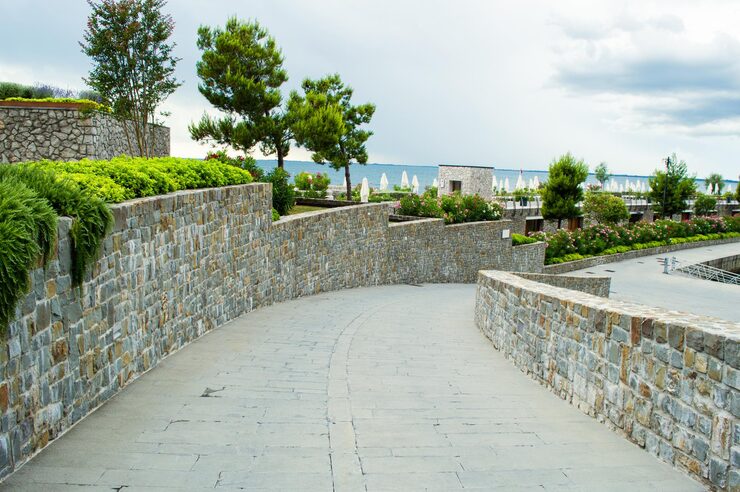
Where this suits Acton properties
Long wooded driveway entries
Acton's acre-plus lots often sit well back from the road behind a long gravel or asphalt approach. Cobblestone at the street edge marks the entry clearly and gives the whole drive a finished transition instead of a ragged asphalt lip.
1960s-80s subdivision frontages
Many Acton subdivision driveways are original asphalt now cracking at the apron. Replacing just that section in cobblestone solves the worst wear point without repaving the whole drive, and holds up better where plows and road salt hit hardest.
Sandy-soil properties with existing plantings
Acton's glacial sand drains well and takes a compacted base easily, which makes it good ground for edging that ties a driveway into stone walls, foundation beds, or mature tree plantings already on the property.
So tar and chip suits a longer, gentler Acton drive with some room around it. It is a poor match for a short, steep or shared one, or one that opens straight onto the walk.
Questions we hear
Does cobblestone edging stop asphalt from spreading?
Yes, that is its main structural job. Asphalt without a restrained edge creeps outward under tire load and winter heave. A properly set cobblestone or granite edge, bedded into compacted base rather than just sitting on top of the asphalt, holds the line and keeps the driveway width honest year after year.
Can you add an apron without touching the rest of my driveway?
In most cases yes. The apron is a separate section structurally, so it can be excavated, based and edged on its own without disturbing the existing drive surface, as long as the grades meet cleanly at the joint.
Will cobblestone edging survive plows?
It survives plows better than painted curbing or unrestrained asphalt edges, because the units are set deep and bedded in stone dust or mortar rather than resting on the surface. The edge that usually fails first is one that was never properly set below grade.
Is reclaimed granite cobble available for Acton projects?
It depends on supply at the time, and reclaimed material varies piece to piece, which is part of its look. We can talk through what is currently available and whether it suits the style of your house when we come out.
Next step
Call us at (413) 337-3772. Tell us about the lot, the slope and what you want the frontage to look like. We have been working in this area since 1988, and we will tell you plainly what suits your property.