
Cobblestone Aprons and Edging in Bedford, MA
A lot of driveways in Bedford work fine. The asphalt holds, the surface drains, nothing is cracking. What’s missing is the finish at the street and along the edge – the part that makes a drive look like it belongs to the house instead of just ending at the road. On the wide, flat lots common to Bedford’s colonials and capes, that transition is usually the single most visible part of the property from the street, and it’s often the one part nobody has touched since the house was built.
Cobblestone aprons and edging solve that without touching the driveway surface itself. The apron is the section where the drive meets the street – the part that takes the most abuse from turning wheels, snowplow blades and runoff. Edging runs the length of the drive, holding the asphalt or gravel in place and giving the whole thing a defined border instead of a ragged line where pavement meets lawn.
What’s actually involved
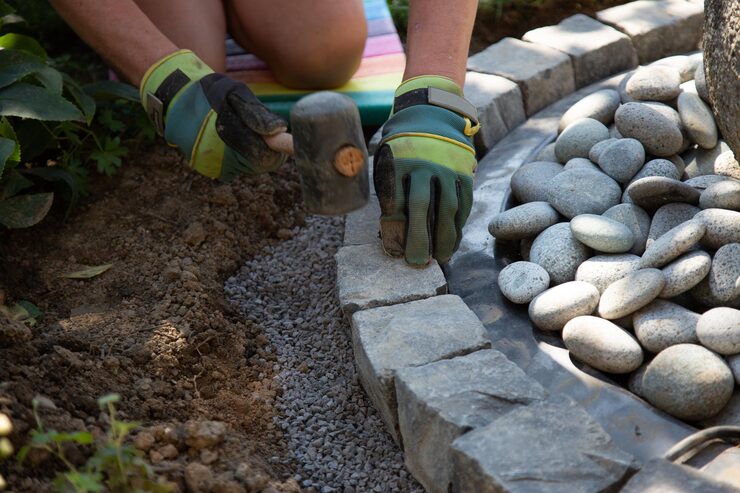
Done properly, this is excavation work before it’s decorative work. The existing edge gets cut back, a base is excavated and compacted, and the cobblestones are set in that compacted bed with a restraint behind them so they don’t creep sideways under load. Skip the base work and set stone directly on loose soil or old fill, and the first hard frost will lift sections unevenly – which is exactly the failure mode that makes a lot of amateur stone borders look wavy within a couple of years.
On Bedford’s flatter lots, the excavation itself is usually straightforward – there’s rarely the steep grade or tight access that complicates this kind of work elsewhere in the area. That makes the job more about getting the base and the stone selection right than fighting the site.
Matching matters here more than on a plain driveway repair. An apron or border sits next to the house, the front walk and whatever stonework already exists, so stone choice is partly a structural decision and partly a question of what looks right against an older New England facade. Granite cobblestone, whether reclaimed or new-cut, tends to suit the older housing stock around town better than a poured concrete curb or a plastic landscape edge – it reads as permanent rather than tacked on, and it ages in a way that matches brick steps, stone walls and the kind of fieldstone retaining walls that show up throughout Bedford’s older neighborhoods.
The apron deserves particular attention because it’s load-bearing in a way the rest of the border isn’t. Plow trucks catch that corner every winter, cars swing wide turning in, and water from the street runs across it during heavy rain. A few things make the difference between an apron that holds and one that needs redoing in a few seasons:
- A compacted gravel base deep enough to resist frost heave, not just a few inches thrown down for looks
- Stones set tight enough that plow blades can’t catch an edge and pry one loose
- A slight pitch away from the garage or house so runoff sheds toward the street instead of pooling at the threshold
- Restraint or edging behind the cobbles so the whole run doesn’t splay outward over time


What Our Clients Say
What the work involves below the surface
The stone is the last and smallest part of the job. A cobblestone apron stays flat or goes wavy depending on what is underneath it.
Granite cobblestone holds its edge and its color for decades with almost no maintenance, which is why it shows up on older New England properties more than any other border material.
Concrete pavers cost less upfront and come in more finishes, but the color fades and individual units can crack under repeated plow contact.
Reclaimed or antique cobblestone costs more and takes longer to source, but it reads as original to the house rather than added on.
Whatever material you choose, it still needs somewhere for water to go. An apron that traps runoff at the garage door undoes the benefit of a well-built edge.
Grading has to pitch water away from the foundation, not toward it. This gets decided during excavation, before a single stone is set, and it can’t be fixed afterward without pulling the work back up.
Materials and the trade-offs
Why the base matters more than the stone
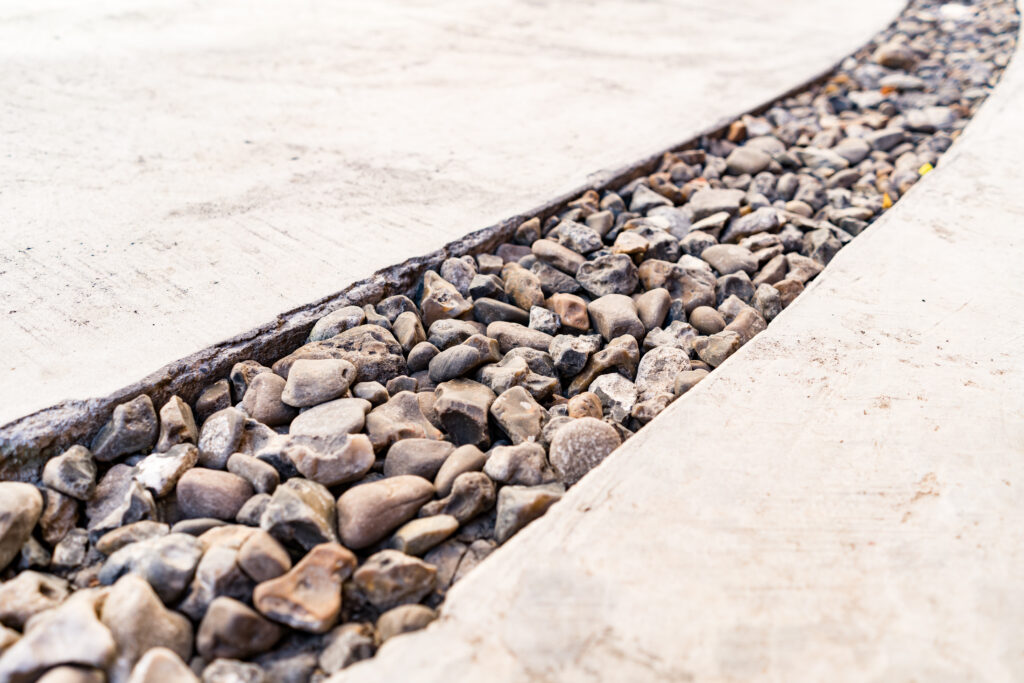
Massachusetts freeze-thaw cycles decide whether cobblestone edging holds or fails. Water gets under the stones, freezes, expands, and pushes them out of line – unless the base beneath was compacted deeply and evenly enough to resist that movement. A thin bed of sand under decorative stone looks fine on installation day but starts drifting apart within a season or two once frost works under it.
Cobblestone also has a real edge over poured concrete borders: because it’s made of individual units rather than one continuous slab, seasonal movement doesn’t crack it the way it cracks concrete. A shifted stone can simply be lifted and reset; a cracked concrete section has to be cut out and repoured. That repairability is part of what you’re paying for, not just the look.
Edge restraint behind the cobblestones – a buried concrete or compacted-base curb the stones sit against – is what keeps that repairability intact, rather than letting the whole border slowly splay outward under traffic and plow pressure.

Tying it into what's already there
On most Bedford properties, this work doesn’t happen in isolation. It has to read correctly next to the existing driveway surface, the front walkway, any retaining walls, and the planting beds along the edge of the lot. A cobblestone apron that’s a different stone entirely from the front walk can look like two unrelated projects instead of one coherent entry.
Older capes and colonials in particular tend to have simple, understated stonework if they have any at all, which means an oversized or overly ornate border can look out of scale with the house. The goal is usually restraint – a clean, well-set edge that reads as part of the original property rather than a recent addition competing for attention.
Where there’s an existing low wall, granite curbing, or a mature planting bed along the drive, the new stonework should match that material or at least its color and scale, so the whole frontage holds together as one line from the street to the front door.
Where this fits on a Bedford property
This kind of work tends to make the most sense where a property already has the bones for it: a solid driveway surface that doesn’t need replacing, a front entry worth framing properly, and enough frontage width that an apron reads as intentional rather than squeezed in. Bedford’s lot sizes and setback patterns suit that more often than not.
It also makes sense as a standalone project separate from any driveway paving. If the asphalt is sound and the only issue is a crumbling edge or a plain, undefined street entrance, there’s no reason to redo the whole surface to fix that one detail. The apron and the edging can be handled on their own timeline.
What doesn’t make sense is adding cobblestone detail to a driveway that’s actively failing underneath – cracking, heaving, or holding water. In that case the asphalt itself needs attention first, since no amount of edge work will hold up next to a surface that’s already breaking down.
Where this suits Bedford properties
Wide frontages
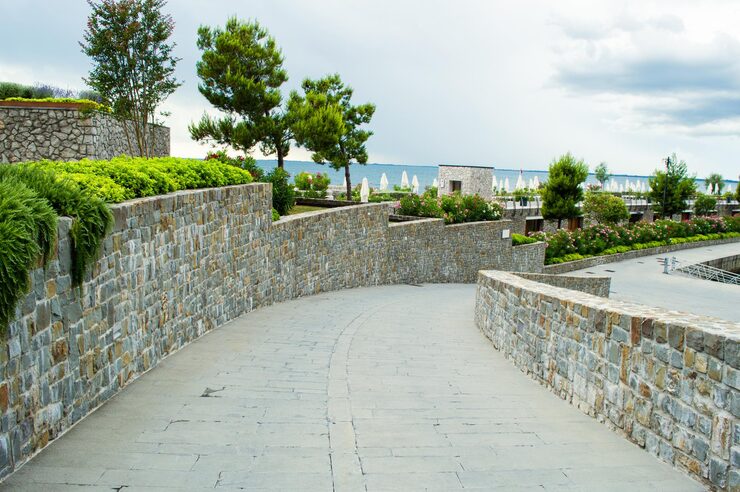
Bedford's mid-century colonials and capes often sit on generous lots with wide street frontage, giving a cobblestone apron room to read as a real feature rather than a narrow strip squeezed between a fence and a mailbox.
Flat, easy-access lots
Flat grading across much of Bedford means less excavation to fight and easier staging for the compaction equipment this work depends on, which keeps the base work straightforward rather than improvised.
Older house, newer drive
Where the driveway has been repaved over the decades but the house is original, cobblestone edging gives the entry a material that matches the age of the house instead of the age of the asphalt.
So tar and chip suits a longer, gentler Bedford drive with some room around it. It is a poor match for a short, steep or shared one, or one that opens straight onto the walk.
Questions we hear
Does cobblestone edging work with an existing asphalt driveway, or does the whole drive need to be redone?
It can go in against an existing asphalt surface as long as that asphalt is in reasonable condition. The apron and edge are a separate structural job from the driveway itself, so a sound drive doesn't need to be torn out to add a proper border or street apron.
How wide a strip does a cobblestone apron usually need at the street?
It depends on the width of the existing curb cut and how the drive meets the road, but it's generally sized to the apron itself rather than running the full length of the driveway. We measure the specific entry before giving a layout.
What's the real difference between cobblestone and a poured concrete border?
Cobblestone is set piece by piece on a compacted base, so individual stones can be lifted and reset if frost heave or a plow catches an edge. A poured concrete border is one continuous slab – if it cracks or heaves, you're replacing a section, not resetting a stone.
Do you handle both the cobblestone work and drainage grading in the same job?
Yes. Grading and pitch are part of the same excavation, since the base has to be shaped to move water away from the house before any stone goes down. Treating them as separate jobs is how drainage problems get missed.
Next step
Call us at (413) 337-3772. Tell us about the lot, the slope and what you want the frontage to look like. We have been working in this area since 1988, and we will tell you plainly what suits your property.