
Cobblestone Aprons and Edging in Concord, MA
A house near the centre of Concord with a stone wall, a brick walk, and a plain asphalt apron at the street looks unfinished. The transition from road to driveway is the first thing a visitor sees, and on a historic district property it is often the one detail that reads as modern against everything else that doesn’t. On the longer rural drives out toward the edges of town, the problem is different: there’s no street-level statement to make, but there’s still a long run of edge that needs to hold its line through winter after winter without a crew back out every spring to reset it.
Cobblestone solves both, but not in the same way. At the street, a cobblestone apron defines the entrance the way the original builders would have, with a texture and pattern that sits naturally next to fieldstone walls and old granite curbing. On a long drive, cobblestone edging is less about appearance and more about holding an asphalt or gravel surface in place against frost heave and plow blades, with the look as a secondary benefit. Either way, the apron or edge line is also the part of the property that takes the most abuse: plow blades catching the corner, delivery trucks cutting wide, salt and sand runoff concentrating right at that seam between street and private drive. Material choice matters here as much as pattern.
Reclaimed granite cobbles, when they can be sourced, carry a weight and irregularity that machine-cut stone can’t fully match, and they tend to be what older Concord properties call for if the goal is to look original rather than added on. Manufactured concrete cobbles cost less, come in more consistent sizing, and hold up just as well structurally, but they read differently up close. Neither choice fixes a bad base, which is the part that actually determines whether the work lasts.
What’s underneath decides what lasts
Cobblestone, whether reclaimed granite or a manufactured concrete equivalent, is only as good as the base under it. The work starts with excavation to a depth that gets below the zone where frost does its damage, then a compacted aggregate base, then a bedding layer the stones sit into, then the edge restraint that keeps the whole assembly from migrating sideways as the ground moves. Skip any one of those steps and the stones will still look right for a season or two. Then the frost finds the weak point and the line starts to wander, usually right where the plow hits hardest or where water has been pooling unnoticed.


What Our Clients Say
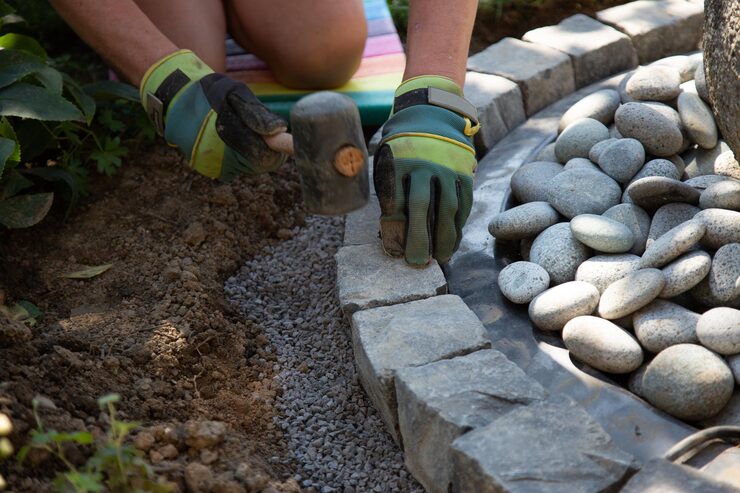
What the work involves below the surface
The stone is the last and smallest part of the job. A cobblestone apron stays flat or goes wavy depending on what is underneath it.
Granite vs. concrete cobblestone
Reclaimed granite costs more up front, ages without fading, and can be reset indefinitely. Concrete cobblestone is less expensive and consistent in shape but will show wear and color change over the years that granite does not.
Edge restraint matters more than the stone
A beautiful cobblestone border with no proper restraint behind it will splay apart within a few freeze-thaw cycles. The restraint is the part nobody sees and the part that decides whether the job lasts.
Drainage has to be designed, not assumed
Water follows the path a hard surface gives it. Pitching an apron or edge run away from the house, the foundation, and any below-grade entry is a design decision made before a single stone is laid.
Matching an older house
Concord’s housing stock runs old. Stone, brick, and weathered wood dominate near the centre. A cobblestone apron or edging chosen to echo existing stonework, mortar tone, and colour reads as original to the property rather than a recent addition.
Working around mature trees
Many Concord driveways wind through wooded lots, where mature oak and maple roots run close to the surface.
Materials and the trade-offs
How the apron ties the property together
A cobblestone apron rarely stands alone. It meets the driveway on one side and the street on the other, often close to a walk, mailbox post, or low wall, so the work has to reconcile the street’s grade, the driveway’s grade, and whatever hardscape already sits nearby. On a historic Concord lot, that usually means matching a stone wall’s color and jointing so the apron reads as part of the original build, even decades later. On a rural lot, it more often means tying into gravel or asphalt that was never designed with an edge detail, so the cobblestone has to create a clean line where none existed. Getting the pattern, joint width, and stone size right at this transition is what separates work that looks original from work that looks applied.
- Reconciles street grade, driveway grade, and existing hardscape
- Matches color and jointing on historic lots; defines a clean edge on rural ones
- Takes the heaviest exposure to turning loads and plow contact each winter

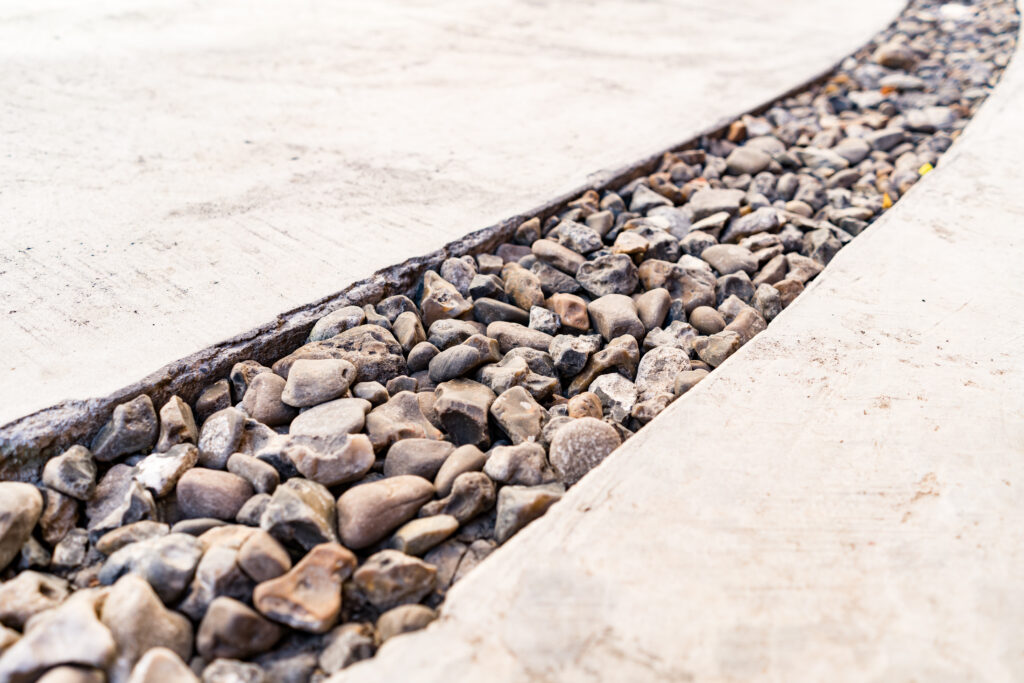
Where the street meets private property
Where a driveway meets a town-accepted road, the apron and the curb cut fall under the town’s jurisdiction, and any changes to that section need to work within what the town allows for cuts and drainage onto the public way. Where a drive meets a private way, that section is the owners’ responsibility entirely, which gives more latitude on material and pattern but also means any drainage mistake is the property’s problem to fix, not the town’s. Concord has both conditions within its borders, often on the same street, so the first step on any apron job is establishing which case applies before design decisions get made. This isn’t a matter of asking permission for the sake of it. A cobblestone apron built past the point where town jurisdiction starts, without accounting for town drainage requirements, is a job that may need to be partly redone. On a rural lot well outside the centre, this question rarely comes up at all, and the work can focus entirely on function and appearance without that constraint shaping the plan.
Snow, plows, and the edge that survives a Concord winter
Plow blades catch any edge that sits proud of the surrounding grade, and a cobblestone border is no exception if it’s set without enough reveal control. The detail that survives repeated plow contact is usually a slightly lower stone height at the vulnerable edge, with the restraint buried deep enough that a blade glancing off the top doesn’t lever the whole course loose. This matters more on long rural drives, where plowing is often done fast and by whoever is available, than on short historic district frontages where hand shoveling is more common. Either way, a cobblestone installation that looks right in October has to be built for what happens to it in February, not just for how it photographs when it’s finished. That’s the difference between a border that needs seasonal resetting and one that doesn’t move for years. Concord’s winters are consistent enough in their freeze-thaw cycling that this isn’t a detail worth skipping to save a day of labor, because the repair cost later is higher than the cost of doing the edge correctly the first time.
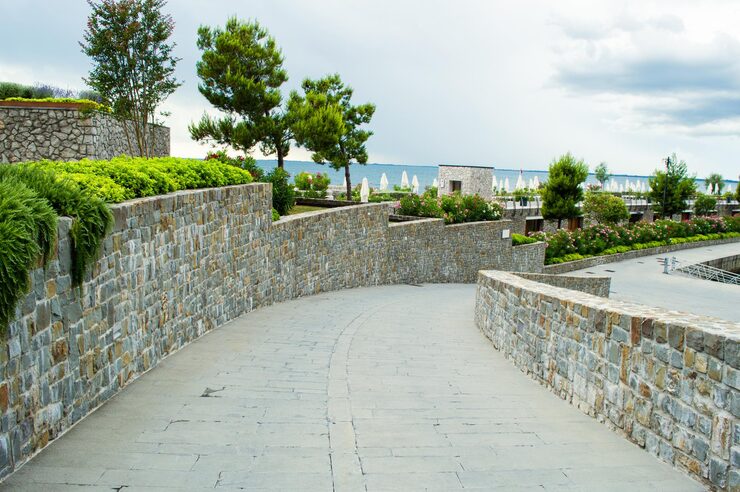
Where this suits Concord properties
Historic district frontages
Properties near Concord centre with stone walls and period architecture, where a cobblestone apron replaces a plain asphalt entrance with something that matches the house.
Long rural drives
Properties on the outlying roads with extended driveways through wooded lots, where edging holds the surface line against root movement and frost without constant resetting.
Mixed jurisdiction frontages
Lots where the drive meets both a town-accepted road and private land, requiring the apron design to account for two different sets of drainage and grading rules.
So tar and chip suits a longer, gentler Concord drive with some room around it. It is a poor match for a short, steep or shared one, or one that opens straight onto the walk.
Questions we hear
Does a cobblestone apron need town approval in Concord?
If the apron connects to a town-accepted road, the curb cut and drainage at that connection fall under the town's jurisdiction. If it connects only to a private way, the work is the owner's decision. Which applies depends on the specific street, so this gets confirmed before design work starts.
Is reclaimed granite worth the extra cost over concrete cobblestone?
If the goal is matching an older stone house or wall, granite's aging and color make it worth the premium. If the apron is further from the house or the budget is tighter, concrete cobblestone holds up well with a different aging pattern.
Can cobblestone edging handle a driveway shaded by mature trees?
Yes, but the base and restraint have to allow for root movement nearby. A rigid edge set tight against a root zone is more likely to crack than one with some flexibility built into the base design.
How is cobblestone work different from a driveway repair?
This is new hardscape construction built around appearance, drainage, and the transition between street and property, not a patch or resurfacing job. The base and materials used are different from standard driveway paving.
Next step
Call us at (413) 337-3772. Tell us about the lot, the slope and what you want the frontage to look like. We have been working in this area since 1988, and we will tell you plainly what suits your property.