
Cobblestone Aprons and Edging in Dedham, MA
A lot of driveways in Dedham end the same way: asphalt runs straight to the street with no defined edge, and the border between the drive and the lawn has been chewed up by snowplows for years. Other properties, especially the older ones close to the center, have a drive squeezed between two houses with almost no room to spare. Both situations are hardscape problems, not paving problems. Cobblestone aprons and edging solve them by giving the drive a defined, durable transition at the street and a border that holds its line along the length of the drive.
This is not about fixing a failed surface. It is about finishing one properly, or protecting a surface you already have.
What’s actually underneath
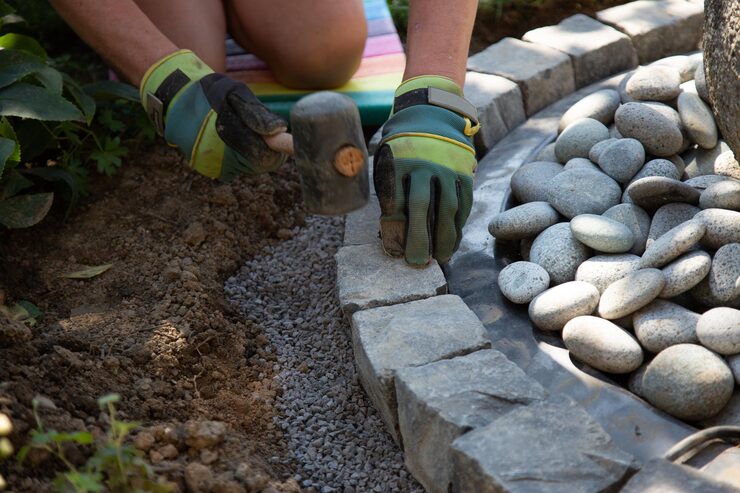
The stone you see is the easy part. What determines whether it still looks right in several winters is what sits below it: excavation to a consistent depth, a compacted gravel base, a bedding layer the stones sit into, and edge restraint that keeps the whole assembly from creeping sideways. Massachusetts frost moves water and soil beneath a surface every winter. A base that is compacted unevenly, or edging that isn’t properly restrained, lets that movement reach the stone itself. That is why cobblestone edging on a poor base goes wavy and uneven within a few years, while the same material on a properly built base holds its line for a long time. The stone rarely fails on its own. The base underneath it does.
Materials, honestly
Granite cobblestone is the traditional choice and the one that suits older Dedham houses best. It is durable, it ages well, and individual stones can be lifted and reset if one shifts. It costs more up front. Concrete paver cobblestone-look units cost less initially, come in more consistent shapes, and are easier to source for a quick repair, but they don’t weather the same way granite does and tend to show wear at the surface over time rather than aging gracefully. Neither is wrong. They suit different budgets and different expectations of how the material should look in fifteen years.
Edging also needs a decision: stone set tight to the asphalt with no reveal, or a slightly raised lip. A raised lip sheds plow blades better but is more exposed to impact. Flush edging is less visible but offers less physical protection. Dedham’s close-set neighborhoods and heavier street-side plowing make that edge detail worth thinking through rather than defaulting to whatever is fastest to install.


What Our Clients Say
What the work involves below the surface
The stone is the last and smallest part of the job. A cobblestone apron stays flat or goes wavy depending on what is underneath it.
Grade matters as much as material. Water needs to move away from the house and off the apron, not pool at the garage or foundation. In Dedham, pitch is set when the base is built, before any stone goes down.
Edging ties new hardscape into what already exists: a stone wall, a planting bed, an older entry walk. Matching line and material to the house matters more here than on a plain asphalt job.
Mature trees near the street in many Dedham neighborhoods mean roots can lift an apron over time.
On town-accepted roads in Dedham, the curb cut and the apron’s street-side edge fall under town jurisdiction and permitting. On a private way, that same section is the owner’s call entirely, opening up more cobblestone patterns, borders, and edging options.
Narrow side-yard drives common in Dedham’s older sections need edging that doesn’t eat into width. A low-profile flush cobblestone border keeps the usable drive as wide as before, while neatly framing the apron where driveway meets street or sidewalk.
Materials and the trade-offs
Why this fits Dedham specifically
Dedham mixes two very different driveway conditions, often within a few streets of each other. Closer to the center, older homes sit on tighter lots with narrow drives squeezed between houses, where every inch of width matters and an oversized edge detail is a real nuisance rather than a style choice. Toward the Westwood line, lots open up, frontages are wider, and there’s often more existing stonework and landscaping already in place for new hardscape to match. Neither situation calls for the same apron or edge detail, which is why this work gets planned around the specific property rather than installed the same way everywhere.

What this adds to a property
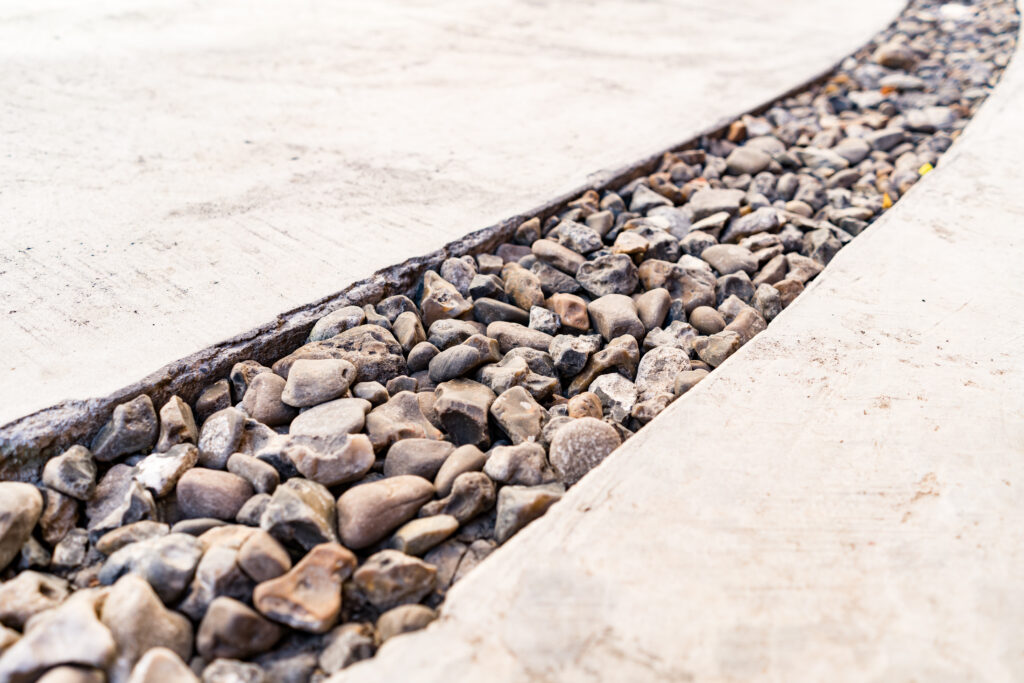
A defined apron and edge does two things a plain asphalt drive doesn’t. It gives the street-to-drive transition a finished look that reads as intentional rather than incomplete, and it protects the edge of the asphalt itself from the slow spreading that plow blades and tire wear cause over years. On an older Dedham property, that transition is often the first thing visible from the street, more visible than the drive surface itself. Getting it right changes how the whole entry reads, independent of whatever condition the rest of the driveway is in.
Starting the conversation
Every property here has its own frontage, its own grade, and its own mix of existing stonework or plantings to work around. Dedham’s older neighborhoods often have mature trees pushing roots toward the curb, brick walkways that have shifted over decades, or granite curbing original to the house that’s worth preserving rather than ripping out. Newer builds tend to have cleaner grades but fewer cues to work from, which means the apron and edge design has to set the tone for the whole frontage. The right plan comes from looking at the specific site, not from a standard layout pulled off a shelf.
- Matching cobblestone tone and size to existing stonework or masonry
- Planning transitions where aprons meet sidewalks, tree belts, or utility access points
- Choosing edging that holds up through Dedham’s freeze-thaw winters
If you’re weighing cobblestone against a plain asphalt edge, or trying to match something already on an older Dedham property, call Driveway Specialists at (413) 337-3772 to talk through what the site actually calls for before any design gets finalized.
Where this suits Dedham properties
Narrow side-yard drives
Close-set older homes near the center often run drives tight between houses. A cobblestone edge defines the line cleanly without eating into already limited width.
Wider lots toward Westwood
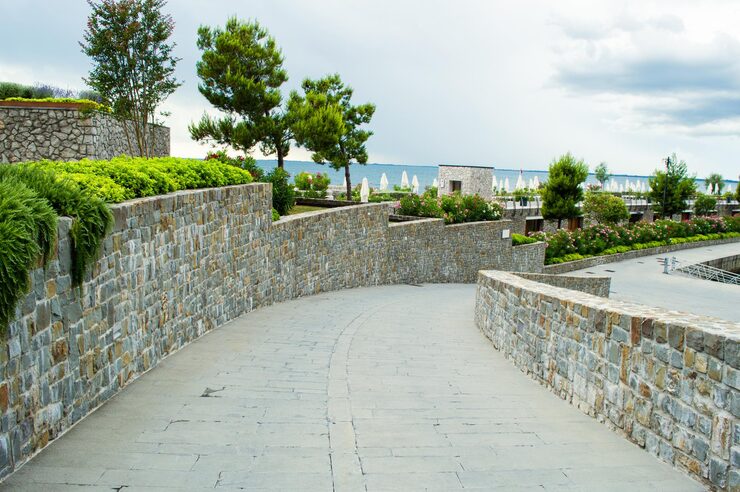
Larger frontages near the Westwood line can carry a fuller apron and border treatment, tying new hardscape to mature plantings and stone walls already on the property.
Pre-war houses with no real entry detail
Many Dedham homes built before the driveway was an architectural feature still have a plain asphalt-to-street transition. Cobblestone gives that transition a defined edge for the first time.
So tar and chip suits a longer, gentler Dedham drive with some room around it. It is a poor match for a short, steep or shared one, or one that opens straight onto the walk.
Questions we hear
Does cobblestone edging stop asphalt from spreading at the edges?
Yes, that is its main structural job. Asphalt without a restrained edge pushes outward under traffic and plow pressure over time. A properly bedded cobblestone border holds that edge in place so the surface keeps its shape instead of spreading and cracking along the margin.
Will cobblestone look right with an older Dedham house?
Granite cobblestone in particular reads as traditional New England material, which is why it pairs well with older brick, clapboard and stone-wall properties common around Dedham. Concrete paver versions can work too, but they read more modern and age differently.
Can this be added without redoing the whole driveway?
Often yes. An apron and edge treatment at the street end, or a border along an existing drive, can usually be built onto a sound existing surface without replacing it, as long as the base under the new work is properly prepared.
What happens to cobblestone over a New England winter?
Properly bedded stone set on a compacted base with real edge restraint moves very little, because the base itself is built to handle frost. Poorly bedded stone, by contrast, is exactly what heaves and goes wavy after a few winters.
Do you handle the curb cut where the apron meets the street?
On a town-accepted road, the curb cut and apron area at the street line fall under the town's jurisdiction. On a private way, that section is the owner's to decide. We work within whichever applies to the property.
Next step
Call us at (413) 337-3772. Tell us about the lot, the slope and what you want the frontage to look like. We have been working in this area since 1988, and we will tell you plainly what suits your property.