
Cobblestone Aprons and Edging in Dover, MA
A long private drive through woods on a Dover lot usually ends two ways: a plain asphalt edge that blurs into the lawn within a season, or a street-to-drive transition that actually looks finished from the road. Most of what we’re asked for in Dover isn’t a new driveway at all. It’s a cobblestone apron at the street, and edging that holds a line along a drive that may run a few hundred feet before it reaches the house. On acreage lots with conservation setbacks dictating where the route can even go, the apron is often the only part of the property a visitor sees before they arrive, so it carries more weight than its size suggests.
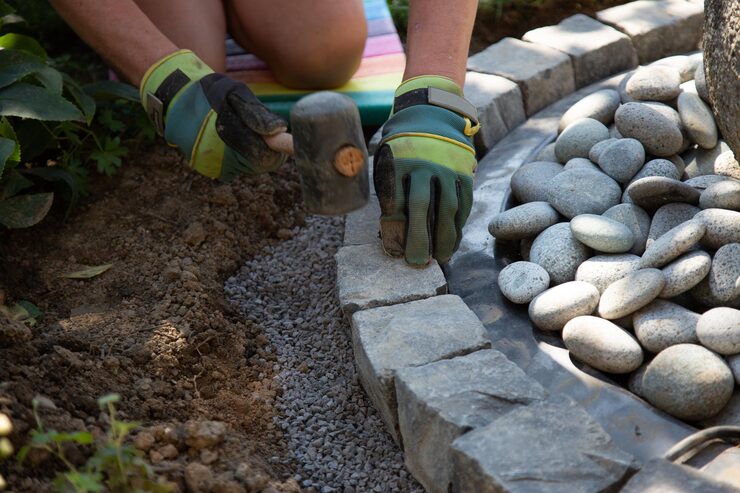
Everything that matters about whether that apron still looks sharp in ten years is below the surface, not on it. Cobblestones set directly on native soil will heave, rock, and gap apart the first winter, because nothing is holding them against frost movement or distributing the load from a vehicle’s tires. The actual work is excavation down past the topsoil, a compacted base that won’t hold water against the stones, a bedding layer that lets each cobble seat evenly, and an edge restraint – concrete, steel, or a buried soldier course – that keeps the whole field from migrating outward over time. Skip the restraint and even correctly set stone will walk.
Massachusetts frost doesn’t just make things cold, it lifts them. Water in the soil beneath the stone freezes, expands, and pushes upward unevenly, because no two spots under a hundred-foot apron freeze and thaw at exactly the same rate. A base built from open-graded crushed stone lets that water drain down and away before it can freeze in place. A base left as compacted loam, or worse, Dover’s exposed or near-surface ledge with no drainage path around it, holds water right where it does the most damage. That’s the difference between an apron that stays flat for decades and one that’s visibly rolling by the second winter.
The edging that runs the length of the drive earns its keep differently than the apron does. On a drive cut through woods, tree roots push from one side and runoff cuts from the other, so a shallow plastic or loose brick edge loses its line within a year or two. A proper cobblestone or granite edge restraint is set on its own footing, deep enough to resist root pressure and frost, and it holds the gravel or asphalt field it borders instead of just decorating the seam. That matters most on the curves where a long drive bends around trees or ledge outcrops, since a soft edge washes out exactly where the water collects.


What Our Clients Say
What the work involves below the surface
The stone is the last and smallest part of the job. A cobblestone apron stays flat or goes wavy depending on what is underneath it.
Granite cobblestone costs the most up front but barely weathers at all – it looks the same in thirty years as it does new, and individual stones lift out cleanly for repair.
Reclaimed Belgian block brings genuine age and texture to Dover driveway aprons and edging, often at a lower cost than new stone.
Concrete cobble costs least and installs faster, but the color sits on the surface and fades, and the units chip at corners under plow blades.
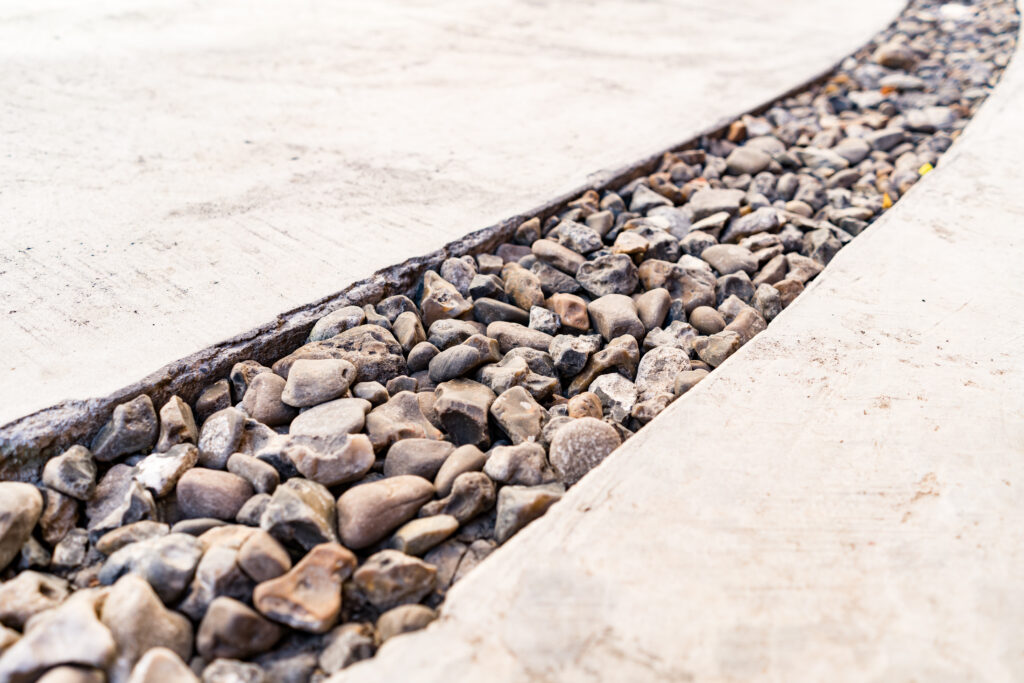
Water has to go somewhere once stone replaces lawn.
On wooded Dover lots, root heave from mature oaks near the drive’s edge is a real risk. Keeping the excavation clear of large roots, with a proper base and edge restraint, protects both the stone apron and the tree’s health.
Materials and the trade-offs
Matching what's already there
Dover’s estate properties tend to have an established language already in place – fieldstone walls, a gravel or asphalt drive with decades on it, plantings that were never meant to be disturbed. New cobblestone work that ignores that context looks bolted on, no matter how well it’s built. We look at the wall coursing, the existing entry width, and the house’s age before settling on a stone color and a laying pattern, because an apron that reads as original to the property is worth more than one that simply looks new. Where a drive already has an asphalt or gravel surface in good condition, the cobblestone work usually stops at the first thirty to sixty feet near the street and at any secondary entry points, rather than replacing the whole run. That keeps the project focused on the transition itself – the part that actually needs to perform and the part everyone sees – instead of turning into a full driveway replacement that wasn’t the ask.

Grade, ledge, and getting equipment in
Dover’s lots are rarely flat. A drive that climbs or curves through woods to reach a house set well back from the road means the apron sits at whatever grade the land gives it, and ledge near the surface can turn a straightforward excavation into something that needs to be worked around rather than through. We check grade and probe for rock before pricing the job, because an apron that’s pitched wrong at the street will send runoff back down the drive every time it rains, and hitting ledge mid-excavation changes both the approach and the sequence of the work. Access matters too. Getting a compactor, a stone saw, and a material delivery down a narrow wooded drive and turned around near the house takes planning on a lot where the route itself was shaped by conservation setbacks rather than by a surveyor’s straight line. We walk the full route before committing to a plan, not just the finished footprint.
Starting the conversation
Most Dover projects start with a site walk rather than a phone quote, because grade, ledge, and tree cover change what’s possible from one driveway to the next, even on similar-sized lots. Stone walls, mature plantings, and the town’s winding, tree-lined roads mean no two aprons sit the same way against the street, so we look at the specifics before talking numbers.
We’ll check where the apron meets the street, how the drive is pitched, and what’s already built that the new work needs to sit alongside, whether that’s a granite curb, an existing cobblestone border, or a stretch of lawn that floods in spring. We’ll also talk through how the cobblestone will be laid, what base goes beneath it, and the edge detail that keeps it tight through freeze-thaw cycles winter after winter. If drainage near the road is a concern, that gets addressed in the plan, too, rather than discovered later.
- On-site assessment of grade, drainage, and existing materials
- A clear plan for base, stone pattern, and edge restraint
Call Driveway Specialists at (413) 337-3772 to set up a time to walk the property.
Where this suits Dover properties
Long wooded drives
Where a drive winds through trees before reaching the house, a well-built apron at the street gives the whole route a defined start, even when the rest stays gravel or worn asphalt.
Estate entries with stone walls
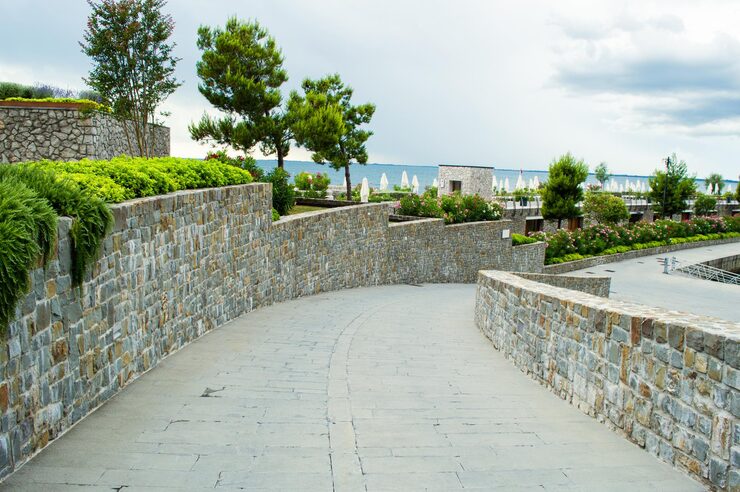
Properties with existing fieldstone walls benefit from cobblestone that echoes that material, tying a new apron into decades-old stonework instead of contrasting with it.
Lots with ledge near the surface
Where bedrock sits close to grade, cobblestone's shallower excavation depth compared to a full driveway rebuild makes it a practical way to upgrade just the entry.
So tar and chip suits a longer, gentler Dover drive with some room around it. It is a poor match for a short, steep or shared one, or one that opens straight onto the walk.
Questions we hear
Does cobblestone edging work on a drive that's still gravel or asphalt?
Yes. Most Dover projects add cobblestone only at the street-facing apron and leave the rest of the drive as it is, since that's the section that defines the entry and takes the most wear from turning vehicles and plows.
How does tree root growth affect cobblestone aprons near wooded drives?
Roots from mature trees close to the excavation can lift stones over time if they're not accounted for during installation. We route the excavation to avoid major roots where possible, which protects both the tree and the finished stonework.
Can cobblestone handle a long, sloped private drive?
The apron itself is usually on a shorter, flatter section near the street. Where the drive climbs or curves further back, grade and drainage are assessed separately, since a hard surface on a slope needs its own pitch worked out so water doesn't run back toward the house.
What happens if the excavation hits ledge?
We probe for rock before finalizing a plan. If ledge is shallow, the approach may shift – working around it rather than cutting through – which can change both the layout and the sequencing of the job.
Next step
Call us at (413) 337-3772. Tell us about the lot, the slope and what you want the frontage to look like. We have been working in this area since 1988, and we will tell you plainly what suits your property.