
Cobblestone Aprons and Edging in Franklin, MA
Franklin has two very different kinds of frontage, and both end up looking for the same thing: a cobblestone apron or edge detail that makes the transition from street to drive look finished instead of poured-and-left. The subdivisions built through the 1990s and 2000s gave a lot of houses a wide asphalt drive on a large lot, with nothing marking where the driveway actually starts. The older roads through town have narrower frontages and houses with some age to them, where a plain asphalt edge looks out of place against a house with real detail on it. Cobblestone solves both problems, but for different reasons.
On the wide subdivision drives, the apron is a framing device. It gives the eye a stopping point, ties the drive to the walkway or the garage, and breaks up what is otherwise a large flat expanse of asphalt. Done well, it also marks the property line from the street in a way that reads as intentional rather than accidental. On the older-road properties, cobblestone edging reads as something that belongs with an older house, in a way that a poured concrete curb or a plain asphalt lip does not. It picks up the stonework, brick, or fieldwork already present on the lot instead of fighting it.
What’s underneath decides whether it stays straight. Cobblestone work is not surface decoration. It is excavation, a compacted base, bedding material set to grade, and an edge restraint holding the whole assembly together. Massachusetts frost does not forgive shortcuts here. Ground freezes, expands, and heaves whatever sits above it; when it thaws, anything not properly restrained settles unevenly. That is why cobblestone that has not been set on a real base goes wavy and gappy within a few seasons, while the same stone set correctly stays flat and tight for far longer. The restraint at the edge is doing more work than the stone itself. Without it, the whole border walks outward under frost and under the weight of tires clipping the corner.
We dig out to a real depth rather than laying stone over whatever is already there, compact the base in stages, and set the edge restraint before the cobblestone goes in, not after. That order matters. An edge laid loose and backfilled later moves the first winter it sees frost. We also pitch the apron slightly away from the garage or house so water sheets off toward the street rather than pooling at the stone line, which is where a lot of frost damage actually starts.
A few things worth sorting out before stone goes in the ground:
- Whether the apron needs to carry vehicle weight or is purely a border, since that changes the base depth required
- How the new edge will meet existing walkway or driveway material without an awkward seam
- Whether the town’s road edge or any utility access near the street affects where the apron can start


What Our Clients Say
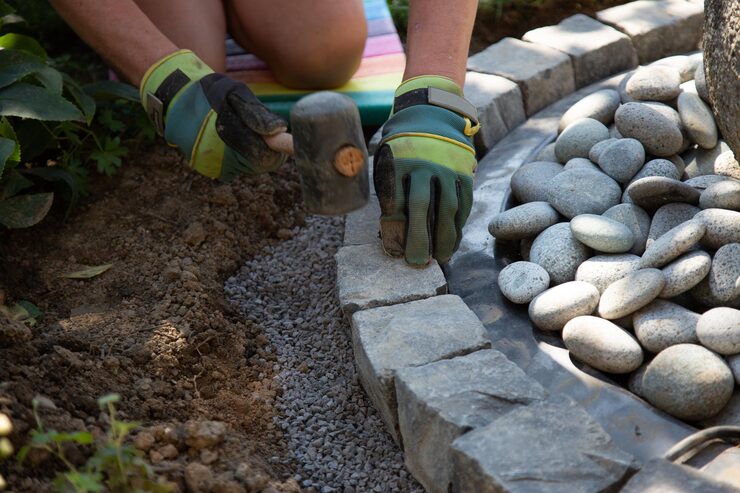
What the work involves below the surface
The stone is the last and smallest part of the job. A cobblestone apron stays flat or goes wavy depending on what is underneath it.
Granite cobblestone holds a straight line and resists frost heave better than cast concrete pavers, which can chip at the corners over time.
Reclaimed cobblestone suits an older Franklin property near the original roads, where a crisp new edge would look out of place against the house.
New-cut granite gives a cleaner, more uniform line, better suited to a subdivision drive where the rest of the property is newer construction.
Concrete cobble costs less up front but shows wear and colour fade faster under Franklin's weather, and chips are harder to patch invisibly than with natural stone.
Grading is part of the design, not an afterthought.
Materials and the trade-offs
Materials and what they trade off
Granite cobblestone is the standard where longevity matters most. It’s heavy, dense, and largely indifferent to freeze-thaw cycling, which is why it holds a straight line in Franklin’s climate better than lighter materials. It costs more up front and is harder to source reclaimed in bulk, but a chipped or displaced stone can be reset individually without disturbing the run either side of it.
Concrete cobblestone pavers cost less and offer more colour and pattern options, which suits newer subdivision properties with a more uniform, manufactured look. The trade-off is durability: concrete is more prone to surface spalling under freeze-thaw, and colour fades unevenly with UV exposure, so a repaired section can visibly mismatch an older one.
Reclaimed granite sits between the two on cost but ahead of both on character, suiting Franklin’s original-road houses where new material would look wrong against an older facade. Supply is inconsistent, so matching a reclaimed run to an existing apron takes more planning than ordering new stone.

Drainage, grade, and tying into what exists
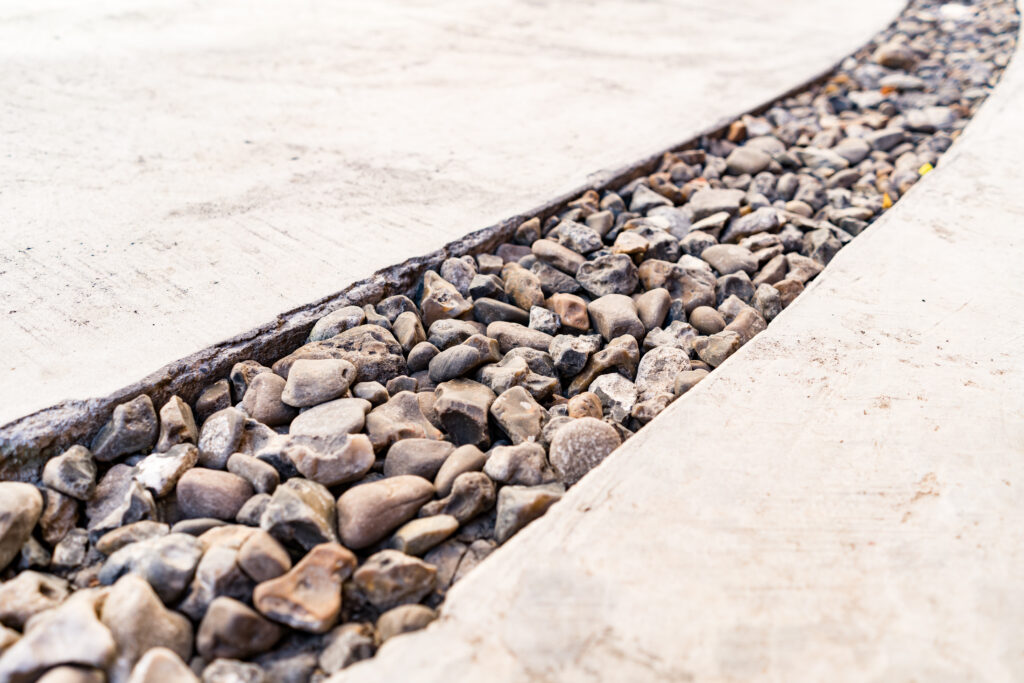
Every apron and edge decision is also a drainage decision. A hard, compacted surface sheds water that lawn or loose gravel used to absorb. On the wide, flat subdivision lots common around Franklin, that runoff needs to be pitched deliberately away from the garage and foundation rather than left to find its own path. On older properties with established grading, a new apron can easily disrupt a drainage pattern that has worked for decades if it isn’t matched carefully to the existing slope.
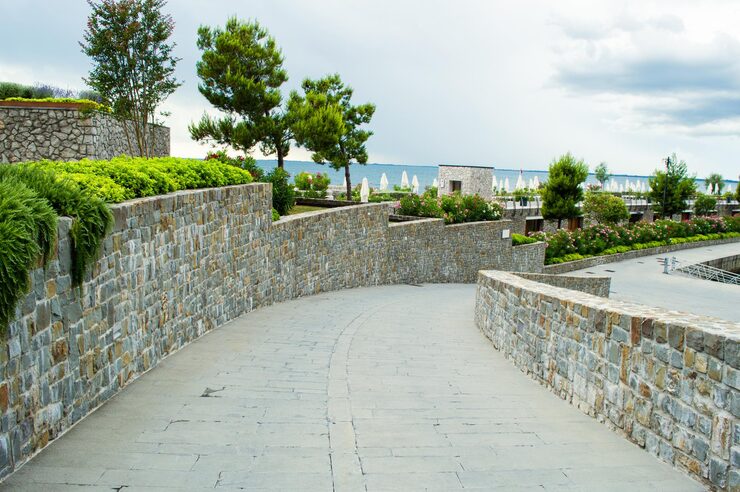
The apron also has to read as one continuous piece with what’s already there: the driveway surface it borders, the front walk, retaining walls, and planting beds. A cobblestone edge that’s a slightly different stone, radius, or height than the walkway next to it looks like an add-on rather than part of the property. Matching an older Franklin house means paying attention to:
- The stone colour and texture already present on the house or walkway
- Mortar tones, where mortared joints are used nearby
- The existing slope and drainage pattern around the foundation
Where this suits Franklin properties
Wide subdivision drives
Large 1990s-2000s lots with broad asphalt driveways benefit from a cobblestone apron that frames the entrance and breaks up an otherwise plain expanse of pavement.
Older homes on original roads
Houses on Franklin's established streets suit reclaimed or traditional cobblestone edging that matches period detail better than a poured concrete curb.
Properties tying drive to walkway
Where the driveway, front walk and entry all meet near the house, a continuous cobblestone border ties the separate surfaces into one finished approach.
So tar and chip suits a longer, gentler Franklin drive with some room around it. It is a poor match for a short, steep or shared one, or one that opens straight onto the walk.
Questions we hear
Does cobblestone edging stop asphalt from spreading at the edges?
A properly set edge restraint, with the cobblestone bedded into it, holds the asphalt edge in place and resists the outward creep that happens when an asphalt drive is left with no border at all.
Can cobblestone be added to an existing driveway without repaving it?
In many cases yes, provided the existing edge is sound enough to tie into. We excavate and rebuild the border itself rather than disturbing the full driveway surface.
How does frost affect cobblestone aprons in Franklin?
Ground freezing and thawing moves anything not set on a compacted base with real edge restraint. Stone set correctly stays flat through winter; stone laid over an unprepared base heaves and gaps within a few seasons.
Is reclaimed cobblestone available for older Franklin properties?
It can be sourced, though supply is inconsistent and matching an existing run in size and colour takes more planning than ordering new-cut granite.
Next step
Call us at (413) 337-3772. Tell us about the lot, the slope and what you want the frontage to look like. We have been working in this area since 1988, and we will tell you plainly what suits your property.