
Cobblestone Aprons and Edging in Medfield, MA
Medfield’s older neighborhoods tend to sit on generous lots with wide frontage and straight, level drives, the kind of layout that gives a cobblestone apron room to actually do its job. The apron is the strip where your driveway meets the street, and the edging is what holds the line of your drive, walkway or planting bed in place. Done well, cobblestone in this spot does two things at once: it frames the entrance to the property, and it stops the edge of an asphalt or paver drive from spreading and crumbling under plow blades and frost.
This is not a driveway repair. It is a finishing detail, and on a property with the kind of frontage common in Medfield, it is often the single change that makes a drive look intentional rather than just poured. Walk down almost any street near the town common and you will notice the same pattern: homes with a plain asphalt drive look unfinished at the curb, while the ones with a stone apron or border read as cared for, even when the driveway surface itself is nothing special.
What happens under the stone
A cobblestone apron that lasts is built from the ground up, not laid on top of what is there. The work starts with excavation to a depth that clears the zone where frost does its damage, followed by a compacted base, usually crushed stone, that lets water drain through rather than pool underneath. The cobblestones sit on a bedding layer, set tight, and the whole edge is locked in with a restraint, either a concrete haunch poured behind the stones or a buried edge restraint depending on the look you want.
Skip any one of those steps and Massachusetts frost will find it. Water gets under a shallow-set stone, freezes, expands, and over a winter or two that stone is loose. That is why a cobblestone apron that was installed properly ten years ago still sits flat, and one that was set into a thin bed of sand is already rocking underfoot.
Grade matters just as much as depth. The apron has to pitch water away from the garage and off the drive, not toward it. On a flat Medfield lot that is a small, deliberate slope built into the base. Get that wrong and every storm sends water pooling exactly where you do not want it, cobblestone or not.
Edging gets the same attention to foundation, just on a smaller scale. A border that runs along a planting bed or defines the shoulder of a walkway still needs a trench cut to consistent depth and a restraint to keep it from heaving or drifting out of line after a few seasons of freeze and thaw. The difference between edging that stays sharp and edging that wanders is almost always what is buried, not what is visible.
A few things worth asking about before work starts:


What Our Clients Say

What the work involves below the surface
The stone is the last and smallest part of the job. A cobblestone apron stays flat or goes wavy depending on what is underneath it.
Granite cobblestone holds its edge and color for decades and shrugs off plow damage without chipping, which matters on a Medfield drive through tough New England winters.
Reclaimed granite cobblestones carry a weathered, settled look from day one, suiting an older Medfield colonial or farmhouse better than a uniform new-cut stone ever will.
Edge restraint is the part nobody sees. A buried steel or concrete edge keeps the cobblestone apron’s line straight through years of Medfield plowing, frost heave, and freeze-thaw cycles, preventing the gradual spreading and gaps that loosen borders over time.
A belgian block edge along a planting bed, walkway, or driveway apron in Medfield does the same job as a mortared restraint: it holds a clean, lasting line between lawn, bed, and hardscape without constant re-cutting or seasonal maintenance.
Matching the new apron to an existing stone wall or walkway ties the whole entrance together, rather than leaving the drive looking like a separate project bolted onto the house.
Materials and the trade-offs
Drainage and grade decide the outcome
Putting any hard surface over soil changes where rainwater goes. On the flat, well-kept lots typical of Medfield, that water either sheets off cleanly or it sits at the low point and works its way toward a foundation. A cobblestone apron has to be built with a pitch that carries water off the drive and away from the garage slab, not just dropped in flush with the existing grade.
This is also where a lot of DIY and budget installs go wrong. A flat-set apron looks fine the day it is laid. The first heavy fall rain tells you whether the grade was actually planned or just eyeballed. Getting it right at the base stage costs nothing extra; fixing it after the stone is set means pulling it back up.


Tying the apron into what is already there
Few Medfield properties are starting from bare ground. Most already have an asphalt or paver drive, a front walk, and often a stone wall or foundation planting along the front of the house. The apron and edging have to read as part of that existing picture, not as a separate add-on bolted onto the end of the driveway.
That means matching stone tone to an existing wall where there is one, aligning the apron’s width to the drive it is framing, and carrying the same edge detail around a walkway or bed if that is part of the job. It also means thinking about how the apron meets the street edge, a stretch of town right-of-way where Medfield has its own expectations, and getting that transition clean rather than abrupt.
Where cobblestone edging earns its keep
Not every driveway needs this. Cobblestone aprons and edging make the most sense where the entrance is a visible, used-every-day part of the property, and where the existing drive is sound enough that the apron and edging are an upgrade rather than a patch over a failing surface. On the kind of level, well-maintained lots found through Medfield and over toward Dover and Millis, that describes most of the stock, which is why this treatment shows up so often on the nicer streets in town.
Done well, the work earns its keep in a few concrete ways: it defines where pavement ends and lawn begins, so plow drivers and landscapers have a clean line to work against; it resists the frost heave and edge crumble that plain asphalt shoulders suffer through a New England winter; and it reads as finished the moment you turn in, rather than looking like a driveway that stops short.
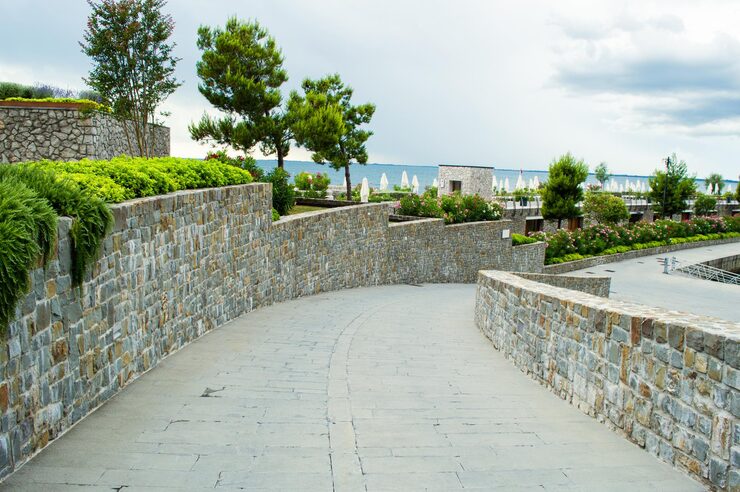
Where this suits Medfield properties
Wide, level frontage
Medfield's generous suburban lots give a cobblestone apron room to frame the full width of the drive, rather than squeezing a narrow strip between house and street.
Older, established houses
Reclaimed or weathered-finish granite cobblestone suits colonials and farmhouses where a brand-new, uniform stone would look out of place against the existing architecture.
Drives in otherwise good shape
Edging and an apron make the most sense where the driveway surface itself is sound, turning a plain entrance into a finished one instead of covering a failing drive.
So tar and chip suits a longer, gentler Medfield drive with some room around it. It is a poor match for a short, steep or shared one, or one that opens straight onto the walk.
Questions we hear
How is a cobblestone apron different from the driveway edge itself?
The apron is the transition zone where the driveway meets the street, usually a few feet of stone that frames the entrance. Edging can continue that same stone treatment along the rest of the drive, a walkway, or a planting bed to tie the whole frontage together.
Will frost heave affect cobblestone the same way it affects asphalt?
Stone itself does not crack the way asphalt does, but it can shift if the base and edge restraint underneath are not built to handle freeze-thaw. A properly compacted base and a buried edge restraint are what keep the stones from working loose over winters.
Can cobblestone edging be added without redoing the whole driveway?
Yes. Edging and an apron are usually installed against an existing drive surface, provided that surface is sound. It is a finishing addition rather than a full driveway project.
Does the apron need to match an existing stone wall or walkway?
It does not have to, but on older Medfield properties matching tone and style to existing stonework usually gives a better result than a mismatched new material next to an established house.
Next step
Call us at (413) 337-3772. Tell us about the lot, the slope and what you want the frontage to look like. We have been working in this area since 1988, and we will tell you plainly what suits your property.