
Cobblestone Aprons and Edging in Milton, MA
A lot of Milton properties sit on a slope, and a lot of them were built before anyone thought much about where water would go once the ground was paved over. If your house is on the Blue Hills side of town, or on one of the older streets that climbs rather than runs flat, the apron where your drive meets the road and the edge that holds everything in place are doing more structural work than they look like they’re doing. This isn’t a driveway repair. It’s the finish detail that decides whether the transition from street to drive looks right against an older house, sheds water the way it should, and stays tight through another round of Massachusetts winters.
Cobblestone aprons and edging are usually added to a property that already has a paved or gravel drive and needs the entrance and borders done properly – in stone that matches the age of the house, set to handle a grade that asphalt edging alone won’t hold. We see this constantly on the streets around Milton Academy and the older sections near Milton Village, where the houses are a century or more old and a plain asphalt lip at the street never looked right against them to begin with. A cobblestone apron reads as part of the house rather than an afterthought bolted onto a driveway.
The real work, though, is below the stone. On a sloped lot, the apron is the last line of defense before runoff reaches the street, and it has to be built on a proper compacted base with the right pitch so water moves away from the garage or front walk instead of pooling at the transition or undermining the pavement edge over a few winters. We set each cobble on a concrete or compacted gravel bed depending on the grade and the traffic the drive gets, with joints packed tight enough to resist frost heave – which is the actual failure point for most DIY or poorly built aprons around here. A thin mortar skim coat and some stones set on sand will look fine for a season and then start popping loose the first hard freeze-thaw cycle.
Edging gets the same attention. Where a driveway runs along a slope or borders a lawn that’s higher or lower than the pavement, a true cobblestone edge is set deep enough to hold its line rather than drift sideways under frost pressure, something a strip of plastic or asphalt edging won’t do on Milton’s heavier clay soils. We typically match the stone – granite setts, reclaimed Belgian block, or a style closer to what’s already on the property – so the edging reads as original rather than retrofitted, and so it holds up to snowplow contact along the drive’s length without chipping or shifting.
Because this work sits at the property line and the public way, it also touches town drainage and curb-cut requirements, so we coordinate the grading and the transition with what Milton’s Department of Public Works expects for runoff and sightlines before anything gets set.
Typical reasons homeowners call us for this specifically:


What Our Clients Say
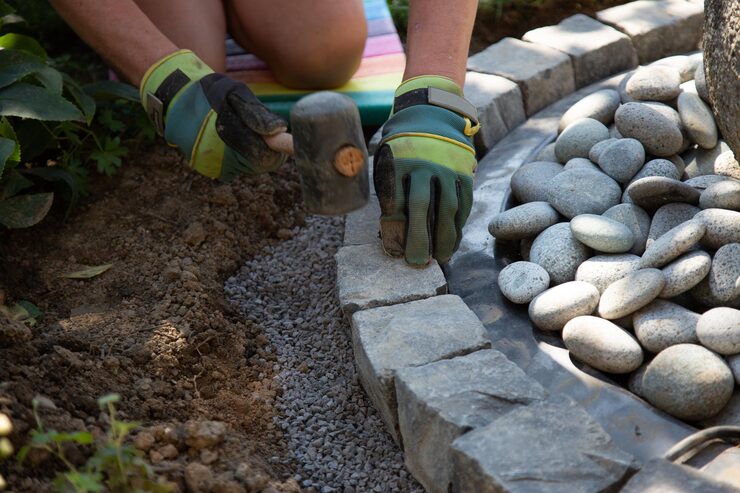
What the work involves below the surface
The stone is the last and smallest part of the job. A cobblestone apron stays flat or goes wavy depending on what is underneath it.
What's Underneath Decides What You See
Cobblestone that stays flat and cobblestone that heaves and gaps come down to the same thing: what's under it.
Granite, Reclaimed, or Concrete Pavers
Granite cobblestone costs most but outlasts all, aging beautifully on Milton's older Colonials and Victorians. Reclaimed offers similar character with less predictable sizing. Concrete pavers install faster and cost less, but chip sooner and look manufactured.
Pitch Away From the House, Not Toward It
On a sloped Milton lot, grade is everything. A cobblestone apron must pitch toward the street or a drain, never toward the garage or foundation. Get it wrong, and every storm sends runoff exactly where it shouldn’t go.
Matching What's Already There
Edging has to read as one piece with the existing drive, entry walk, and any stone walls already on the property. On an older Milton home, matching the era of the house matters as much as matching the material underfoot.
Where the Apron Meets the Road
Where your apron meets a town-accepted road, the curb cut itself is the town’s business, not yours to redesign. Everything on your side of that line – the stone, the edge, the pitch – is where the real decisions sit.
Materials and the trade-offs
Working Around What's Already on the Lot
Milton has no shortage of mature trees close to the street, and plenty of narrow older driveways that don’t leave much room to maneuver. Cobblestone work on these properties often means hand-setting stone where a machine can’t reach, and designing edging that survives root pressure from an oak that was there before the house.

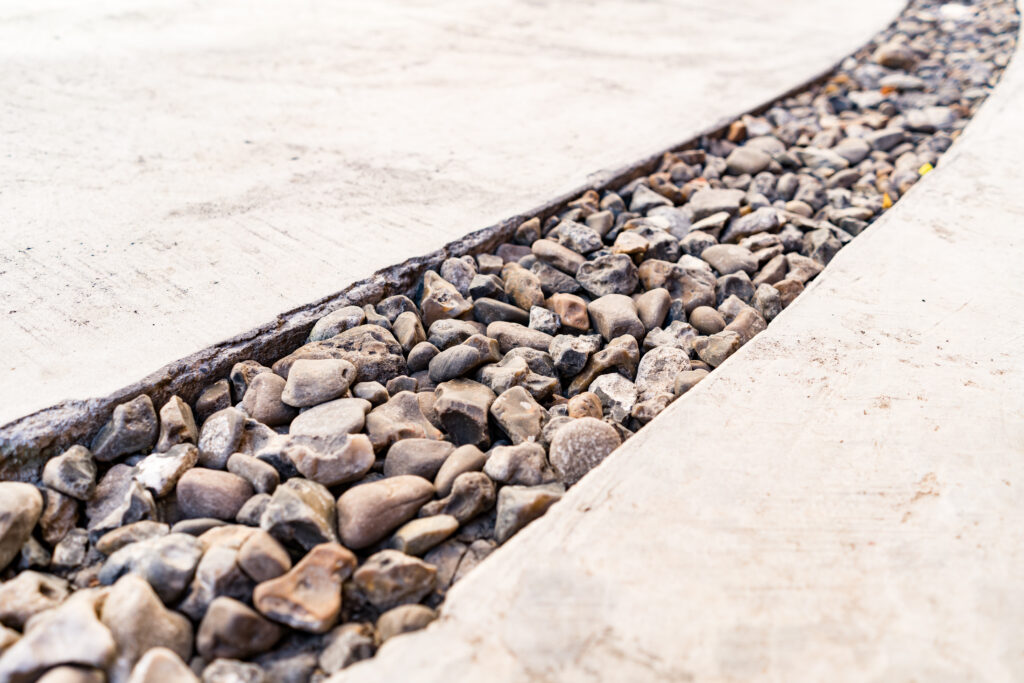
Cobblestone aprons and edging add a refined, lasting finish to Milton driveways, framing asphalt, concrete, or gravel surfaces with a durable border that resists cracking, shifting, and weather damage year-round. Unlike poured concrete borders, cobblestone is individually set, allowing it to flex slightly with ground movement common in Milton’s clay-heavy soil without fracturing or heaving over time.
We design aprons that transition smoothly from your driveway to the street or garage, reinforcing high-traffic zones where tires and turning wheels cause the most wear. Edging defines planting beds, walkways, and driveway boundaries, giving your property a tailored, upscale look that complements brick, stone, or stucco exteriors found throughout Milton neighbourhoods.
- Durable granite or concrete cobblestone options
- Custom patterns including herringbone, basketweave, and running bond
- Reinforced base preparation for freeze-thaw resilience
Our installers carefully grade and compact the base before setting each stone, ensuring proper drainage and long-term stability. Whether you’re restoring an aging border or adding one to a new driveway, our cobblestone work is built to handle Milton’s seasonal freeze-thaw cycles while boosting curb appeal and resale value.
Snow, Plows, and Edge Detail
Milton gets plowed hard in winter, and an apron edge that isn’t properly set is the first thing a plow blade catches. A loose edge restraint lets individual stones shift sideways under that pressure, and once one stone moves, the row next to it follows within a season or two. Setting the edge restraint deep and solid – whether that’s a concrete haunch behind the border stones or a steel edge keyed into the base – is what keeps a cobblestone apron looking the same in its fifth winter as it did when it was installed. This is a detail a lot of installers skip because it doesn’t show once the job is finished, and it’s exactly the detail that shows up as a problem two winters later.
If you’ve had an apron installed before that started shifting after a plow season or two, it’s almost always this: the edge wasn’t restrained properly underneath, not that the wrong stone was chosen.
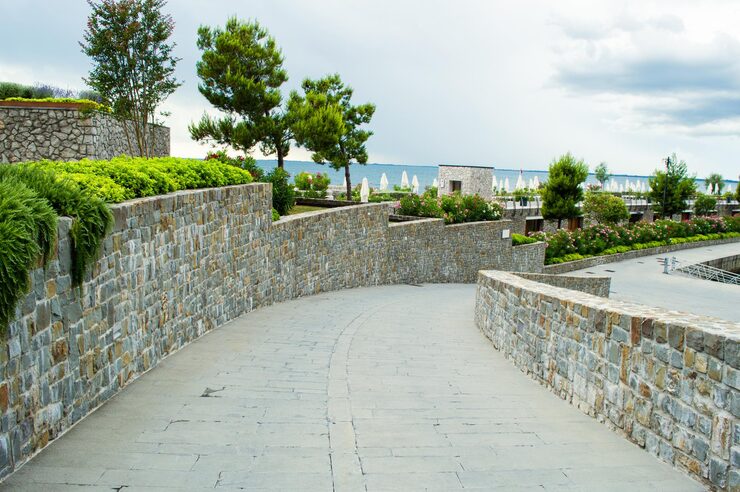
Where this suits Milton properties
Sloped Blue Hills lots
Properties on the steeper streets near the reservation need an apron that manages real grade, not just a flat transition. Pitch and drainage planning matter here more than anywhere else in town.
Older Colonials and Victorians
Houses with existing granite curbing or fieldstone walls suit cobblestone because it reads as original rather than added on. The material ages into the property instead of sitting apart from it.
Narrow, tree-lined driveways
Mature oaks and maples close to the street mean hand-setting stone where machines can't reach, and building edge restraint that can handle root pressure without heaving out of line.
So tar and chip suits a longer, gentler Milton drive with some room around it. It is a poor match for a short, steep or shared one, or one that opens straight onto the walk.
Questions we hear
Does the town control the apron where it meets the road?
Where a drive meets a town-accepted road, the curb cut itself is the town's business. The apron design, stone choice, and grading on your side of that line are yours to decide.
Will cobblestone edging work on a steep driveway?
Yes, but the base and pitch have to be built for it specifically. On a sloped Milton lot, the edging and apron need to direct water away from the house and garage, not just look level.
Is reclaimed cobblestone a good option for an older Milton house?
It can look very close to original granite and suits an older property well, though sizing is less consistent than new-cut stone, which shows slightly in the joint lines.
How does frost affect a cobblestone apron over time?
Frost moves the ground under the stone every winter. If the base and edge restraint aren't built to handle that movement evenly, individual stones shift and the surface goes wavy within a few seasons.
Next step
Call us at (413) 337-3772. Tell us about the lot, the slope and what you want the frontage to look like. We have been working in this area since 1988, and we will tell you plainly what suits your property.