
Cobblestone Aprons and Edging in Norwood, MA
Norwood’s post-war streets were built for simple, flat frontage: a straight run from curb to garage, a narrow strip between two houses, not much depth to work with. That makes the street-to-drive transition one of the few places on the property where a homeowner can actually change how the house reads from the sidewalk. A cobblestone apron at the end of a plain asphalt drive, or a clean edge restraint running the length of it, does more for the look of the house than almost anything else on the lot that costs this little effort to maintain.
This is not a fix for a failing driveway. It is finishing work on a drive that is otherwise sound, and it is usually the first hardscape project a Norwood homeowner takes on before thinking about walkways, walls or planting beds. It also tends to be the project that pays for itself fastest in curb appeal, since it’s the first thing anyone sees before they even reach the front door.
What sits under the stone matters more than the stone
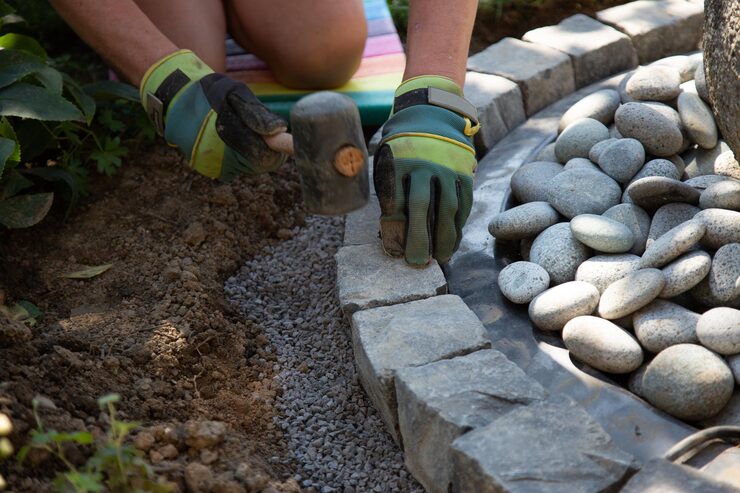
An apron that looks right for five years and then looks wrong for the next fifteen almost always failed underneath, not on the surface. The sequence is excavation to a consistent depth, a compacted gravel base, a bedding layer the units sit in, and an edge restraint locking the whole field so it cannot creep sideways. Massachusetts frost moves water in the ground every winter, and a base that was never compacted properly gives that movement somewhere to go. The stones follow it. A base that was compacted right resists it, and the apron stays flat through freeze-thaw cycles instead of rippling at the edges, which is the first and most visible sign of a job done fast rather than right.
Edge restraint is the part most homeowners never think about until it fails. Without it, individual units walk outward under traffic and plow pressure, joints open, and the whole field loosens from the outside in. With a proper restraint tied into the base, the field stays locked as one unit for the life of the installation.
On a narrow Norwood lot where the apron sits close to a neighboring drive, that edge is doing double duty: holding the stone pattern and giving a clean, deliberate line between two properties instead of a ragged one. On corner lots and those with shared driveways near Norwood Center, that line also tells a plow driver or delivery truck exactly where the pavement ends and the stone begins, which matters more than it sounds like it should after the first snowfall.


What Our Clients Say
What the work involves below the surface
The stone is the last and smallest part of the job. A cobblestone apron stays flat or goes wavy depending on what is underneath it.
Granite cobblestone holds its edge and color for decades but costs more up front and is heavier to handle on Norwood’s tighter driveways. As aprons and edging, it frames asphalt or concrete beautifully and remains the material that ages best.
Concrete pavers cost less and come in more shapes, but surface color fades over time, and Norwood's freeze-thaw cycling shows on cheaper units faster than on granite cobblestone aprons and edging, which hold their finish and crisp lines season after season.
Reclaimed or antique cobblestone has the aged look many older Norwood homes suit, lending driveway aprons and edging genuine period character.
Any of these materials can be set as a full apron or just an edging band. A narrow band costs less and still frames the drive; a full apron commits to the look along the whole frontage.
Grade decisions get made here too. Water has to keep moving away from the Norwood garage and foundation, not pool where asphalt meets new stone.
Materials and the trade-offs
Tying it into what's already there
Most of this work happens on a lot that already has an asphalt driveway, a front walk, and a house with some age on it. The apron or edging has to read as part of that, not as something bolted on afterward. That means matching the stone tone to brick or stone already on the house where there is any, picking a joint pattern that doesn’t fight with an existing walkway, and setting the new edge at a height that sheds water the same direction the driveway already does. On a lot with a retaining wall or a planting bed near the drive, the cobblestone line often becomes the detail that ties those separate features together instead of leaving them looking like three unrelated projects done at three different times. Getting that relationship right is as much a design decision as it is a construction one, and it’s worth working out on paper before anyone starts digging.

Where this fits on a Norwood lot
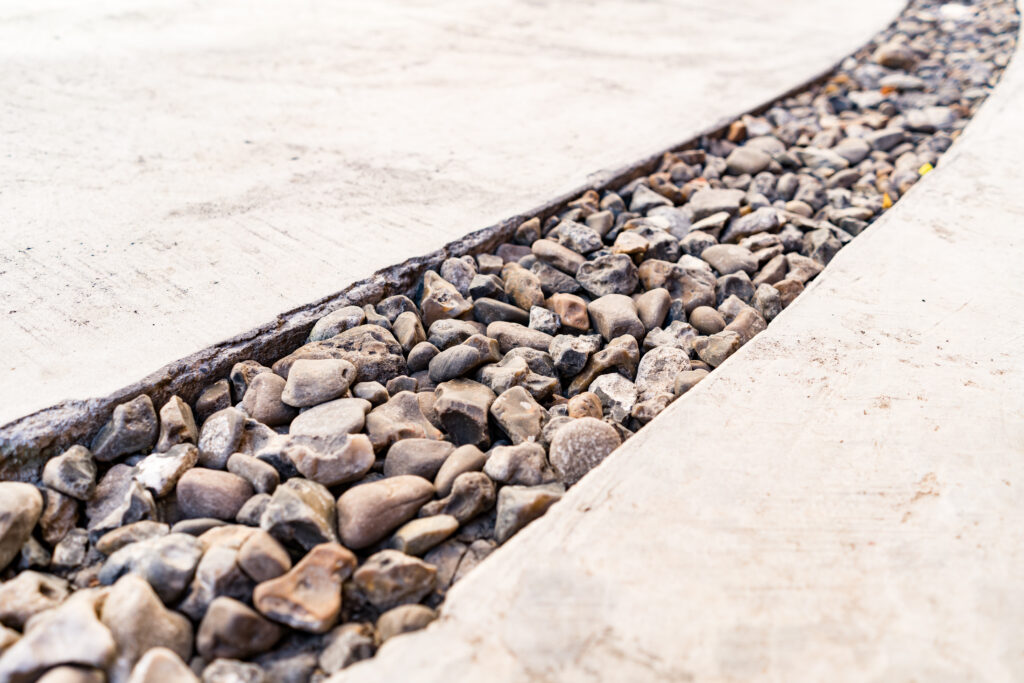
The small, regular lots that make up most of Norwood’s post-war neighborhoods are good candidates for this kind of work precisely because the frontage is simple. A flat, short run of asphalt with a defined curb cut gives a clean canvas for an apron, without the drainage complications of a long sloped drive or the access headaches of a hillside estate lot. Narrow side-yard drives benefit especially, since a crisp edge restraint does the job of a fence line between two close-set houses without actually building a fence. Because many of these homes share a similar scale and setback, a well-matched cobblestone detail tends to look intentional rather than out of place, which is not always true on larger or more varied lots elsewhere in the area.
Getting started
If the drive itself is sound and what’s missing is the finish at the street and along the edges, that’s exactly what cobblestone aprons and edging are for. Around Norwood, a lot of driveways run straight into asphalt or a worn concrete lip with nothing to define the transition, and that’s usually the easiest spot to upgrade without touching the whole surface. It’s worth looking at the existing grade, the driveway material, the walkway lines, and the front of the house together before settling on a stone and a layout, rather than picking a product first and hoping it fits.
- Apron width and curve at the street or garage entry
- Edging style along beds, walkways, or the drive’s full length
- Stone size, color, and pattern against the home’s existing materials
- Base depth and drainage where the new work meets the old surface
Call Driveway Specialists at (413) 337-3772 to talk through what would actually suit the property, and what it would take to get the base right underneath it before any stone goes down.
Where this suits Norwood properties
Narrow side-yard drives
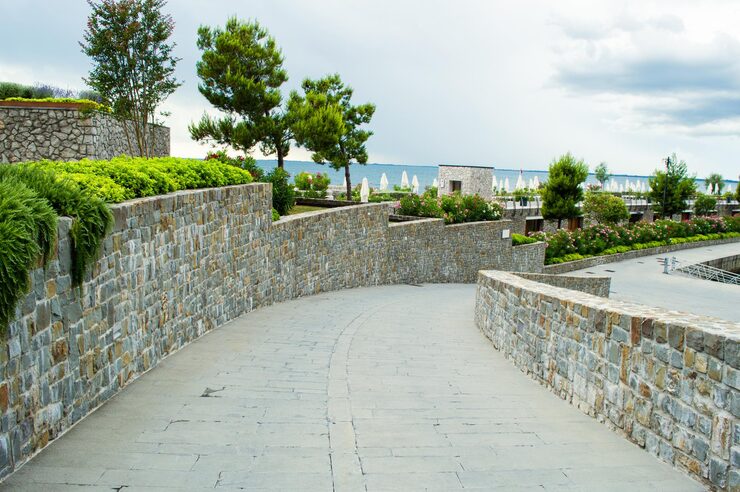
Post-war Norwood lots often run a thin strip of asphalt between two houses. A defined cobblestone edge gives that strip a clear boundary and a finished look without the cost of a fence.
Short, flat frontages
Flat curb-to-garage runs are common across Norwood and give a clean, simple base for a full apron. There's no slope to fight and no complex drainage plan needed before the stonework goes in.
Matching an older house
Many Norwood homes have some age and detail on the facade already. Cobblestone in a tone that echoes existing brick or stone ties the drive into the house instead of sitting apart from it.
So tar and chip suits a longer, gentler Norwood drive with some room around it. It is a poor match for a short, steep or shared one, or one that opens straight onto the walk.
Questions we hear
Does a cobblestone apron need its own permit in Norwood?
That depends on whether the work touches the town-accepted road or curb cut versus staying entirely on private property. It's worth confirming the scope with the town before work starts if the apron will extend to the street edge.
Will cobblestone edging survive plow damage?
A properly set edge restraint tied into a compacted base holds up far better than loose or poorly bedded stone. The edge detail is specifically what keeps plow contact from walking units out of line over time.
Can edging be added without replacing the whole driveway?
Yes. If the existing asphalt is sound, an apron or edging band can be set against it as a standalone project. It's a finishing detail, not a repair, and doesn't require redoing the driveway surface itself.
How does cobblestone compare to poured concrete edging?
Concrete edging is cheaper initially but cracks with frost the same way a driveway slab can, and a cracked section usually means replacing a whole run. Individual cobblestones can be lifted and reset without disturbing the rest of the field.
Next step
Call us at (413) 337-3772. Tell us about the lot, the slope and what you want the frontage to look like. We have been working in this area since 1988, and we will tell you plainly what suits your property.