
Cobblestone Aprons and Edging in Sharon, MA
A lot of driveways in Sharon run long through trees before they reach the garage, especially around the lake and the hillier streets off Massapoag. By the time that drive meets the road, the transition is usually an afterthought: a ragged edge of asphalt, maybe a slumped curb cut, nothing that acknowledges the house at the other end. Cobblestone changes that one spot without touching the rest of the driveway. It gives the entrance a defined edge, ties the drive to the front walk or a retaining wall, and holds its line in a way that raw asphalt edge never does.
The same material does two different jobs on most Sharon properties: the apron where the drive meets the street, and the edging that runs along the drive, a walkway, or a planting bed. Both depend on what happens underneath, not on the stone itself. An apron also has to survive something a side edge doesn’t: the turning radius of cars, delivery trucks, and the town plow catching the corner every winter. That means the base under an apron generally needs to be built heavier and the edge restraint tighter than what we’d use for a run of edging along a quiet flower bed.
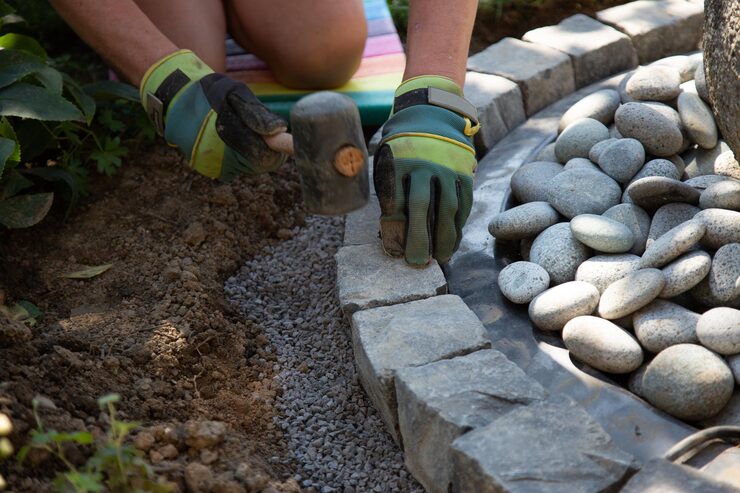
Cobblestone set on a few inches of sand over compacted gravel will move with every frost cycle, because there is nothing holding it against lateral push. The work that actually matters is excavation to a consistent depth, a compacted base thick enough to resist frost heave, and an edge restraint – concrete, steel, or a buried soldier course – that locks the whole assembly in place before the first stone goes down. Sharon’s sandy soil, where it’s present, is a genuine advantage here. Sand drains fast, so water isn’t sitting under the base through a freeze, which is the main reason cobblestone edging cracks and lifts in towns with heavier clay. We still don’t skip the base. Sandy soil reduces the water problem; it doesn’t remove the need for compaction. Where a lot sits lower, closer to the lake, or has a clay pocket mixed into otherwise sandy ground, we adjust the base depth and drainage rather than assume the whole property behaves the same way.
Granite cobblestone is the standard choice for this kind of work. It costs more up front than a poured concrete apron, but it doesn’t spall the way concrete does under New England freeze-thaw, and a stone that gets knocked loose by a plow can be reset without cutting out a slab. Concrete edging is cheaper initially and can look clean when new, but it cracks along a fixed line and the repair is a patch, not a reset.
A few patterns tend to work best on Sharon’s lots:
- A single soldier course of cobblestone along an asphalt drive, which reads as intentional without competing with stone walls or plantings already on the property
- A wider granite apron where the drive meets the street, built to take plow contact and turning traffic without shifting
- Cobblestone edging that continues from the driveway to a front walk, so the two surfaces read as one planned entrance instead of two separate projects


What Our Clients Say
What the work involves below the surface
The stone is the last and smallest part of the job. A cobblestone apron stays flat or goes wavy depending on what is underneath it.
Pitch matters as much as material. In Sharon, an apron has to shed water away from the garage and toward the street, not pool at the transition where cobblestone meets asphalt.
Shaded, tree-lined drives stay damp longer. Cobblestone handles that better than asphalt edge, which softens and spreads under the same conditions.
Granite cobblestone can be reset stone by stone if a plow catches it, a quick fix for Sharon driveways.
In Sharon, cobblestone aprons and edging tie the driveway, front walk, and entrance into one cohesive look, instead of leaving each surface to read as a separate, mismatched slab.
On older Sharon houses, a reclaimed or tumbled cobblestone apron reads as original to the property, softening the transition between driveway and street.
Materials and the trade-offs
Drainage and grade come before the stone
Cobblestone work fails or succeeds on where the water goes once there’s a hard edge in the ground. A driveway with any real grade concentrates runoff at exactly the point where the apron meets the street, and that’s the spot most prone to washout if the base isn’t built to carry it. On the rolling lots around the lake, we look at where the land already slopes before deciding how the edging ties in – sometimes that means a slightly wider stone course on the downhill side, sometimes it means a drain channel set into the apron itself. Pitching the whole assembly away from the house isn’t a design preference. Water finds the low point regardless of what you’d prefer, and if that low point is your foundation or your garage slab, the stone was installed wrong no matter how good it looks.

Matching what's already there
Cobblestone edging rarely stands alone. It has to work with an existing driveway surface, a front walk, retaining walls on sloped lots, and planting beds that have been there for years. On an older Sharon house with fieldstone walls or a bluestone walk, a tumbled granite cobblestone sits naturally alongside that material; a sharp-edged new-cut stone can look out of place next to it. Sharon’s mix of antique colonials, stone-wall farmhouses, and newer construction along the Route 123 corridor means there’s no single “right” cobblestone for the whole town – what reads as authentic next to a 19th-century fieldstone foundation can look heavy-handed next to a newer build with clean concrete walks.
We look at what’s already on the property before recommending anything specific:
- The age and style of the house, and the materials used in its existing walls or walks
- The grade of the lot and how water needs to move across it
- Whether the driveway surface is asphalt, gravel, or pavers, since each pairs differently with stone size and edge detail
Where this fits in Sharon
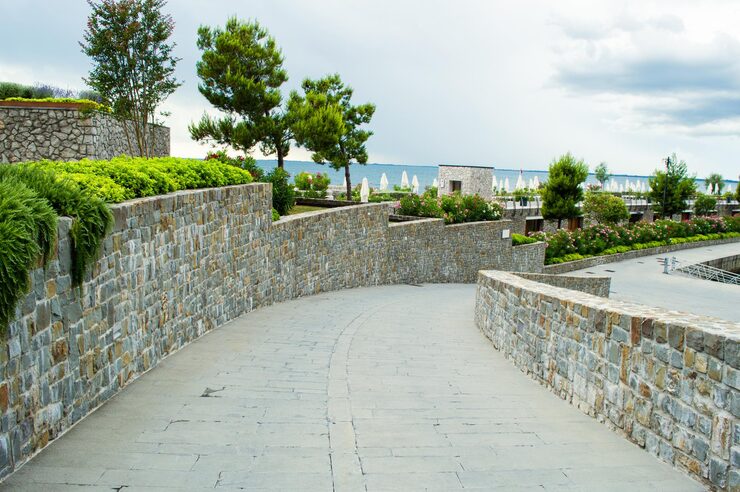
This work suits the kind of properties common around Sharon: long tree-lined drives that need a defined entrance, lots with enough grade that drainage has to be planned rather than assumed, and older homes where a new concrete apron would look wrong against existing stonework or fieldstone walls. Cobblestone aprons hold up well against snowplow blades too, which matters on the longer rural drives typical of this area. It’s a smaller, more precise job than a full driveway repaving, and it’s usually done alongside other hardscape work rather than as a standalone repair.
Good candidates for this kind of work include:
- Driveway entrances where asphalt meets the road and needs a durable, defined transition
- Walkway edges running alongside existing stone or brick features
- Transition points where a driveway ties into a patio, garage apron, or stone wall
Where this suits Sharon properties
Long tree-lined drives
Properties around the lake and wooded back lots often have long drives that lack any defined entrance. Cobblestone at the apron gives that stretch a clear, finished start.
Sloped lots near the lake
Rolling terrain means grade and drainage have to be planned at the apron, not assumed. Sandy soil helps, but the edging still needs to pitch water away from the house.
Older homes with existing stonework
Houses with fieldstone walls or a bluestone walk call for cobblestone that matches, not a poured concrete apron that looks newly added and out of place.
So tar and chip suits a longer, gentler Sharon drive with some room around it. It is a poor match for a short, steep or shared one, or one that opens straight onto the walk.
Questions we hear
Does cobblestone edging work with sandy Sharon soil, or does it still need a full base?
Sandy soil drains well, which reduces the main cause of frost heave under cobblestone – water sitting under the base through winter. It's a real advantage, but it doesn't replace the need for proper excavation and a compacted base. We build the base the same way regardless of soil type; sandy ground just means it holds up better over time.
Can cobblestone edging be added to an existing asphalt driveway?
Yes. The apron and edge are cut in against the existing asphalt, with a proper base and edge restraint installed before the stone goes down. It doesn't require repaving the whole driveway.
How does cobblestone handle a plow compared to a painted or asphalt edge?
A plow blade that catches a cobblestone edge can usually be reset stone by stone. The same impact on a concrete edge or asphalt lip tends to crack or chip it permanently.
What stone works best for a Sharon property with an older house?
Tumbled or reclaimed granite cobblestone generally reads as original alongside older stonework like fieldstone walls or bluestone walks. Sharp new-cut stone tends to look more modern and can clash with an older facade.
Next step
Call us at (413) 337-3772. Tell us about the lot, the slope and what you want the frontage to look like. We have been working in this area since 1988, and we will tell you plainly what suits your property.