
Cobblestone Aprons and Edging in Westborough, MA
Westborough drives sit on a wide range of lots, from newer subdivision frontage with a clean strip of lawn either side to older houses closer to the Route 9 corridor where the drive meets the street at an angle. Most of these drives are already wide and level, which means the asphalt or concrete itself usually isn’t the problem. What’s missing is the finish at the edges: a defined apron where the drive meets the road, and a clean line where it meets the lawn, the walk, or a planting bed. Cobblestone does that job. It’s not a repair. It’s the detail that makes a wide, plain drive look finished instead of just poured.
A cobblestone apron is the first few feet of the drive, the part a visitor actually steps on and a driver actually sees before anything else. Edging is the border running the length of the drive, or around a walkway or patio, holding the asphalt or pavers in and keeping mulch and lawn out. Both are hardscape work, which means the result depends on what goes in before anyone sets a stone.
What’s underneath decides what lasts
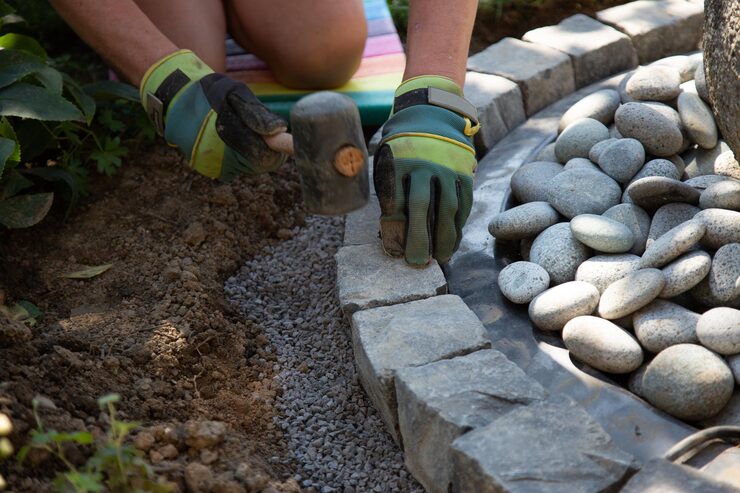
Granite cobblestone, reclaimed or new, is heavy and unforgiving of a soft base. Before anything is set, the area gets excavated below the finished grade, a compacted gravel base goes in, and the stones are bedded in a setting layer with proper edge restraint behind them. Skip any one of those steps and Massachusetts frost will find it. Ground freezes, water in the soil expands, and anything resting on an uncompacted base gets pushed. Cobblestone set directly on native soil, or set without restraint behind it, will heave and spread within a winter or two. Stones set on a real base and held by restraint move together as a unit, if they move at all, and settle back true in spring.
Westborough’s mix of newer fill around subdivision lots and older, undisturbed soil near the town center means the base work isn’t identical from one street to the next. A drive on fill settles differently than one on ground that’s been stable for a century. That’s decided on site, not from a brochure.

What Our Clients Say
What the work involves below the surface
The stone is the last and smallest part of the job. A cobblestone apron stays flat or goes wavy depending on what is underneath it.
Granite cobblestone holds its edge and color for decades and takes a plow blade better than most materials. Concrete pavers cost less up front but show wear faster where salt and snow blades hit them hardest.
Reclaimed granite costs more than new-cut stone but carries a worn, settled look that matches an older Westborough house immediately, with no years of weathering needed.
Water has to go somewhere.
A new apron should read as part of the property, not a patch.
Commercial frontage along the Route 9 corridor takes more punishment: more turning traffic, more plow passes.
Materials and the trade-offs
Materials and the trade-offs that matter
Granite cobblestone, new-cut or reclaimed, is what most Westborough homeowners picture. It’s the most expensive option and the one that ages best: color doesn’t fade, edges don’t erode under salt, and a cracked stone can be pulled and replaced without disturbing the rest. That repairability matters here, since freeze-thaw cycles are the thing most likely to eventually move or crack an individual stone.
Concrete cobble-look pavers cost less and come in more consistent sizes, so installation goes faster. They don’t weather as gracefully, though—color fades unevenly over the years, and the surface shows wear where snow blades and studded tires hit it each winter. That’s a reasonable trade for a low-traffic side edge or planting border, but a shorter-lived choice for an apron absorbing every plow pass at the street.
Belgian block sits between the two: durable like granite, with a squarer, more formal look suited to a straight colonial-style house rather than a casual ranch lot.

Drainage, grade, and tying it to what's already there
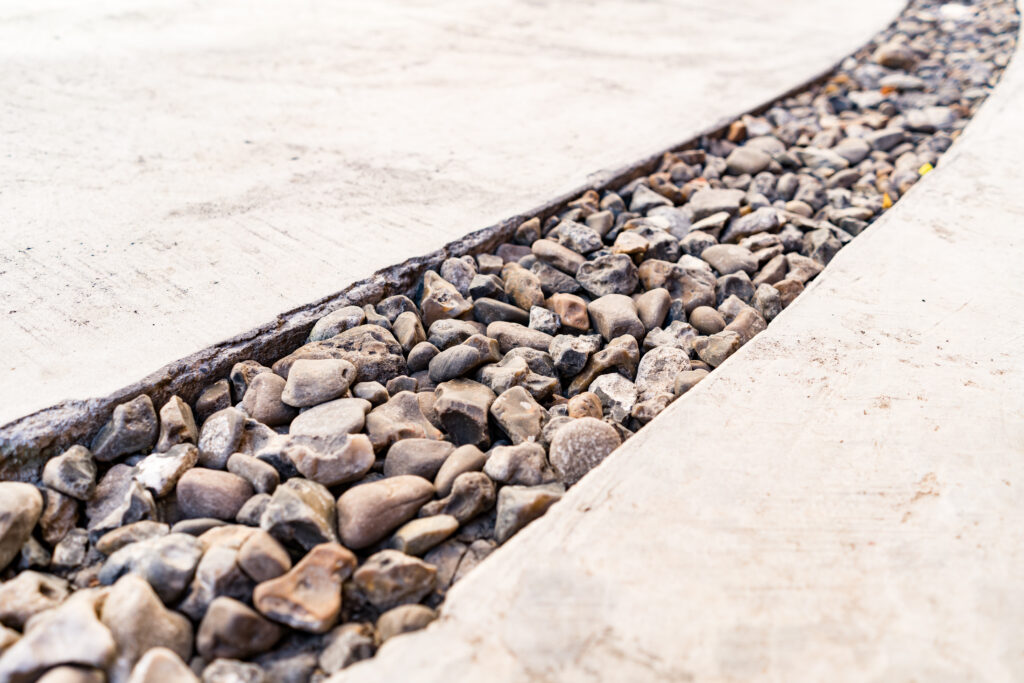
Cobblestone edging isn’t just decorative. Set correctly, it’s also a drainage line, channeling water off the drive surface rather than letting it sheet across the lawn or pool at the garage door. Getting the pitch right at the apron is the part most likely to be rushed, and the part that causes problems years later if it isn’t. Water has to move away from the house and away from the foundation, every time, regardless of which way the original grade happens to slope.
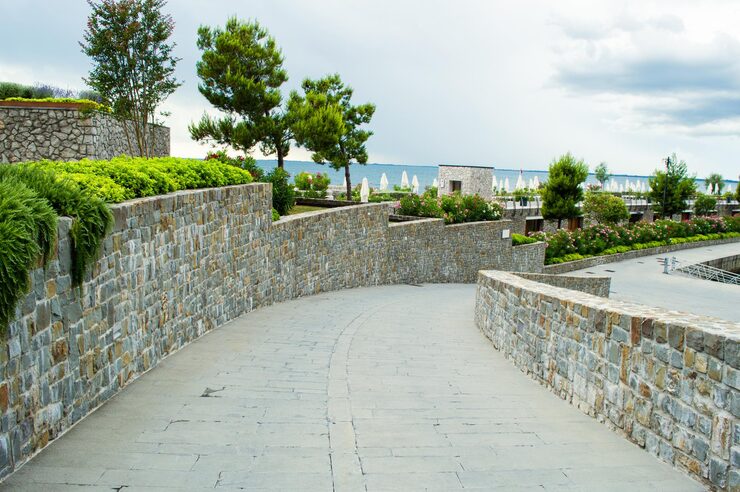
Most Westborough properties already have something to tie into: a front walk, a low retaining wall, foundation plantings, or an older stone edge somewhere on the lot. New cobblestone work should pick up the same stone tone or the same line of an existing wall rather than introducing a third material to a property that already has two. On older houses near the center of town, matching an existing granite curb or hitching post stone with new cobble reads as original. Mismatched material reads as an addition, even when the installation itself is solid.
Where this kind of work fits in Westborough
Wide, level subdivision drives around Westborough benefit most from a defined apron, since the drive itself rarely needs structural work but almost always lacks a finished edge where it meets the street. A cobblestone border there does the job of marking the transition cleanly, without the cost of redoing the whole surface.
Older lots near downtown and around the historic district gain the most from edging that ties a new apron into an existing stone wall, walk, or foundation line, matching the character already on the property instead of looking bolted on. Commercial frontage along Route 9 and the main corridor needs edging built for heavier turning traffic and more frequent plowing, which changes the restraint detail and base depth even when the visible stone looks the same as a residential job. Sloped or hillier lots further from the center need aprons that manage runoff as much as they manage looks.
If you’re planning an apron, a border, or edging to finish off a drive that’s otherwise in good shape, call Driveway Specialists at (413) 337-3772 to talk through what your lot actually needs before any stone gets ordered.
Where this suits Westborough properties
Wide subdivision drives
Newer lots with level, generously sized drives often have no defined apron at all. A cobblestone edge gives the entrance a finished line without touching the drive surface itself.
Older homes near downtown
Houses close to the town center often already have a stone wall, walk, or curb. Matching new cobblestone to that existing material reads as original rather than added.
Corridor commercial frontage
Properties fronting the main road see heavier turning traffic and more plowing. Edging here needs restraint built for that load, not just the look of residential cobble.
So tar and chip suits a longer, gentler Westborough drive with some room around it. It is a poor match for a short, steep or shared one, or one that opens straight onto the walk.
Questions we hear
Is cobblestone edging a DIY project?
Setting a few stones along a bed border is manageable on your own. An apron or a drive-length edge is a different job: it needs excavation, a compacted base, and proper restraint behind the stones, or frost will move it within a winter or two. That part is worth having done right the first time.
Can cobblestone be added to an existing asphalt drive without repaving it?
Yes, in most cases. The apron and edge are installed around and against the existing drive surface. If the asphalt itself is sound, there's no reason to disturb it just to add a stone border.
How does cobblestone handle New England winters?
Granite cobblestone set on a proper base with real edge restraint holds up to freeze-thaw cycles better than most paving materials, because the stones and the restraint move together rather than individually. A poorly based installation is the thing that fails, not the stone itself.
What's the difference between an apron and edging?
An apron is the defined section where the drive meets the street, usually the first several feet. Edging is the border running along the length of the drive, a walkway, or a planting bed. Many properties use both, matched in material.
Next step
Call us at (413) 337-3772. Tell us about the lot, the slope and what you want the frontage to look like. We have been working in this area since 1988, and we will tell you plainly what suits your property.