
Walkway Installation in Brookline, MA
Most front walks in Brookline were laid when the house was built, and a lot of that work is older than the concrete or brick it sits on. On a Victorian or prewar lot, the walk is short, often no more than a few strides from the public sidewalk to the front steps, and it has to do real work in a small space: handle the grade change, shed water away from the foundation, and look right against a house that may be a century old. That last part matters more here than on a typical suburban lot. A walkway in Brookline sits close to the street, close to the neighbors, and close to a facade with real architectural detail, so the material and the layout get noticed.
This is a hardscape job, not a paving job. Nobody is fixing potholes. The decision is about what the path is made of, how it’s built underneath so it stays flat through New England winters, and how it reads next to brick steps, a stone foundation, or a wrought-iron rail.
What’s under the surface decides what happens on top
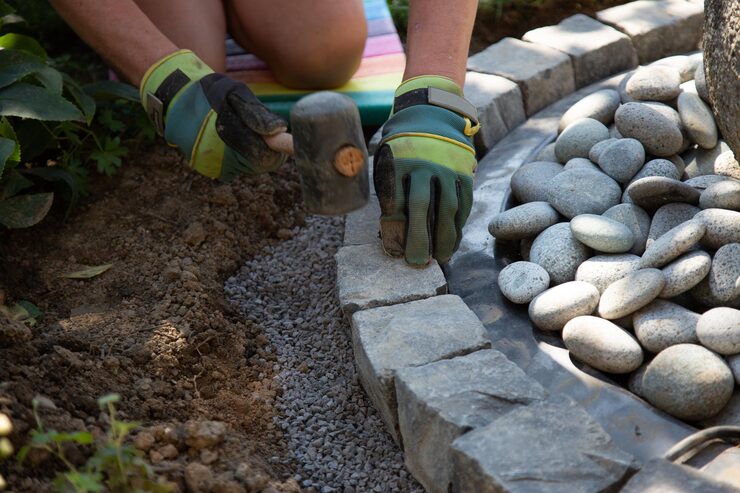
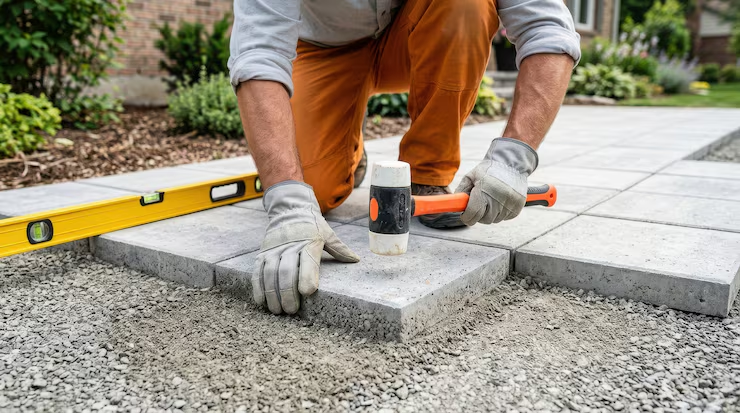
Everything visible on a walkway depends on what’s buried: excavation depth, a compacted gravel base, bedding sand or setting bed, and edge restraint holding the perimeter in place. Frost is the reason this matters in Massachusetts. Water in the soil freezes, expands, and pushes upward. Where the base is shallow or poorly compacted, that movement is uneven, and uneven movement is what makes pavers rock, brick lift, and concrete crack along old joints. A properly built base drains before the water has a chance to freeze and holds its shape when it does, which is why two walkways that look identical on day one age completely differently by year ten.
On Brookline’s narrow lots, excavation itself is part of the planning. There’s often little room beside the walk to stage spoil or materials, and a short drive or tight side yard means equipment and deliveries have to be sized to fit the property, not the other way around. Good crews plan the sequence before the first shovel goes in: where the spoil pile sits, which way the gravel truck can back in, and how the finished grade ties into an existing stoop without a lip that catches a shoe or pools water after rain.
Materials aren’t interchangeable
Concrete, brick, bluestone, and concrete pavers all handle freeze-thaw differently, age differently, and cost differently to fix later. None of them is the automatically correct choice. The right one depends on the house, the budget, and how much the owner wants to deal with in ten years.


What Our Clients Say
Concrete walks
Poured concrete is the lowest upfront cost and reads clean next to a simple facade. It cracks along joints over time, and a cracked section usually means replacing that panel rather than a patch.
Brick walkways
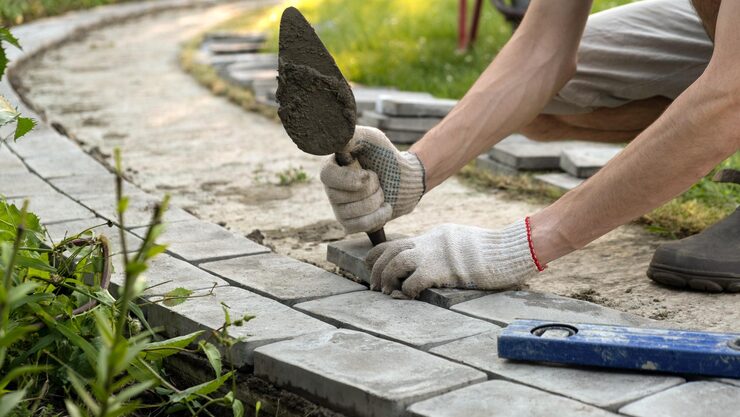
Brick suits Brookline’s older housing stock better than almost anything else, complementing triple-deckers and Colonials alike. Individual bricks can be lifted and reset after frost heave or root growth, keeping long-term repair costs down without ever redoing the whole walkway.
Bluestone paths
Bluestone gives a formal, high-end look that matches Brookline's stone foundations, brick steps, and tree-lined streets beautifully.
Concrete pavers
Pavers offer the most design flexibility and the easiest spot-repair if a section settles, since individual units lift out without disturbing the rest.
Drainage comes before design
Any hard surface changes how water moves across a lot. A walk that traps water against the foundation creates problems indoors, not just outdoors, so pitch and runoff direction get decided before material choice.
Pitching away from the house
On tight Brookline lots, there's rarely room for a drain or swale beside the walk.
Choosing a material
The materials are not equal. Each suits some properties and not others.
Tying into the entry
A walkway rarely stands alone. It meets a front step, a stoop, or a porch, and the transition has to be stable and sized correctly. Rebuilding that joint is the most common reason old walks need full replacement.
Matching the driveway or apron
Where the walk crosses or runs beside the driveway, materials and edges should relate to each other rather than compete. On a short Brookline apron, this transition is often visible from the sidewalk and worth getting right.
Working around existing walls and planting
Mature plantings and low stone or brick walls are common on older Brookline lots. Reusing or rebuilding around them, rather than ripping everything out, usually costs less and keeps the property’s established look intact.
Matching an older house
A walkway installed for a 1910s or 1920s house reads differently than one for a 1980s build. Material, joint pattern, and edge detail all signal age, so matching the house means more than matching the budget.
Working within historic review
Some Brookline streets fall under local historic district guidelines affecting what’s visible from the public way. A new walkway visible from the sidewalk often falls under that review, so it’s worth checking before materials are ordered.

Where this work fits in Brookline
Brookline’s dense housing stock—short setbacks, narrow side yards, walks close to the public sidewalk—shapes how a walkway project gets planned here. The footprint is small, so equipment access, material staging, and street parking around the crew need to be worked out before digging starts, not during it. A short drive or single curb cut often leaves no room to park a delivery truck off-street, which affects scheduling as much as design.
Because the walk sits in full view of neighbors and foot traffic, the finished look carries more weight than a backyard patio would. Brick and bluestone tend to suit Brookline’s triple-deckers and older Victorians better than plain poured concrete: they age with more character and can be repaired piecemeal if frost heave or a tree root disturbs a section. For newer construction nearer Newton or the Brighton line, concrete pavers offer similar flexibility without the historic-matching constraint.
What drives the price
A new walk has to meet several existing things cleanly.
- The entry : The walk must arrive at the door at a sensible height. The threshold sets the finished level, so the work starts at the door and runs outward.
- The drive : Where a walk meets a drive, the levels and the drainage have to agree. A mismatch becomes a trip edge or a puddle.
- Walls and planting : Existing stone walls, foundation beds and mature trees constrain the route. Roots under a path are worked around, not cut through without thought.
- An older house : Scale, colour and pattern should follow the architecture. A narrow, dark stone walk suits an old house differently than a broad paver field does.
Next step
A walkway that’s built on a proper base, pitched correctly, and matched to the house in front of it is a one-time job, not a recurring one. Brookline’s mix of older colonials, triple-deckers, and newer infill homes means walkway layouts rarely follow a single template—setbacks, mature trees, and established plantings all factor into the design. We take the time to look at how the walk ties into your front steps, driveway apron, and property line before any excavation starts.
Properly built walkways start below the frost line with compacted gravel, which matters given New England’s freeze-thaw cycles that cause heaving and cracking in corner-cut installations. We work with concrete, brick, bluestone, and paver options, each suited to different budgets and architectural styles common throughout the neighborhood.
- Correct base depth and compaction for long-term stability
- Pitch and drainage planning to keep water off your steps and foundation
- Material and pattern choices that complement your home’s existing character
If you’re planning a new front walk or replacing one that’s heaving and cracking, call Driveway Specialists at (413) 337-3772 to talk through materials and layout for your property.
Before you call
It helps to know:
- Where the walk starts and where it needs to end
- Whether the route crosses a slope or a shared area
- Which material you lean towards, and whether the house is older
- Where water currently runs on the property
Questions people ask
Does a new walkway in Brookline need historic district approval?
Some Brookline streets fall within local historic districts that review changes visible from the public way, which can include a front walk. It's worth checking your property's status before finalizing materials, since this affects timeline more than feasibility.
What's the most durable material for a Brookline front walk?
Brick and bluestone both handle freeze-thaw well and can be repaired section by section if frost heave disturbs part of the path. Poured concrete costs less upfront but typically needs full panel replacement rather than spot repair when it cracks.
Can you work around our existing stone wall and plantings?
Yes. On older Brookline lots with established walls or garden beds, we build around what's already there whenever it's structurally sound, which keeps costs down and preserves the property's existing character.
How does a walkway affect drainage near our foundation?
Any hard surface changes where water goes. On tight lots without room for a separate drain, the walkway itself has to be pitched correctly to carry water away from the foundation and toward the street or yard.
Will the crew need to park on the street?
On most Brookline lots, yes, since short drives and narrow side yards rarely leave room for equipment or material staging off-street. We plan access and scheduling around this before work begins.
Next step
Call Driveway Specialists on (413) 337-3772. We are a family-run company in business since 1988, and we will walk the route with you and talk through material, grade and drainage before anything is priced.