
Walkway Installation in Canton, MA
A lot of Canton properties sit on ground that slopes toward or away from the Blue Hills reservation, and that grade shows up the moment you start thinking about a front walk. Post-war subdivisions off the flatter streets tend to have a modest pitch from the road to the door. Newer construction on the hillier parcels can drop several feet from the driveway to the front entry, which changes the whole approach to a walkway before a single paver goes down. This isn’t a repair job and it isn’t a driveway. A walkway is the first thing anyone touches when they visit the house, and it has to handle foot traffic, winter ice, and whatever water the slope sends its way, while still looking like it belongs with the house.
We build these from the ground up, literally. The finished surface is the part you see, but the work that keeps it flat for years happens underneath, and that’s where most of the decisions get made.
What’s happening below the surface
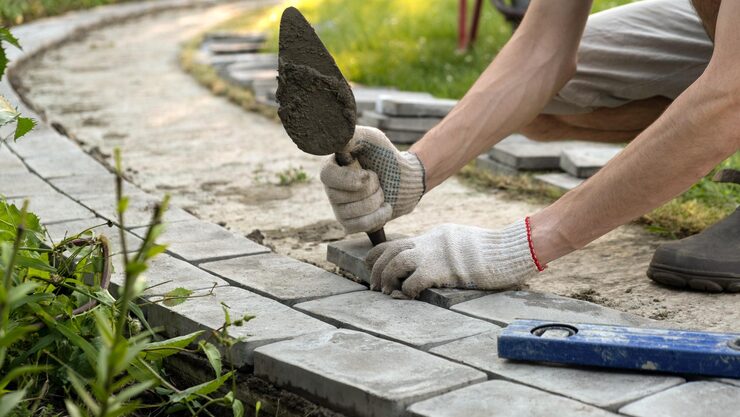
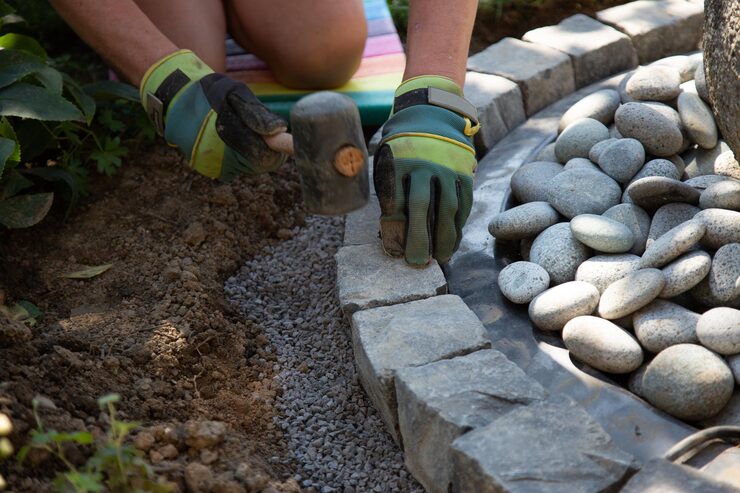
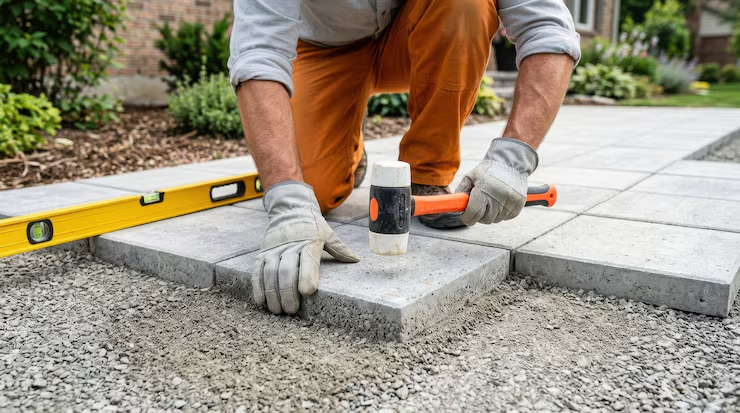
Every walkway starts with excavation to a depth that lets us build a proper base, then compaction of that base in layers rather than all at once. Skipping the layered compaction is the single most common reason a walkway looks fine in October and has a dip in it by spring. On top of the compacted base comes a bedding layer that the pavers or stone actually sit in, and at the edges, restraint that keeps the whole thing from spreading sideways over time.
Frost is the reason any of this matters in Massachusetts. Water in the ground freezes and expands, and if it’s sitting under an unprepared walkway, it lifts sections unevenly as it does. A well-draining base lets water move through instead of pooling and freezing in place, which is why the prep work underneath is worth more than almost anything you choose for the surface.
On the sloped lots common around Canton, we also have to think about where the walkway interrupts water that’s already moving downhill. A path cut straight across a slope can act like a small dam unless it’s graded to shed water along its length rather than against the house or across a neighbor’s yard. Where the drop from driveway to door is steep, we sometimes break the run into shallow steps or landings rather than one continuous slope, which is both safer underfoot in icy weather and easier on the eye than a ramp running the length of the yard.
Surface material matters too, but it’s a secondary decision once the grading and base are sorted out. Options we typically walk through with Canton homeowners include:
- Concrete pavers, for a clean, uniform look that holds up well to freeze-thaw cycles
- Natural stone, including bluestone or fieldstone, for a more organic match with older or wooded properties
- Stamped or broom-finished concrete, a lower-maintenance option for straightforward, flatter layouts
- Brick, which suits the colonial and Victorian homes found throughout town


What Our Clients Say
Materials, and what they actually trade off
Concrete pavers flex at the joints instead of cracking, handle Canton's freeze-thaw cycles well, and let you swap a damaged unit without redoing the walkway.
Poured concrete walkways are the cheapest option up front in Canton, but a single slab cracks as one piece when frost heaves it, and that crack is permanent.
Brick has a traditional look that suits colonial and cape-style homes common in Canton’s older neighborhoods, but it’s more prone to frost damage at the surface than dense concrete pavers and needs a tighter base to hold its lines.
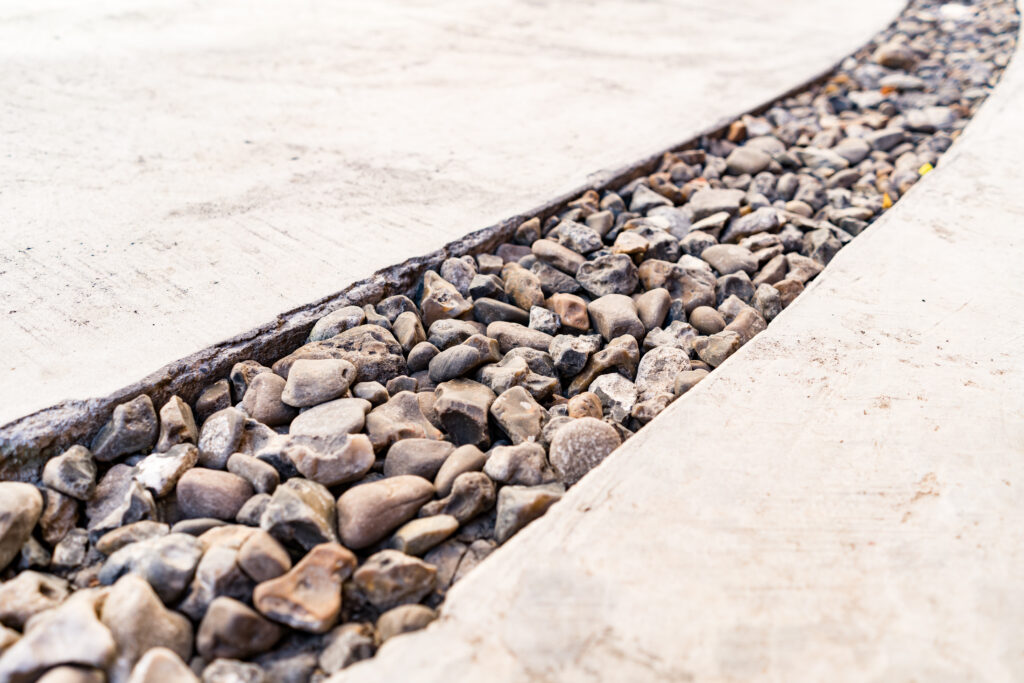
Loose materials like gravel or stepping stone paths cost less and drain well on their own, but they don’t suit a formal front entry and need edging to stop migration over a few seasons.
Why pitch away from the house is not optional
Any hard surface sheds water faster than bare ground. If a walkway slopes toward the foundation instead of away from it, you’ve built a channel that aims runoff at the house every time it rains.
On Canton’s hillside lots, this gets more complicated. Water coming down from higher ground has to be directed around the walkway, not just off it, or the path becomes the fastest route for runoff to reach the door.
Choosing a material
The materials are not equal. Each suits some properties and not others.
Tying into what's already there
A new walkway rarely stands alone. It must meet the driveway edge, align with the front steps, and often pass existing plantings or a retaining wall. Getting each transition height right matters as much as the walkway itself.
On an older Canton colonial, matching brick or a similar paver tone to the house’s trim and foundation stone keeps the walkway from looking like an addition rather than part of the original design.
Where a Canton walkway meets an asphalt or paver driveway, the edge restraint has to hold both surfaces independently, since they expand, contract, and settle at different rates through our region’s freeze-thaw winters and humid summers.
Working around roots and shade
Mature trees are part of the look in a lot of Canton’s established neighborhoods, but roots under a walkway path will lift pavers over time, and shaded paths stay damp longer, which affects how slick a surface gets in winter.
In Canton, we route walkways around significant root systems where we can, and choose surface texture with shaded, damp conditions in mind, rather than assuming every part of the property dries and drains the same way.

Where this suits Canton properties
The post-war subdivisions with gentler street-to-door grades are usually straightforward: a stable base, decent pitch, and a material that matches the house. It’s the newer construction on steeper Blue Hills-adjacent lots where the real planning happens. A walkway there often needs steps or a terraced section built into the run, and the drainage plan has to account for water moving across the whole property, not just the few feet under the path.
Canton’s older homes closer to town also bring their own wrinkles: mature trees with root systems that can heave a walk within a few seasons, foundations that have settled unevenly, and existing concrete or stone that was never set on a proper base to begin with. We’ll often pull that old path entirely rather than try to patch around a problem that’s just going to come back.
- Base prep suited to the soil and slope, not a generic depth
- Steps or terracing worked into steeper layouts
- Material choices that match the house and existing hardscape
- Drainage planned for the whole lot, not just the path
What drives the price
A new walk has to meet several existing things cleanly.
- The entry : The walk must arrive at the door at a sensible height. The threshold sets the finished level, so the work starts at the door and runs outward.
- The drive : Where a walk meets a drive, the levels and the drainage have to agree. A mismatch becomes a trip edge or a puddle.
- Walls and planting : Existing stone walls, foundation beds and mature trees constrain the route. Roots under a path are worked around, not cut through without thought.
- An older house : Scale, colour and pattern should follow the architecture. A narrow, dark stone walk suits an old house differently than a broad paver field does.
A family-run crew that's seen the ground here before
Driveway Specialists has been doing this work since 1988, which means we’ve built walkways on plenty of lots like the ones around Canton’s hillside developments and its older, flatter streets closer to town. That history matters less for any single job and more for knowing, before we start digging, which properties need extra drainage planning and which don’t.
We’re a family-run operation based in Natick, and we’ve worked across Norfolk, Middlesex and eastern Worcester counties for more than 35 years. That’s long enough to have seen what happens to a poorly built walkway after a few New England winters, and to build the next one so it doesn’t repeat the problem.
We’ll walk the property with you, talk through material options honestly, including the trade-offs, and give you a straightforward read on what the grade and soil are going to require. No pressure to pick the most expensive option if a simpler one will hold up just as well on your specific lot.
Before you call
It helps to know:
- Where the walk starts and where it needs to end
- Whether the route crosses a slope or a shared area
- Which material you lean towards, and whether the house is older
- Where water currently runs on the property
Questions people ask
How long does a walkway installation take?
It depends on length, material, and how much grading or excavation the slope requires. A simple flat run is quicker than a path that needs steps or terracing on a sloped lot.
Can a walkway be built over existing roots or a steep slope?
Yes, but it changes the approach. Roots may need rerouting around rather than over, and a steep slope often calls for steps or terraced sections built into the base rather than a single straight run.
What's the best material for an older Canton house?
Brick or a paver that matches the home's existing trim and foundation stone usually looks most at home on an older colonial or cape. Bluestone also suits traditional houses but costs more.
Will a new walkway affect drainage near my foundation?
It can, which is why pitch matters. A walkway should always slope away from the house, and on sloped lots it needs to direct water around the path rather than funneling it toward the entry.
Do you only install new walkways, or also replace old ones?
Both. A lot of our calls come from heaving, uneven, or cracked walkways that need to come out and be rebuilt properly from the base up.
Next step
Call Driveway Specialists on (413) 337-3772. We are a family-run company in business since 1988, and we will walk the route with you and talk through material, grade and drainage before anything is priced.