
Walkway Installation in Carlisle, MA
Most Carlisle properties sit on two-acre lots at the end of a long private drive that winds through trees before the house ever comes into view. By the time a visitor reaches the front door, the drive has already made its impression. The walkway is what finishes the job – the short run from where cars park to the entry, or the path that connects a back door to a patio or a side yard. On a lot this size, that path is rarely a straight line, and it is rarely flat.
What goes on top of a Carlisle walkway matters less than what happens underneath it. This is wooded, often ledge-close ground, and the frost cycle that moves a poorly built path in Natick will move one here just as readily, sometimes faster if bedrock sits close to the surface and water has nowhere to go but sideways.
Built from the ground down
A walkway that stays flat starts with excavation to a depth the material actually needs, not a shallow scrape. Below that goes a compacted base, usually crushed stone, that gives water somewhere to move instead of pooling under the surface and heaving it when the ground freezes. On lots where ledge sits close to grade, that excavation sometimes hits rock sooner than expected, and the base depth has to adjust rather than get skipped. Skipping it is the single most common reason a walkway goes wavy within a few winters.
On top of the base comes a bedding layer, then the surface material, then edge restraint. The restraint is what keeps pavers or a poured edge from creeping outward over time as frost pushes and traffic wears at the margins. Without it, even a well-built surface slowly spreads and gaps open at the joints.
Material choice changes the whole conversation. Natural stone, whether fieldstone, bluestone, or granite, holds its look for decades and repairs by lifting and resetting a single piece, but it costs more up front and needs a mason who knows how to set it properly. Concrete pavers cost less, come in more consistent shapes, and are just as repairable, but they read as more uniform and less rustic. Poured concrete is the cheapest option and the hardest to repair – a crack in a slab usually means replacing the whole section, not just a piece of it, because there is no way to lift and reset part of a monolithic pour.
Grade matters as much as material. Water has to move away from the house, not toward it, and a walkway that is pitched the wrong way – even slightly – becomes a channel that carries runoff straight at the foundation. On a wooded lot this gets more complicated, since tree roots and shade both interfere with how water drains and how long the surface stays damp.
Call (413) 337-3772 to talk through what a walkway on your lot actually needs before anything gets dug.


What Our Clients Say
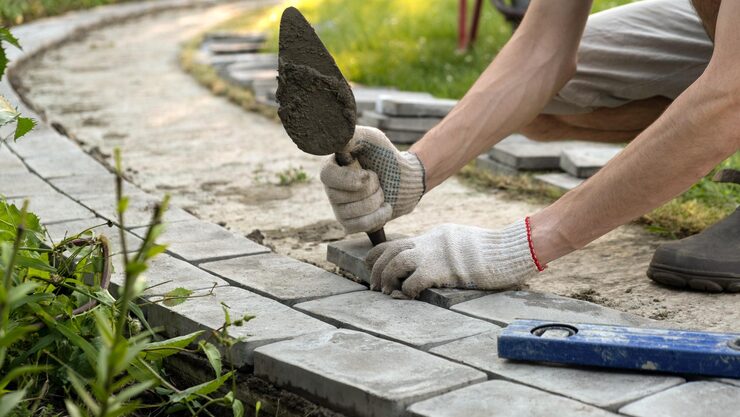
Frost Movement Below the Surface
New England frost does not ask permission. It lifts unsupported soil, and anything built on top of it lifts too, unevenly, which is why a thin base is the most common cause of a walkway going wavy.
Ledge Changes the Excavation
Many Carlisle lots have bedrock close to the surface. When excavation hits ledge sooner than planned, the base depth, drainage path, and paver edging all need to be rethought on site before walkway installation continues.
Natural Stone
Fieldstone, bluestone, and granite age beautifully and can be repaired piece by piece rather than replaced wholesale.
Concrete Pavers
Concrete pavers cost less than natural stone, arrive in consistent shapes and sizes, and are repairable one unit at a time if a slab cracks or stains.
Poured Concrete
Poured concrete is the cheapest walkway surface up front, which suits budget-conscious Carlisle homeowners. The drawback is durability: once it cracks from frost heave or tree roots, you can’t lift and reset one slab, you’re replacing the whole damaged section.
Pitch Away From the House
A walkway pitched the wrong way channels water toward the foundation instead of away from it.
Choosing a material
The materials are not equal. Each suits some properties and not others.
Tying Into the Drive
Where a long Carlisle driveway ends, the walkway has to pick up cleanly.
Matching an Older Entry
Many Carlisle homes are older colonials with fieldstone walls, granite steps, or brick detailing already in place. A new walkway reads better when its material, joint pattern, and edging echo what is already there, rather than competing with it.
Working Near Conservation Land
Many Carlisle properties border conservation land, leaving little room to grade or reroute drainage without encroaching on protected ground.
Roots and Shade
Mature trees around many Carlisle gardens mean roots underfoot and shaded paths that stay damp longer after rain.
Access Through the Woods
A long private drive through trees is good for privacy but tight for equipment.

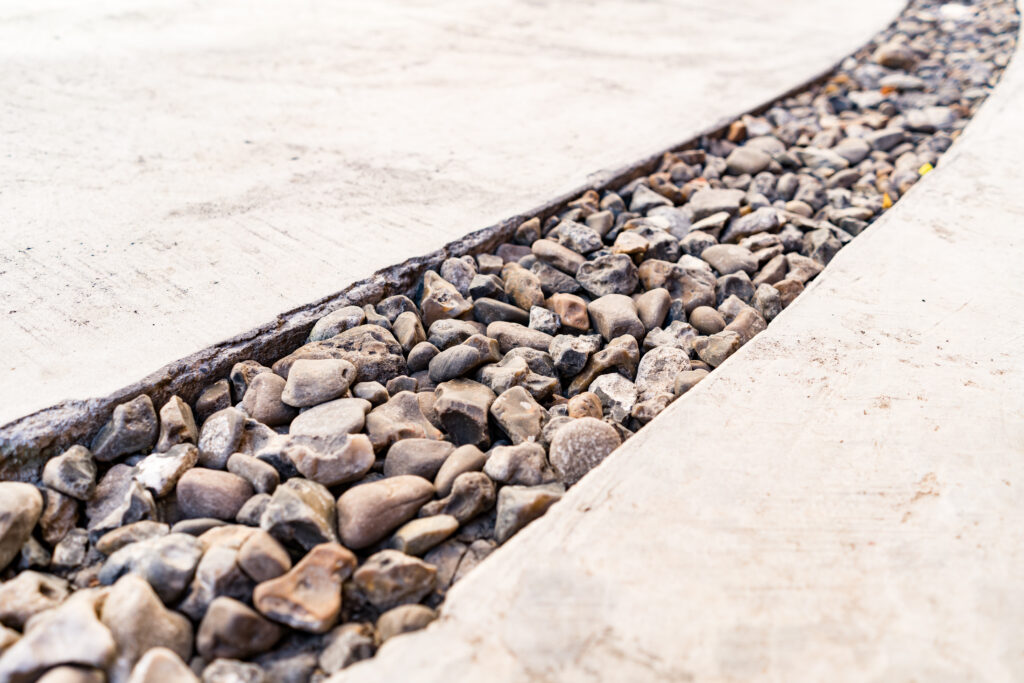
Edge Restraint Over Time
Without proper edge restraint, pavers and stone creep outward as frost pushes and feet wear at the margins. It is a small detail that decides whether joints stay tight for years, yet it is often the first thing cut from a budget walkway and the first thing to fail.
Carlisle’s clay-heavy ground and freeze-thaw cycles put real pressure on a path’s edges each winter. We set restraint below grade against firm, undisturbed soil or compacted base, not just pinned to loose fill, so it resists the sideways heave that loosens joints and opens gaps between units. The right choice depends on the walkway itself:
- Rigid aluminium or steel edging for crisp, curved lines along borders and planting beds
- Concrete haunching behind courses that see heavier foot traffic or sit near a driveway
- Deep-set paver restraints hidden beneath soil or turf for a cleaner finished look
Whichever method suits your layout, we grade and compact the base properly first, because restraint only works when it has something solid to hold against. Done this way, your walkway keeps its lines and tight joints through many Cumbrian winters.
What drives the price
A new walk has to meet several existing things cleanly.
- The entry : The walk must arrive at the door at a sensible height. The threshold sets the finished level, so the work starts at the door and runs outward.
- The drive : Where a walk meets a drive, the levels and the drainage have to agree. A mismatch becomes a trip edge or a puddle.
- Walls and planting : Existing stone walls, foundation beds and mature trees constrain the route. Roots under a path are worked around, not cut through without thought.
- An older house : Scale, colour and pattern should follow the architecture. A narrow, dark stone walk suits an old house differently than a broad paver field does.
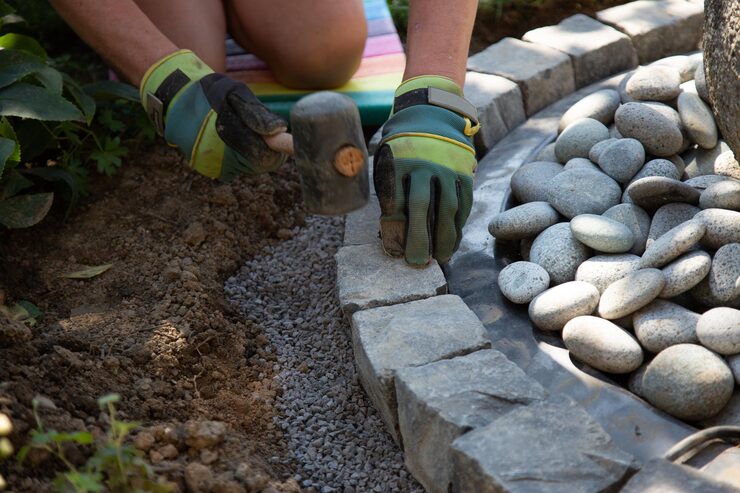
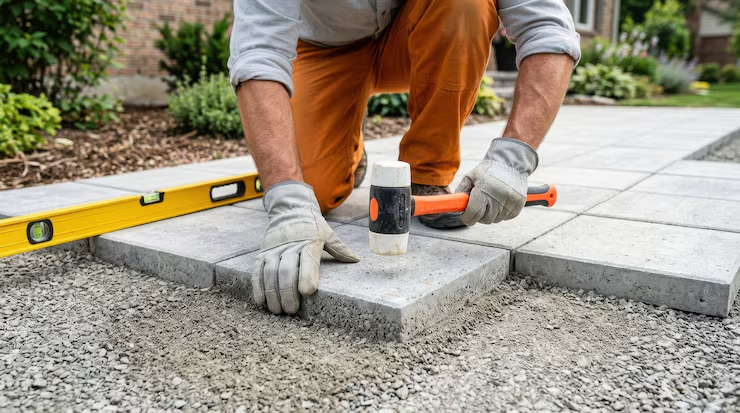
Why Carlisle Lots Suit This Work
Carlisle’s two-acre zoning means most front walkways are a deliberate design choice rather than a short concrete afterthought between a sidewalk and a door. There is room to let a path curve through trees, follow the natural grade, or connect two separate entry points without feeling cramped. That space also means the work has to account for real conditions: ledge close to the surface in parts of town, root systems from mature oaks and maples, and drainage that has to clear the house and then clear the lot without crossing into neighboring conservation land. None of that is a reason to avoid stone or paver work here – it is the reason to plan it properly before excavation starts. A walkway built with the right base and the right pitch on a wooded Carlisle lot will outlast one built the same way on flat open ground somewhere else, simply because the groundwork was matched to what the site actually does in winter and after heavy rain.
Before you call
It helps to know:
- Where the walk starts and where it needs to end
- Whether the route crosses a slope or a shared area
- Which material you lean towards, and whether the house is older
- Where water currently runs on the property
Questions people ask
Will tree roots from oaks or maples damage a new walkway?
Roots can heave a surface over time if the path is built too shallow or set directly over a major root. A deeper base and, where needed, routing the path around significant roots instead of over them avoids most of this. It's a site-by-site decision, not a standard fix.
What happens if excavation hits ledge partway through the job?
On many Carlisle lots bedrock sits closer to the surface than the plan assumes. When that happens, the base depth and sometimes the path's route get adjusted on site rather than forcing the original plan through rock.
Can a new walkway match an existing stone wall or granite steps?
Yes, matching tone and texture to existing fieldstone or granite is common on older Carlisle properties. It takes selecting material with the existing stonework in mind rather than picking a generic match.
Does a walkway near conservation land need special drainage planning?
Lots that border conservation land often have less room to redirect runoff, so the walkway's pitch and base need to manage water on-site rather than pushing it toward the boundary.
How does access work on a long private drive through the woods?
Equipment and material need a clear path in and enough room to turn. On long wooded drives this is part of the planning conversation before work starts, not something worked out on the day.
Next step
Call Driveway Specialists on (413) 337-3772. We are a family-run company in business since 1988, and we will walk the route with you and talk through material, grade and drainage before anything is priced.