
Walkway Installation in Franklin, MA
Franklin has two kinds of front yard, and they call for different thinking. On the subdivision lots built through the 1990s and 2000s, the drives are wide and the setback from road to front door is often long, with a straight shot of lawn in between and no real path connecting them. On the older streets near the center, the house sits closer to the road and any existing walk is narrow, cracked concrete poured decades ago with no base to speak of. Either way, the question is the same: how do you connect the driveway to the front door in a way that looks like it belongs to the house and survives a Massachusetts winter.
A walkway is not a smaller driveway. Nobody drives a car on it, so the loads are lighter, but the frost is identical, and frost is what undoes most of the walkways in this area. The soil here moves every winter as it freezes and thaws, and anything built directly on undisturbed soil moves with it. The fix is the same principle as any paved surface, scaled down: excavate below the frost-affected zone, lay a compacted gravel base that drains instead of holding water, bed the surface material correctly, and restrain the edges so they cannot spread. Skip any one of those steps and the walkway heaves unevenly, joints open, and pavers or stone start to rock underfoot within a few seasons.
Width matters more than most homeowners expect. A single-file path of 30 inches might fit the lot, but anything meant to be walked two abreast, or that leads to a front door used for daily guests and deliveries, works better at 42 to 48 inches. Franklin’s mail carriers, delivery drivers, and anyone pushing a stroller or a snow shovel will use whatever is there, so building slightly wider up front avoids a path that feels pinched later.
Material choice should answer to both climate and style. Clay or concrete pavers handle freeze-thaw cycling well because they are segmental; if one small area shifts, it can be lifted and reset without tearing out the whole run. Natural stone, whether irregular fieldstone or cut bluestone, reads as more custom and tends to suit the older homes near the Franklin center, but it costs more in labor to fit properly. Stamped or poured concrete can work for a straighter, more modern approach but is less forgiving if the base beneath it was not built correctly, since a crack in a slab cannot be spot-repaired the way a paver can.


What Our Clients Say
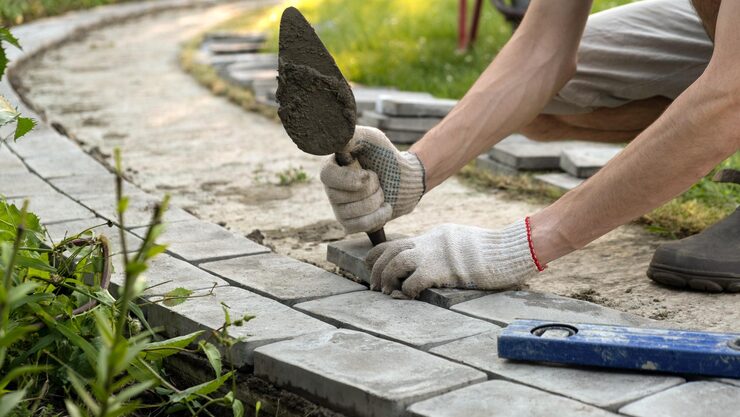
Excavation depth and a compacted gravel base matter more than the material on top. In Franklin’s clay-heavy soil, skip the base and even good pavers or natural stone will shift, settle, and crack within a few freeze-thaw winters.
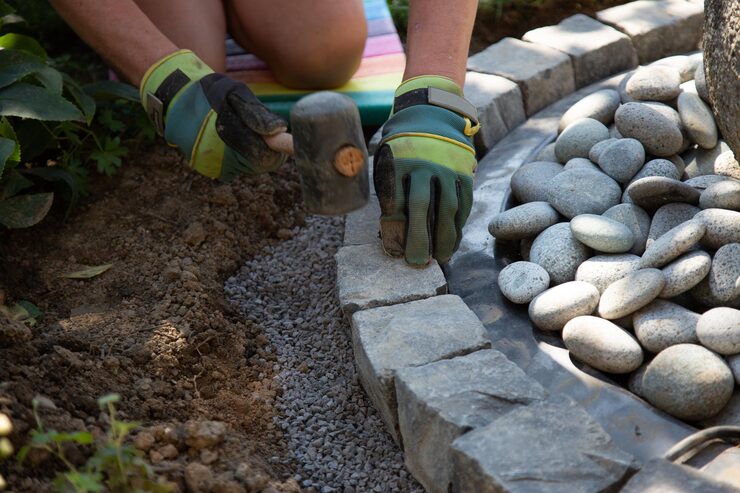
Edge restraint keeps a Franklin walkway’s lines straight. Without it, paver edges spread sideways under frost pressure, snow-plow loads, and foot traffic, and the joints between units slowly open up, letting gravel base wash out and settling begin.
Concrete pavers hold a crisp, consistent look and are simple to lift and reset if one settles. For Franklin properties with clay-heavy soil and seasonal freeze-thaw shifts, they’re usually the most practical, durable choice for a long, straight connector path.
Natural stone, like bluestone or fieldstone, ages better than almost anything else and suits Franklin’s older streetscapes beautifully, but it costs more upfront and is harder to patch invisibly if a section needs resetting years later.
Poured concrete walks are durable but unforgiving once they crack, since the whole slab or panel usually needs replacing rather than a single unit lifted and reset.
Grading a Franklin walkway so it sheds water away from the house, not toward the foundation, is as important as the surface material itself. Standing water against a sill or along a shaded, frost-prone path causes problems long after installation.
Choosing a material
The materials are not equal. Each suits some properties and not others.
A walkway that ties cleanly into the driveway's edge, rather than stopping short with a gap of lawn, reads as one planned entry sequence instead of two separate afterthoughts.
Mature trees near older Franklin lots mean roots can lift a path over time.
Matching a new walkway to an older Franklin home's existing stone walls or steps takes more care than matching a newer build, where the palette of materials is usually simpler.
In Franklin, shaded, damp stretches under tree cover grow algae and moss faster than open path sections. A slightly textured paver or natural stone surface stays safer underfoot than a smooth one in those perpetually damp, shaded spots year-round.
Width matters for everyday use. A walk sized for two people to pass, or a stroller and a walker side by side, serves a Franklin family better than a narrow single-file strip.

Why the base decides the outcome
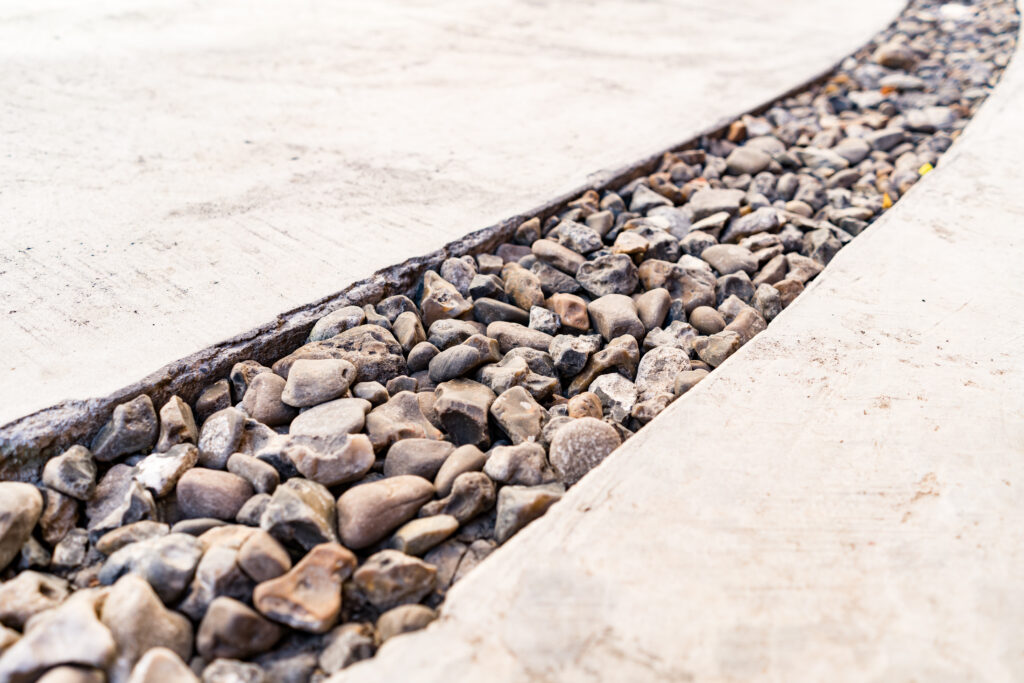
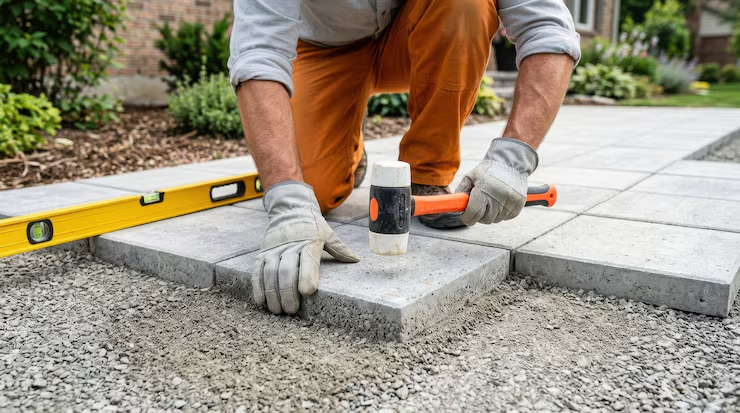
Everything visible about a walkway, the color, the joint pattern, the edge line, is decided by what happens before any of it goes down. Excavating to the right depth and compacting a crushed stone base lets water drain through instead of pooling and freezing underneath. Frozen water under a thin or poorly compacted base expands and pushes the surface up unevenly, which is why a walkway that was flat in October can show a visible wave by March. A properly built base moves as a unit, if it moves at all, keeping the surface flat far longer than cutting corners underneath ever does.
Edge restraint does the rest of the work. Without a hard edge locking the perimeter in place, paver or stone edges spread outward under frost pressure and the steady wear of feet walking the same line year after year. That spreading opens the joints, lets in more water, and accelerates the same freeze-thaw cycle that caused the problem in the first place. A well-restrained edge keeps the whole walkway acting as one stable unit instead of pieces slowly working apart.
What drives the price
A new walk has to meet several existing things cleanly.
- The entry : The walk must arrive at the door at a sensible height. The threshold sets the finished level, so the work starts at the door and runs outward.
- The drive : Where a walk meets a drive, the levels and the drainage have to agree. A mismatch becomes a trip edge or a puddle.
- Walls and planting : Existing stone walls, foundation beds and mature trees constrain the route. Roots under a path are worked around, not cut through without thought.
- An older house : Scale, colour and pattern should follow the architecture. A narrow, dark stone walk suits an old house differently than a broad paver field does.
Planning a walkway for a Franklin property
Franklin’s newer subdivision lots usually give a walkway room to be generous: a gentle curve from driveway to door, planting beds on either side, and enough width for two people comfortably. The budget decision there is usually about material and length rather than working around tight space. On the older streets nearer the center, the frontage is tighter and the path often has to work around mature trees, closer-set houses, and an existing stone wall or set of steps that predate the house’s current owners.
Either lot type benefits from treating the walkway, driveway, and entry as one connected plan rather than three separate decisions made at different times. A path that lines up with the driveway edge, uses a complementary material, and pitches water away from the foundation will outlast one built in isolation, regardless of which material you choose. If you are planning a new walk or replacing one that has heaved, cracked, or settled unevenly, call Driveway Specialists at (413) 337-3772 to talk through what your lot and your house actually need.
Before you call
It helps to know:
- Where the walk starts and where it needs to end
- Whether the route crosses a slope or a shared area
- Which material you lean towards, and whether the house is older
- Where water currently runs on the property
Questions people ask
How is a walkway different from a driveway when it comes to installation?
The loads are lighter since cars never drive on it, but the frost movement underneath is identical. A walkway still needs excavation, a compacted base, and edge restraint, just at a narrower width and often a shallower depth than a driveway.
What's the most durable material for a Franklin walkway?
Natural stone ages the best and resists wear the longest, but it costs more and is harder to patch invisibly. Concrete pavers are more affordable and easier to reset individually if a section settles, which makes them a practical middle ground for most properties.
Can a new walkway be built around mature trees without damaging the roots?
Yes, by routing the path around major root zones and adjusting the base depth in those stretches rather than cutting straight through roots. This is a common consideration on Franklin's older, tree-lined lots.
Why does a walkway need to pitch away from the house?
Water that collects against the foundation instead of draining away can cause problems with the sill and basement over time. Grading the walkway surface to shed water outward, away from the house, avoids creating that path for water to collect.
Next step
Call Driveway Specialists on (413) 337-3772. We are a family-run company in business since 1988, and we will walk the route with you and talk through material, grade and drainage before anything is priced.