
Walkway Installation in Harvard, MA
Houses in Harvard tend to sit well back from the road, at the end of a long gravel or unpaved drive, often with an orchard or open field on one side. That setback is the point of living here, but it means the walk from the drive to the front door is doing real work: it has to read as an arrival, not an afterthought, and it has to survive mud, frost, and a long New England approach without turning into a maintenance headache. A good walkway ties the gravel drive, the entry, and whatever stone walls or plantings already exist into one sequence that looks like it belongs on the property.
That’s a different job from fixing a failed driveway. Nobody is calling because the walk collapsed overnight. They’re calling because the current path is a worn track through the grass, or a slab of cracked concrete from decades ago, and the house deserves better. Some are starting from nothing: a gravel drive that just stops near the house, with whoever’s walking in left to pick their way across lawn or mud depending on the season.
What’s underneath decides what you see on top
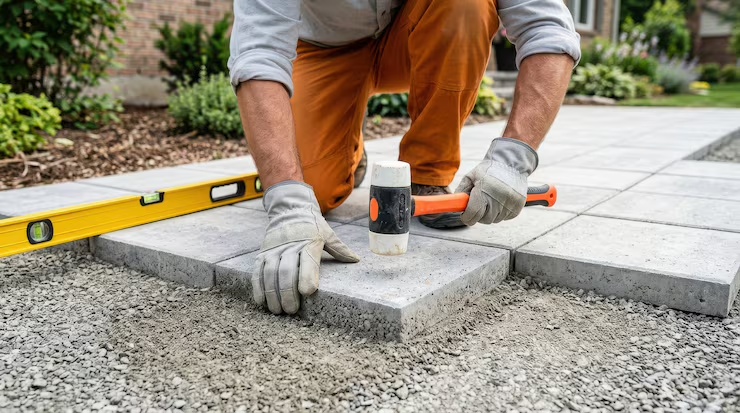
Every walkway that stays flat through a Massachusetts winter has the same thing in common: proper excavation down past the topsoil, a compacted base that won’t shift, and bedding material set correctly before anything decorative goes down. Frost heave is a function of water sitting in the base and freezing. A base that drains doesn’t heave. A base that holds water pushes the surface up unevenly every winter until joints open and pavers rock underfoot. On Harvard’s mix of orchard loam and heavier pockets of clay, this step matters more than the material choice that comes after it, and it’s the step that’s easiest to shortchange because nobody can see it once the walk is finished.
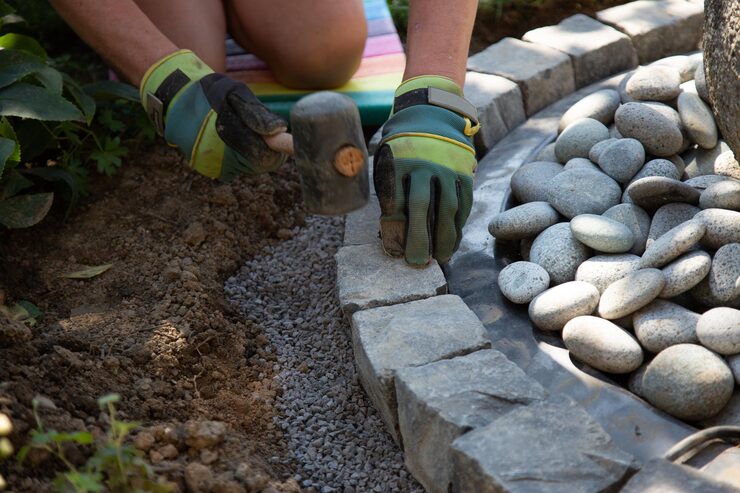
Edge restraint matters just as much. Without it, pavers and edging stone creep outward over a few freeze-thaw cycles, and the clean line you installed turns ragged within a season or two. We set restraint as part of the base work, not as an afterthought bolted on at the end.
We also think about where water goes once the walk is in place. A hard surface sheds water instead of letting it soak in, and on a property with a long gravel drive, that runoff has to be directed away from the house foundation and off the walk itself, not pooled at the front step or channeled toward a mudroom entry.
Material choice is where the walk starts to match the rest of the property. Options worth weighing for a Harvard setting:
- Natural stepping stone or fieldstone — reads as an extension of existing stone walls, informal and durable
- Clay-paver or concrete unit paver — crisp edges for a more formal approach to the front door
- Gravel with steel or timber edging — keeps continuity with a gravel drive while still defining the path


What Our Clients Say
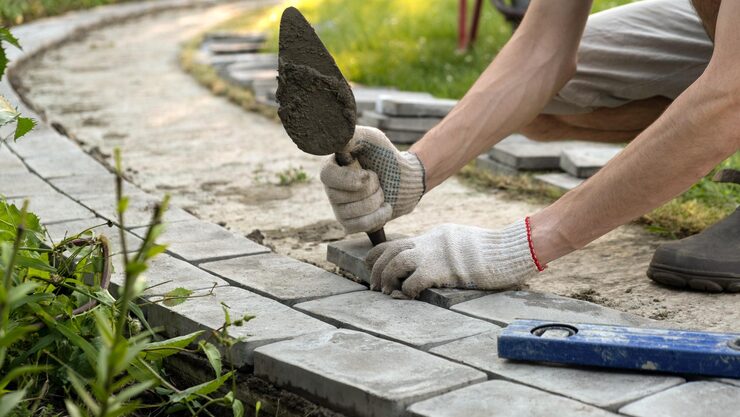
Natural stone, cut for a long approach
Fieldstone or bluestone steppers suit a long rural walk in Harvard and age well against an orchard or stone-wall backdrop, but they cost more upfront and are harder to reset precisely once frost heave shifts a stone.
Concrete pavers, built for repair
Pavers handle Harvard's freeze-thaw cycles well, and individual units lift out cleanly for repair or utility access without disturbing the surrounding walkway.
Poured concrete, simple but rigid
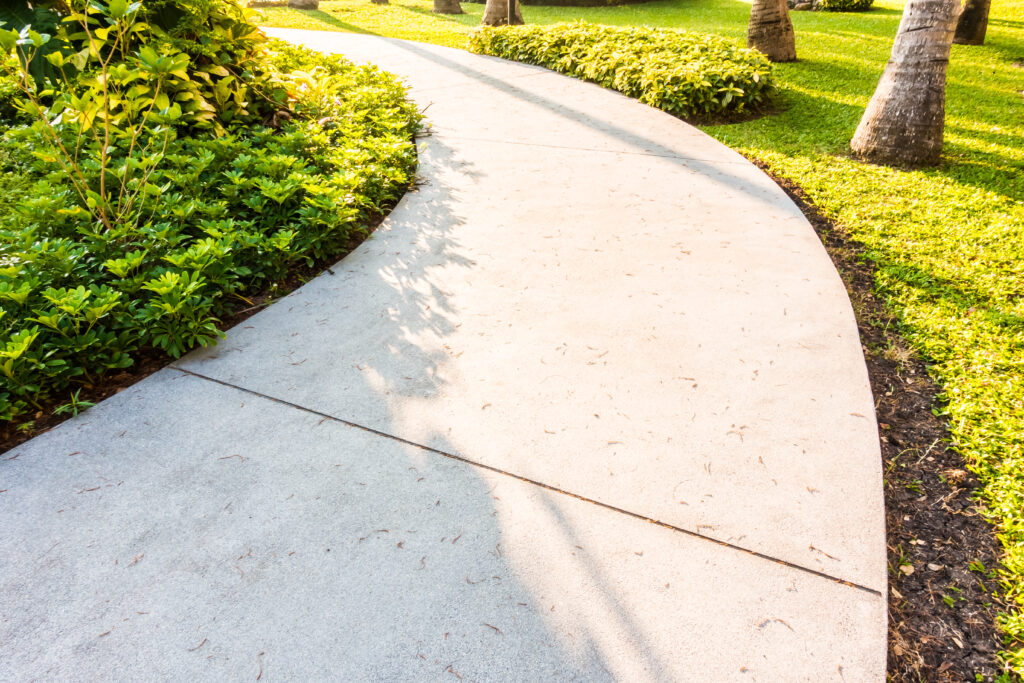
Poured concrete is the lowest-cost walkway option around Harvard, but it cures as one rigid slab. When frost or soil movement shifts the base beneath it, the slab cracks—and that crack is permanent, unlike swapping a single paver unit.
Gravel and stabilized paths
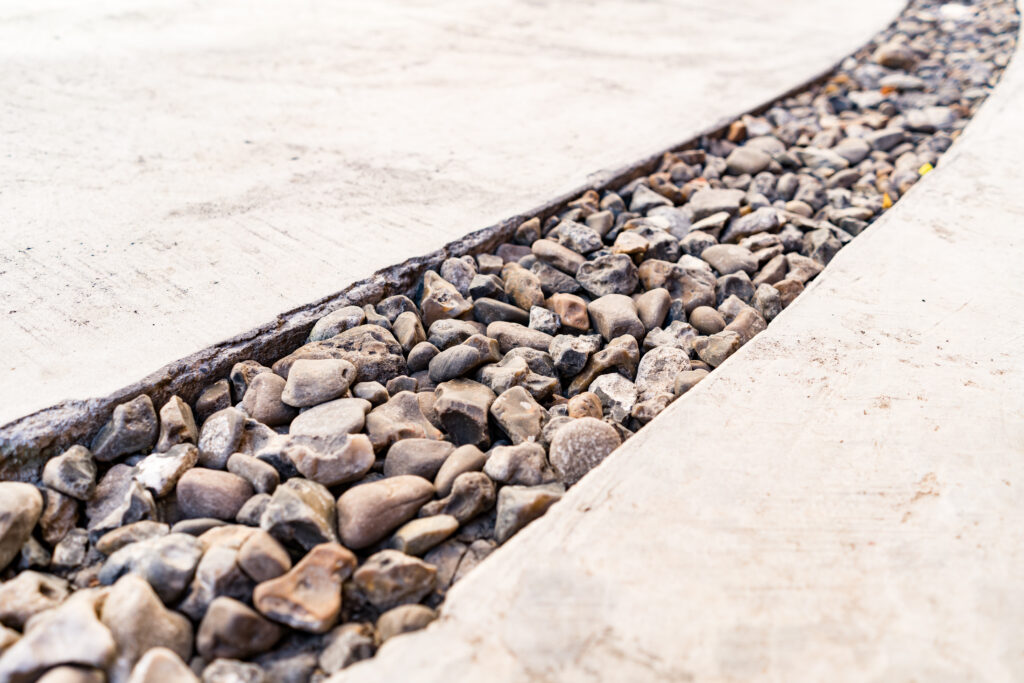
A stabilized gravel path reads naturally against Harvard’s farm lanes and orchard rows, costs less than poured paving, but needs occasional topping up and raking, plus edging to hold its line and resist frost heave through winter.
Matching an older farmhouse
Many Harvard homes are older farmhouses with fieldstone walls already on the property.
Where the drive meets the walk
On a long gravel drive, the walkway's starting point needs a firm, well-drained transition so gravel doesn't migrate onto the new surface and the edge doesn't wash out.
Choosing a material
The materials are not equal. Each suits some properties and not others.
Grade over a long run
A walk running any real distance across sloped Harvard orchard ground needs steps or a shallow pitch built in deliberately, not left to follow the natural slope, collect water at the low end, and ice over by winter.
Planting and walls alongside
Where a Harvard walkway runs beside existing beds or a stone wall, we set the edge restraint to leave room for planting to grow in against it, rather than crowding the surface, so borders and low plantings stay tidy as they mature over seasons.
Entry and step detail
The last few feet before the door carry the most wear and the most scrutiny. We give that section the most attention to base depth and surface fit so it doesn’t become the first spot to fail.
Shade, moss, and damp stone
Mature trees around many Harvard properties mean a shaded walk stays damp longer, inviting moss and algae growth.
Working around orchard access
Equipment access for walkway installation has to account for working orchard rows, irrigation lines, and existing drive traffic in Harvard, so we plan the approach, staging, and material delivery before any excavation starts, keeping orchard operations running without disruption throughout the project.
Why the base is the whole job
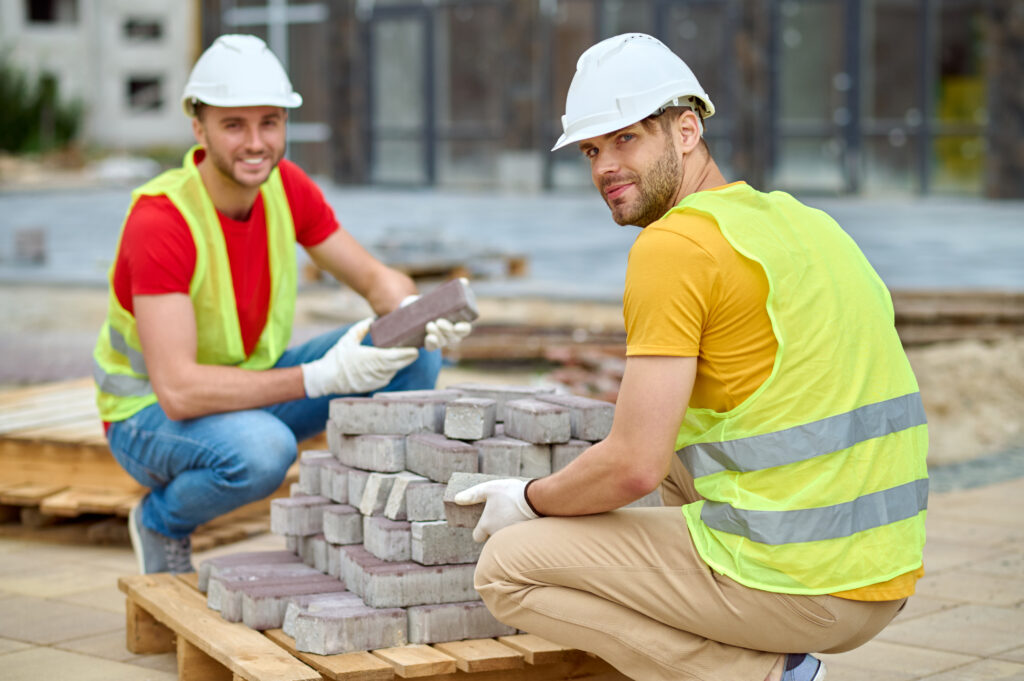
A walkway that goes wavy within a year or two almost always failed below grade, not at the surface. Insufficient excavation depth, a base material that holds water instead of shedding it, or compaction that was rushed rather than done in proper lifts. These problems don’t show up on day one. They show up after the first hard freeze-thaw cycle, when uneven moisture in the base pushes some sections up and leaves others settled. On a long Harvard property where the walk might run thirty or forty feet from drive to door, even a small base inconsistency becomes visible as a dip or a lift partway along the run. We excavate to account for the native soil on each property, since orchard loam drains differently than the clay pockets that show up in low spots, and we compact in stages rather than all at once. It costs more time than skipping straight to the attractive surface material, but it’s the difference between a walkway that still sits flat after a decade and one that needs lifting and resetting within a few years.
What drives the price
A new walk has to meet several existing things cleanly.
- The entry : The walk must arrive at the door at a sensible height. The threshold sets the finished level, so the work starts at the door and runs outward.
- The drive : Where a walk meets a drive, the levels and the drainage have to agree. A mismatch becomes a trip edge or a puddle.
- Walls and planting : Existing stone walls, foundation beds and mature trees constrain the route. Roots under a path are worked around, not cut through without thought.
- An older house : Scale, colour and pattern should follow the architecture. A narrow, dark stone walk suits an old house differently than a broad paver field does.
Starting the conversation
Every Harvard property we've worked on has its own combination of slope, soil, shade, and existing stonework, so there's no standard quote that fits all of them. Properties along the orchard roads and the older farmsteads near the town center tend to have compacted clay and exposed ledge close to the surface, while newer builds on subdivided lots often have fill that settles differently once a walkway goes in. What we can do is walk the site with you, look at where the drive ends and the house begins, check the grade and drainage, and talk through which material fits both the budget and the look you want, whether that's fieldstone to match an older farmhouse or clean pavers for a newer build. If you're also dealing with a long gravel or unpaved drive that needs attention alongside the walkway, we handle that conversation too, since the two often get planned and installed together for a consistent look. Call (413) 337-3772 and we'll set up a time to come look at the property directly.
Before you call
It helps to know:
- Where the walk starts and where it needs to end
- Whether the route crosses a slope or a shared area
- Which material you lean towards, and whether the house is older
- Where water currently runs on the property
Questions people ask
Does a walkway in Harvard need the same base work as a driveway?
The principle is the same, drainage and compaction, but the scale is smaller. A walkway carries foot traffic, not vehicle weight, so the base depth and material differ from a driveway even though frost heave and water movement matter just as much.
Can you build a walkway that matches our existing stone walls?
Yes. Many Harvard properties already have fieldstone walls or foundations, and we can pull stone type and coursing from what's there so the new walk looks original to the property rather than added on.
What happens if part of the walk is shaded by orchard trees most of the day?
Shaded sections stay damp longer and are more prone to moss and algae. We can account for this in material choice and joint spacing, though some seasonal cleaning is still part of owning a shaded stone or paver surface.
Is gravel or stabilized path a serious option, or just a cheaper compromise?
For a long rural approach it can be a genuine fit, not just a lower-cost stand-in. It suits the farm-lane character of many Harvard lots, though it needs occasional topping up in a way that hard paving doesn't.
Do you also work on the gravel drive at the same time as the walkway?
Often, yes. Where the drive and the new walk meet is one of the most important transitions on the property, so planning both together usually gives a better result than treating them as separate projects.
Next step
Call Driveway Specialists on (413) 337-3772. We are a family-run company in business since 1988, and we will walk the route with you and talk through material, grade and drainage before anything is priced.