
Foundation Work in Bedford, MA
Water coming through a basement wall after a heavy rain. A damp patch in the corner that never fully dries, even in a dry summer. A section of foundation that bows inward or sheds crumbs of mortar when you run a hand across it. These are not cosmetic problems. They are signs that the ground outside the house is moving water toward the foundation instead of away from it, and that the wall itself is no longer stopping that water from getting in.
This is not paving work and it does not get treated like paving work. It is excavation, drainage and structural repair around the perimeter of a house, and on a lot like many of the mid-century colonials and capes around Bedford, with their flat grading and generous frontages, the access is usually straightforward. That is one less obstacle standing between the symptom and the fix.
Why the water is getting in
Older New England houses were built on fieldstone or poured rubble footings with no membrane on the outside and no drain running alongside the footing. There was nothing to stop ground water from finding its way through the stone and mortar joints. Water does not need to rise under the slab to cause a problem like this. It moves sideways, through the wall itself, following the path of least resistance from the saturated soil outside to the dry, low-pressure air of the basement inside.
On a flat Bedford lot, that saturation often comes from poor surface grading rather than a high water table. If the ground around the foundation is level or sloping back toward the house, every storm sends water straight to the wall instead of away from it. Gutters that dump close to the foundation make it worse. The fix has to start outside, at the source, not inside at the symptom.
What a proper repair actually involves
Diagnosing the problem correctly before any digging starts matters more than the digging itself. A crack that is actively leaking needs a different approach than a wall that is bowing under soil pressure, and a wall that is bowing needs a different approach again than one that is simply porous after decades of freeze-thaw cycles opening up the mortar joints. Treating all three the same way wastes money and does not solve the underlying issue.


What Our Clients Say
Why This Has to Be an Outside Job
Interior sealants and drainage channels manage water after it has already entered the wall. They can keep a floor dry, but they do nothing to stop the wall itself from staying wet, which is what eventually breaks down mortar joints and pushes a wall out of plumb. Treating the cause means going outside: excavating down to the footing, addressing the wall itself, and rebuilding the drainage that should have been there from the start.
It is more disruptive and more involved than an interior fix, and it is fair to be upfront about that. Planting beds get dug out, a section of patio or walkway may need to come up, and the Bedford yard will show the work for a while afterward. Older homes in this area often have footings set shallow by current standards, so excavation needs to be handled carefully to avoid undermining what is already there.
The trade-off is that exterior work addresses the actual mechanism instead of buying a few dry seasons before the wall fails further. Done properly, it includes:
How the Work Runs
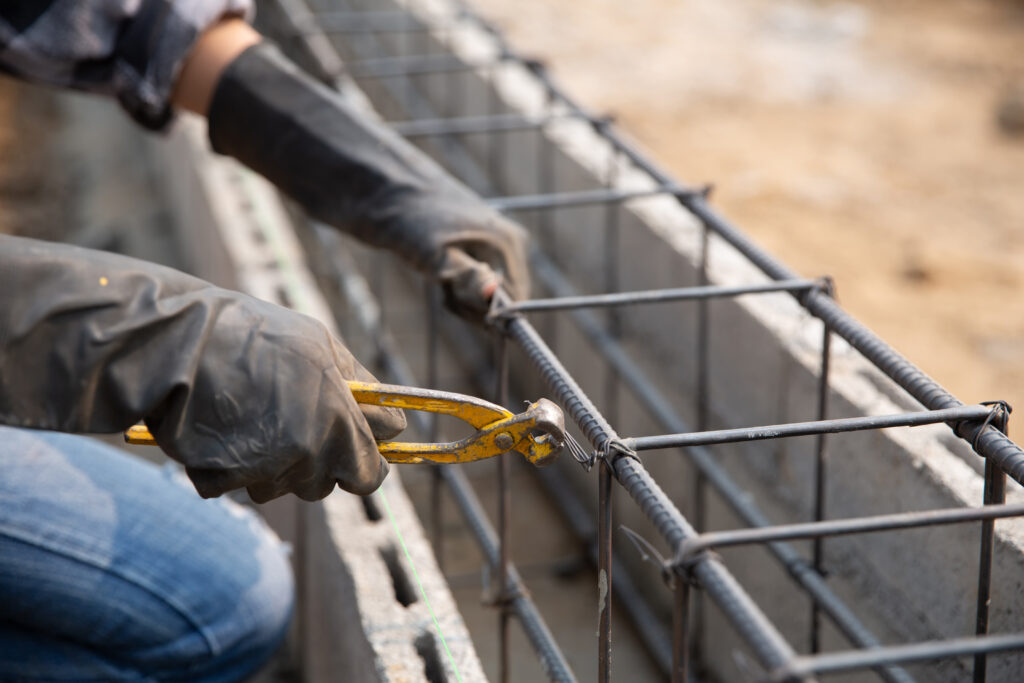
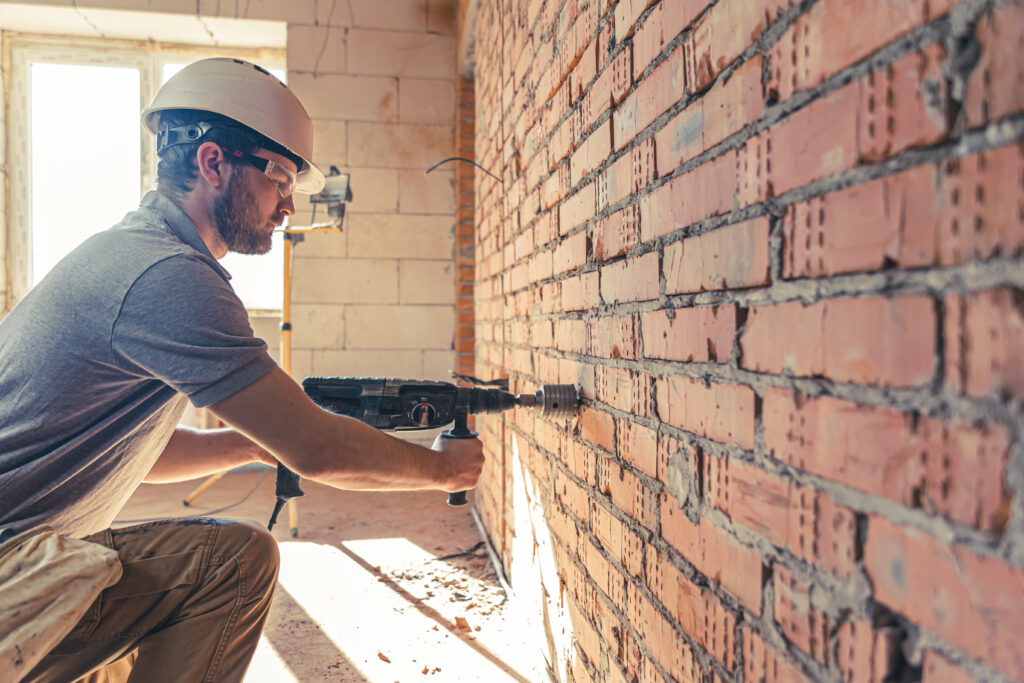
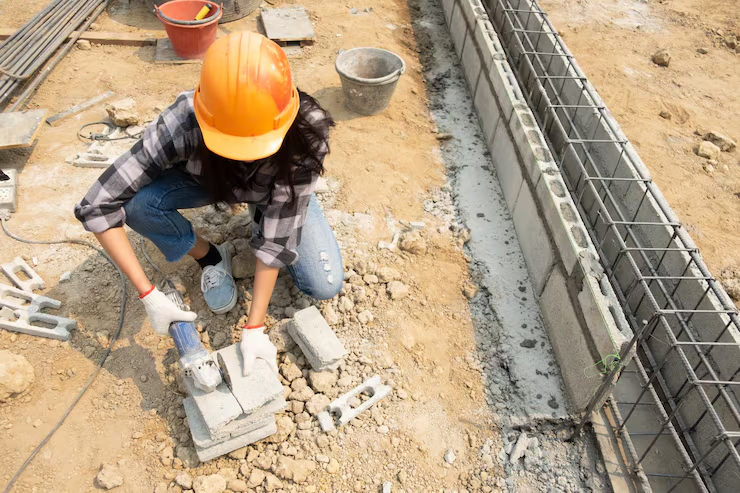
The sequence starts with excavation down the affected side of the foundation, exposing the footing and the outside face of the wall. Established shrubs, foundation plantings and any hardscape sitting against that section typically have to be removed or relocated before the machine can get close to the wall. On a Bedford lot where plantings are often mature but foundation beds are narrow, this is usually a smaller disturbance than homeowners expect, and we flag anything worth saving before digging starts.
Once the wall is exposed, cracked or spalling sections get repaired and a drainage membrane goes on the exterior face. A perimeter drain is set at the base of the footing, running to daylight or to a sump, so water is intercepted before it ever reaches the wall. Backfill goes back in with free-draining material rather than the original dense soil, so water moves down to the drain instead of pooling against the wall again.
The work, in order
Access Decides the Approach
On a flat, open Bedford lot, a mini excavator can usually reach the affected wall directly. Tighter side yards or plantings close to the foundation may force hand digging instead, changing the timeline.
What Happens to the Yard
Beds nearest the Bedford foundation come out before digging starts. Anything worth saving gets set aside, kept watered, and replanted once backfill and grading are finished, though the first season back will look sparse until roots re-establish.
Regrading the Surface
Once backfill is in, the final grade has to slope away from the foundation, not toward it. This is often the actual long-term fix, since poor surface grading is what sent water to the wall in the first place.
When the Drive or Walk Is in the Way
If a section of driveway or walkway sits directly against the excavated wall, it has to come up before digging starts and gets rebuilt afterward. That work follows the foundation repair, not the other way around.
Downspouts and Surface Water
Regrading solves standing water, but downspouts around Bedford properties still need to discharge well away from the new grade.
What to Check Before Anyone Comes Out
A few things are worth doing before scheduling a visit, because they make the first look much more useful. Note where the water or damp actually appears inside, and whether it tracks with rain or shows up regardless of weather. Walk the outside of the house after a storm and see where water pools or sheets toward the foundation rather than away from it, which is common on Bedford’s older lots where grading has settled over the decades. Check where downspouts discharge and how close that is to the problem wall, and note any nearby trees whose roots may be drawing moisture unevenly from the soil.

Next Step
A foundation problem on a flat Bedford lot is usually more straightforward to access and fix than the same problem on a tight, sloped, or heavily planted site elsewhere in Middlesex County. That does not make it a small job, but it does mean the work can generally proceed without the access complications that slow things down in town centers like Lexington or Concord, where retaining walls, mature trees, and narrow side yards often limit how equipment can get to the foundation at all.
If you are seeing water, damp, or movement around a foundation wall, the next step is a look at the specific wall, the grading around it, and where the water is actually coming from. That usually means checking downspouts, the slope of the soil against the house, and any cracks or settling in the wall itself before deciding whether the fix is drainage, grading, underpinning, or a combination. Call Driveway Specialists at (413) 337-3772 to talk through what you are seeing and arrange a visit.
What to check and write down first
These are the pointers that help most before anyone visits.
- Note where and when. Which wall, which corner, and whether it follows heavy rain, snowmelt or a particular season.
- Photograph it dry and wet. Take pictures of the same spot on a dry day and again after rain.
- Look at the outside. Check whether the ground beside that wall slopes toward the house, whether a downspout empties near it, and whether anything piles water against it.
- Check for movement. Look for horizontal cracks, a wall that leans in, or stones that have shifted. Mark the ends of a crack with a pencil and date it, so changes can be seen.
- Check the stonework. Press on the mortar. If it crumbles or sands away, say so.
- Think about access. Where could a machine stand, and what is in its way? Tell us who shares the drive or boundary.
- Leave it as you found it. Do not seal or patch the wall before we see it. It hides what we need to look at.
Questions we get asked
Is this the same crew that does driveways?
Foundation work is a separate trade from paving, even though it is handled under the same company. The equipment, sequence and skills involved in excavating around a foundation and installing drainage are different from laying asphalt or pavers, though the same crew may handle a drive or walkway that has to be removed to get at a wall.
Will this guarantee a dry basement?
No contractor can promise that, and it would not be honest to say so. What exterior excavation, membrane and drainage work does is address the actual mechanism, water moving through a wall from saturated ground, rather than just managing the symptom inside. That gives the wall a real chance to stay dry, but it depends on ongoing grading and downspout maintenance too.
How much of the yard will be disturbed?
Only the section directly over the excavation and the access route to it. On an open, flat Bedford lot that is often a narrower strip than homeowners expect, since the machine does not need to maneuver around tight corners or mature trees close to the foundation.
What if the driveway is in the way of the excavation?
If a section of drive or walkway sits against the wall being worked on, it gets removed before digging starts and rebuilt once the foundation repair and backfill are complete. This is planned into the sequence rather than treated as a separate problem.
Next step
Call us on (413) 337-3772. Tell us which wall, what you have seen, and how the lot slopes around it. We have worked across Middlesex County since 1988, and we will tell you plainly what is likely going on and whether outside work is the right answer.