
Foundation Work in Brookline, MA
Water coming through a basement wall after heavy rain. A damp corner that never quite dries out, even in July. A section of fieldstone that is bowing inward or shedding mortar onto the floor. If any of that sounds familiar, the problem is not the basement itself. It is what is happening outside, against the wall, where you can’t see it.
Brookline’s housing stock makes this a common call. Victorian and prewar houses here were built on fieldstone and rubble foundations, sometimes parged with a thin coat of cement on the inside face. There was no membrane put on the outside wall when the house was built, and in most cases no perimeter drain was ever installed at the footing. The wall itself was never meant to be waterproof. It was meant to hold the house up. Keeping water out was always going to be a separate job, and on a lot of these houses, that job was never actually done.
Why the water gets in
Fieldstone and old rubble walls are not solid barriers. They’re built from stone and mortar with gaps and voids behind them, backfilled with whatever soil came out of the original excavation. When rain soaks into that backfill, it finds the path of least resistance, which is usually straight through the wall itself, not under the footing. That’s why interior cracks, efflorescence, and wet patches often show up well above floor level, not just at the base of the wall.
This matters because it tells you where the fix has to happen. Water moving through the wall has to be stopped at the wall, from the outside, before it gets that far. Anything done on the interior side, like a sealant coat or an interior drain channel, is working on water that has already arrived and found its way in. It can manage the symptom for a while, but it does nothing for the stone, the mortar, or the structure itself, which keeps absorbing moisture year after year.
Access is the first real question in Brookline, more than in most towns we work in. Many lots here are narrow, fences and hedges sit close to the foundation, and the affected side of the house is often the one furthest from the street. Before we talk about membrane or drainage, we have to work out whether a mini-excavator can actually reach the wall, or whether part of the dig has to be done by hand, section by section, to protect a neighbor’s fence line or an old tree’s root system.
Once we’re at the wall, the actual repair work usually involves a few connected steps:


What Our Clients Say
Interior fixes treat the symptom, not the cause
Interior sealants, sump pumps, and interior drain channels have a place, and sometimes they’re the only practical option on a given budget or timeline. But they manage water once it has already pushed through the wall. They don’t stop it from getting into the wall assembly in the first place, and they don’t do anything for a wall that’s physically deteriorating from decades of saturation. On Brookline’s older foundations, especially the fieldstone and early block walls common near the city’s tree-lined streets, that saturation cycle is often what’s driving the cracking and bowing in the first place.
Exterior work is more disruptive and costs more, because it means digging down to the footing along the affected run of wall. That’s the honest trade-off: more digging and more cost, against actually addressing where the water enters and giving the wall itself a chance to dry out and stabilize. It typically involves:
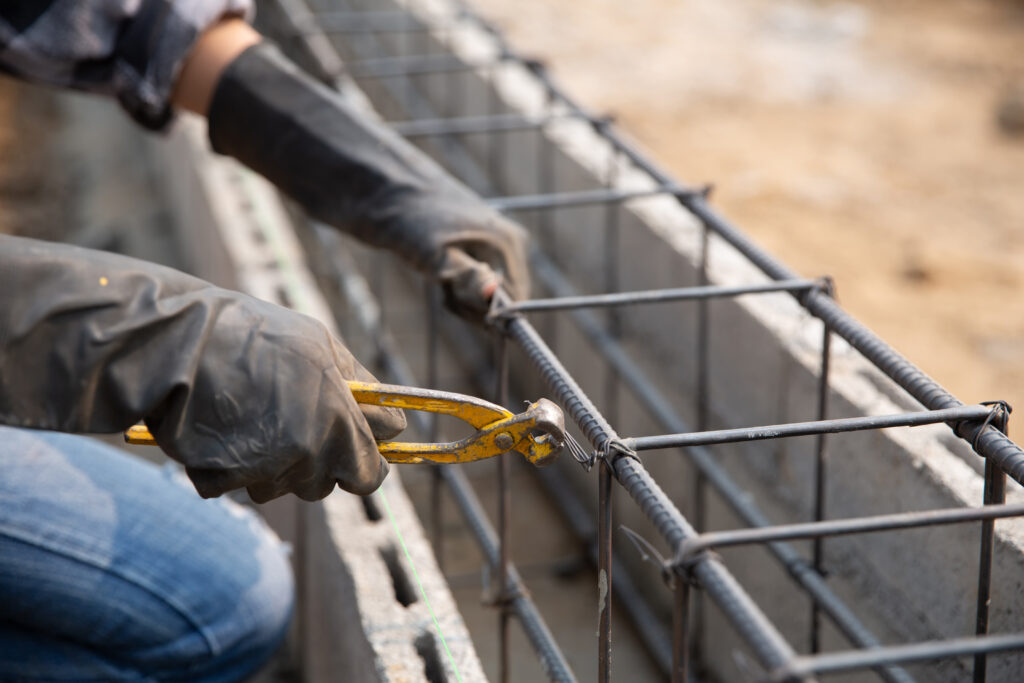
- Excavating to the footing to expose the wall fully
- Applying a proper waterproof membrane, not just a damp-proof coating
- Installing or restoring exterior footing drains tied to daylight or a dry well
What the excavation involves
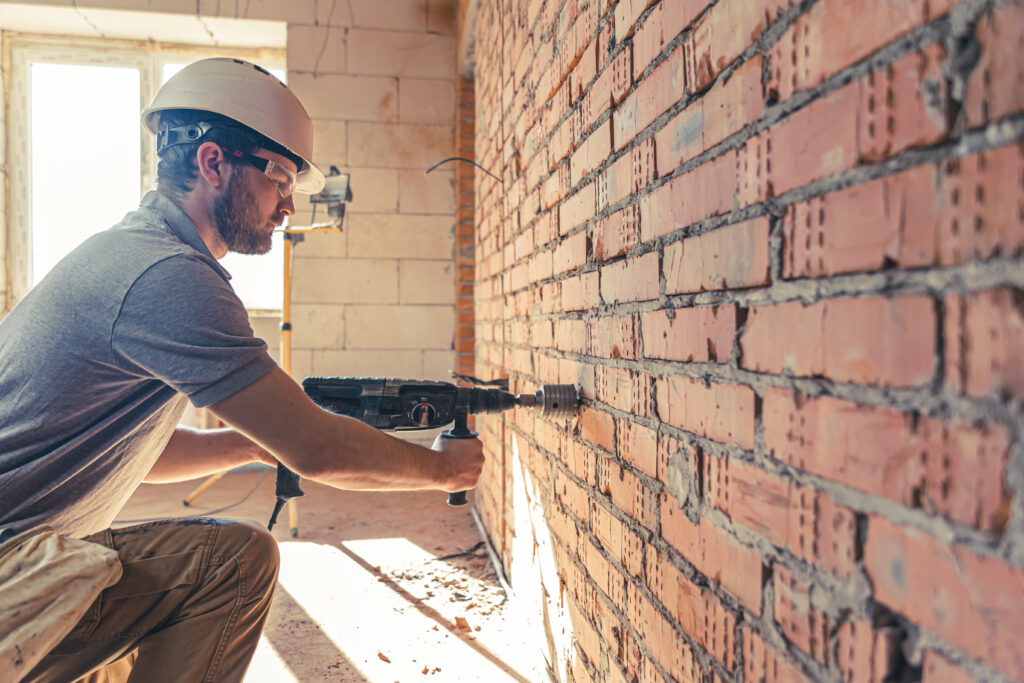
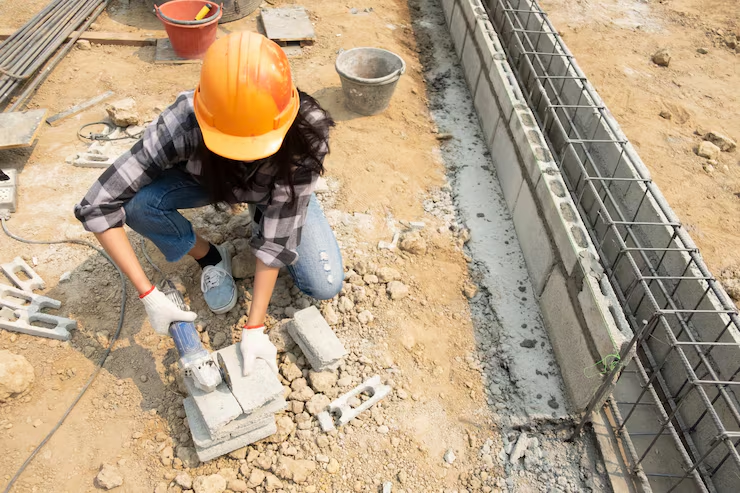
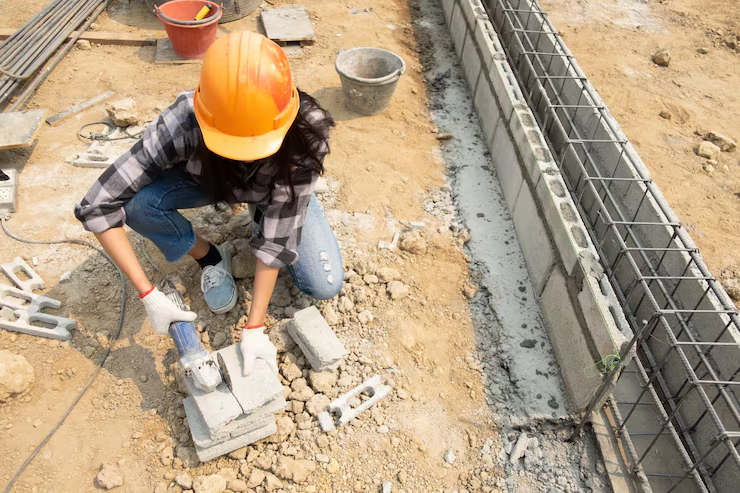
Once we know which side of the house we’re working on and how a machine can reach it, the dig follows the foundation wall down to the footing. On a lot where planting beds, a walkway, or a section of patio sit in the way, that has to come out first and gets set aside to be reinstated afterward. We try to keep the disturbed footprint as narrow as the work allows, since every foot of garden or hardscape removed is a foot that has to be rebuilt once backfill is done.
On Brookline’s smaller, tightly built lots this step often takes longer than the actual wall treatment itself, simply because there’s less room to stage spoil and material, and more hand digging involved getting the trench open without damaging what’s next to it — a neighbor’s fence line, an old stone retaining wall, or utility runs that weren’t where the plans said they’d be.
The work, in order
Wall treatment, briefly
With the wall exposed, deteriorated mortar or coating is addressed and a water management layer goes on the exterior face before backfill, so the wall has a drainage plane rather than bare stone against wet soil.
Drainage at the footing
A perimeter drain line at the footing gives water somewhere to go besides through the wall, carrying it away from the foundation to daylight or a dry well instead of letting it pool against the stone.
Backfill matters as much as the dig
What goes back into the trench matters.
Regrading the surface
Once backfill is in, the surface grade next to the house gets rebuilt to shed water away from the wall rather than toward it, which is often part of why the problem existed in the first place.
When hardscape is in the way
If a walkway, patio, or section of driveway sits over the dig path, it has to come up before excavation starts and gets rebuilt afterward, which is a separate scope from the foundation work itself.
Planning around an older, tighter lot
Brookline adds a layer most towns don’t: dense lot lines, mature plantings close to the house, and on-street parking that can make staging equipment and material genuinely difficult on a given block. We look at access before anything else, because it decides whether this is a straightforward machine dig or a slower, partly hand-dug job.
Short drives and aprons common on these lots usually can’t double as staging space, so material often has to come in from the street in stages. On a corner lot or anywhere near a historic district, the exterior work itself isn’t typically what draws attention, but anything that changes the visible grade, a retaining wall, or hardscape at the front of the house can be a different conversation. We’ll flag that early if it applies, rather than assume it doesn’t.
None of this changes the underlying work. It changes how long it takes to get a machine to the wall and how carefully the site around it has to be protected and restored once the trench is closed.

What to do before you call
Note where the water shows up inside, which wall, how high, and whether it tracks with rain or snowmelt rather than appearing randomly. Photos of the damp pattern, any cracking, and the exterior grade along that wall are useful before anyone walks the site. If you’ve noticed standing water outside near that corner after a storm, that detail matters more than almost anything else you can tell us. Brookline’s older housing stock, tight lot lines, and mature trees close to foundations mean root pressure and poor drainage are common culprits, so mention nearby trees, downspout placement, and whether neighboring grading slopes toward your foundation.
If a section of wall is visibly bowing, crumbling, stair-step cracked, or has shifted, describe it clearly, since that changes how we sequence the work and whether temporary bracing comes up in conversation. Note the age of the house and any prior repairs too. Call (413) 337-3772 and we’ll talk through what you’re seeing and what it would take to get eyes on it.
What to check and write down first
These are the pointers that help most before anyone visits.
- Note where and when. Which wall, which corner, and whether it follows heavy rain, snowmelt or a particular season.
- Photograph it dry and wet. Take pictures of the same spot on a dry day and again after rain.
- Look at the outside. Check whether the ground beside that wall slopes toward the house, whether a downspout empties near it, and whether anything piles water against it.
- Check for movement. Look for horizontal cracks, a wall that leans in, or stones that have shifted. Mark the ends of a crack with a pencil and date it, so changes can be seen.
- Check the stonework. Press on the mortar. If it crumbles or sands away, say so.
- Think about access. Where could a machine stand, and what is in its way? Tell us who shares the drive or boundary.
- Leave it as you found it. Do not seal or patch the wall before we see it. It hides what we need to look at.
Questions we get asked
Is this the same as waterproofing a basement from the inside?
No. Interior coatings and drains manage water after it has already come through the wall. This is exterior excavation down to the footing to stop water from entering the wall in the first place and to give it somewhere to drain instead.
Will you need to remove my patio, walkway, or driveway to get to the wall?
Only if it sits directly over the section being excavated. We assess access and the dig path first and will tell you plainly if hardscape has to come up and be rebuilt afterward.
How do you deal with Brookline's narrow lots and street parking?
We look at machine access before anything else. On tighter lots that means working out whether equipment can reach the affected wall directly or whether part of the dig needs to be done by hand, and staging material from the street in stages if needed.
Do older fieldstone foundations need different treatment than poured concrete?
Yes. Fieldstone and rubble walls have gaps and voids behind the stone that let water track through rather than just under the wall, so the drainage plane and backfill approach account for that, rather than treating it like a solid poured wall.
What can I do before you come out to look at it?
Note which wall, how high the water or damp line reaches, whether it follows rain or snowmelt, and photograph the exterior grade along that wall along with any cracking or bowing you can see.
Next step
Call us on (413) 337-3772. Tell us which wall, what you have seen, and how the lot slopes around it. We have worked across Middlesex County since 1988, and we will tell you plainly what is likely going on and whether outside work is the right answer.