
Foundation Work in Canton, MA
Water coming through a basement wall after heavy rain. A corner of the yard that stays wet into June. A section of fieldstone wall that bows, crumbles, or has started to let fine cracks of daylight through at the mortar joints. If any of that sounds like your house, the problem usually isn’t the basement. It’s what’s happening outside, at and below grade, where the foundation meets the soil.
This is especially common on the sloping lots around Canton, where post-war subdivisions and newer construction sit on grades that run down off the Blue Hills side of town. A house built into a slope has one side carrying far more water pressure against the foundation than the others, and that side is usually the one giving trouble. We see this pattern repeat street after street: the uphill wall stays damp and stained while the downhill side of the same house looks dry and sound.
Why older foundations let water through the wall
Many houses in this area, especially anything built before the 1960s, sit on fieldstone or rubble foundations with no waterproofing membrane and no working perimeter drain. These walls were never meant to be watertight. They were built to hold the house up, and they do that well. What they don’t do is stop groundwater from moving through the stone and mortar when the soil outside stays saturated.
So the water isn’t rising up through the slab. It’s moving laterally, straight through the wall, following the path of least resistance through gaps in old mortar. On a sloped lot, the uphill side takes the brunt of it, because that’s where water is draining toward the house instead of away from it.
That’s a different problem from a flat lot with a high water table, and it calls for a different read on where the grade is sending water before anyone digs. A fix that works on a level lot in Canton Center can make things worse on a graded lot near the reservoir, if it isn’t matched to how water actually moves across that particular yard.
Before any repair gets planned, we look at a few things on site:
- Where surface water collects and which way it actually drains during a storm, not just on paper
- Whether gutters and downspouts are dumping water right at the foundation instead of carrying it away
- The condition of the mortar joints, looking for soft spots, hollow sections, or active mineral staining
- Whether there’s any drain at the footing at all, and if so, whether it’s still doing anything
- Grading changes near the house, like added patios, mulch beds, or regrading that may have tilted water back toward the wall


What Our Clients Say
Why This Has to Be Fixed From Outside
Interior fixes, sealant on the inside wall, a sump pump, a drain channel along the basement floor, deal with the water after it’s already inside. They can manage the symptom. They do nothing to stop water from moving through the wall in the first place, because the pressure driving it is still there on the other side.
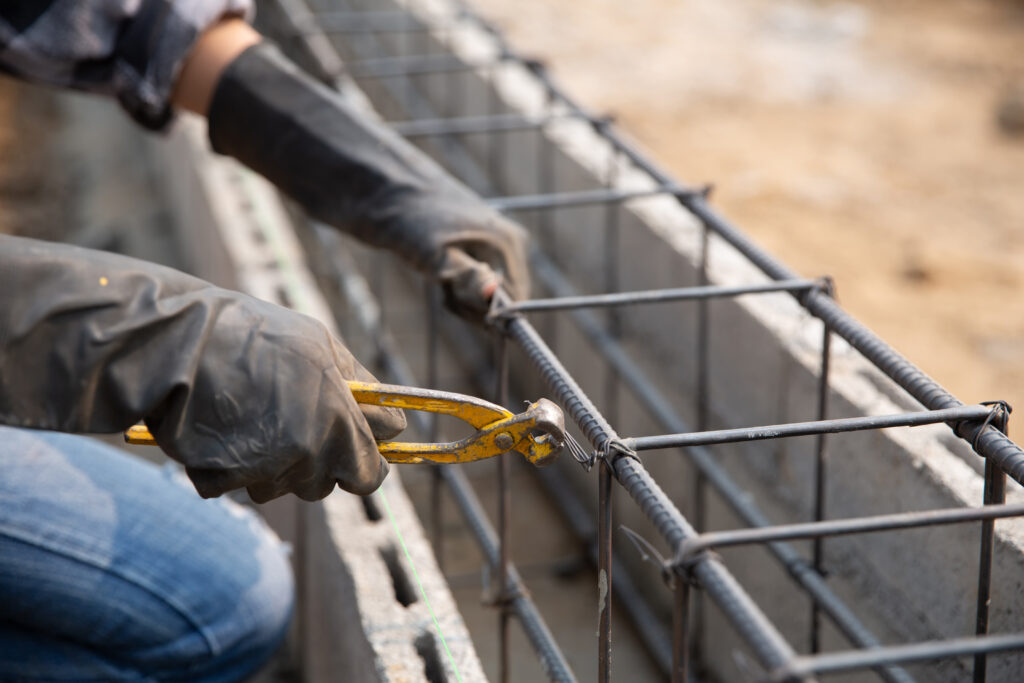
Treating the cause means going outside: excavating down the face of the wall, addressing the wall itself, and rebuilding the drainage that should be moving water away from the foundation instead of into it. It’s more disruptive and more involved than an interior fix, and it should be, because it’s solving a different problem.
How the Work Runs, Start to Finish
Exterior foundation work follows a sequence, and each stage depends on getting the one before it right. It starts with excavation down to the footing along the affected wall, exposing the full face of the foundation so the actual condition of the stone or block can be seen, not guessed at. Canton’s older neighborhoods, with their mix of fieldstone and early block foundations, often reveal problems that don’t show from inside the basement until the wall is actually open.
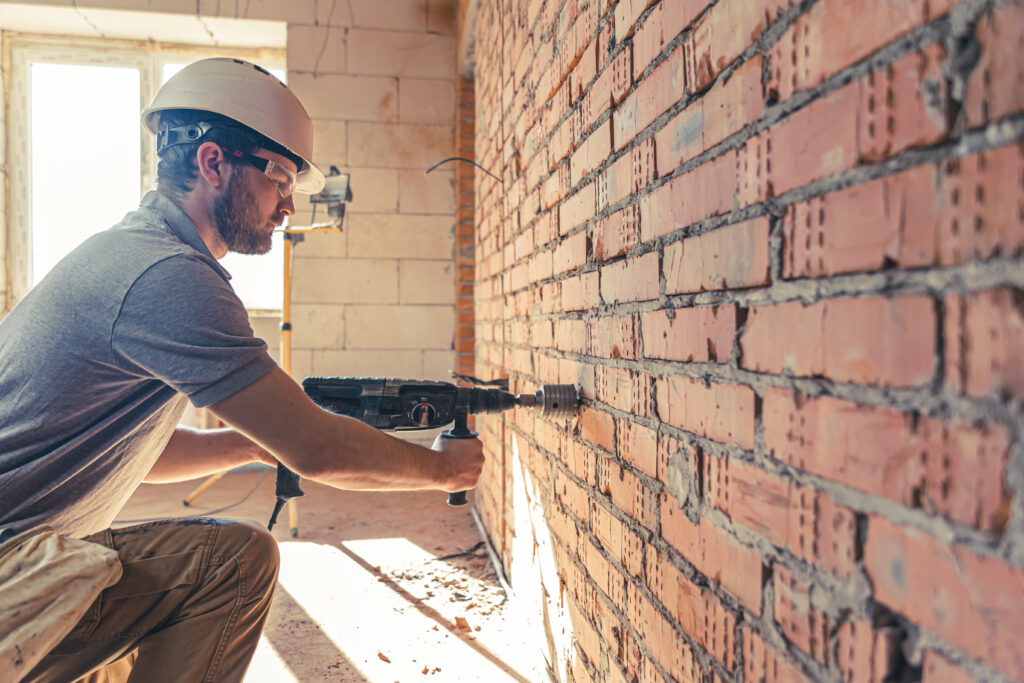
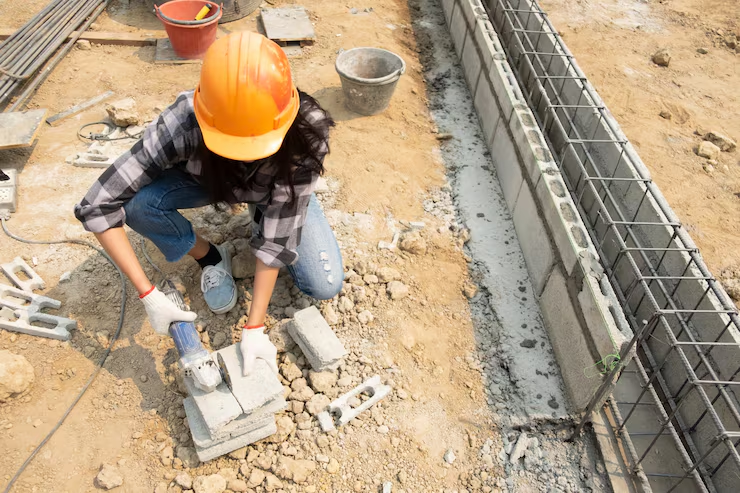
The work, in order
Access Decides the Approach
On a Canton hillside lot, the question that shapes everything else is whether a machine can actually reach the affected wall. A narrow side yard or a retaining wall between the street and the house changes the whole plan.
Backyard and Side-Yard Realities
Many of the houses on these sloped lots have one side with almost no clearance between the foundation and a hill or retaining structure. That side often has to be dug by hand, which changes the time and cost involved.
Grading After Backfill
Backfilled soil settles over time. The finished grade has to slope away from the wall from day one, not flat, so the next heavy rain doesn’t undo the work by pooling right back where it started.
Hardscape in the Way
A patio, walk, or section of driveway built up against the wall sometimes has to come up to get the machine in. That’s a separate cost to plan for, and it’s worth asking about before work starts.
Restoring the Yard
Once backfill is complete and compacted in stages, topsoil and disturbed planting areas around the Canton property get reinstated. The goal at the surface is a grade that sheds water away from the foundation, not one that merely looks finished.
What Happens at the Surface Afterward
Once the wall and drainage work is done and the trench is backfilled, the ground on that side of the house needs to be regraded, not just filled back in. The new surface has to carry water away from the foundation on a consistent slope, which sometimes means changing the grade more than it was before, not just restoring it. Backfill also settles over the following months, so the first regrade isn’t always the last one needed.
If a driveway, walk, or patio sat against that wall and had to be removed for access, that surface has to be rebuilt afterward. That’s paving and hardscape work rather than foundation work itself, but it’s planned around the same drainage logic so the two don’t work against each other:
- Final grade slopes away from the foundation, not just away from the excavation line
- Rebuilt paving ties into existing drainage paths instead of creating a new low point
- Settling areas get topped off rather than left to pond water

Before Anyone Comes Out
A few things are worth checking and writing down before scheduling a look at the problem. Note when the water or damp shows up: after every rain, only after heavy storms, or seasonally in spring when the ground thaws and the water table rises. Canton's mix of clay-heavy soil and older housing stock means foundation movement often shows up as a slow, seasonal pattern rather than a sudden event, so a few weeks of observation can reveal more than a single visit ever could. Photograph the affected wall and the ground outside directly opposite it, including how the grade slopes near the house. If there's a downspout or sump discharge anywhere near that section of wall, note where it empties, and check whether nearby trees or shrubs have roots running toward the foundation. Look inside, too: hairline cracks near windows or doors, sticking frames, or gaps where trim meets the wall are all worth photographing.
What to check and write down first
These are the pointers that help most before anyone visits.
- Note where and when. Which wall, which corner, and whether it follows heavy rain, snowmelt or a particular season.
- Photograph it dry and wet. Take pictures of the same spot on a dry day and again after rain.
- Look at the outside. Check whether the ground beside that wall slopes toward the house, whether a downspout empties near it, and whether anything piles water against it.
- Check for movement. Look for horizontal cracks, a wall that leans in, or stones that have shifted. Mark the ends of a crack with a pencil and date it, so changes can be seen.
- Check the stonework. Press on the mortar. If it crumbles or sands away, say so.
- Think about access. Where could a machine stand, and what is in its way? Tell us who shares the drive or boundary.
- Leave it as you found it. Do not seal or patch the wall before we see it. It hides what we need to look at.
Questions we get asked
How do I know if this is a foundation problem and not just a basement leak?
If the dampness or water tracks back to a specific wall, especially one on the uphill or downhill side of a sloped lot, and shows up after rain rather than constantly, it generally points to water moving through the wall from outside rather than a plumbing or condensation issue inside.
Can this be fixed without digging up the yard?
Interior measures can manage water once it's already inside, but they don't stop it from coming through the wall. Fixing the source means exterior excavation, which does involve disturbing the yard along the affected wall.
Will my driveway or patio need to come up?
Only if it sits directly against the section of wall that needs work, or blocks the only access a machine has to that side of the house. On many Canton lots, side-yard access can avoid this; on others, it can't be avoided.
How long does exterior foundation work take?
It depends on the length of wall involved, how the soil behaves once opened up, and how much hand-digging is needed where a machine can't reach. It's a multi-stage job, not a single visit.
Is this the same crew that does driveway paving?
No. Foundation work is excavation, drainage, and masonry around the foundation itself. It's a different trade from paving, though on some properties the two jobs are planned together when hardscape has to come up for access.
Next step
Call us on (413) 337-3772. Tell us which wall, what you have seen, and how the lot slopes around it. We have worked across Middlesex County since 1988, and we will tell you plainly what is likely going on and whether outside work is the right answer.