
Foundation Work in Chestnut Hill, MA
Water coming through a basement wall after rain. A damp patch that never quite dries out, even in a dry summer. A corner of the foundation that has started to bow, flake, or crumble at the mortar joints. If any of that is happening at your house, you are not dealing with a paving problem, and you are not dealing with a drainage problem you can fix with a sump pump alone. You are dealing with what is happening outside the wall, below grade, where you cannot see it.
Chestnut Hill is full of exactly the houses where this shows up. The village sits across the Newton and Brookline line, and the older homes here, many of them a century or more old, were built with fieldstone or rubble foundations and no real waterproofing system. There was no membrane against the stone, no perimeter drain carrying water away from the footing. The ground around the house was simply backfilled and left to do what it does.
Why water moves through the wall, not under it
That matters because it tells you where the water is actually coming from. A fieldstone or early poured foundation is porous. Water in the surrounding soil, especially after heavy rain or spring thaw, finds the path of least resistance through the joints and the stone itself. It is not rising up from below the slab in most cases. It is pushing in sideways, driven by hydrostatic pressure building up against the outside of the wall. On the kind of large, mature lots common in Chestnut Hill, with established plantings and ornamental drives set close to the house, that pressure has often been building for decades with nothing to relieve it.
This is why interior fixes, a new coat of sealant on the basement wall, a better dehumidifier, a second sump pump, treat the symptom and not the cause. They can buy time. They do not stop water from continuing to move through the stone and mortar, and in many cases they trap moisture inside the wall assembly rather than letting it dry. The work that actually addresses the problem happens outside, at the source.


What Our Clients Say
An Outside Job, Not an Inside Fix
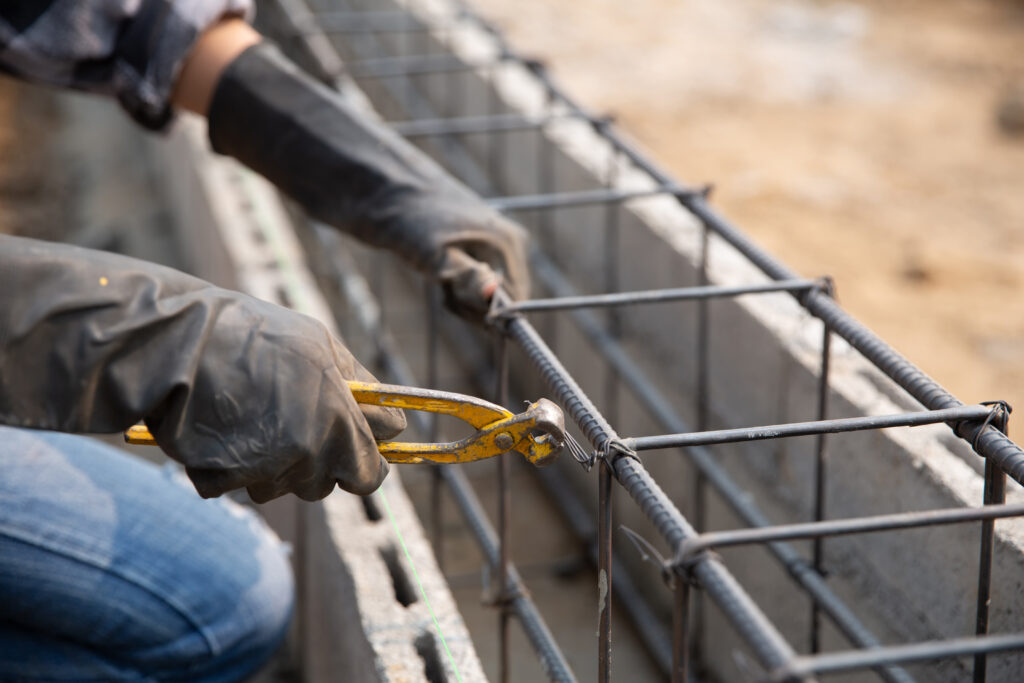
Treating the cause means excavating along the affected section of foundation, down to the footing, so the exterior face of the wall can be addressed directly and a drain can be installed where water actually collects. It is more disruptive than an interior patch, and it costs more, because it involves machinery, digging, and reinstating the ground afterward. That is the honest trade-off. An interior fix is cheaper and faster. An exterior fix is the one that deals with the water before it ever reaches the wall.
What Happens to the Ground Around the House
Excavating around an old foundation means moving through whatever is already there, and in Chestnut Hill that’s usually a lot. Mature plantings crowd close to the house, boxwood hedges line the walls, foundation beds have been built up over decades, and there’s often a short run of bluestone or brick walk laid right against the foundation itself. Older properties may also have window wells, buried drainage lines, or stone edging that wasn’t part of the original plan but has been there long enough to matter.
Some of this can be protected in place with careful digging and temporary barriers. Some of it has to come out entirely to give a machine and a crew real access to the wall. There’s rarely a way to do this work without disturbing something, so we walk the property first and plan the dig around what’s worth saving versus what has to move.
Before anything comes out of the ground, we’re upfront about which plantings, walks, or beds fall into each category, what can be restored afterward, and what will need to be replaced.
The work, in order
Access Often Decides the Approach
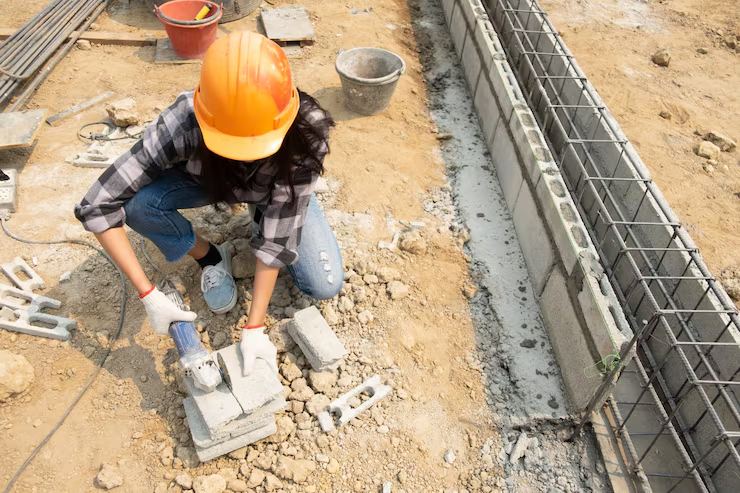
Many Chestnut Hill lots near the village center have narrow side yards and tight gaps between houses. Whether a mini-excavator can reach the affected wall, or the work must be done by hand, shapes both timeline and plan.
Wall Treatment Once Exposed
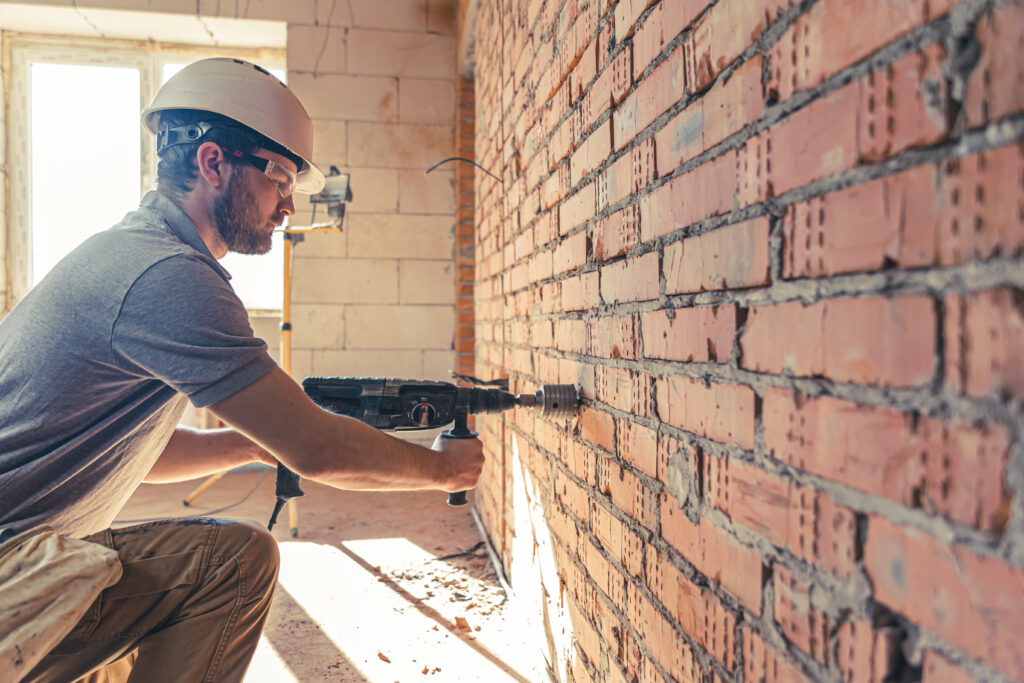
With the wall exposed down to the footing, the stone or masonry gets cleaned and treated, and any failing mortar is addressed before anything is backfilled. This step only works if the excavation reached deep enough in the first place.
Drainage at the Footing
A perimeter drain at the footing gives water somewhere to go besides through the wall. Without it, even a treated wall surface is just facing the same hydrostatic pressure again in a few years.
Backfill Matters as Much as the Dig
What goes back into the trench affects how water behaves next time it rains. Backfilling with the wrong material next to a treated wall can undo the work before it has a chance to prove itself.
Regrading the Surface
Once the trench is backfilled, the surface near the house often needs regrading so water sheds away from the foundation rather than pooling back.
When the Drive or Walk Has to Come Up
If the ornamental drive or entry walk sits close enough to the foundation, it may have to be lifted to get the excavation where it needs to go, and reset afterward once the grading is finished. On the short, formal drives common in Chestnut Hill, that usually means pavers or a stone surface that can be taken up section by section rather than broken out, which keeps the reinstated area matching what was there. This is where the project touches paving, but it is still driven entirely by the foundation work underneath it. The drive or walk is a consequence of the dig, not the reason for it. Deciding this in advance, before excavation starts, avoids surprises partway through the job about what has to be lifted and what can be worked around. It also lets us price the surface reinstatement honestly as its own piece of the job, separate from the foundation work itself, so you know what you are paying for at each stage.

What to Check Before You Call
Before anyone comes out, it helps to document what you are seeing. Note which wall and which corner of the basement the water appears on, whether it tracks with heavy rain, snowmelt, or both, and whether the damp patch on the inside lines up with a downspout, a low spot in the yard, or a section of drive on the outside. Photos of cracking, bowing, or efflorescence on the wall, along with a rough sense of how long it has been happening, give us a much clearer starting point than a general description on the phone. None of this requires any special knowledge, just a careful look with a flashlight and a phone camera. If you can also note how close the affected wall is to plantings, walks, or the drive, that helps us think through access before we’re standing in your yard. Call Driveway Specialists at (413) 337-3772 to walk through what you’re seeing and arrange a time to come look at the site directly.
What to check and write down first
These are the pointers that help most before anyone visits.
- Note where and when. Which wall, which corner, and whether it follows heavy rain, snowmelt or a particular season.
- Photograph it dry and wet. Take pictures of the same spot on a dry day and again after rain.
- Look at the outside. Check whether the ground beside that wall slopes toward the house, whether a downspout empties near it, and whether anything piles water against it.
- Check for movement. Look for horizontal cracks, a wall that leans in, or stones that have shifted. Mark the ends of a crack with a pencil and date it, so changes can be seen.
- Check the stonework. Press on the mortar. If it crumbles or sands away, say so.
- Think about access. Where could a machine stand, and what is in its way? Tell us who shares the drive or boundary.
- Leave it as you found it. Do not seal or patch the wall before we see it. It hides what we need to look at.
Questions we get asked
Is this the same crew that does driveway paving?
Foundation work is a separate trade from paving. Excavation, drainage and wall treatment around a foundation require different equipment and sequencing than laying or resurfacing a driveway, even when the two jobs happen on the same property.
Will fixing the outside guarantee a dry basement?
Addressing water at the source, outside the wall, deals with the cause rather than masking the symptom. We won't promise a specific outcome, but excavation and drainage at the footing is the approach that targets how water is actually reaching the wall in older New England foundations.
How do you deal with mature plantings and a finished drive during the dig?
We look at the site first and plan the excavation around what can be protected and what has to be moved. On Chestnut Hill properties with established landscaping or ornamental drives, this is usually the first thing we walk through together before any digging starts.
How long does foundation excavation work take?
It depends on the length of wall affected, access to the site, and how much of the surrounding ground and hardscape has to come up and go back. We'll give you a realistic sense of timeline once we've seen the specific section of foundation involved.
Next step
Call us on (413) 337-3772. Tell us which wall, what you have seen, and how the lot slopes around it. We have worked across Middlesex County since 1988, and we will tell you plainly what is likely going on and whether outside work is the right answer.