
Foundation Work in Dedham, MA
Water coming through a basement wall after heavy rain. A damp patch that never quite dries out, even in August. A corner of the foundation that looks like it’s bowing inward, or mortar between the stones that crumbles when you touch it. If any of that sounds familiar, you’re not dealing with a driveway problem. You’re dealing with a foundation problem, and it needs a different approach entirely.
A lot of the housing stock in Dedham, especially in the older, close-set neighborhoods nearer the center of town, was built on fieldstone or rubble foundations. These weren’t built with a membrane against the outside face, and most never had a working perimeter drain installed at the footing. Over decades, the mortar between the stones breaks down, and the wall itself becomes the path water takes to get inside. It isn’t rising up through the slab. It’s moving laterally, through the wall, following whatever gap or crack offers the least resistance.
Why interior fixes don’t solve this
Interior sealants, epoxy injections, and interior drain channels are common because they’re cheaper and faster, and they don’t touch the yard. But they manage water after it has already reached the inside of the wall. They don’t stop the water from reaching the wall in the first place. If the ground outside is still saturated and still finding its way through the stone, you’re just moving the moisture around instead of removing it.
The outside job is more disruptive and costs more, because you’re excavating down to the footing, addressing the wall itself, and rebuilding drainage that should have been there from the start. That’s the honest trade-off. It’s not a weekend fix, and it means digging up part of the yard, and sometimes part of a walk or drive, to get there. But it addresses the actual cause instead of the symptom, which matters if you’re planning to stay in the house long enough to care about what’s happening behind the wall ten years from now.
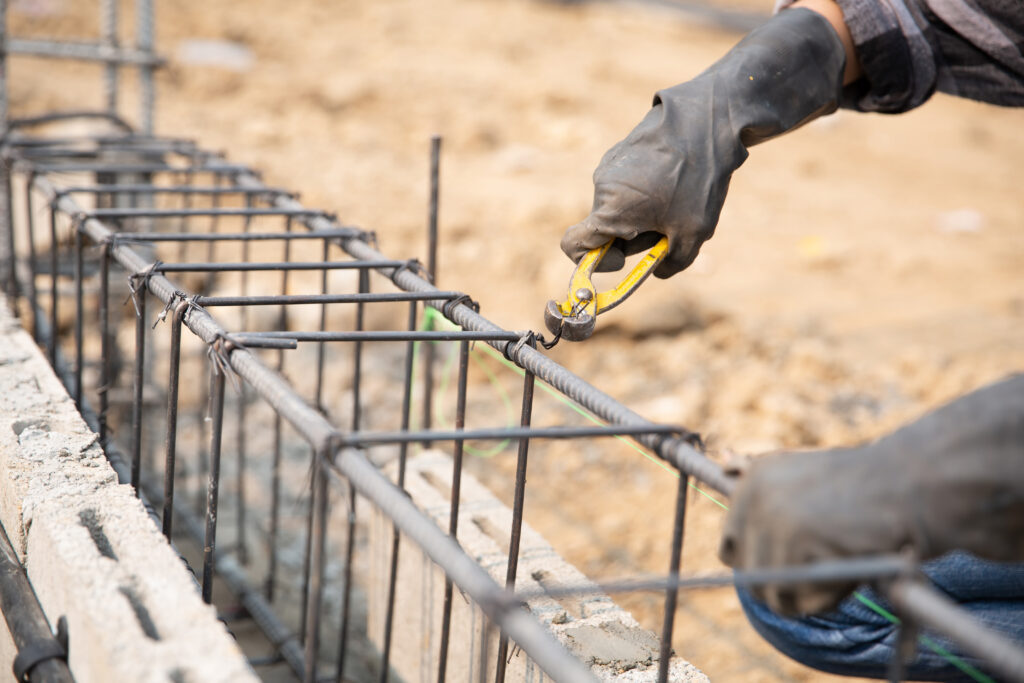
A proper exterior repair usually involves a few distinct stages, and it helps to know what they are before a crew shows up:
- Excavating along the affected run of wall down to the footing, carefully, so the stone isn’t disturbed more than necessary
- Repointing or rebuilding deteriorated sections of the wall itself, not just patching the surface
- Applying a proper waterproof membrane or coating against the exterior face
- Installing a perimeter drain at the footing that actually carries water away instead of letting it pool against the new work


What Our Clients Say
What's Actually Happening to the Wall
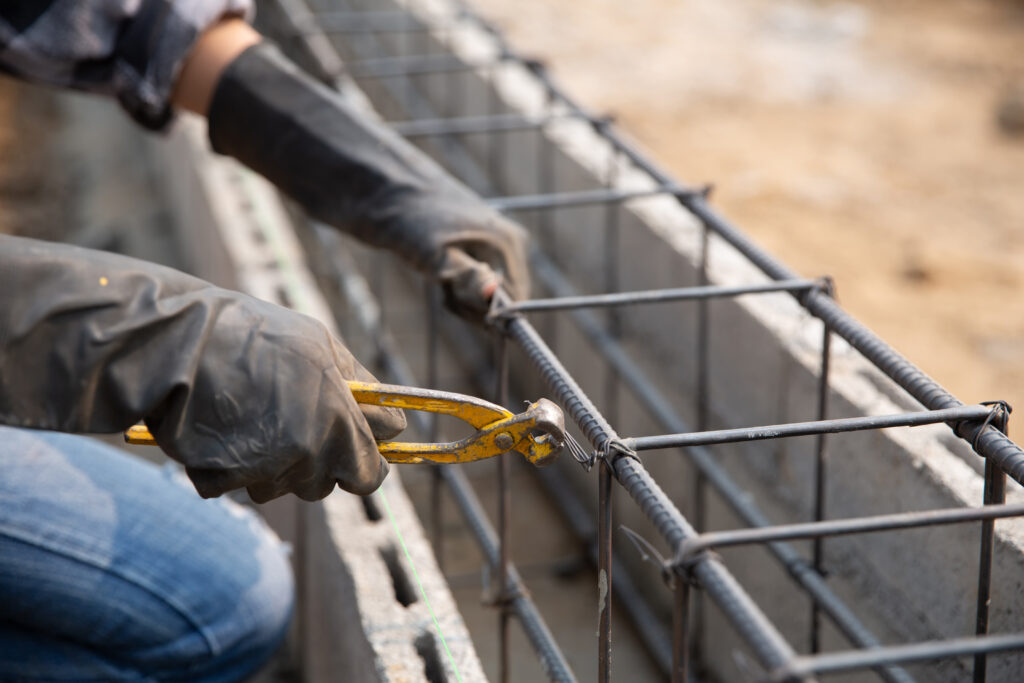
Fieldstone and rubble foundations common in Dedham’s older neighborhoods were built from whatever stone was on hand, set with lime mortar that was never meant to be waterproof. It was meant to hold the stones in place and flex slightly with the ground. Over the better part of a century, that mortar erodes, freeze-thaw cycles open hairline gaps wider, and the wall develops a network of small paths for water to follow inward instead of shedding it.
Once water is moving through the wall rather than around it, no amount of patching the inside face stops the source. The ground outside is still holding water against the stone every time it rains or the snow melts, and the wall keeps taking the hit year after year. You’ll usually see the evidence before you see the cause:
- White, chalky mineral deposits (efflorescence) on the interior stone
- Mortar that crumbles or pulls away when touched
- Damp patches that reappear after drying
- Bowing or stair-step cracking in the wall itself
Addressing the grading and drainage outside is what actually changes the wall’s long-term odds.
Excavation and Access
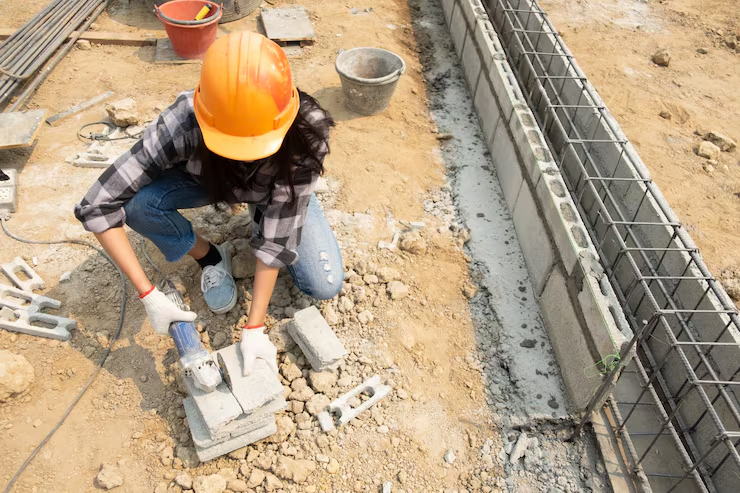
Getting a machine to the affected side of the house is often the real constraint in Dedham’s older neighborhoods, where lots were laid out long before excavators and skid steers existed. A narrow gap between two houses might only allow hand-digging, which changes both the timeline and the overall approach to the job. Wider side yards allow a small excavator or mini-skid to get into position, which moves faster and disturbs less of the yard once it’s in place. Before any digging starts, we factor in utility locates, fence lines, mature trees, and existing hardscaping like patios or walkways that could limit swing room or dumping space for spoils.
- Side-yard width and gate clearance determine whether equipment can reach the foundation at all
- Hand-digging costs more time but protects tight landscaping and underground lines
- Spoil removal needs a clear path, especially on sloped or terraced Dedham lots
We walk the access route with you first, so there are no surprises once work begins.
The work, in order
Planting and Hardscape
Shrubs, foundation plantings, and anything built against the wall, a walkway, a patio edge, a short retaining wall, usually has to come out or come up before excavation starts. Some of it can be reset afterward. Some can’t.
Treating the Wall
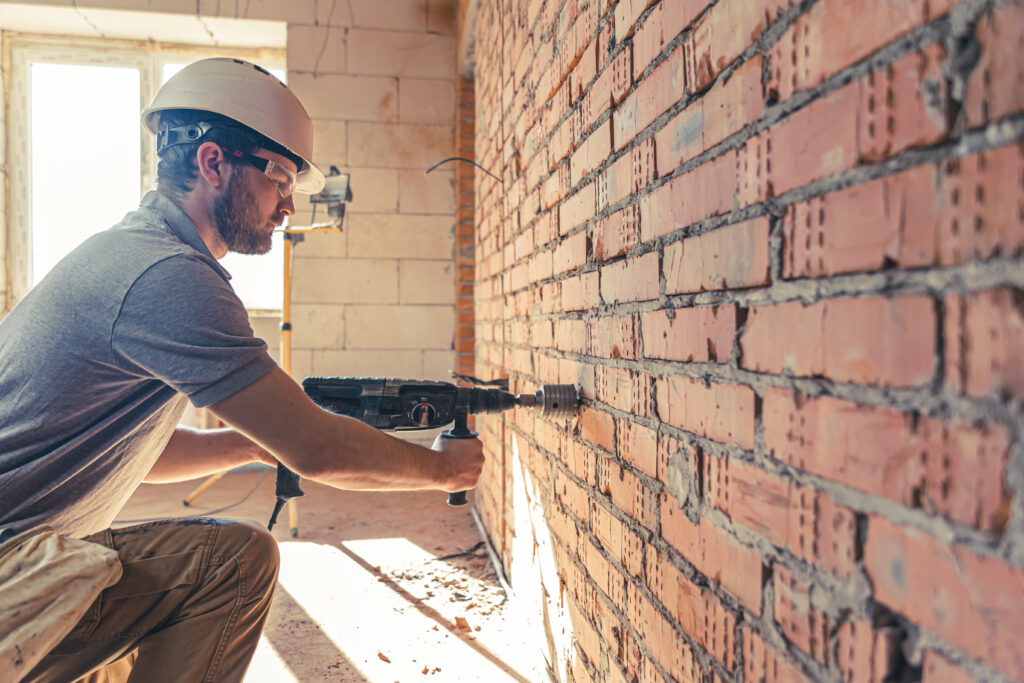
With the wall exposed, our Dedham crews rake out loose or failed mortar, repair cracks, and prepare the exterior face before applying a durable waterproof membrane.
Drainage at the Footing
A perimeter drain at the footing gives water somewhere to go besides into the wall.
Backfill and Regrading
Backfill goes in with drainage in mind, not just to fill the hole. The final grade at the wall needs to shed water away from the house, not hold it against the foundation again.
What the Surface Looks Like After
After wall repairs, soil gets regraded to shed water away from the foundation. On tight Dedham lots, a nearby driveway may need removal and rebuilding over compacted, properly sloped backfill—a separate paving phase.
Before Anyone Comes Out
A few things worth checking and writing down before a foundation specialist comes out to a Dedham property: where exactly the water or dampness appears inside, whether it tracks with heavy rain or snowmelt specifically, and whether it’s worse on one side of the house than another. Dedham’s mix of older homes and clay-heavy soil means grading and drainage issues show up often, so look outside for anything that lines up with the inside location, a downspout emptying too close to the foundation, a low spot that collects water, or a slope toward the house instead of away from it. Photos of the interior damage, cracks, staining, efflorescence, and the exterior grade around the house help an assessment move faster and give a clearer starting point. Note whether gutters discharge near the foundation or carry water further out, since that’s often part of the picture. If there’s a sump pump, mention how often it runs. Also worth knowing: the age of the foundation, any prior repairs, and whether cracks have visibly widened or new ones have appeared recently.

Next Step
If you’re seeing water in the basement, damp patches creeping up a foundation wall, or cracking and settling on an older Dedham home, don’t wait for the problem to spread. Many foundation issues in this area trace back to exterior causes: poor grading, clogged or missing gutters, aging downspout extensions, or driveway and walkway surfaces that pitch water straight toward the house instead of away from it. On Dedham’s mix of older colonials and newer builds alike, identifying which of these is actually driving the damage is the real first step, not just patching the crack or sealing the wall from inside.
The sooner that exterior cause gets diagnosed, the less invasive and less costly the fix tends to be, whether that means regrading, repairing drainage, or correcting a driveway slope that’s working against the foundation rather than protecting it.
Call Driveway Specialists at (413) 337-3772 to talk through what you’re seeing, what access looks like on your lot, and what the next practical step should be.
What to check and write down first
These are the pointers that help most before anyone visits.
- Note where and when. Which wall, which corner, and whether it follows heavy rain, snowmelt or a particular season.
- Photograph it dry and wet. Take pictures of the same spot on a dry day and again after rain.
- Look at the outside. Check whether the ground beside that wall slopes toward the house, whether a downspout empties near it, and whether anything piles water against it.
- Check for movement. Look for horizontal cracks, a wall that leans in, or stones that have shifted. Mark the ends of a crack with a pencil and date it, so changes can be seen.
- Check the stonework. Press on the mortar. If it crumbles or sands away, say so.
- Think about access. Where could a machine stand, and what is in its way? Tell us who shares the drive or boundary.
- Leave it as you found it. Do not seal or patch the wall before we see it. It hides what we need to look at.
Questions we get asked
Is this the same company that does driveway paving?
Yes, but foundation excavation and drainage work is a separate trade from paving. We handle both, but they're planned and priced separately because the work itself is different.
Will fixing the outside guarantee a dry basement?
No contractor can promise that, and we won't. What exterior excavation and drainage work does is address the actual path water is taking through the wall, rather than just treating the symptom inside.
Does my driveway need to be torn up for foundation work?
Only if the affected section of wall runs underneath or directly beside it. On many Dedham lots the drive is far enough from the problem area that it isn't touched at all.
How do you get equipment to a foundation on a narrow lot?
On tight side yards, especially common in Dedham's older neighborhoods, we often rely on hand excavation or smaller equipment. Wider lots toward Westwood usually allow a compact excavator, which is faster.
What's the first sign I should call about?
A damp wall that doesn't dry out, visible water after rain, crumbling mortar, or any section of wall that looks like it's bowing. Document when it happens and what the ground outside looks like before calling.
Next step
Call us on (413) 337-3772. Tell us which wall, what you have seen, and how the lot slopes around it. We have worked across Middlesex County since 1988, and we will tell you plainly what is likely going on and whether outside work is the right answer.