
Foundation Work in Dover, MA
Water coming through a basement wall after heavy rain. A damp corner that never quite dries out, even in summer. A section of fieldstone that bulges or crumbles when you press on it. These are not cosmetic problems and they rarely stay the same size. They tell you something is moving water against your foundation that shouldn’t be there, and on a lot the size of the ones common in Dover, that water has a long way to travel before it ever reaches the house.
Most of the older homes on Dover’s larger parcels were built on fieldstone or mortared rubble, not poured concrete. Those walls were never built to stop water. They were built to hold the house up. Water moves through the gaps between stones and through the mortar itself, following the path of least resistance until it finds the inside face of your basement wall. There is no membrane back there, and in most cases there is no drain running along the footing either. The water doesn’t go under the wall and around the house. It goes through it.
Newer construction in town isn’t automatically free of trouble either. Poured concrete foundations can still crack from settlement, from backfill that was compacted unevenly, or from hydrostatic pressure building up after a run of wet seasons. A crack in a twenty-year-old poured wall and a crumbling joint in a two-hundred-year-old fieldstone wall are different problems structurally, but both share the same underlying issue: water finding a path it shouldn’t have, and no good way out once it arrives.
Painting the inside of a damp wall, or applying a sealant coating, treats the symptom you can see. It does nothing to the water pressing against the other side. The wall stays wet, the coating eventually fails or traps moisture behind it, and the mortar keeps breaking down. Real correction means going to the source: excavating along the outside of the foundation, treating the wall itself, and giving the water somewhere to go other than through your basement. That is a bigger, more disruptive job than a coating, and it costs more. We won’t tell you otherwise. What it does is address the actual mechanism instead of hiding it for a season or two.
On a wooded, large-acreage lot, the first question is never the wall. It’s whether a machine can reach it. Long private drives, mature trees close to the foundation, and conservation setbacks near wetlands or buffer zones all shape where equipment can sit and which route it takes to get there. We look at access before we talk about the wall, because access decides what the job actually looks like.
A proper assessment before any digging starts should cover a few specific things:


What Our Clients Say
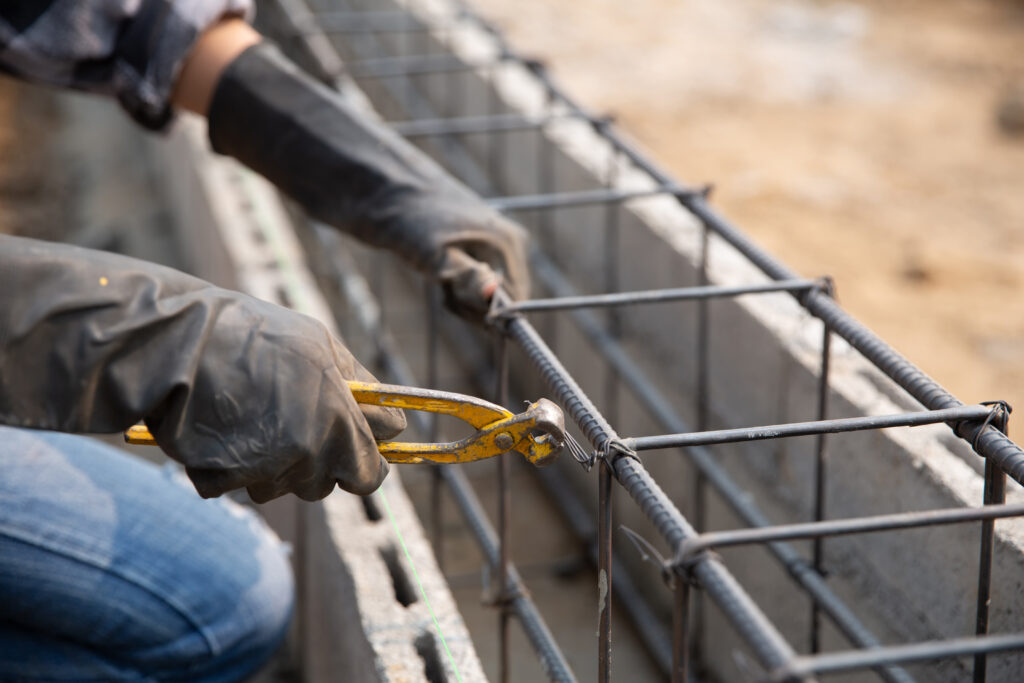
What's Actually Happening Behind the Wall
A fieldstone or rubble foundation relies on the soil around it staying stable and the water table staying low enough not to push against it. When grading has settled over decades, or a downspout has been dumping water against the same corner for years, that balance shifts. Hydrostatic pressure builds against the stone, finds a gap, and the water follows it inward. In older Dover neighborhoods, where many homes still sit on original fieldstone or parged rubble walls, this is less an exception than a predictable stage of the foundation’s life.
Frost makes it worse. Water sitting in the soil against the wall freezes and expands each winter, working stone and mortar loose a little more each cycle. By the time it shows up as a wet wall, a crack, or a musty basement smell indoors, the movement outside has usually been happening for years, hidden under lawn or mulch.
What’s typically going on behind the wall:
- Saturated or poorly graded soil pressing against the stone
- Deteriorated mortar joints letting water and fine soil migrate through
- Downspouts or surface runoff concentrated at one point
- Repeated freeze-thaw cycles widening existing gaps
Excavation and What Happens to the Yard
Reaching the wall means opening a trench along the foundation, which means moving or protecting whatever sits above it. On an estate lot around Dover that might mean mature plantings close to the house, a stone path, an irrigation line, or a section of lawn with real grade to it. Before digging starts, we walk the yard to flag what needs to come out, what can be protected in place, and what’s already at risk from root damage or settling soil. The trench itself typically runs the length of the affected wall and down to the footing, which on older Dover homes can mean several feet of depth through mixed soil and the odd buried surprise – old drain tile, a forgotten utility line, or construction debris from the original build.
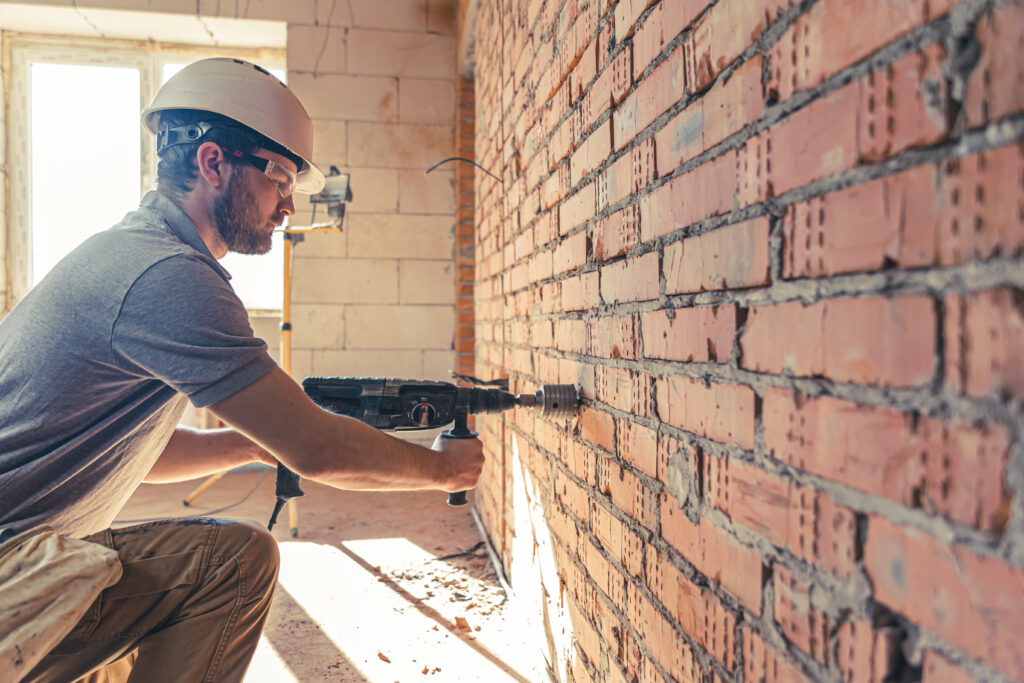
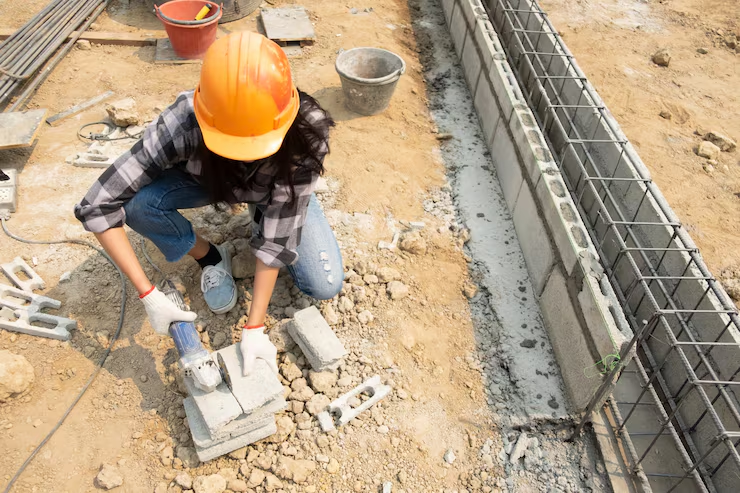
The work, in order
Wall Treatment
Once the wall is exposed, loose mortar and failing stone or brick get raked out and repaired, and the exterior face is treated to stop water from tracking through it going forward.
Drainage at the Footing
A perimeter drain along the footing gives water a path away from the wall instead of through it, carrying it to daylight or a dry well downhill of the house.
Backfill
Once the Dover footings have cured, the trench gets backfilled with free-draining material rather than heavy clay, so water moves away from the wall instead of pressing against it.
Reinstating the Ground
Final grading pitches reinstated soil away from the foundation so Dover's heavy seasonal rain doesn't find its way back to the same spot it came from.
Ledge and Grade Change the Plan
Dover lots vary — some excavate easily, others hit ledge feet down, changing trench work and timelines. Drives sloping toward the house add drainage risk. We assess grade and subsurface before quoting, since guessing at ledge wastes everyone’s time.
What If There's a Drive or Walk in the Way
On a lot of Dover properties, the only clear path to the affected foundation wall runs straight across a driveway, a front walkway, or a planted edge that was never built to carry excavators or a mini-skid loader. We walk the access route during the site visit, not after the crew has already shown up, so we know whether a section of concrete, pavers, or asphalt has to come out to get equipment where it needs to be. That gets flagged and measured before anyone starts digging, and you’ll know exactly which part of the drive or walk is affected and why.
Reinstating that surface afterward is a separate scope from the foundation repair itself, and we keep the two priced separately rather than folding one into the other so the estimate stays honest. Some homeowners handle the surface patch themselves or bring in their own paving contractor once our excavation work is backfilled and compacted; others prefer we coordinate it directly. Either way, we’re upfront about which is which from the start.

Before You Call
A few things are worth checking and writing down before anyone comes out. Note which wall and which corner the water or damp appears on, whether it tracks with heavy rain or shows up regardless, and whether a downspout, sump discharge, or low spot in the grade sits near that same corner. Photos of the inside wall and the outside grade at that location help us plan the access route before we’re standing on site. If you’ve noticed the problem getting worse over a specific period, that timeline matters too, as does any recent grading, paving, or landscaping work near the foundation.
What to check and write down first
These are the pointers that help most before anyone visits.
- Note where and when. Which wall, which corner, and whether it follows heavy rain, snowmelt or a particular season.
- Photograph it dry and wet. Take pictures of the same spot on a dry day and again after rain.
- Look at the outside. Check whether the ground beside that wall slopes toward the house, whether a downspout empties near it, and whether anything piles water against it.
- Check for movement. Look for horizontal cracks, a wall that leans in, or stones that have shifted. Mark the ends of a crack with a pencil and date it, so changes can be seen.
- Check the stonework. Press on the mortar. If it crumbles or sands away, say so.
- Think about access. Where could a machine stand, and what is in its way? Tell us who shares the drive or boundary.
- Leave it as you found it. Do not seal or patch the wall before we see it. It hides what we need to look at.
Questions we get asked
Is this the same crew that does driveway paving?
No. Foundation excavation and drainage work is a separate trade from paving. We treat it as its own job with its own sequence, even when the access route happens to cross a driveway or walkway.
Will this guarantee a dry basement?
We can't promise that, and we wouldn't want to. What exterior excavation, wall treatment, and drainage do is address the actual path water is taking through the wall, rather than masking it from the inside.
How do conservation setbacks near Dover's wetlands affect this work?
If a property is near a wetland or buffer zone, the route equipment can take and how close excavation can go to certain boundaries may be limited. This is worked out for each property rather than assumed.
What if a machine can't reach the affected wall?
On wooded, large-acreage lots this comes up often. We look at access first, because it can change the approach, the equipment used, or the sequence of the work before the wall itself is even addressed.
Does the lawn or landscaping near the foundation get fully restored afterward?
The ground gets regraded and reinstated so water drains away from the wall, but an excavation along an old foundation disturbs the surface above it. We talk through what to expect in that specific area before starting.
Next step
Call us on (413) 337-3772. Tell us which wall, what you have seen, and how the lot slopes around it. We have worked across Middlesex County since 1988, and we will tell you plainly what is likely going on and whether outside work is the right answer.