
Foundation Work in Lexington, MA
Water coming through a basement wall after heavy rain. A damp corner that never quite dries out, even in summer. A section of fieldstone or rubble foundation that bulges inward, or mortar that crumbles when you touch it. If any of that sounds familiar, you are not dealing with a paving problem. You are dealing with a structure that is letting water in, and in a lot of Lexington’s older colonials and capes, that is exactly what you would expect.
Lexington has a large stock of mid-century houses sitting on original foundations, many on established lots near the historic centre or along the older residential streets further out. Those foundations were built to a different standard than anything going in today. There is no membrane on the outside wall, no perimeter drain at the footing, and in many cases the material itself is fieldstone or poured concrete that has moved slightly over seventy or eighty years. Water does not need a crack to get in. It moves through the stone and mortar itself, following the path of least resistance, and that path usually ends at your basement wall.
Why this is an outside job
Painting the inside of the wall, or applying one of the interior sealant coatings sold for this, stops water from showing on the surface you can see. It does nothing for the water still moving through the wall and the saturated soil behind it. Over time that trapped moisture keeps working on the mortar and the wall itself from the inside, where you cannot see it happening. The only way to deal with the cause rather than the symptom is to go outside: excavate down to the footing, treat the wall, put in proper drainage, and backfill correctly. It is more disruptive and more expensive than a bucket of interior coating. It is also the only version of this job that actually addresses what is happening behind the wall rather than hiding it.
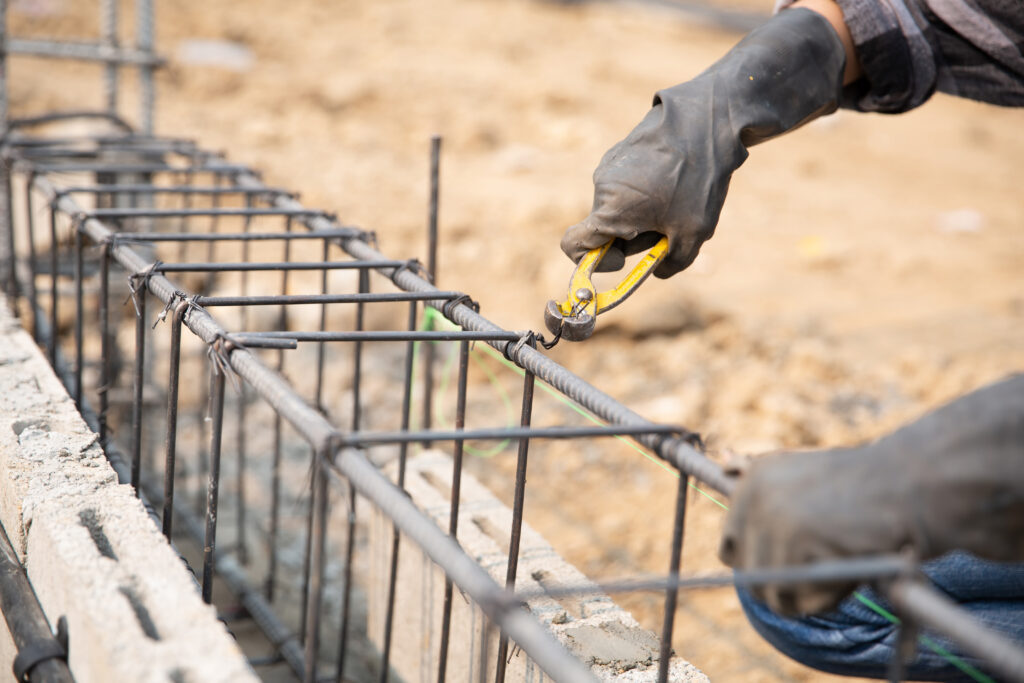
A proper exterior repair on a Lexington property generally involves a few distinct stages, and knowing them helps you judge any quote you receive:
- Careful excavation down to the footing, working around mature plantings, stone walls, and existing hardscape wherever the lot allows
- Inspection and repair of the wall itself, repointing mortar joints or patching concrete before anything else goes on
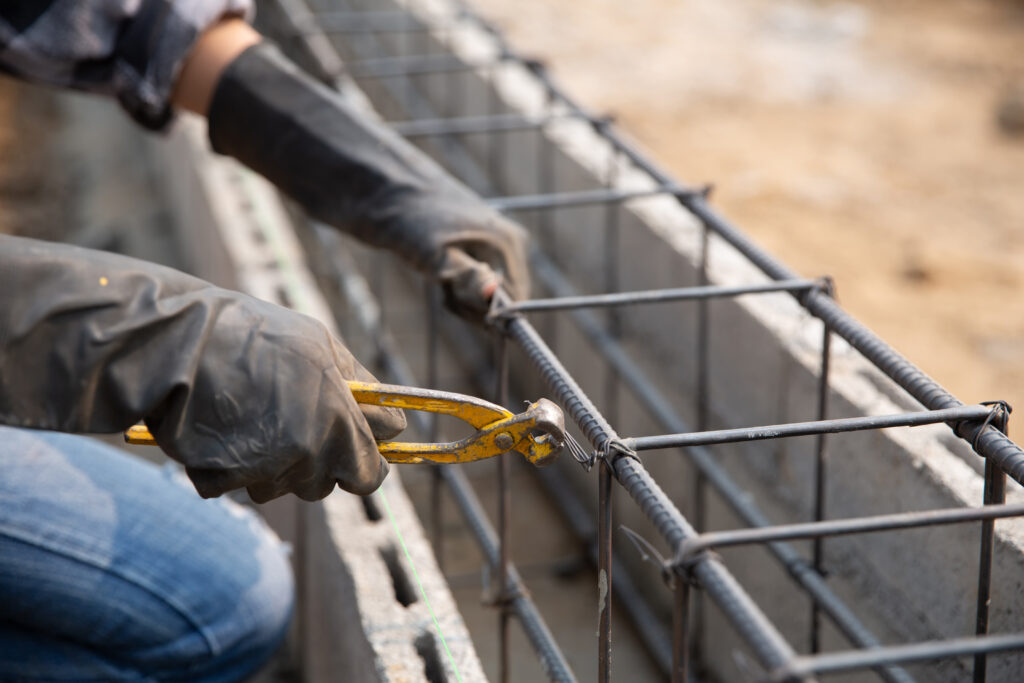
- A waterproof membrane or coating applied directly to the exterior wall surface
- A new perimeter drain at the footing, tied into daylight or an existing drainage system where one exists
- Backfill with free-draining material rather than simply returning the original soil


What Our Clients Say
What's Actually Happening to the Wall
Fieldstone and old poured-concrete foundations common around Lexington were built without a damp-proofing membrane and without a drain at the base of the wall. Groundwater and surface runoff saturate the soil against the foundation, and hydrostatic pressure pushes that moisture straight through the wall material. A crack is not required. Porous stone and aging mortar joints are enough on their own, especially in homes built before modern waterproofing codes were standard practice.
Clay-heavy soil in this area compounds the problem. It expands when wet and contracts when dry, repeatedly loading and unloading the wall and widening whatever gaps already exist. Freeze-thaw cycles through a Lexington winter do the same thing on a shorter timeline, working mortar loose a little more each year.
Signs worth noting:
- Bowing or leaning walls
- Horizontal or stair-step cracking
- White mineral staining (efflorescence) on stone or block
- A musty smell that returns no matter how often the basement is aired out
These are all signs of the same underlying mechanism, not separate problems needing separate fixes.
The Work in Sequence
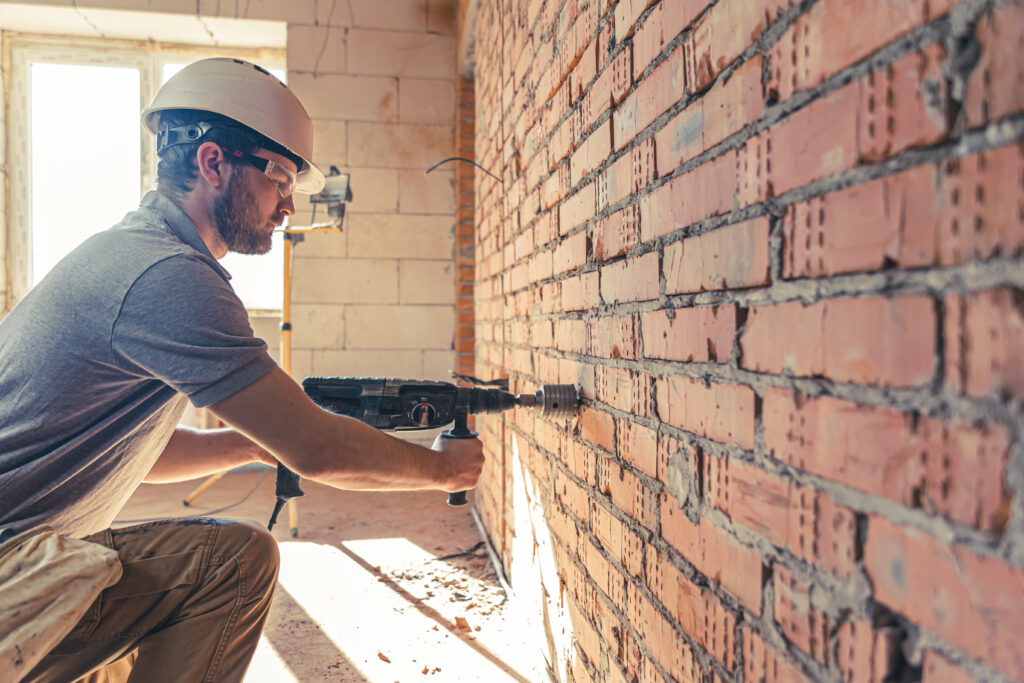
Once a section of foundation is confirmed as the source, the job follows a set order: excavate along the affected wall down to the footing, inspect and treat the exposed surface, install drainage at the base, backfill with material that will not simply resaturate against the wall, and reinstate the grade at the surface. In Lexington’s clay-heavy soil, this sequence matters more than in sandier ground, since clay holds water against a wall far longer after rain and expands as it does, which is what stresses foundations here in the first place.
Nothing is skipped
Skipping a step, usually the drainage or the backfill material, is why some foundation repairs fail again within a few years. The sequence exists because each stage protects the one before it:
The work, in order
Access Comes First
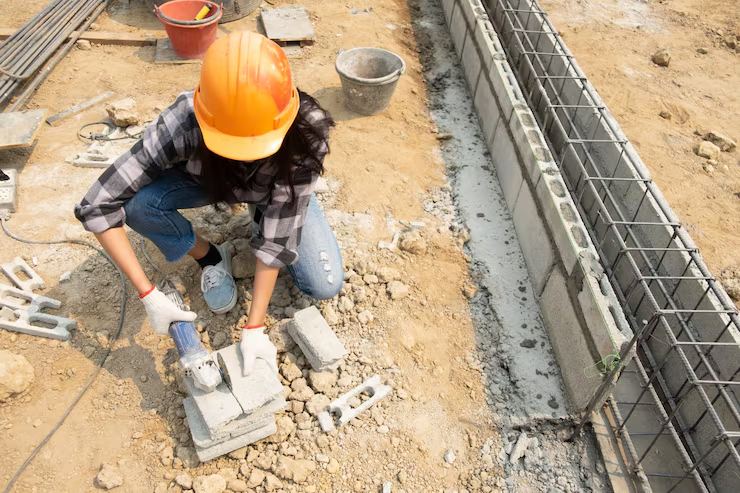
Before any excavation starts, we check whether a machine can actually reach the affected wall.
Planting and Hardscape
Mature trees, shrubs, and foundation plantings near the wall usually have to come out or be cut back before excavation begins.
Wall Treatment
Once exposed, the Lexington foundation wall is cleaned, inspected for cracks, and treated with a waterproof coating or membrane before any backfill goes back.
Drainage and Backfill
A perforated drain at the footing, wrapped in gravel and fabric, paired with free-draining backfill, keeps water moving away from the wall instead of sitting against it after Lexington's heavy spring storms, reducing hydrostatic pressure and protecting your foundation for years.
Lexington's Older Lots Change the Approach
Many Lexington lots predate modern equipment access, with narrow side yards, close-set trees, and in-ground features limiting excavator reach.
Regrading and What Happens at the Surface
Once drainage work is complete, the grade near the foundation gets reshaped to carry water away from the house rather than toward it. This is often the step that gets rushed, and it is one of the more important ones, since poor regrading can undo good waterproofing within a season or two. If a driveway, walkway, or patio sits close to the excavated wall, it may need to be lifted, cut back, or partially rebuilt to accommodate the new grade and drainage line underneath it. That is a separate scope from the foundation work itself, but it has to be planned alongside it, not discovered afterward once equipment is already on site.
On a property where the drive runs close to the house, as many do in Lexington’s older neighbourhoods, this is worth raising with us during the initial walkthrough. We’ll check slope, surface material, and how close the excavation line falls to paved edges, so the full scope is priced and scheduled together rather than in two disconnected trips weeks apart.

What to Check Before You Call
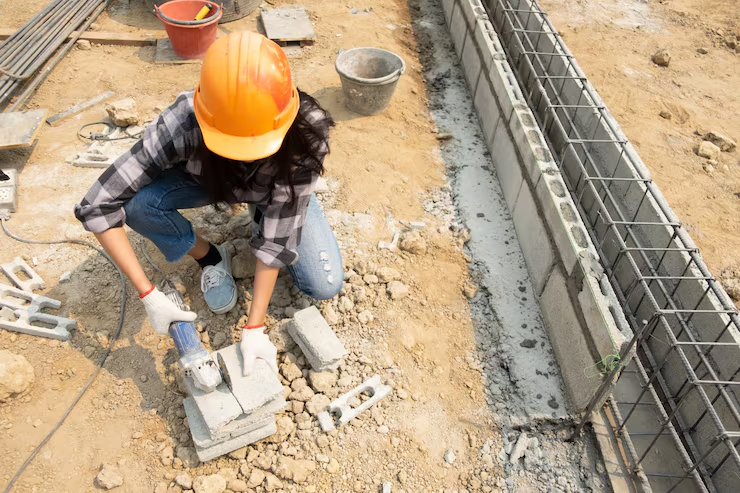
Before you pick up the phone, spend a few minutes observing your foundation and basement the way an inspector would. Note where water appears first after rain, whether it tracks with storm intensity, and whether it shows up on dry days too, which can point to groundwater rather than surface runoff. Photograph any cracking, bowing, or staining with a date, and check whether cracks run horizontal, vertical, or stair-step through mortar joints, since the pattern tells us a lot about the pressure behind the wall. If you have a sump pump, note how often it runs and whether that has changed recently. Walk the exterior too: grading that slopes toward the house, clogged gutters, and downspouts dumping near the foundation are common contributors around Lexington's clay-heavy soil. This information speeds up the first visit considerably. From there, the next step is a walkthrough of the affected wall and the ground around it, so we can tell you what is actually happening and what it will take to fix it properly.
What to check and write down first
These are the pointers that help most before anyone visits.
- Note where and when. Which wall, which corner, and whether it follows heavy rain, snowmelt or a particular season.
- Photograph it dry and wet. Take pictures of the same spot on a dry day and again after rain.
- Look at the outside. Check whether the ground beside that wall slopes toward the house, whether a downspout empties near it, and whether anything piles water against it.
- Check for movement. Look for horizontal cracks, a wall that leans in, or stones that have shifted. Mark the ends of a crack with a pencil and date it, so changes can be seen.
- Check the stonework. Press on the mortar. If it crumbles or sands away, say so.
- Think about access. Where could a machine stand, and what is in its way? Tell us who shares the drive or boundary.
- Leave it as you found it. Do not seal or patch the wall before we see it. It hides what we need to look at.
Questions we get asked
Is this the same company that does driveway paving?
Yes, but foundation work is a separate trade handled on its own schedule and scope. It involves excavation, drainage and wall treatment rather than surface paving, even though it's the same family-run company behind both.
Will interior waterproofing paint fix the problem?
It will stop water showing on the surface you can see, but it does not stop water moving through the wall from outside. The moisture keeps affecting the mortar and stone where you can't see it. Addressing the cause means working from the exterior.
How do you deal with mature trees close to the foundation?
We assess root position and trunk proximity during the walkthrough. In some cases plantings or branches need to come out before excavation starts; in others, hand-digging near roots is enough to avoid removal.
Will my driveway or walkway be affected?
If it sits close to the excavated wall, it may need to be lifted or partially rebuilt once the new grade and drainage are in. We price and schedule that alongside the foundation work rather than as a separate job.
What should I document before calling?
Where and when water appears, how it relates to rainfall, photos of any cracking or bowing with dates, and how often a sump pump runs if you have one. It gives us a clearer picture before the first visit.
Next step
Call us on (413) 337-3772. Tell us which wall, what you have seen, and how the lot slopes around it. We have worked across Middlesex County since 1988, and we will tell you plainly what is likely going on and whether outside work is the right answer.